Wall-mount vs. ceiling-mount roller shades is a choice about where the shade belongs in the room, not just where its brackets attach. The better option gives the fabric room to travel, keeps handles and trim usable, and creates a top line that looks intentional across your windows.
Start with the opening, then consider the surrounding wall, ceiling, doors, and furniture. World Wide Shades can help you evaluate those relationships before you choose a mounting approach. Start your custom shade configuration once you know which surface best supports the look and clearance you want.
Wall-mount vs. ceiling-mount roller shades at a glance
A wall-mounted roller shade attaches to a vertical surface, often above the window opening. A ceiling-mounted shade attaches to a horizontal surface, which could be the room ceiling or the underside of a suitable recess.
That distinction matters when shopping. An inside mount describes a shade positioned within the window opening, while an outside mount describes coverage beyond it. Ceiling mounting is not automatically an outside mount, and wall mounting does not automatically mean the fabric will clear a projecting handle.
Choose wall mounting when the area above the frame offers a practical location and you want to relate the shade to the window rather than the ceiling. Consider ceiling mounting when a higher, continuous top line suits the room or when the wall above the opening is visually awkward. Either choice still depends on the selected shade configuration and the available supporting surface.
Let recess depth narrow the decision first
A deep recess can keep the shade visually contained within the opening. A shallow one can make an outside-mounted shade the more practical starting point, even if you initially preferred a tucked-away look.
World Wide Shades specifies a minimum frame depth of 1.5 inches for inside mounting, with 2.5 inches recommended for motorized shades. When the frame is shallower, use an outside mount. These depth guidelines help distinguish a viable inside-mount option from a mounting idea that only looks good in a photo.
Do not read the minimum depth as a promise that every chosen configuration will sit fully concealed. The shade, its controls, and any selected covering details still need to be considered together. A recessed horizontal surface also should not be confused with the room ceiling when discussing your preference.
If the depth rules out an inside mount, the next decision is whether an outside shade should relate to the wall above the frame or to the ceiling. Review the World Wide Shades measuring guide for the approved sizing approach before making that choice.
Compare trim and handles before comparing appearance
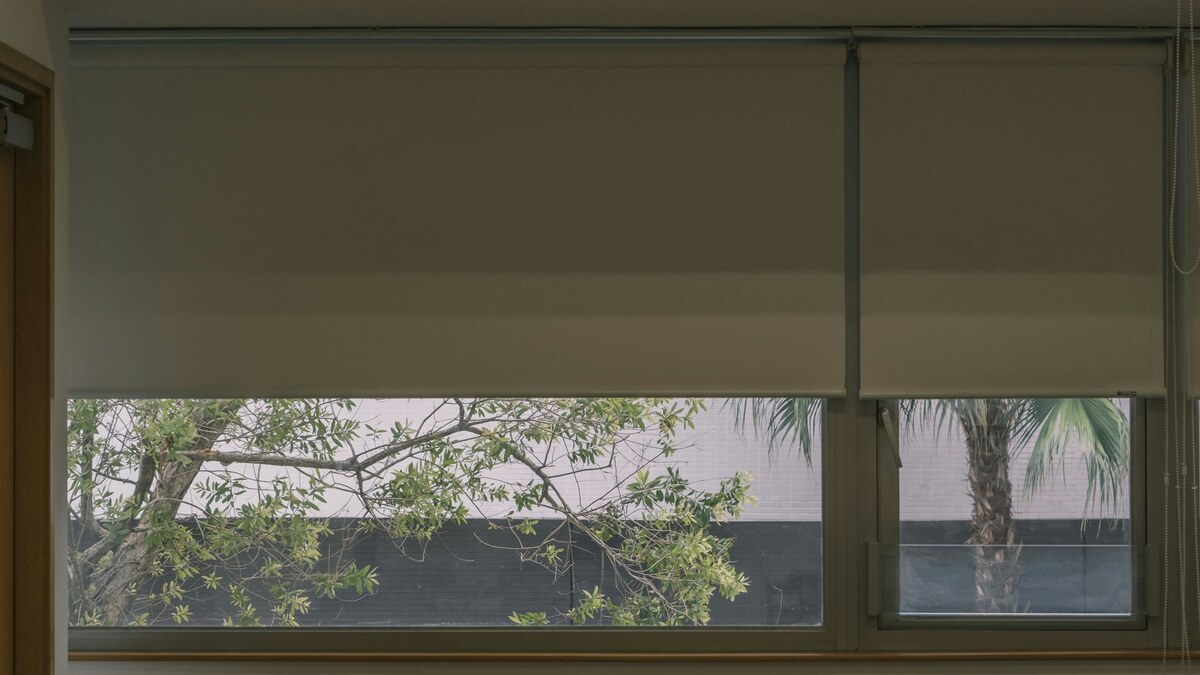
Window trim changes the relationship between the mounting surface and the path of the fabric. A wall above the frame may sit behind a projecting trim profile, so choosing that wall does not by itself establish that the shade will pass in front of the trim.
Handles create another possible conflict. Picture a casement window with a handle that extends toward the room: the shade needs a usable travel path without making normal window operation awkward. Ceiling mounting may offer a useful layout option, but it does not automatically solve a handle problem.
The fabric plane is simply the position of the hanging fabric relative to the window, trim, and room. Compare that position rather than assuming that a particular mounting label guarantees clearance. The same ceiling can support different visual outcomes depending on the selected configuration.
World Wide Shades can review your opening and discuss the relationships that matter for your order. Contact the team or call (844) 674-2716 if substantial trim or projecting handles make the choice unclear.
Choose the top line you want to see
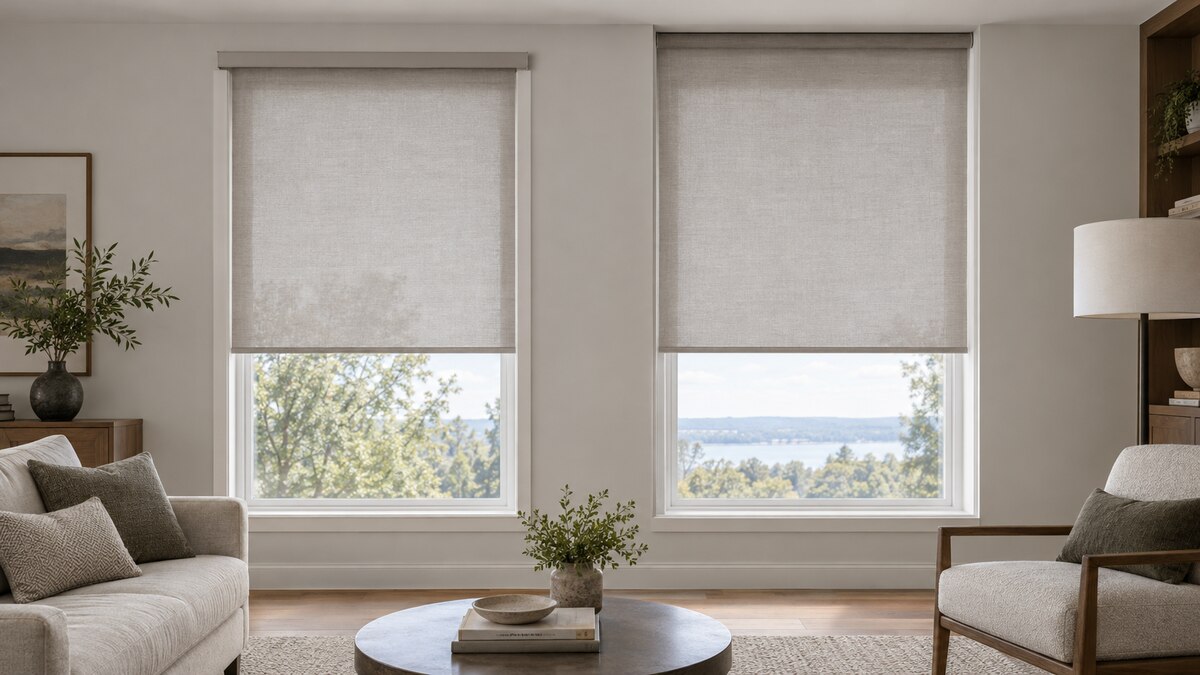
Wall mounting usually makes it easier to treat each window as its own composition. The shade can relate visually to the frame below it, leaving a band of wall between the shade and the ceiling. This can feel balanced in a room where the windows are separate architectural features.
Ceiling mounting brings the top of the shade into a closer relationship with the ceiling. It can suit a room where you want a taller visual treatment or a shared line above several openings. It is not automatically the cleaner choice, however, especially when the ceiling changes height or the window wall has soffits.
For a new home, plan custom shades during new construction rather than leaving the mounting relationship until every surrounding detail is fixed. Early decisions give the window treatment a place in the room's overall composition.
Keep projection separate from mounting height
Mounting height describes how high the shade begins. Projection describes how far it extends toward the room. Raising a shade to the ceiling changes the first relationship, but it does not necessarily improve the second.
This is especially important above a desk, a deep windowsill, or a sofa placed close to the window. The shade should look appropriate when raised and remain practical when lowered. Think about the space occupied by the full treatment, not just the appearance of the fabric in its lowered position.
Wall mounting may provide the arrangement you want without drawing attention to a tall ceiling. Ceiling mounting may establish a useful visual line without moving furniture farther into the room. Neither outcome should be assumed from the mounting name alone.
Make the surface decision alongside your shade choices, not after them. Explore fabric options to compare the visual direction, then see live pricing in the builder as you configure the actual treatment.
Give doors and furniture their own vote
Nearby doors can make an otherwise attractive mounting position inconvenient. Consider a balcony door beside a fixed window, or a cabinet door that opens toward the shade. The preferred treatment should work with those everyday movements rather than requiring a new routine.
A ceiling-mounted top line across a window and door can look cohesive, but shared height does not mean the openings need identical operation. Likewise, separate wall-mounted shades can look deliberate if their relationship follows the architecture instead of arbitrary height differences.
Furniture deserves the same attention. A reading chair may be easy to move today, while a built-in desk or deep cabinet is a lasting part of the room. Choose a shade position that fits the more permanent elements first.
For apartment layouts, motorized shades for high-rise condos offers another planning perspective. Mounting surface and control choice are related decisions, but one should not be used as a shortcut for resolving the other.
Align groups by a clear visual rule
Several shades in one room can look disjointed when every opening is treated independently. Before choosing the mounting surface, decide what should align: the shade tops, the architectural openings, or the relationship between each shade and its own frame.
Matching windows often favor a repeated arrangement. Mixed-height windows require a more deliberate choice: a common top line may look orderly, while following each opening may better respect the architecture. Neither rule is universally right.
Ceiling mounting can support a shared top reference when the ceiling itself is consistent. Wall mounting can also support a common top line when there is a suitable area above the openings. A change in ceiling level or an interruption in the wall may make separate groups more convincing than one forced line.
World Wide Shades can help you discuss the group as a whole rather than as unrelated orders. Plan whole-home motorized shades if the same alignment decisions extend into neighboring rooms, and explore motorized shade options alongside your mounting preferences.
Balance the mounting choice with the rest of the order
Fabric appearance remains important after you settle the geometry. A subtle color can help a visible shade blend with the room, while a contrasting fabric makes its location more noticeable. The mounting decision and fabric decision should support the same visual goal.
World Wide Shades offers 500+ colors across 40+ fabric families. Browse the fabric collection with the room's wall, trim, and ceiling colors in mind rather than selecting a mounting surface to compensate for an unrelated fabric choice.
If existing shades already occupy the space, compare repairing and replacing roller shades before repeating the old arrangement. A replacement is an opportunity to reconsider a troublesome top line or clearance issue, not an obligation to copy it.
Also allow room in your schedule for a custom order. World Wide Shades standard production is 2–4 weeks; limited-stock fabrics and special shapes take 3–4 weeks. Review holiday ordering and lead-time planning when the room needs to be ready for a particular occasion.
Frequently asked questions
No. A shallow frame points toward an outside mount, but an outside shade can still be considered in relation to either the wall or ceiling. Choose between those surfaces based on the available location, desired top line, and clearance relationships.
Not automatically. The selected configuration must place the fabric appropriately relative to the trim, so the wall surface alone is not enough information to settle the question.
They can be planned around a shared visual reference when the room and available mounting surfaces support it. Compare that approach with following the individual openings before deciding which arrangement looks more intentional.
The intended coverage needs to correspond to the actual mounting location. Use the World Wide Shades measuring guidance for your chosen arrangement rather than transferring dimensions from a different mounting plan.
Consider both together rather than locking either decision too early. In particular, remember the recommended 2.5-inch frame depth for motorized inside mounts, and evaluate your preferred controls as part of the complete shade configuration.
Ready to Order? Plan Your Mount and Shade
Move from the room's constraints to the finished look in four decisions. The goal is a coherent order, not a mounting choice based only on a product photo.
- Measure the opening: Take three readings across width and use the smallest, then measure height at left, center, and right and use the tallest. Submit the exact opening rather than subtracting for deductions, which the factory calculates. Inside mounts need at least 1.5 inches of depth, with 2.5 inches recommended for motorized shades; use an outside mount for a shallower frame. For an outside mount, extend the measured size 2–3 inches to each side and 3 inches above the frame.
- Choose the fabric: Compare light, privacy, and view goals, then explore the fabric collection for a suitable family and color.
- Choose the control: Decide whether manual or rechargeable motorization suits the window, and include the required remote for a motorized order.
- Review the configuration: Enter the measurements, mounting choice, fabric, and control in the builder, then see live pricing in the builder.
- Confirm and order: Check the details and timing, then contact World Wide Shades or call (844) 674-2716 with any question before submitting the order.
Bring the whole room into the conversation when a single window cannot tell the full story. Call (844) 674-2716 to discuss your mounting direction with World Wide Shades.