The choice between battery-powered and hardwired motorized shades is the single biggest decision when you commit to automation. Get it right and you'll forget the shades exist for years. Get it wrong and you'll be changing batteries every six months or paying an electrician to fix a buried mistake.
Across the World Wide Shades customer base, neither option dominates. Both are valid — the right answer depends on your home, your budget, and how often you want to think about your window treatments.
This guide walks through the real-world tradeoffs.
The short answer
- Retrofitting an existing home with no in-wall wiring near windows: battery is almost always the right call.
- New construction or a major renovation where walls are already open: hardwire it. You won't regret it.
- Rentals, condos with strict HOAs, or any short-term living: battery.
- A house you plan to live in for 10+ years with high-window-count motorization: consider hardwiring at least the most-used windows.
The rest of this article explains why.
How battery-powered motorized shades work
Battery shades use a lithium-ion rechargeable battery pack housed inside the roller tube or in a slim battery wand mounted near the headrail. A small DC motor drives the tube. The motor connects wirelessly to your smart-home hub via Bluetooth, Zigbee, Z-Wave, or Matter-over-Thread.
Battery life expectations from World Wide Shades motors:
- Single-shade per day operation: 12–18 months between charges.
- Two cycles per day with automation: 8–12 months.
- Five+ cycles per day (heavy automation): 4–8 months.
- Solar panel accessory: indefinite battery life in most window orientations.
Charging is done with a USB-C cable plugged into the battery wand. Total downtime per recharge is around 4 hours per shade.
How hardwired motorized shades work
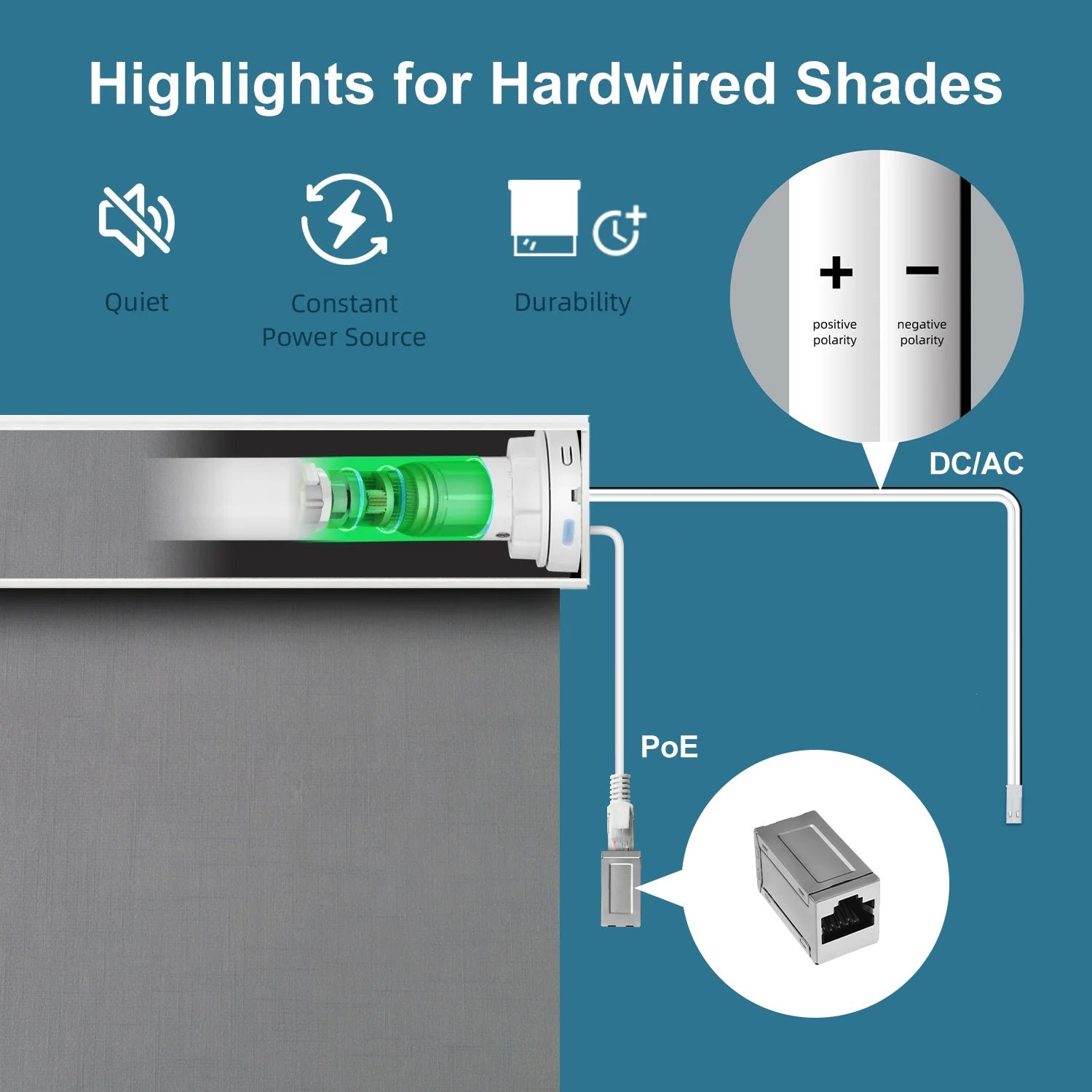
Hardwired shades pull 24V DC power from a transformer wired into your home's electrical system. The motor inside the roller tube draws power on demand. No battery, no recharging, no degradation over time.
Hardwired systems come in two main configurations:
- Single-window wiring: each shade has its own dedicated low-voltage wire run to a transformer.
- Multi-shade bus wiring: a single wire bus feeds multiple motors with shared power and control.
The bus configuration is faster and cheaper to install when you have 4+ motorized windows in a single room.
The cost comparison
Per-window installed pricing from World Wide Shades:
| Setup | Cost per shade | Install complexity |
|---|---|---|
| Battery motorized (retrofit) | $350–$650 | Self-install or pro in 1 hour |
| Battery motorized + solar accessory | $450–$750 | Self-install in 90 minutes |
| Hardwired (new construction) | $400–$700 | Electrician runs wiring during framing |
| Hardwired (retrofit through existing wall) | $700–$1,400 | Electrician drills, fishes wire, patches drywall |
The big-ticket item with hardwired retrofits is electrical labor — not the motor itself. Running wire through finished walls is slow and damages drywall. New construction is the opposite: wires get pulled in 30 minutes during framing, and the cost difference disappears.
For project-specific quotes, call World Wide Shades at (844) 674-2716 or visit /contact.
Where battery wins
Pulling 24V wiring through finished walls is invasive. You're paying an electrician to drill, fish, and patch. For a typical 10-window retrofit, the cost difference between battery and hardwired can exceed $5,000 in labor alone.
Battery motorization avoids all of this. Mount the brackets, drop in the shade, charge once. Done in an afternoon.
Battery shades install with two mounting brackets and no wiring. They can be removed at move-out with no wall damage. World Wide Shades offers tension-rod mounting for true no-damage installs in rentals.
For condo and HOA-specific considerations, see our condo HOA window shade approval guide and roller shades for rental apartments.
If you're motorizing just one or two windows — say, a tall bedroom window or a single skylight — the cost-per-window math heavily favors battery. The fixed cost of running a single dedicated wire to one window is hard to justify.
Add the World Wide Shades solar panel accessory and a south- or east-facing window's battery will recharge passively year-round. Effectively infinite battery life with no wall surgery.
Battery shades can come with you when you move. Hardwired shades stay with the house. For homeowners who move every 5–10 years, battery shades are the more flexible investment.
Where hardwired wins
If walls are already open, pulling low-voltage wire takes 15 minutes per window. The marginal cost of hardwiring during construction is minimal — typically $50–$150 per window in additional labor. Compared to battery operation forever, that's a steal.
If you're building or gutting a home and you know you'll motorize, hardwire every window where motors might go — even windows you don't plan to motorize immediately. Wire is cheap; future drywall surgery is expensive.
Twenty windows of motorized shades on battery means twenty battery packs that drift out of sync, twenty charging cycles per year, twenty things to remember. Whole-home hardwired projects "set and forget" much more cleanly.
World Wide Shades consistently recommends hardwiring for projects of 12+ windows where the homeowner intends to age in place.
Windows that run 4+ automation cycles per day — west-facing afternoon-close shades, vacation random-mode shades, frequent media-room blackouts — drain batteries faster. Hardwiring eliminates this concern entirely.
Battery wands and pop-out battery compartments are slim, but they're not invisible. Hardwired motors fit inside the roller tube with no external hardware. For minimalist interiors where every visible element is intentional, hardwired wins on appearance.
A battery pack typically lasts 5–7 years before capacity meaningfully degrades. Replacement packs run $50–$120 per shade. Over 20 years, a battery shade may need 3 pack replacements — $150–$360 in replacement parts per window. Hardwired motors typically run 20+ years with no battery replacement.
Hybrid setups: when to mix both
Many World Wide Shades customers run a hybrid setup: hardwired motors on heavy-use windows (living room, primary bedroom, west-facing windows) and battery motors on accent windows (bathrooms, guest rooms, low-use spaces).
This blends the best of both worlds:
- Lowest-cost retrofit for the windows that matter least
- Maintenance-free operation where it matters most
- Easier resale story (battery shades can be replaced/upgraded; hardwired stays)
For hybrid system planning, call (844) 674-2716 to talk through your home with our consultants.
Common mistakes to avoid
A 20-foot tall window with a battery motor needs a ladder every time the battery dies. Hardwire it. Don't make a recharging chore for yourself.
Transformers need to live somewhere accessible — usually a utility closet, basement, or mechanical room. Plan this before walls close up. World Wide Shades can spec the right transformer size for your project.
Both battery and hardwired shades can be smart-home compatible, but the radio (Bluetooth, Zigbee, Z-Wave, Matter, Thread) matters. Match the shade radio to your smart-home hub. See our Alexa and Google Home motorized shade guide for compatibility specifics.
Battery motors are quieter than hardwired motors on average — the lower-power draw means smaller motors and softer operation. For bedrooms and nurseries, this is a real advantage. World Wide Shades ultra-quiet battery motors operate under 32 dB at the hembar.
For south- or east-facing windows, adding a solar panel accessory to a battery shade is one of the highest-ROI upgrades. Roughly $50–$80 extra at order time, infinite battery life thereafter.
Battery vs hardwired decision flowchart
Answer these four questions:
-
Is your home under construction or undergoing a major renovation?
- Yes → hardwire
- No → continue
-
Are you motorizing 12+ windows you plan to keep for 10+ years?
- Yes → strongly consider hardwiring at least the heavy-use windows
- No → continue
-
Is the window south- or east-facing with good sun exposure?
- Yes → battery + solar accessory is the best value
- No → continue
-
Do you want a fully wireless, removable, no-electrician install?
- Yes → battery (most common answer for retrofits)
- No → consider hardwiring if you want fully "set-and-forget" reliability
FAQs: battery vs hardwired motorized shades
Typically 12–18 months for single-use-per-day windows, 8–12 months with moderate automation, and 4–8 months with heavy automation. World Wide Shades batteries can be recharged in 4 hours via USB-C.
Yes for new construction or major renovations (marginal cost is minimal). No for retrofits in finished homes unless you're motorizing 12+ windows you'll live with long-term.
Yes. Battery shades require no wiring and can be installed and removed with no permanent wall damage. World Wide Shades offers tension-rod options for fully damage-free rental installs.
On south- or east-facing windows with reasonable sun exposure, yes. Indirect light reduces effectiveness — north-facing windows generally won't keep batteries fully topped up year-round.
Battery shades are slightly quieter on average due to smaller motors. Both options from World Wide Shades operate under 35 dB at the hembar — quiet enough for bedrooms and nurseries.
Yes, but it requires running wire through walls to each shade — typically more expensive than the original install. Plan ahead during construction if you think you might want hardwired in the future.
Hardwired. Batteries degrade over 5–7 years and need replacement packs. Hardwired motors typically run 20+ years with no maintenance.
Ready to choose between battery and hardwired?
World Wide Shades offers both battery-powered and hardwired motorized roller shades, fully compatible with Apple HomeKit, Google Home, Alexa, and SmartThings. To plan your system:
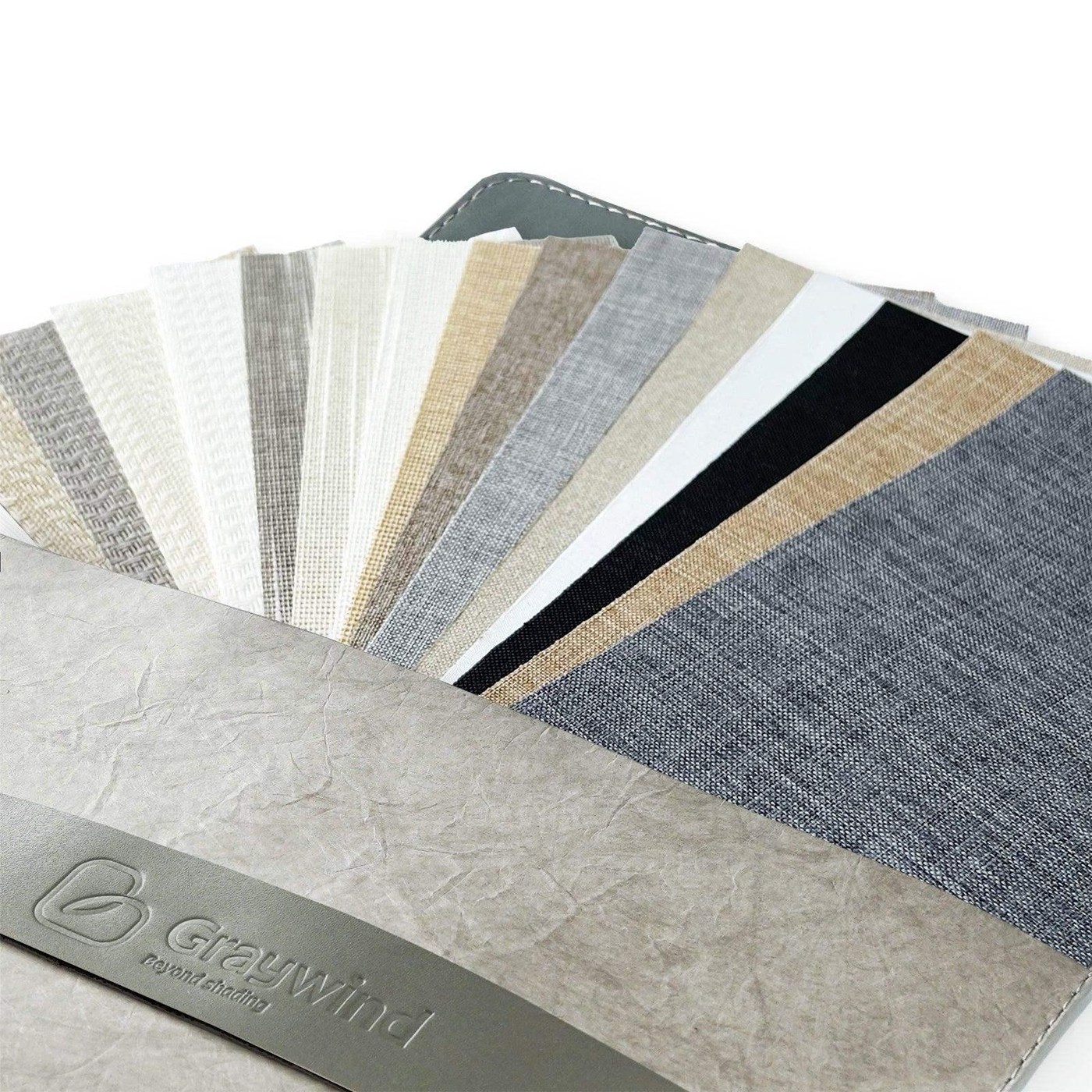
- Browse fabric options in our swatches gallery.
- Design shades in the online builder.
- For battery-vs-hardwired planning or whole-home automation projects, call (844) 674-2716 or reach us at /contact.
World Wide Shades helps you pick the right motorization approach so your shades work the way you want — for years.