Decide whether a vertical or horizontal movement fits the doorway
Replacing vertical blinds with roller shades is a design and use decision, not a one-for-one hardware swap. Vertical blinds move side to side and can stack away from a sliding door. A roller shade moves up and down, so it clears the opening when raised but covers the doorway while lowered. The right choice depends on how often the door is used, how much glass should be covered, the desired appearance and whether the homeowner prefers a fabric panel or a track of vertical vanes.
World Wide Shades' custom roller shades suit buyers who want a clean, continuous fabric surface across a window or door. A roller shade can coordinate with nearby windows and offer a measured fit; it does not move sideways with the door. The roller-shade builder lets the buyer choose a fabric, size and control, then see live pricing.
For a sliding door that is opened frequently, think through the routine: will the shade stay raised for long periods, or does the household want light control while still passing through? The Norman sliding-door roller shade guide describes the general distinction that roller shades move vertically and can be rolled up to provide access. Other retailers also discuss the side-to-side convenience of vertical options; compare the control pattern rather than assuming one style is always superior.
Compare the look and light-control behavior
Vertical blinds give the owner adjustable vanes and a side-to-side stack. A roller shade presents one fabric plane. For a minimalist living room or a coordinated row of windows, that simpler plane can be the preferred look. For a door that needs to be opened while the window covering remains partly in place, the side-to-side stack may be more convenient.
Fabric choice changes the visual and functional result. Blackout is suited to spaces where limiting light is the priority. Light-filtering fabric softens daylight. Solar-screen-style fabric can preserve an outward view, with the actual effect shaped by openness, fabric color, time of day and interior lighting. World Wide Shades lists mill-published openness factors and genuine swatch photos for its 500+ colors across 40+ families from Phifer, Mermet, Ferrari, Copaco, Senbesta and Texstyle. Compare the available fabrics before deciding that the new shade should match a nearby window exactly.
If the vertical blinds currently cover a patio door and adjacent fixed glass, consider whether one shade should span the full combined opening or whether separate treatments would better support door access. Measure the actual opening and inspect handles, locks, trim and clearances. A fabric that coordinates across the room does not require the same size or mount on every window.
Pick the opacity for the room
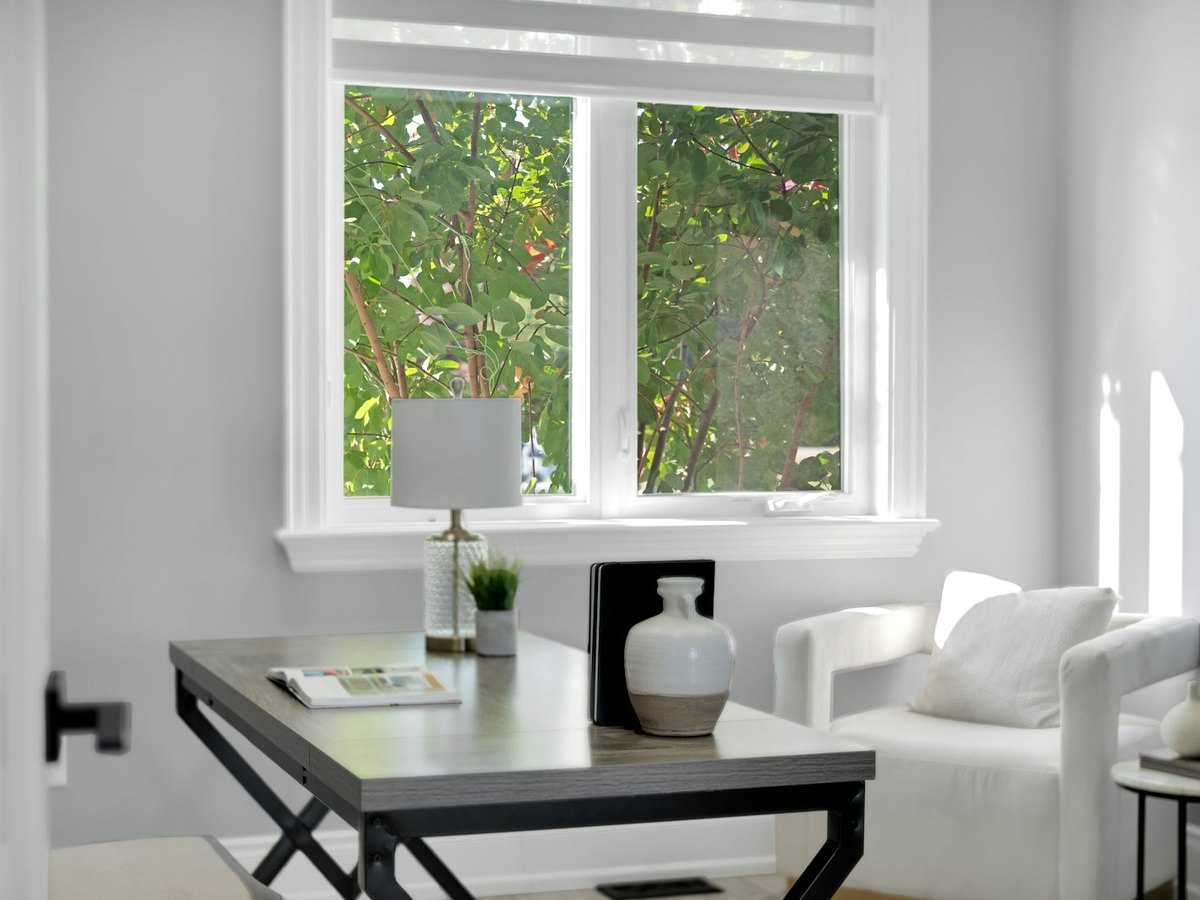
Start with the room's use. In a bedroom, compare blackout and light filtering with the blackout collection and bedroom shades. In a living room, prioritize the balance between daylight, glare and view with light-filtering shades and living-room options. A home office may call for a different screen than a television room; use the home-office page to align the choice with the workstation.
Openness factor describes the physical openings in a woven fabric, as explained in Mermet's glossary. A specific percentage does not guarantee nighttime privacy or exact room darkening. Compare the mill's published value for the actual fabric and think about how the room is lit after sunset.
The shift from vertical blinds to roller shades also changes what the fabric does when lowered. The roller shade covers the glass as a single plane rather than turning vanes to adjust sightlines. That makes the opacity choice more important: choose a fabric that works when fully down, then choose the control that makes raising and lowering practical.
Choose manual or motorized operation
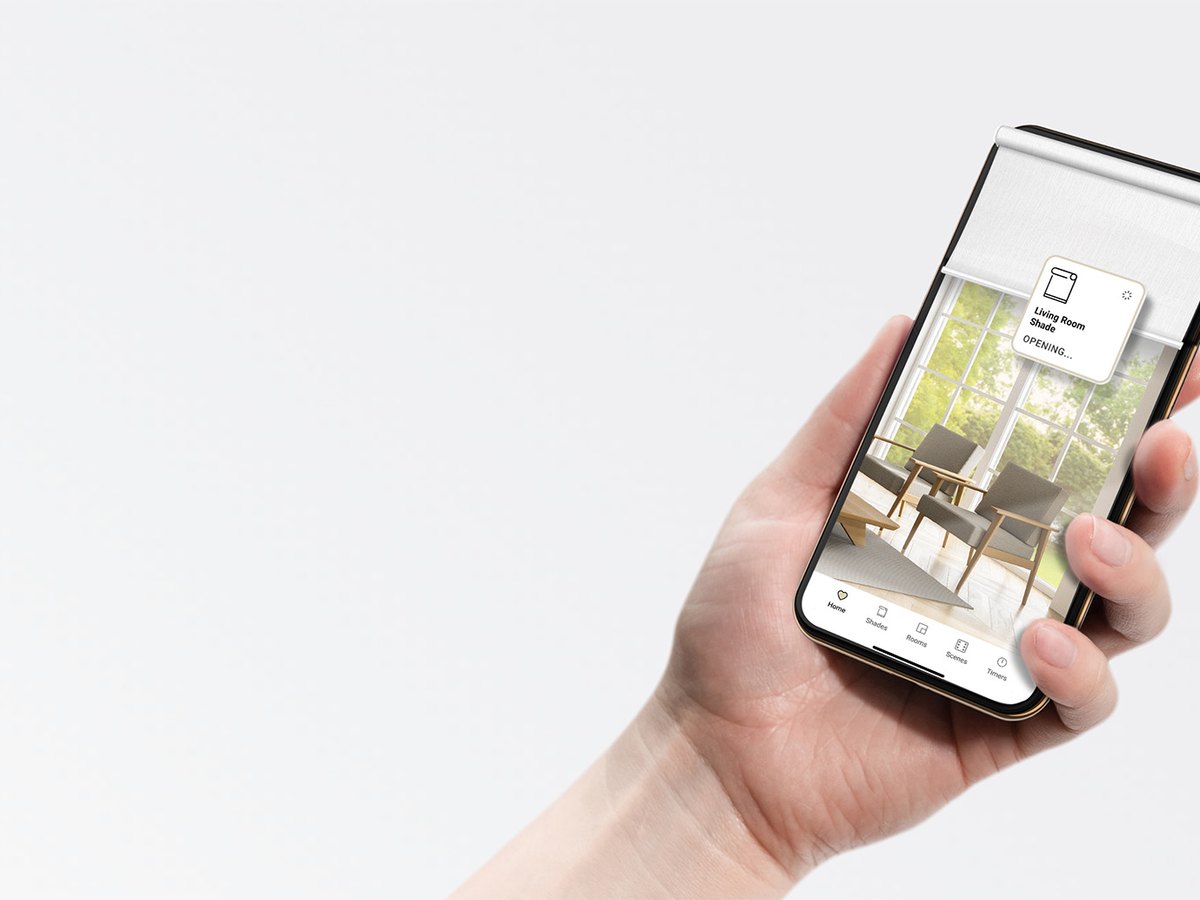
If the door and shade are easy to reach and the shade is adjusted only occasionally, compare manual operation with motorization. For a tall glass opening or a shade that is raised daily, rechargeable motorization may make operation simpler. World Wide Shades offers battery motors that require no wiring. Automate is the default; a customer with a Somfy remote can choose a Somfy motor paired to it.
A remote is required for motorized shades. The Push 5 remote runs up to five shades. The Automate Pulse 2 hub adds app, voice and schedule features for Automate motors only. Think about whether the buyer needs to raise the shade to pass through the doorway, set a schedule or control it from a mobile device. See the motorized shade options and the guide to Automate motors, remote and hub choices.
No charger is included with the motorized shade. Any USB-C charger works, or the buyer can add the Motor Charger. Include charging access in the product decision, especially for a tall or wide door shade. For additional context, read rechargeable motorized shades without new wiring.
Measure the door and choose the mount
For an inside mount, measure width at the top, middle and bottom and use the narrowest measurement. Measure height at the left, center and right and use the tallest. Enter the exact opening size; the World Wide Shades factory makes the deductions. Do not subtract from the width yourself.
Inside mount requires at least 1.5 inches of frame depth. For a motorized shade, 2.5 inches is recommended. If the sliding-door frame is shallower, use outside mount. Before selecting an outside mount, check the full projection around the door, including the handle, trim, drapery and any nearby light fixture.
For outside mount, add 2–3 inches to each side and 3 inches above the frame. This overlap helps the shade cover beyond the opening, but it does not change the door's operation: the roller must be raised when the doorway needs to be clear. Review the measuring guide and enter the finished dimensions in the builder.
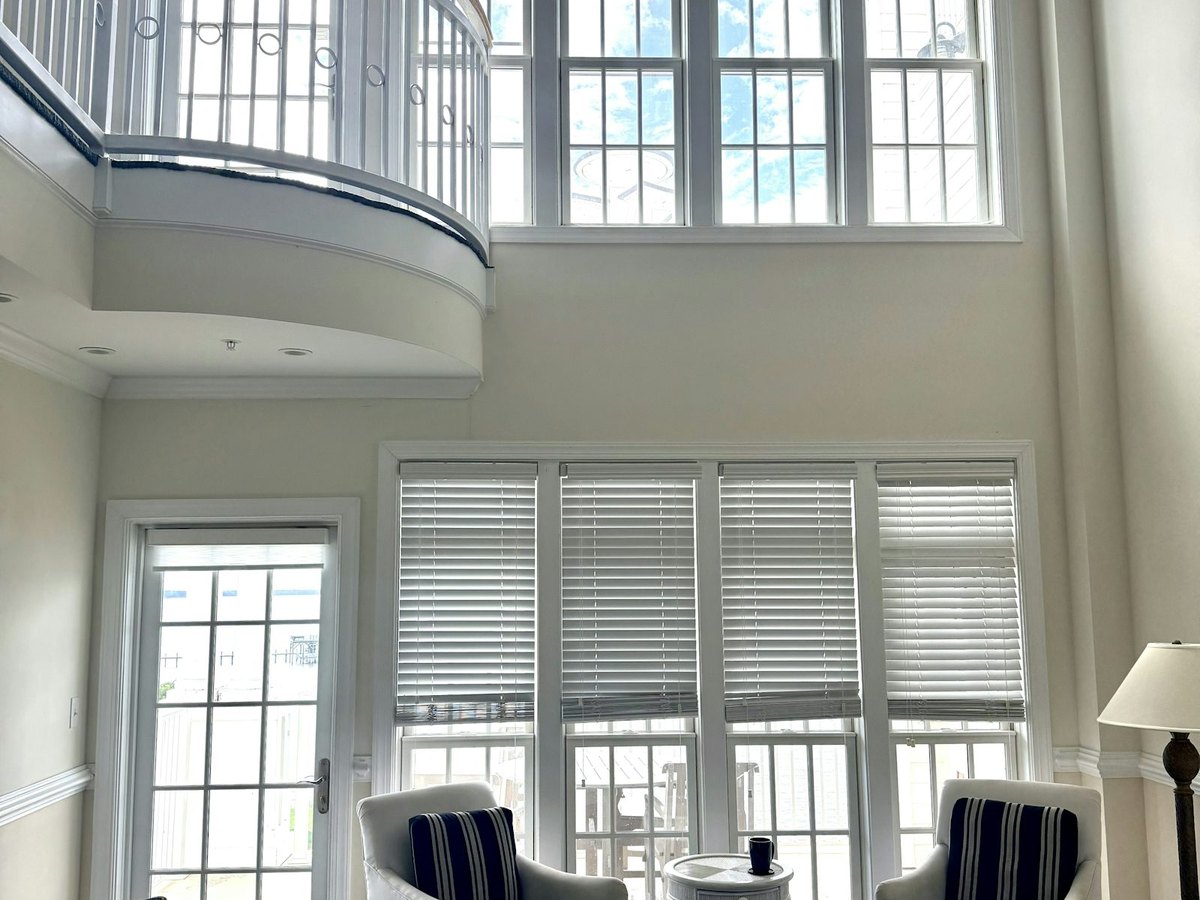
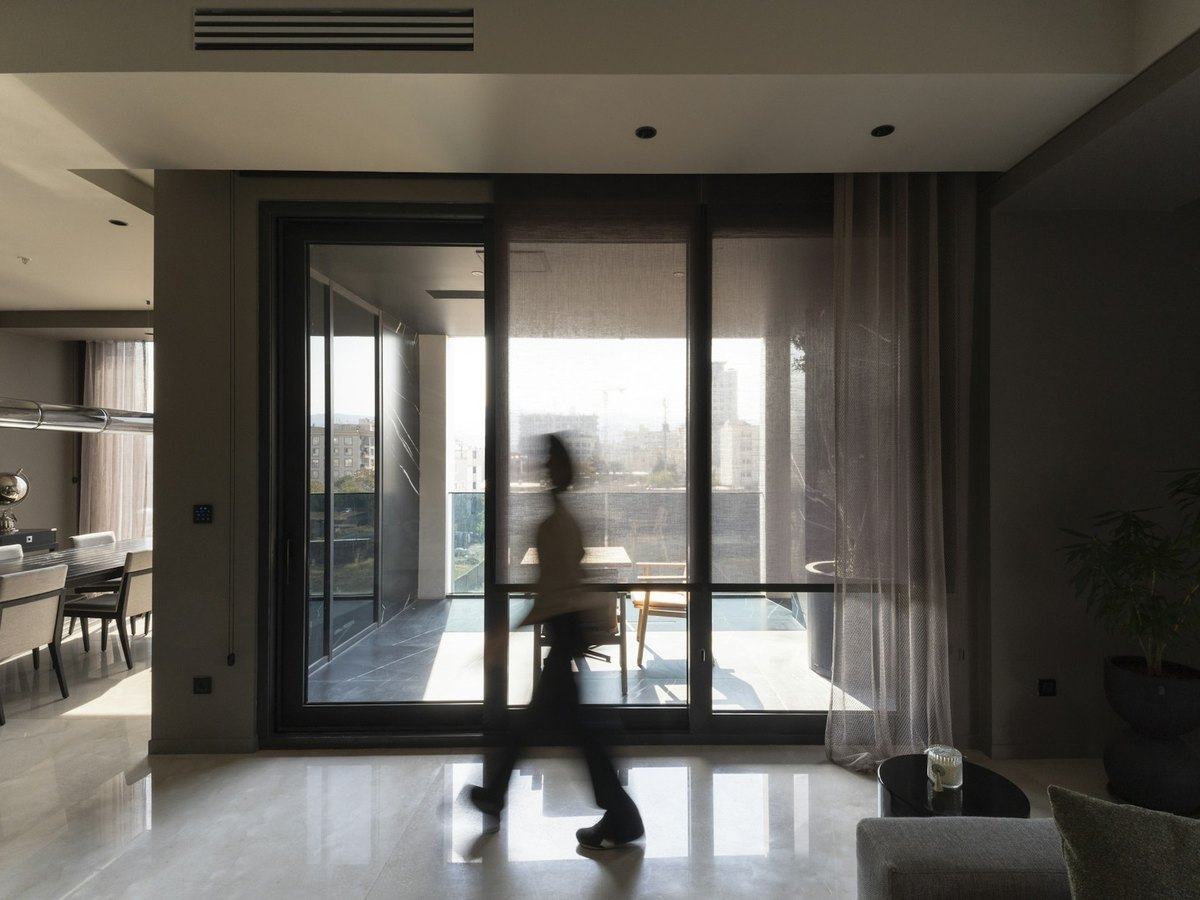
If the door is part of a wall of glass, compare the proposed roller shade with the adjacent windows from the room and exterior sides. A continuous treatment can make the elevation feel unified; a separate shade for the door may preserve access while fixed window shades stay lowered. World Wide Shades' article on roller shades for floor-to-ceiling windows covers related questions about large expanses of glass.
Compare value, production and fit terms
The value of a custom roller shade is not only the fabric. It is the match between the actual opening and the chosen mill material, opacity, control and mounting plan. Compare that specification with the existing vertical blind system and with other custom options by looking at fit, fabric source, lead time, control choices and the ordering process. World Wide Shades shows live pricing in the builder for the selected configuration rather than quoting a universal price here.
Each World Wide Shades shade is 100% custom-made by hand in the USA. Delivery takes 2–4 weeks from order; limited-stock fabrics and specialty shapes take 3–4 weeks. US shipping is free. Plan the order around the remodeling timeline and final measurements; do not assume custom production will be faster than the stated window.
Custom orders are not returnable. If a manufacturing defect occurs, the shade is remade free within 30 days; motors have one-year coverage. If the shade was mismeasured, the customer receives a one-time free recut and pays shipping. Those terms make careful measurement and review of the mount especially important. Contact World Wide Shades with a question or call (844) 674-2716 before you submit an order.
For other comparisons, see how custom online roller shades compare with The Shade Store, how to compare with Hunter Douglas, motorized shades for high-rise homes, motorized shades that pair with a Somfy remote, and motorized shades at floor-to-ceiling windows. This batch also includes designer shade specifications, motorized choices for Westchester and Fairfield County, Automate control choices, and a room-by-room new-home upgrade plan.
Frequently asked questions
They can cover the same opening, but they operate differently. Vertical blinds move side to side; roller shades move vertically and must be raised to clear the doorway. Choose based on how the door is used and how the treatment should look when open.
Choose blackout when limiting light is the main goal, light filtering for diffused daylight, or a solar-screen-style fabric when preserving a view is important. Check the exact mill-published openness factor and consider privacy after dark.
World Wide Shades offers rechargeable battery motorized shades with no wiring. Motorization can make raising a large or frequently used shade easier, but the shade still needs to be raised to clear the doorway.
World Wide Shades recommends adding 2–3 inches on each side and 3 inches above the frame. Check the handle and trim clearances before entering the final size.
At least 1.5 inches is required for inside mount, and 2.5 inches is recommended for motorized shades. Use an outside mount if the frame is shallower.
World Wide Shades' standard delivery window is 2–4 weeks from order. Limited-stock fabrics and specialty shapes take 3–4 weeks; US shipping is free.
Ready to order?
- Measure the door opening with the measuring guide and decide whether the frame supports an inside mount.
- Choose blackout, light-filtering or a solar-screen fabric in the catalog.
- Select manual or motorized operation and enter the exact size in the World Wide Shades builder.
- Review live pricing, confirm that the shade can be raised when the door is in use, then place the custom order.
For help choosing a control, contact World Wide Shades or call (844) 674-2716. Compare the motorized shade collection before finalizing the shade configuration.