The right roller shade for a deep-set window in a Main Line library may be wrong for the glass doors in its new family room. In the library, the priority may be leaving the original casing exposed. At the doors, it may be clearing the handles and taking the glare off a seating area without losing the garden view. The goal is to make those decisions individually without making the rooms look as though they were designed in isolation.
For custom roller shades in a Philadelphia Main Line estate, start with the architecture, then specify the fabric and control for each space. World Wide Shades lets you start a representative window in the shade builder so you can compare a typical configuration before building out the rest of the house.
Get the mount right before choosing fabric
Walk the rooms with a floor plan and give every opening an ID. Mark where you have deep jambs, projecting trim, folded-back shutters, window cranks or door handles. Photograph the top of each opening as well as the whole wall. A photograph that shows the shade location relative to the casing, drapery rod or ceiling beam can resolve a question that dimensions alone won't answer.
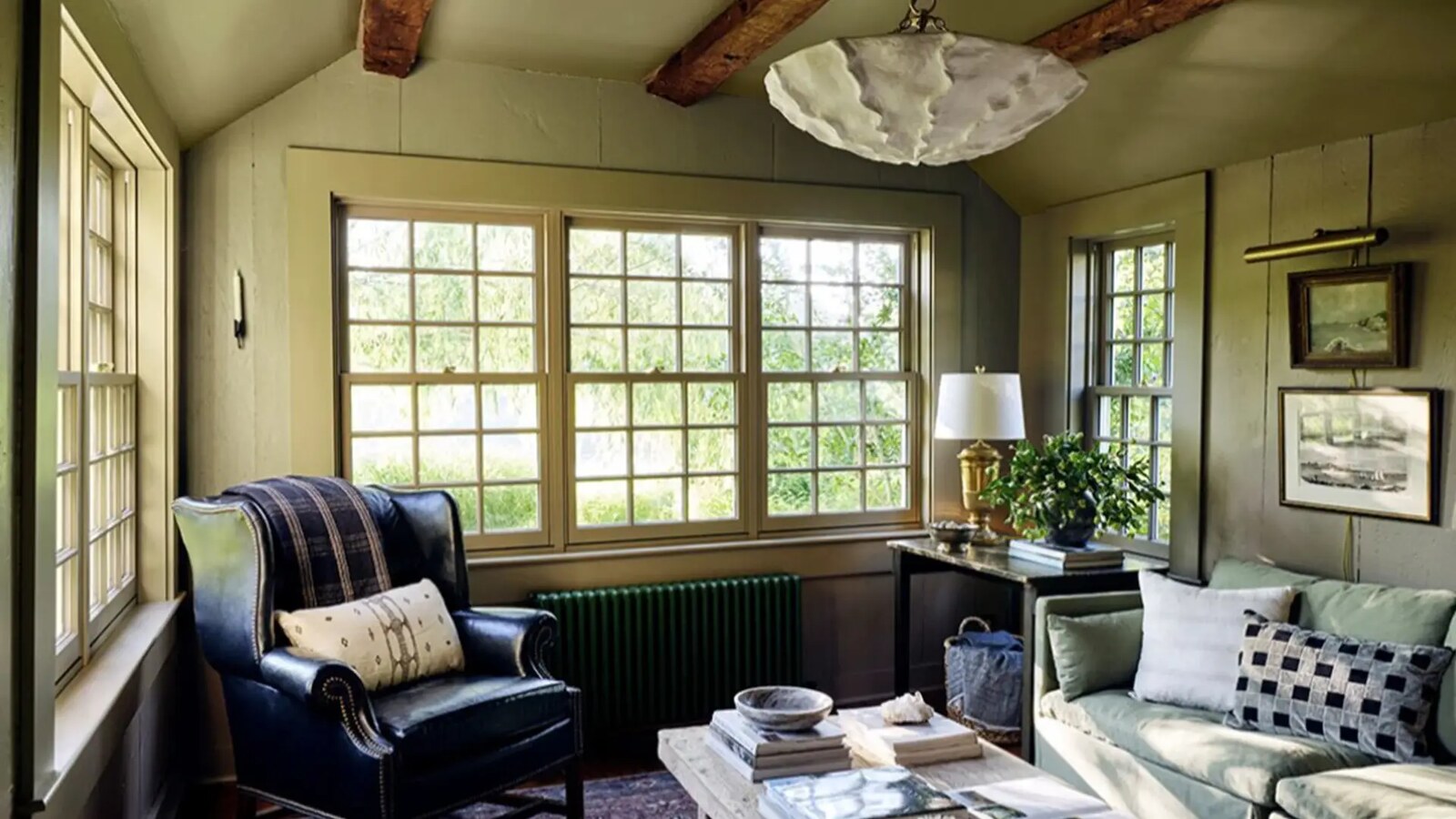
An inside mount is a good starting point when the casing should remain visible and the recess has enough usable depth. World Wide Shades requires at least 1.5 inches of frame depth and recommends 2.5 inches for motorized inside mounts. Check for obstructions where the brackets sit and along the path of the fabric. A deep sill alone does not tell you whether there is room at the head of the window.
Measure the width at the top, middle and bottom and use the narrowest width. Measure the height at the left, center and right and use the tallest height. Enter the exact opening dimensions. Do not subtract anything for clearance; World Wide Shades makes the deductions. Measure each opening, even when several windows look identical, and use the measuring guide before you log final dimensions.
Choose outside mount when the frame is too shallow or consider it when more overlap matters. World Wide Shades calls for adding 2–3 inches on each side and 3 inches above the frame. Check that there is room for that coverage and a suitable surface to mount to, without running into crown molding, a sconce backplate or the trim of the next window.
For a row of adjoining windows, decide whether matching the shade tops matters more than centering each shade over its own opening. Sketch the closed shades and look at the seam locations from the room's main entrance. Before ordering around uneven trim or a tricky corner, call World Wide Shades at (844) 674-2716 or send the opening details.
Decide what you want to see at the top of each window
An exposed roll can work in a contemporary addition or sit quietly behind existing drapery. A fascia, which is a cover at the front of the roller assembly, can create a cleaner horizontal line over adjacent openings. A valance is a more decorative treatment that may make sense where drapery or millwork already establishes a strong header. Compare these approaches from the main view into the room, not just in a close-up of the window.
Put the desired top treatment on the elevation alongside curtain rods, panel stacks and neighboring trim. Before finalizing a fascia or valance, confirm what works with the selected shade, mount and controls. Make sure the treatment won't block a handle, obstruct the moving fabric or make a rechargeable motor hard to access. Where an addition meets an older wing, carrying one fabric tone through both areas may matter more than repeating the exact same header detail.
Choose fabrics by what each room needs
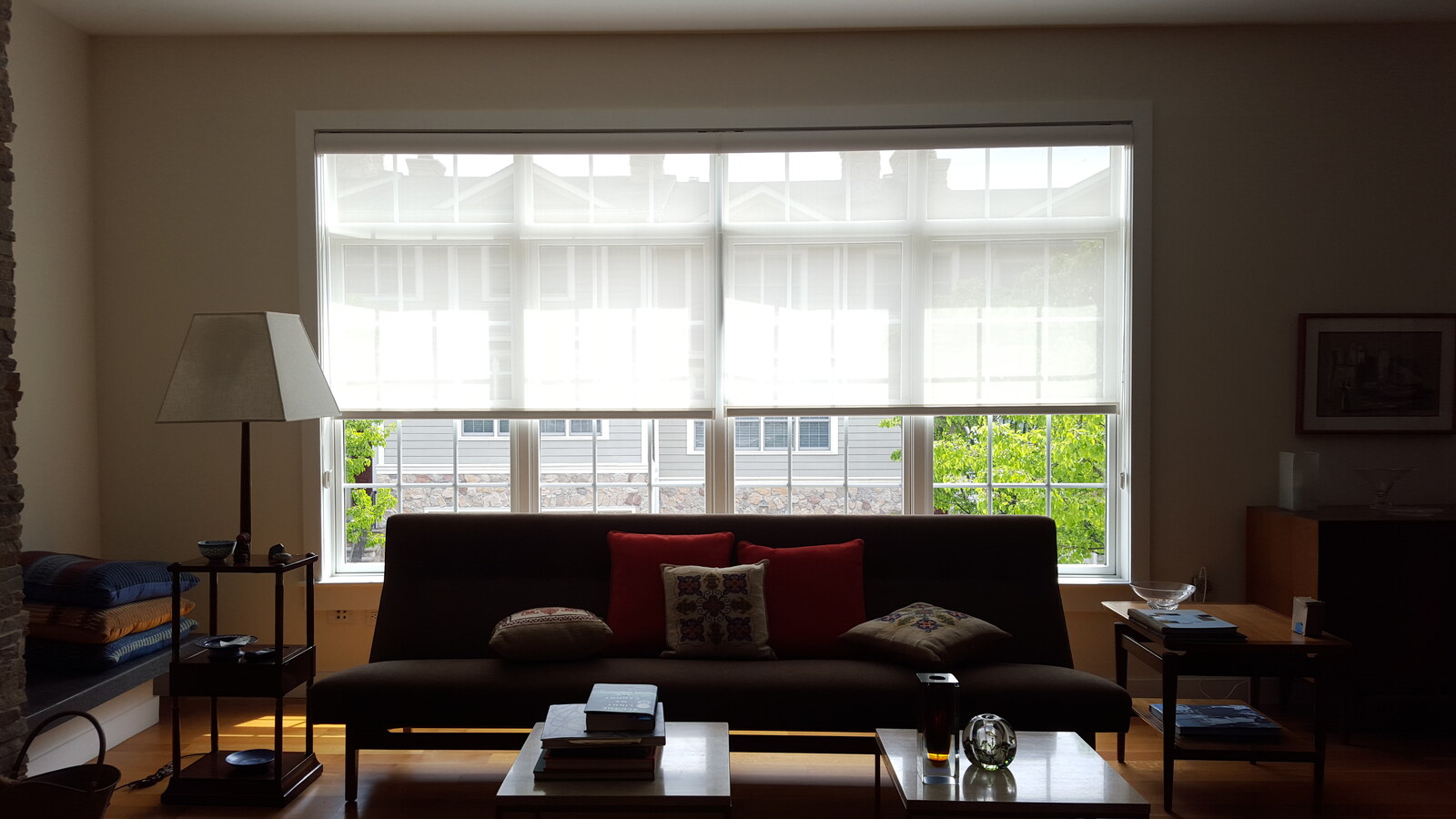
Screen fabrics can make sense where the view matters and glare needs to be managed. The mill's published openness factor describes how open the weave is. A lower factor generally limits the view and direct light through the weave more than a higher one, but the fabric color and the balance of light inside and out also affect what you can see. Do not rely on a view-preserving screen alone for nighttime privacy in an illuminated room.
Light-filtering fabrics are useful where you want softer daylight without a clear view through the shade. Blackout is the better starting point for a bedroom or media room where darkness matters, but the designation applies to the fabric itself. Light may still enter around the edges, so evaluate the mount and overlap separately from the cloth.
World Wide Shades lists 500+ fabric colors across 40+ families from Phifer, Mermet, Ferrari, Copaco, Senbesta and Texstyle, with the mills' published openness factors and genuine swatch photos. Compare fabrics in the catalogue against the room's millwork, wall finish and textiles. Carry the same color family through adjacent rooms where it works, then vary opacity according to use. For street-facing rooms, also consider how different shades will look together from outside when lowered.
Specify room by room, then review the shared sightlines
Start with the windows visible from the entrance or across adjoining rooms. Where deep jambs allow it, inside-mounted shades can keep casing visible, with drapery adding softness or color. Choose the fabric for the time of day the rooms are actually used. An afternoon reading chair and a dining table used primarily after dark may need different levels of glare control and privacy even when they share a view. Explore living room shade options before choosing a fabric for both rooms.
In a family room with a long window wall, consider separate control for the pane where sun hits the television. In an office, check glare at the actual desk before selecting an openness factor. For primary and guest bedrooms, decide whether you want softer morning light or as much darkness as the opening can manage. If guests will use motorized shades, plan for obvious local controls so they don't need access to the household app.
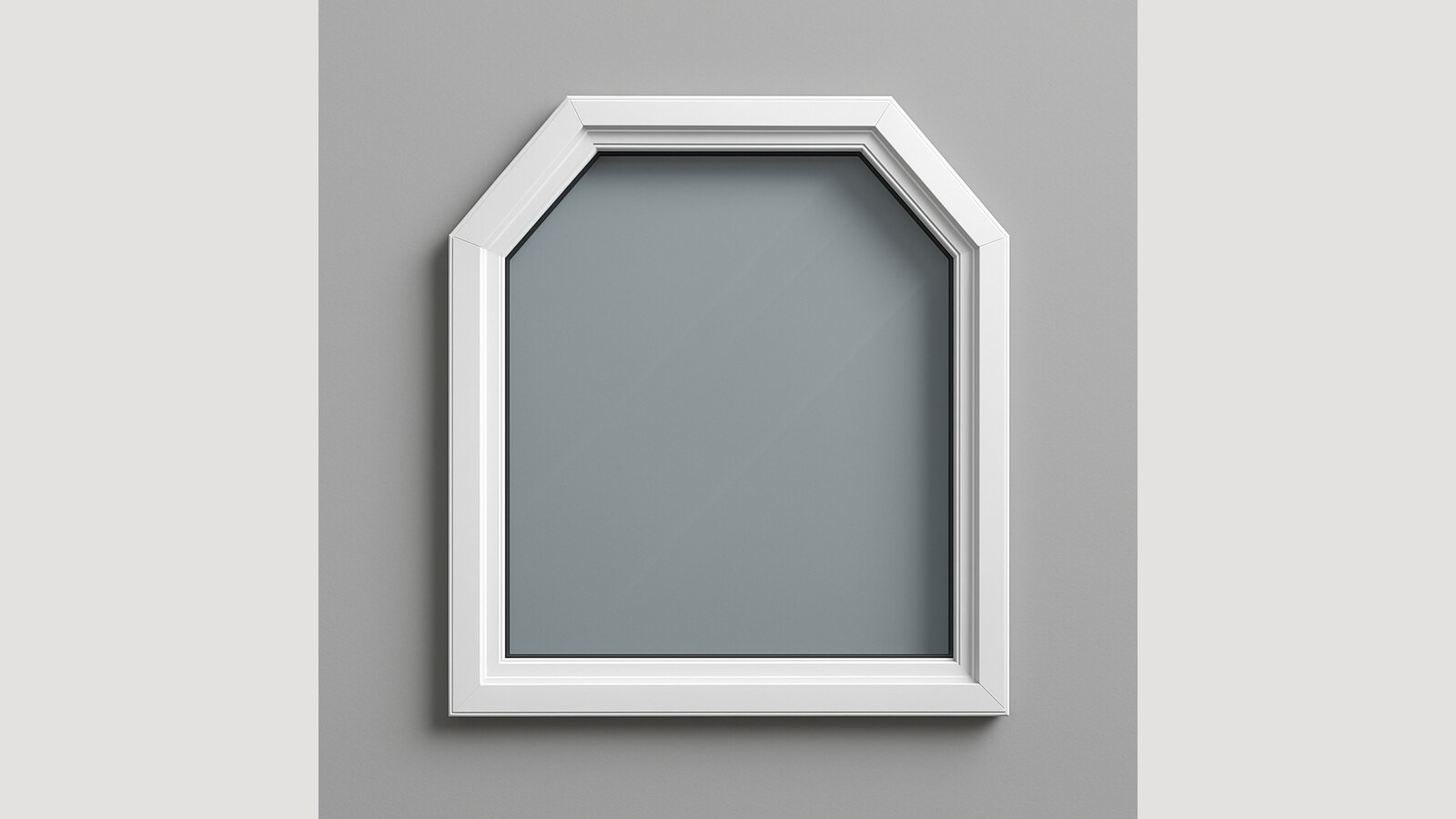
Give tall landings, glazed doors and geometric windows their own entries rather than copying a nearby rectangular shade. On a door, trace the fabric path past pulls and check how the door swings. On a gable or landing, decide whether the unusual opening needs coverage at all, and if it does, confirm how the treatment will fit and whether it can move. The guides to triangular windows and hexagon windows explain why shape changes that decision.
Group motorized shades by how you use them
Choose manual operation where a shade is within easy reach and adjusted independently. Consider motorization for hard-to-reach windows and groups that move repeatedly, such as the family room shades you lower before watching a film. Keep individual control where light hits only one end of a wall. For example, give three shades a shared room group but let the one nearest the television close without moving the others.
World Wide Shades uses rechargeable battery motors that need no wiring. Automate is the default. A remote is required, and the Push 5 controls up to five shades. If you already own a Somfy remote, you can select a Somfy motor paired to it. The optional Automate Pulse 2 hub adds app, voice and schedule control and works only with Automate motors. No charger is included; use a USB-C charger or add the Motor Charger.
Plan how you'll reach the charging port before specifying an especially high shade or covering the roll. Review motorized shade controls or call (844) 674-2716 to talk through groups and charging access before finalizing a multiroom order.
Compare standard sizing, custom ordering and on-site review
A standard-size shade may suit a straightforward opening when its available dimensions and coverage match what the room needs. Custom is worth considering when openings vary, millwork constrains the mount or several rooms need different fabrics and controls to work together. Online configuration makes sense if you can verify finished dimensions and know what you want each window to do. An on-site review by your designer or installer is useful if the mounting surface is uncertain, the openings are high or trim and drapery must align exactly.
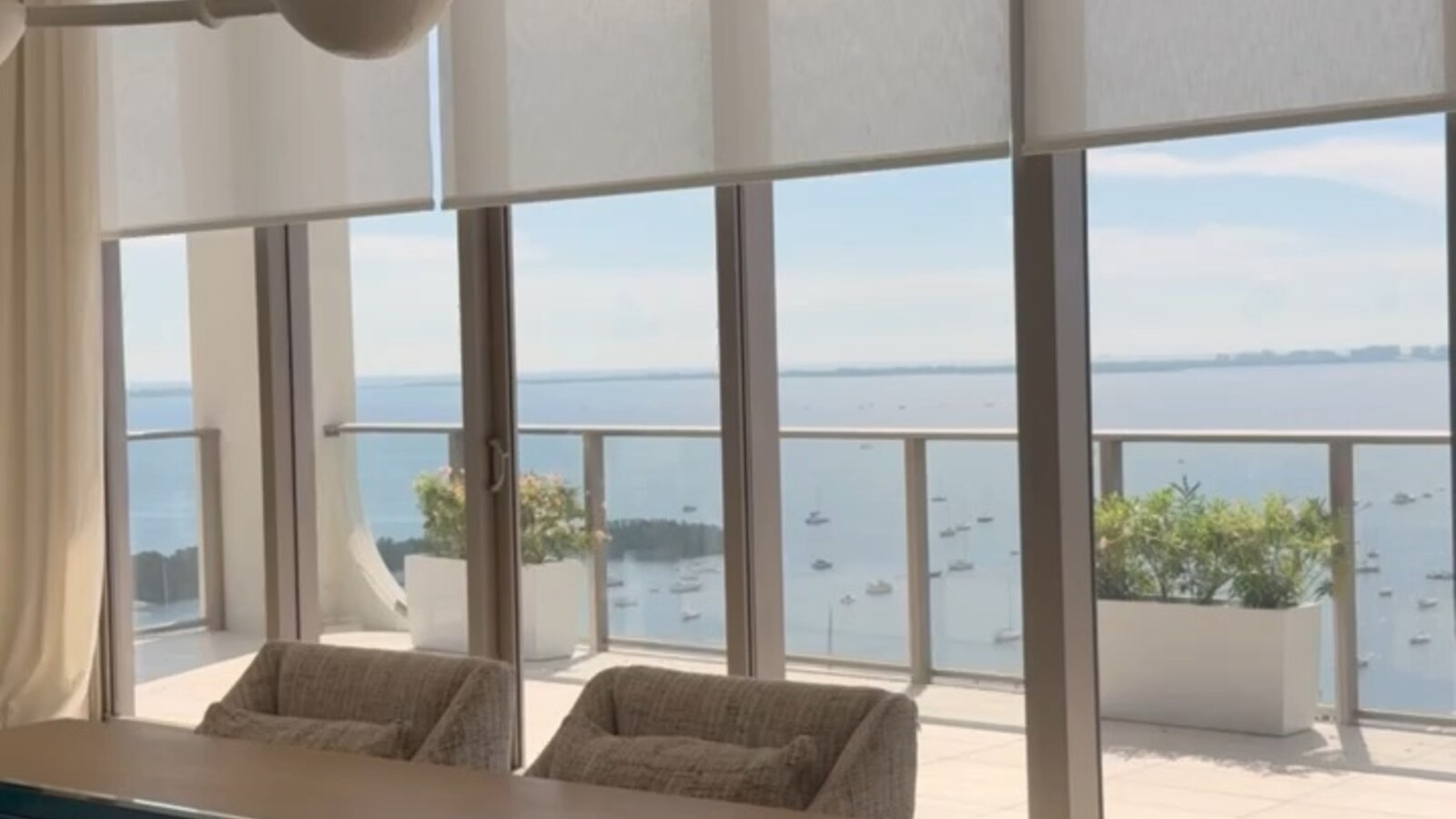
Use your schedule to compare the actual specifications instead of a generic per-window estimate. World Wide Shades shades are custom-made by hand in the USA, with delivery in 2–4 weeks from order and free U.S. shipping. For work in progress, use the new-construction ordering guide to think through when final measurements can be taken. For other project approaches, compare how fabric and control priorities change in Miami waterfront condos and Bergen County luxury homes.
Frequently asked questions
Yes. Choose the mount that fits each opening, then coordinate details across rooms you can see at the same time. A common fabric tone or a consistent shade height along an adjoining wall can make different mounts feel intentional.
Measure every opening individually. Windows with matching casing can still differ at the jambs, and trim that looks symmetrical across a room may not leave the same usable recess depth in each opening.
No. Start with a consistent palette for rooms that share a sightline. Then decide where you want a view through a screen, where you want diffused daylight, and where blackout fabric is a better fit.
World Wide Shades custom orders are not returnable. Manufacturing defects qualify for a free remake within 30 days, and motors are covered for one year. For a mismeasured shade, the policy provides a one-time free recut with the customer covering shipping.
Configure each opening with its own measurements, fabric and control to see live pricing in the builder. Use the same window IDs on your project schedule so you can match each configuration back to its opening before ordering.
Ready to Order?
- Measure. Record exact dimensions and the chosen mount for each opening.
- Select the fabric. Compare colors and opacity for each room and shared sightline.
- Choose the control. Specify manual or motorized and note which shades should move together.
- Review live pricing. Build each shade with the final dimensions and options.
- Place your order. Verify each opening against your schedule, then submit. If you're still weighing a mount or control choice, contact World Wide Shades or call (844) 674-2716 before ordering.