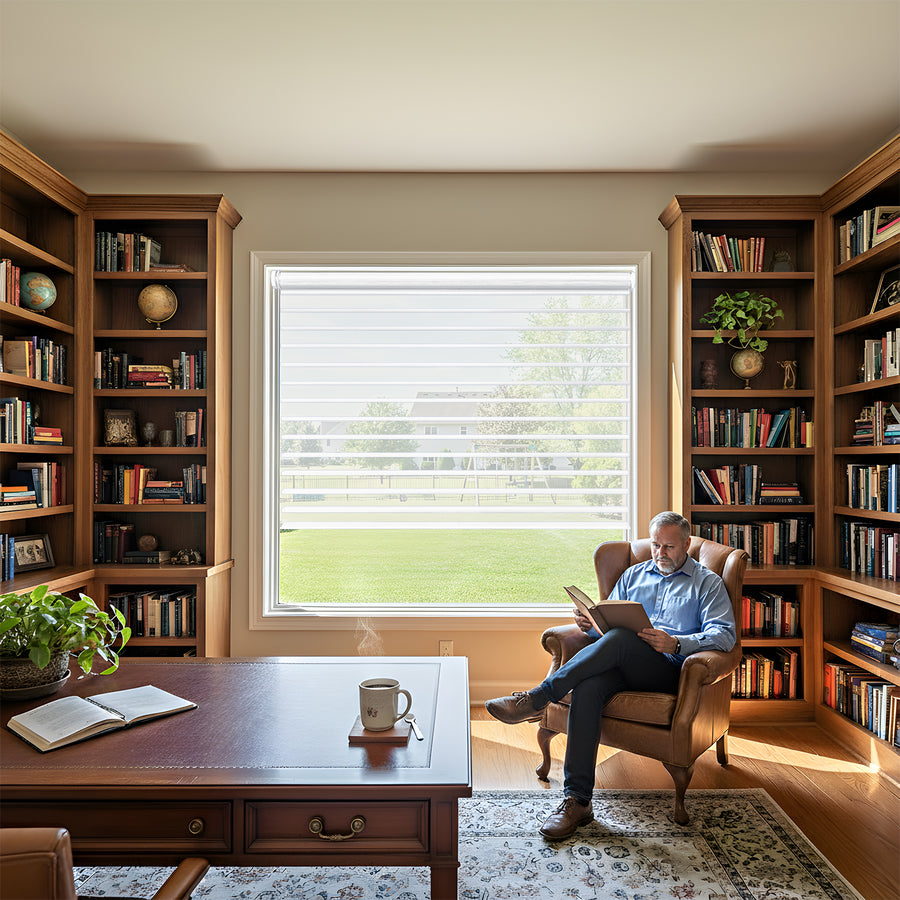
A home library needs light, but uncontrolled light can fade book jackets, discolor paper, damage wood, and make reading uncomfortable. The best home library window shades protect the collection from ultraviolet exposure while controlling reflections on pages and screens. They should also fit behind bookshelves, operate quietly, and support the room's calm visual character.
Start by identifying which windows receive direct sun, when the room is used, and whether shelves sit close to the glass. A south- or west-facing window often needs tighter glare control than a north-facing opening. Use the World Wide Shades Shade Builder to configure fabric and mounting by window instead of applying one opacity level to the entire library.
Why UV and glare deserve separate attention
Ultraviolet exposure contributes to fading in book jackets, artwork, rugs, upholstery, wood stains, and photographs. Many solar screen fabrics block roughly 95% to 99% of UV, depending on the weave and product construction. That slows damage but does not make a collection immune; closing the shade during peak exposure is still important.
Visible light and heat also affect materials. A sunny shelf can become warm, and repeated temperature swings may stress finishes and adhesives. Keep valuable books out of the narrow band of direct sun when possible. For a deeper overview of UV performance, read UV protection window shades.
If you have rare books, paintings, or archival materials, consult a conservator about lux exposure and humidity before relying on a window treatment alone. Contact World Wide Shades for a shade plan that minimizes direct exposure while keeping the room usable.
Glare depends on the angle between the window, the page, and the reader's eyes. A shade can reduce brightness, but the best result may also come from moving a reading chair 90 degrees relative to the window, using a matte reading lamp, or lowering the shade only to the height of the brightest glass.
A 1% solar fabric offers stronger glare control than 3% or 5% because its weave is tighter. A 3% fabric is often a practical compromise for a library because it softens direct brightness while preserving a view. If the room needs an evening reading lamp and complete privacy, add a room-darkening layer or choose a lined roller shade.
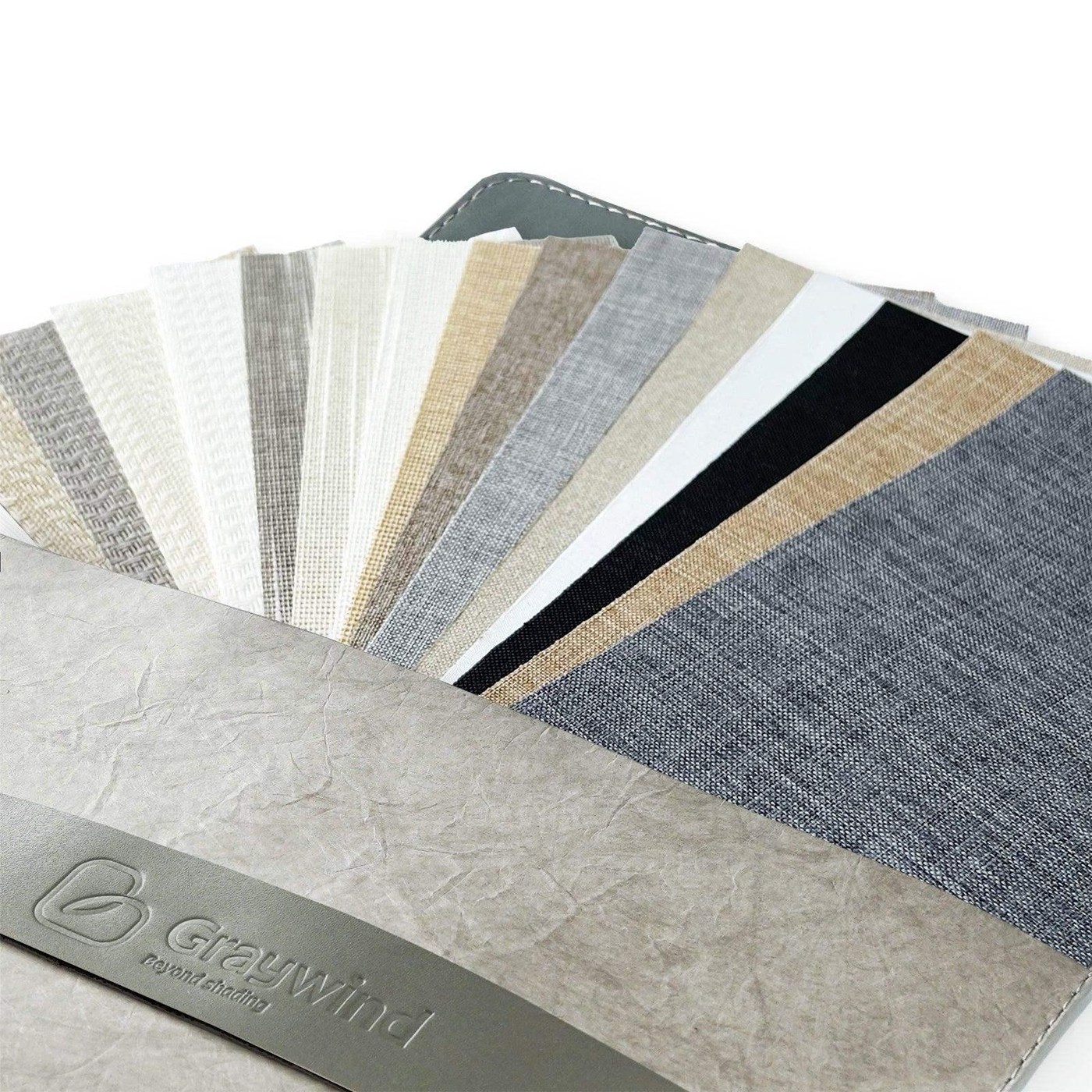
Order World Wide Shades swatches and test them at the reading chair, not only against the window. The apparent color and transparency change when light travels through the sample.
Choose a shade construction for books and shelves
Solar roller shades have a slim profile and are easy to stop at a chosen height. They suit libraries with a view, a reading nook, or shelves that should remain visually light. Choose 1% openness for intense west sun, 3% for balanced view and glare control, or 5% where daylight and outward visibility matter more.
Solar shades are not automatically private after dark. Interior lights can reveal silhouettes through an open weave. If the library faces a sidewalk or neighboring windows, pair solar fabric with a second privacy treatment or choose a tighter construction. World Wide Shades can coordinate a layered system without making the window look bulky.
Light-filtering roller shades diffuse sunlight and create a softer, quieter room. They are a good fit when the library is used for writing, conversation, or study and the primary concern is harsh contrast rather than a clear view. A matte linen-look polyester can add texture without collecting as much dust as a deep fold.
For color and texture guidance, see woven wood shades guide and window shades color guide. Woven wood can be beautiful in a library, but choose a liner when book protection and nighttime privacy matter. Natural materials also need care around condensation and direct moisture.
Blackout is appropriate when the library doubles as a guest room, media space, or archival storage area. It can also protect a west-facing collection when the room is unoccupied. The fabric alone may leave light at the sides and top, so outside mounting, a cassette, side channels, or a light-blocking hem bar can improve coverage.
Read blackout curtains vs. blackout shades for a practical comparison. If you want strong protection without a fully dark room, select room-darkening fabric and stop the shade at the brightest portion of the window.
Mounting around bookshelves
Inside mounting keeps the shade close to the glass and can leave shelf trim visible. It requires enough depth for brackets and the roll. Measure width at the top, middle, and bottom, then use the narrowest number according to the shade system's deduction rules.
Check that the shade fabric can move without rubbing a shelf, mullion, or window crank. A shelf installed too close to the glass may make a headrail or cassette impossible inside the recess. Contact World Wide Shades before ordering if a bookcase is within a few inches of the frame.
Outside mounting can cover trim and reduce edge gaps. Plan approximately 2 to 3 inches of overlap on each side when wall space allows. In a library, the headrail may need to sit above crown molding or between shelves, so measure the vertical clearance carefully.
If shelving blocks access to the brackets, consider motorization or a split shade arrangement. Two coordinated shades across a wide picture window can be easier to operate and can protect only the shelves receiving direct sun. The how to install roller shades guide covers general bracket planning, while World Wide Shades can review the room-specific geometry.
Create a quiet, comfortable reading room
A library benefits from soft, predictable light. Avoid glossy fabrics that reflect a desk lamp or television screen. Warm white, flax, oatmeal, muted green, and medium gray can coordinate with wood shelving without competing with book spines. World Wide Shades can send samples so you can compare undertones against the floor and cabinetry.
Keep indoor humidity around 30% to 50% for general household comfort, and follow conservation guidance for rare collections. Window shades should not press books against a damp exterior wall or prevent needed ventilation. If the room feels humid near the glass, address condensation and air circulation first.
Motorization is useful for tall windows or shelves that make a shade hard to reach. A schedule can lower shades during the brightest afternoon hours and raise them when the sun moves away. Battery motors often add $180 to $350 per window; hardwired options may add $300 to $600 before electrical labor. See smart home motorized shades setup for automation ideas.
Ready to protect your collection? Build home library shades with World Wide Shades, request fabric swatches, or contact World Wide Shades for help with shelving clearance. Call (844) 674-2716 if the library has tall or unusually wide windows.
A book-friendly shade checklist
Before ordering, note:
- Which windows receive direct sun and at what times.
- Shelf distance from the glass, trim, and operating hardware.
- Desired view-through level: 1%, 3%, or 5% openness for solar fabric.
- Whether the room needs glare reduction, UV control, privacy, or blackout.
- Whether a reading chair or desk can be moved to change the glare angle.
- Whether the shade must stop at a partial height to protect specific shelves.
- Whether motorization would prevent reaching over a bookcase.
Use World Wide Shades swatches in the actual library light. Then start your configuration with World Wide Shades or call (844) 674-2716 for a collection-focused recommendation.
Frequently asked questions
Solar roller shades with 1% to 3% openness are a strong starting point for UV and glare control while preserving a view. Light-filtering rollers create a softer atmosphere, while blackout or room-darkening shades suit libraries that store valuable materials or double as guest rooms. Mounting and edge coverage matter as much as fabric.
They can reduce exposure substantially. Many solar screen fabrics block roughly 95% to 99% of UV, but the exact result varies by product, glass, and installation. Lowering shades during peak sun and moving valuable books out of direct rays provides additional protection. Rare collections need conservation advice beyond a shade specification.
Choose 1% when afternoon glare is severe or the collection sits in direct west sun. Choose 3% when you want a balanced view and softer daylight. A 5% fabric works where the window has less direct exposure and preserving brightness matters most. Order World Wide Shades swatches to compare the weave at your reading chair.
Only if the room needs darkness or the collection is highly exposure-sensitive. Blackout fabrics provide stronger protection, but they can make a library feel closed during the day. Room-darkening or solar shades may be a better everyday choice, with blackout reserved for the brightest windows or unoccupied periods.
A custom solar or light-filtering roller shade may cost about $120 to $350 for a standard opening. Cassettes, side channels, wide windows, and motorization raise the total; battery motorization often adds $180 to $350 per window. Use the World Wide Shades builder for an exact configuration.
They are worthwhile when windows are tall, hidden behind shelves, or numerous enough that manual adjustment is inconvenient. A schedule can close shades during peak UV exposure without interrupting reading. Manual cordless shades are economical when every opening is easy to reach.