If you've ever tried to sleep through sunrise, glare, or streetlights, you already know the truth: "blackout" is not a single product. It's a result.
Curtains and shades can both deliver a darker room, but they do it in different ways. Curtains rely on overlapping fabric and wall coverage; shades rely on an opaque material and a close fit to the window. Your best choice depends on how sensitive you are to light, how much space you have around the window, and how you want the room to look day-to-day.
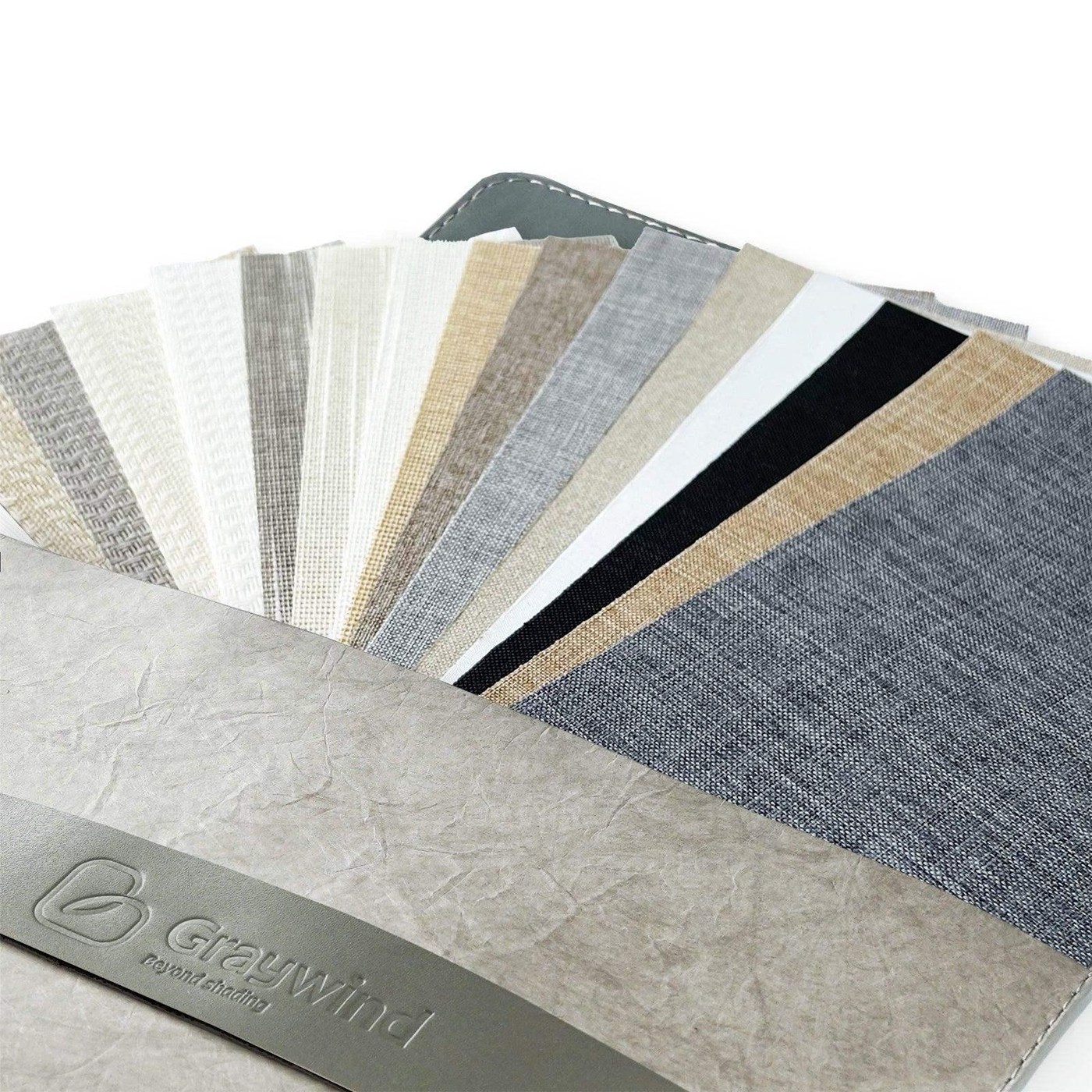
Below is an expert, practical comparison — performance, style, costs, and common pitfalls — so you can choose confidently. World Wide Shades fabricates custom blackout roller shades to your exact window measurements from our Bronx production facility, so the coverage, fabric opacity, and hardware are all dialed in before it ships. If you're leaning toward a shade solution, configure your options in minutes at our shade builder and order free fabric samples to confirm color and feel.
Quick comparison: what each option does best
Blackout curtains excel at:
- Covering wide areas and reducing side light with overlap
- Adding softness and a layered designer look
- Improving perceived insulation when paired with a quality liner
Blackout shades excel at:
- Clean, minimal aesthetics
- Easy daily operation and consistent coverage
- Fitting small rooms where drapery would feel bulky
For many rooms, the ideal setup is actually a hybrid: a blackout shade for daily use plus curtains for style and an extra light seal. World Wide Shades offers custom blackout roller shades that work as a standalone solution or as the functional layer beneath decorative curtains — whatever your room requires.
Light control: fabric opacity vs. light gaps
The darkest room comes from controlling both light through the material and light around the edges.
Curtains can be very dark when:
- The curtain panels overlap in the center
- The rod is mounted high and wide, allowing the fabric to cover more wall
- You use a wraparound rod or return to the wall to reduce side light
Even a good blackout curtain can leak light if it hangs away from the wall or if it doesn't overlap enough at the center.
World Wide Shades offers custom blackout roller shades fabricated to your exact window measurements — which is the critical variable for controlling edge gaps. Standard off-the-shelf shades cut to the nearest standard width leave visible side gaps that defeat the purpose of blackout fabric.
- Inside-mount shades typically leave visible side gaps.
- Outside-mount shades reduce gaps by overlapping the window frame.
If you want the tightest result without curtains, consider adding side channels to a blackout roller shade. That combination is one of the best "single-system" solutions for nurseries and media rooms. Contact World Wide Shades at (844) 674-2716 to discuss whether side channels are the right upgrade for your windows.
Style and room feel
Curtains add volume, texture, and a sense of height — especially when mounted close to the ceiling. They can make a bedroom feel more finished and cozy.
The downside is bulk. In smaller rooms, curtains can compete with furniture, radiators, or bed placement.
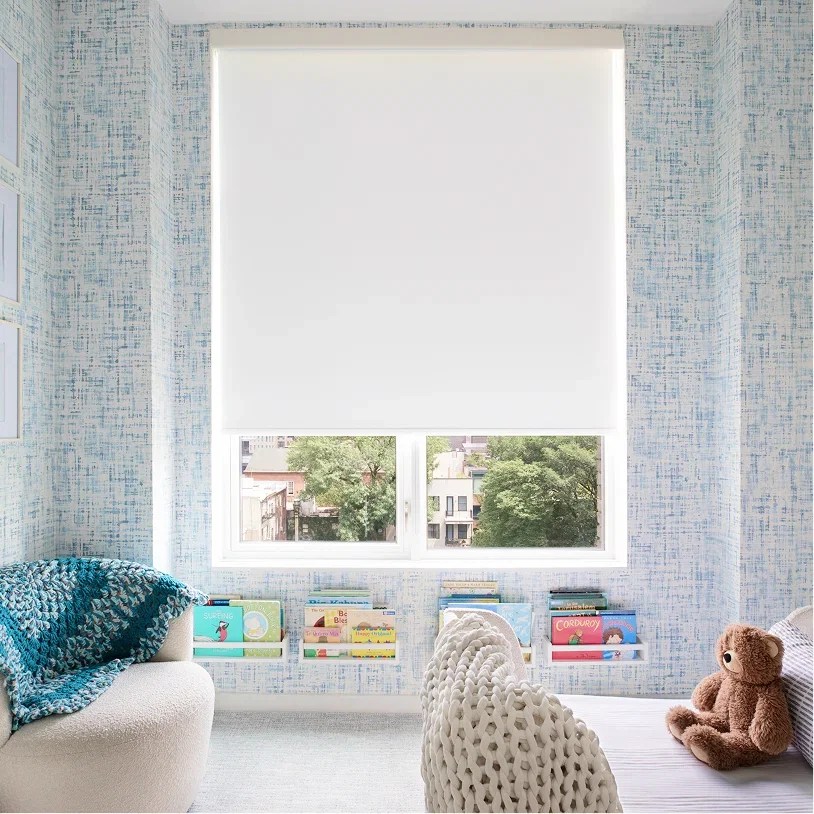
Blackout shades — especially roller shades from World Wide Shades — keep the window line clean. When raised, they stack at the top and the window looks open.
Shades also pair well with modern interiors and can look "built-in" with a cassette or valance. See the roller shade valance options guide for a full breakdown of head rail finishes that give shades a polished, architectural feel.
Convenience: daily operation and maintenance
A good blackout setup isn't just about sleeping once; it's about using it daily without frustration. When homeowners dislike their window covering, they stop using it consistently — and then the room never feels right.
A few real-world considerations:
- If your bed is close to the window, curtains can brush bedding or nightstands.
- If you open the window often, curtain panels can get caught in the sash or snag on locks.
- If you have pets, curtains can become a climbing surface; shades tend to stay cleaner.
- Curtains: opening and closing is simple, but you'll adjust two panels, and they can feel fussy if you do it twice a day.
- Shades: one control moves the entire window covering with consistent alignment.
If you're choosing for a child's room or a guest room, easy operation matters because the user may not fuss with perfect curtain overlap. World Wide Shades offers cordless and motorized options that make daily operation as simple as a single touch — use our shade builder to add those upgrade options at configuration time.
- Curtains: often require laundering or professional cleaning depending on fabric.
- Shades: usually spot-cleaning and occasional dusting.
In dusty climates or near open windows, shades are often easier to keep neat.
Light leakage detail: center gaps, top gaps, and edge overlap
If you're choosing based on "which makes the room darker," focus on how each system handles the most common leakage points.
Even with blackout fabric, many curtains leak light at the center where panels meet.
- Overlap the panels by several inches when closed.
- Consider a wand-draw track or rings that let you pull panels tight without tugging fabric.
If you want the best curtain performance, a two-panel setup often needs a total width around 2.0x to 2.5x the window width for proper fullness and overlap (for example, a 60-inch window typically looks and performs better with 120–150 inches of combined panel width).
Curtains leak at the top if the rod is far from the wall or mounted too low.
- A wraparound rod or ceiling track reduces light spill by returning fabric to the wall.
- Mounting higher can improve the perceived height of the room and reduce the "light shelf" above the curtain.
Shades leak at the top when the fabric exits far from the wall.
- A cassette can reduce that gap.
- Outside-mount placement can help by allowing higher mounting.
World Wide Shades offers cassette and fascia head rail options that tighten the fabric exit point and eliminate the top light gap that plagues many roller shade installs.
Shades need clearance at the sides to move freely. Outside mount and generous overlap are the easiest improvements.
- Typical target overlap: 2 inches per side for bedrooms; 3 inches per side for streetlight exposure.
- For maximum darkness, side channels can reduce edge gaps dramatically.
When you configure a shade at World Wide Shades, you specify the total fabric width — so the overlap you plan is built in, not guessed at after delivery.
Insulation and comfort: which actually helps more?
Both options can improve comfort, but the mechanisms differ.
- Curtains create an air layer between fabric and glass, especially when they cover wall area and return to the wall.
- Cellular shades (and some layered shade systems) add insulation through air pockets.
If energy efficiency is a priority, consider reading our energy-efficient window shades guide. In many homes, a cellular shade can outperform a curtain for insulation while staying visually simple. World Wide Shades offers cellular shade options alongside blackout rollers — use the builder to compare options side by side.
Durability and longevity: what holds up better?
The "better" product is the one that still works and still looks good after a few years of daily use.
Curtains experience wear in predictable places:
- Sun fading along the leading edge where panels overlap
- Dust and skin oils near the touch points where you open/close
- Deformation if panels drag the floor or get caught behind furniture
Higher-quality blackout curtains often use a separate liner. That liner can be replaced later, which is useful if the face fabric is still in great condition.
Shades typically wear at:
- The hembar edge if the fabric rubs due to an out-of-level install
- The control system if the chain is yanked at an angle
- The fabric surface if it's in a kitchen or near high humidity
A well-installed World Wide Shades roller shade with a quality clutch can run smoothly for years, and the fabric tends to stay cleaner because it stacks into a tight roll at the top. Our installation guide at how to install roller shades walks you through a clean, level bracket setup that prevents the hembar rubbing that shortens shade life.
Cost ranges in 2026: realistic budgeting
Pricing varies by size, fabric, lining, and hardware quality. Here are practical planning ranges.
- Ready-made blackout panels: about $40–$120 per panel
- Higher-quality blackout curtains with nicer drape: about $150–$450 per window
- Custom drapery (designer fabrics, tailored): often $600–$2,000+ per window
Curtains also require a rod and rings/track. Hardware alone can add $60–$250 per window depending on style.
- Blackout roller shades from World Wide Shades: about $180–$450 per window
- Blackout roman shades: about $250–$650 per window
- Side channels (when available): often add $80–$200 per window depending on height and system
- Motorization upgrade: commonly adds $150–$300 per shade
If you're comparing a custom shade to ready-made curtains, curtains can look cheaper. If you're comparing to high-quality curtains that hang well and last, shades are often competitive. Get a custom quote from World Wide Shades to compare exact pricing for your windows before you decide.
Room-by-room recommendations
- If you want clean and minimal: blackout roller shades from World Wide Shades with outside mount and generous overlap.
- If you want a luxe, layered look: blackout curtains, ideally with returns to the wall.
- If you're very light sensitive: blackout shade with side channels, or shade + curtains.
For a deeper look at bedroom-specific options, see our best window shades for bedrooms guide.
Safety and simplicity matter.
- Cordless or motorized blackout shades are often the most practical.
- If you use curtains, keep cords and ties secured and avoid long hanging cords near cribs.
World Wide Shades builds cordless and motorized blackout shades for nurseries — no dangling cords, no safety risk. For a complete overview of safer options, see our child-safe window treatments guide.
If you're battling glare, prioritize edge control.
- A blackout roller shade with side channels from World Wide Shades is a strong solution.
- Curtains can work well if you can mount them wide and use a wraparound rod.
Choosing the right shade build: mount and top finish
If you choose shades, two configuration choices matter.
Outside mount reduces edge light by overlapping the window frame. A typical overlap is 2–3 inches on each side. World Wide Shades cuts blackout roller shades to any width, so you can spec the exact overlap that your room requires.
A cassette can reduce the top light gap and creates the most finished look. A fascia improves aesthetics at lower cost but doesn't change light control as much.
If you want a deep dive into top finishes, read our roller shade valance options guide.
Cross-links: more guides for better results
- Best window shades for bedrooms for choosing bedroom-friendly fabrics and features
- Light-filtering shades guide for balancing privacy and daylight in other rooms
- Roller shades for kitchen and bathroom if you're selecting shades for humid rooms
- Child-safe window treatments for nursery and kids' room safety
- Roller shade valance options for cassette and fascia head rail choices
- Energy-efficient window shades for insulation and comfort upgrades
FAQ: blackout curtains vs blackout shades
Either can block a lot of light through the fabric, but the winner often comes down to edge gaps. Curtains can overlap and return to the wall to reduce side light; World Wide Shades blackout roller shades with outside mount and optional side channels can deliver a very tight seal. The best setup for extreme light sensitivity is often a custom shade with side channels as the primary layer.
If you want a clean look, easy daily operation, and consistent coverage, blackout shades are often worth it. World Wide Shades custom blackout roller shades are especially practical for small rooms, modern interiors, and windows where curtains would interfere with furniture. The custom sizing means the shade actually covers the window — not just most of it.
They can reduce echo and soften some high-frequency sound, but they are not true soundproofing. If noise is a major issue, focus on window sealing and consider thicker materials; see our energy-efficient window shades guide for a deeper look.
They can be, especially if you can do an inside mount into a wood jamb. Outside mounts usually require more holes, but the improved coverage can be worth it if you plan to stay a while. For rental-friendly strategies, see our roller shades for rental apartments guide.
For both looks and performance, many rooms work best when the total curtain width is about 2.0x the window width. That fullness lets panels overlap at the center and still drape nicely instead of pulling flat.
Yes. A World Wide Shades blackout roller shade provides the everyday functional layer, and curtains add style and an extra light barrier. This combination is common in hotels because it looks finished and performs well.
Choose the blackout solution that fits your room
Generic off-the-shelf blackout products leave gaps — at the sides, at the top, and wherever the sizing doesn't quite match your window. World Wide Shades solves that by fabricating every shade to your exact measurements, so the coverage is complete and the result actually looks intentional.
Build blackout shades at our shade builder, order fabric samples from /swatches to confirm color and feel, and reach out to World Wide Shades at (844) 674-2716 if you want help planning a room-darkening or true blackout setup for your windows.