Why Your Windows Are Costing You Money
Windows are one of the biggest weak spots in any home's thermal envelope. According to the U.S. Department of Energy, heat gain and heat loss through windows account for 25% to 30% of residential heating and cooling energy use. In a city like New York, where summer temperatures routinely hit the 90s and winter lows dip into the teens, that translates to hundreds of dollars a year in wasted energy.
The good news is that the right window shades can act as a thermal barrier, reducing the amount of heat that enters your home in summer and escaping in winter. Energy-efficient window shades are not a gimmick — they are a proven, cost-effective upgrade that pays for itself over time.
At World Wide Shades, we help homeowners and businesses across the Bronx, Manhattan, and the entire tri-state area select custom shades that balance style, light control, and energy performance. Here is everything you need to know about how window shades affect your energy bills and which types deliver the best results. Ready to get started? Use our online shade builder to configure and price your custom shades right now.
How Window Shades Reduce Energy Costs
Window shades reduce energy consumption through three primary mechanisms:
Solar heat gain reduction. During summer, sunlight streaming through windows heats up interior spaces, forcing your air conditioner to work harder. A quality roller shade with a reflective backing can block 60% to 80% of incoming solar heat, keeping rooms noticeably cooler without cranking the AC.
Insulation and heat retention. In winter, single-pane windows lose heat rapidly. Even double-pane windows allow some thermal transfer. Cellular (honeycomb) shades trap air in their fabric pockets, creating an insulating layer that slows heat loss. Studies from the Department of Energy show cellular shades can reduce heat loss through windows by up to 40%.
Air leakage reduction. Window shades installed inside the window frame create a tighter seal around the glass, reducing drafts and air infiltration. Inside-mounted shades with side channels are especially effective at minimizing convective heat loops — the cycle where cold air near the glass drops, pulls warm room air up, and creates a constant draft.
World Wide Shades can help you identify which windows are your biggest energy losers and recommend the most cost-effective treatment for each one. Call (844) 674-2716 for a free consultation.
Types of Energy-Efficient Window Shades
Not all shades perform equally when it comes to energy savings. Here is a breakdown of the most effective options.
Cellular shades are the gold standard for energy efficiency. Their honeycomb structure creates air pockets that insulate against both heat and cold. Single-cell shades offer moderate insulation, while double-cell and triple-cell designs provide progressively better thermal performance.
A standard double-cell honeycomb shade has an R-value of approximately 3.0 to 4.0 when fully closed, compared to an R-value of about 1.0 for a single-pane window alone. That is a 300% to 400% improvement in insulating performance.
Custom cellular shades from World Wide Shades start at around $85 per window for standard sizes and go up based on cell size, fabric opacity, and motorization options. For a typical New York apartment with 8 to 12 windows, a full set of double-cell honeycomb shades runs $700 to $1,400 — an investment that typically pays for itself within 2 to 3 years through energy savings.
Solar shades are designed specifically to block UV rays and reduce solar heat gain while preserving your view. They are rated by openness factor — the percentage of the fabric that is open weave. A 1% openness solar shade blocks 99% of UV rays and approximately 70% to 85% of solar heat, while still allowing you to see outside.
Solar shades are ideal for south-facing and west-facing windows that receive direct afternoon sun. In a Bronx brownstone with large front windows facing south, a set of 5% openness solar shades can reduce cooling costs for those rooms by 15% to 20% during peak summer months.
Pricing for custom solar shades typically ranges from $65 to $200 per window, depending on size and fabric selection. Explore options on our swatches page to compare openness factors and colors. For guidance on matching fabric type to specific rooms, see our best fabrics for roller shades guide.
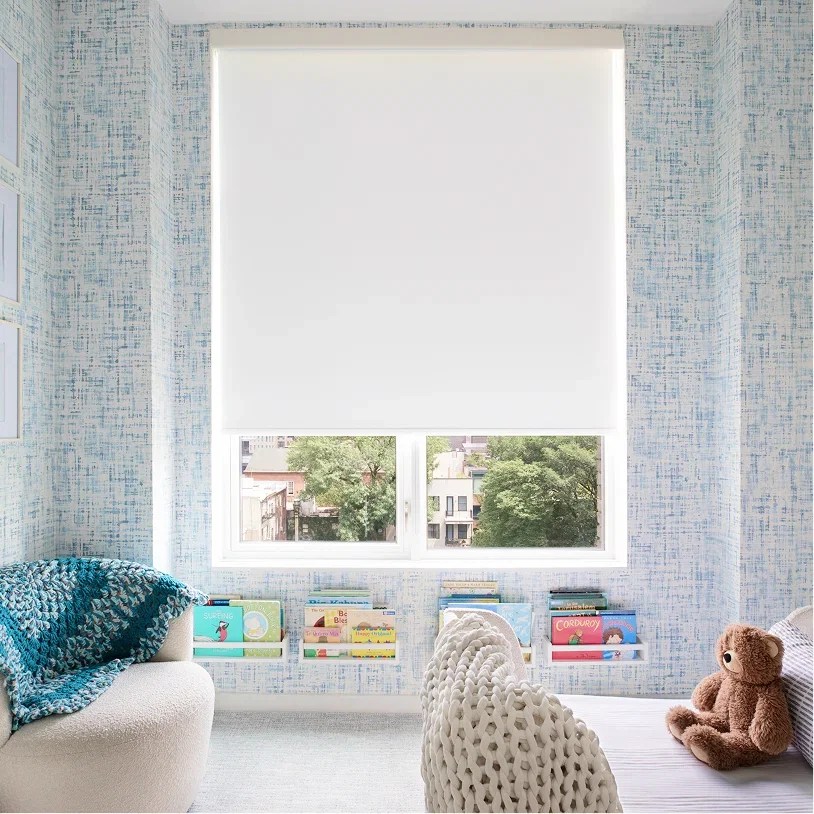
While blackout shades are primarily known for light control, they also provide significant energy benefits. A quality blackout roller shade with a white or reflective backing can reflect up to 70% of solar energy away from the window.
The key to energy performance with blackout shades is the backing material. White-backed or aluminum-backed blackout fabrics outperform dark-backed options by a significant margin. A white-backed blackout shade can reduce solar heat gain by 33% more than a dark-backed shade of the same opacity.
World Wide Shades offers blackout roller shades in both foam-backed and multi-layer laminated constructions — browse the options in our builder to compare backing colors, opacity levels, and pricing.
For maximum versatility, dual roller shades combine a solar shade for daytime use with a blackout shade for nighttime — all on a single bracket. During summer days, the solar shade reduces heat gain while maintaining your view. At night or during winter, the blackout shade provides insulation and privacy.
This combination approach is one of the most energy-efficient setups available, especially for living rooms and bedrooms where both light control and temperature regulation matter. Get started with a custom quote from World Wide Shades to see exactly how a dual shade system would work for your windows.
The Numbers: How Much Can You Actually Save?
Energy savings vary based on climate, window type, shade type, and usage habits, but here are realistic estimates for a typical New York City home:
Summer cooling savings. Properly installed solar or reflective roller shades on south- and west-facing windows can reduce cooling costs by 15% to 25%. For a household spending $200/month on electricity during summer, that is $30 to $50/month in savings, or $90 to $150 over a typical 3-month cooling season.
Winter heating savings. Cellular shades on all windows can reduce heating costs by 10% to 20%. For a household spending $250/month on heating, that translates to $25 to $50/month, or $125 to $250 over a 5-month heating season.
Annual combined savings. A household that installs energy-efficient shades on all windows can expect to save $200 to $400 per year on energy bills. Over a 10-year lifespan (the typical life of quality custom shades), that is $2,000 to $4,000 in savings — far exceeding the initial investment.
Installation Matters: Inside Mount vs. Outside Mount
How your shades are installed affects their energy performance. An inside-mounted shade that fits snugly within the window frame creates a tighter seal and performs better thermally than a loosely mounted shade.
For maximum energy efficiency, consider these installation tips:
- Inside mount with minimal gaps. Measure precisely to leave no more than 1/8 inch of clearance on each side. Our guide on how to install roller shades walks you through the process.
- Side channels for cellular shades. These U-shaped tracks seal the edges of the shade against the window frame, preventing air from circulating around the shade. They can improve thermal performance by an additional 15% to 20%.
- Sealed headrail or cassette. A closed cassette at the top of the shade prevents warm air from escaping above the rolled-up fabric.
If you need help with measurements or installation planning, contact World Wide Shades for a free consultation — call us at (844) 674-2716 and we will walk you through every step.
Smart Controls Amplify Energy Savings
Pairing energy-efficient shades with motorization and smart home integration takes savings to the next level. Automated shades can be programmed to:
- Close on south-facing windows when the sun hits a specific angle
- Open in winter to capture passive solar heat during midday hours
- Close at sunset to retain heat during cold nights
- Respond to temperature sensors or smart thermostat signals
Studies suggest that automated shade control can improve energy savings by an additional 10% to 15% compared to manual operation, simply because the shades are always in the optimal position rather than relying on occupants to remember to adjust them. World Wide Shades offers motorized options for every shade type — configure yours in the builder or call (844) 674-2716 to discuss smart home compatibility.
Choosing the Right Energy-Efficient Shade for Each Room
Different rooms have different needs. Here is a quick guide:
Living room. Solar shades (3% to 5% openness) for daytime heat reduction without blocking the view. Consider a dual shade system if you also want blackout capability for movie nights. See our light filtering shades guide for a deeper breakdown of openness factors.
Bedroom. Cellular blackout shades for maximum insulation and light blocking. Double-cell construction with side channels provides the best sleep-quality darkness plus thermal performance. Our best window shades for bedrooms post covers the full range of options.
Kitchen and bathroom. Moisture-resistant roller shades with a reflective backing. These rooms generate internal heat, so solar heat rejection is a priority during summer months. See our guide on roller shades for kitchens and bathrooms for moisture-rated fabric recommendations.
Home office. Solar shades to reduce glare on screens while managing heat gain. A 3% openness shade is ideal — it cuts glare dramatically while maintaining natural light.
South-facing windows and outdoor spaces. These receive the most direct sun. For patios and porches, see our guide on outdoor roller shades for patios. Indoor south-facing windows benefit most from solar shades or reflective roller shades. Prioritize these windows first if you are upgrading in stages.
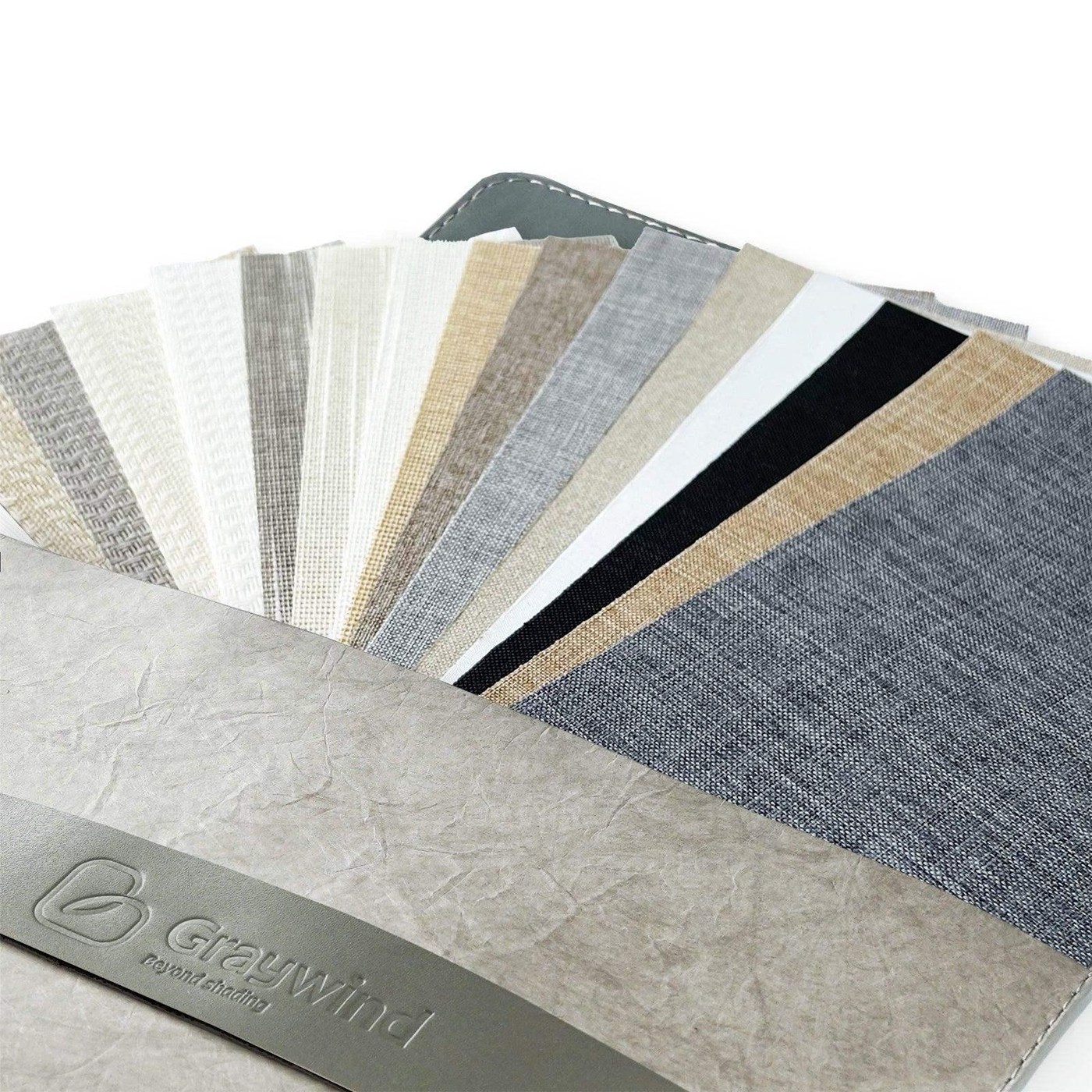
Browse free fabric swatches to compare solar, cellular, and blackout materials side by side before deciding which option suits each room in your home.
Tax Credits and Incentives for Energy-Efficient Window Treatments
Under the Inflation Reduction Act, certain energy-efficient home improvements may qualify for federal tax credits. While window treatments alone typically do not qualify for the 25C Energy Efficient Home Improvement Credit (which focuses on windows, doors, and insulation), they can contribute to a home's overall energy performance when combined with other upgrades. If you are building a new home, read our guide on ordering custom shades for new construction to time your shade order for maximum energy savings from day one.
Some utility companies also offer rebates for energy-efficient window treatments. Con Edison's energy efficiency programs, for example, occasionally include incentives for qualifying shade installations. Check with your local utility provider for current offers.
Frequently Asked Questions
Most homeowners see a 10% to 25% reduction in heating and cooling costs, which translates to $200 to $400 per year for a typical New York City household. The exact savings depend on window orientation, shade type, and how consistently the shades are used in optimal positions. World Wide Shades can walk you through a room-by-room estimate — call (844) 674-2716 for a free consultation.
Cellular (honeycomb) shades generally provide better insulation due to their trapped air pockets, making them superior for winter heat retention. However, solar roller shades are more effective at blocking solar heat gain in summer. For year-round performance, a cellular shade with a reflective backing or a dual roller shade system provides the best of both worlds.
Yes — and they make the biggest difference on older windows. Single-pane windows have very low insulating value (R-value around 1.0), so adding a cellular shade that brings the effective R-value up to 3.0 or 4.0 creates a dramatic improvement. If replacing your windows is not in the budget, energy-efficient shades are the most cost-effective alternative.
Absolutely. At World Wide Shades, every shade is made to your exact measurements. Whether you have standard 36-inch windows or oversized 120-inch picture windows, we fabricate energy-efficient shades in any width and length. Use our online builder to configure your shades and get an instant quote, or contact us for help with unusual sizes.
Start Saving on Energy Costs Today
Energy-efficient window shades are one of the smartest home improvements you can make — they pay for themselves, improve comfort, and look great doing it. Whether you are outfitting a single room or an entire home, World Wide Shades offers custom-fabricated cellular, solar, and blackout shades built to your exact specifications. We are based in The Bronx and serve New York City homeowners and businesses — call (844) 674-2716 to get started.
Browse our fabric swatches to explore materials and colors, or contact World Wide Shades to schedule a free consultation with our team. We will help you choose the right shade for every window in your home.