Outdoor living spaces have changed in the last few years: patios and porches aren't just weekend zones anymore — they're used for remote work, family dinners, and morning coffee. The challenge is that sun, glare, and wind make those spaces uncomfortable at the exact times you want to be outside.
Outdoor roller shades are one of the cleanest ways to control that environment. They can reduce midday heat, cut blinding glare, add privacy from neighbors, and even help calm breezes. The best systems are designed specifically for exterior conditions: UV-stable materials, corrosion-resistant hardware, and fabrics that handle moisture. World Wide Shades custom-fabricates outdoor roller shades to your exact patio measurements from our Bronx production facility — so the coverage, hardware, and fabric choice are right for your specific exposure and climate.
This guide explains what to buy, how to mount it, and what to expect in real-world performance. Use our shade builder to configure your outdoor shades and request free fabric samples to compare openness levels outdoors before you order.
What outdoor roller shades actually do
Outdoor roller shades work like interior rollers, but the fabric and hardware are built for harsher conditions.
They can help you:
- Reduce solar heat gain on south- and west-facing outdoor areas
- Cut glare so you can eat or work outside without squinting
- Add daytime privacy while keeping airflow
- Control wind by creating a semi-permeable barrier
They are not a replacement for structural shading (like a roof or awning), but they are a powerful "fine-tuning" tool that makes a covered space far more usable. World Wide Shades builds outdoor roller shades in any width and drop, using fabrics and hardware rated for full exterior exposure — not interior components pressed into outdoor service.
Fabric choices: solar screen vs. privacy mesh vs. clear vinyl
Outdoor shade fabric selection is mostly about openness and weather resistance.
Solar screen fabric is designed to handle sun and moisture while remaining stable.
- Best for: glare control, heat reduction, daytime privacy
- Typical openness: 1%–10%
- Feel: durable, slightly stiff, textured weave
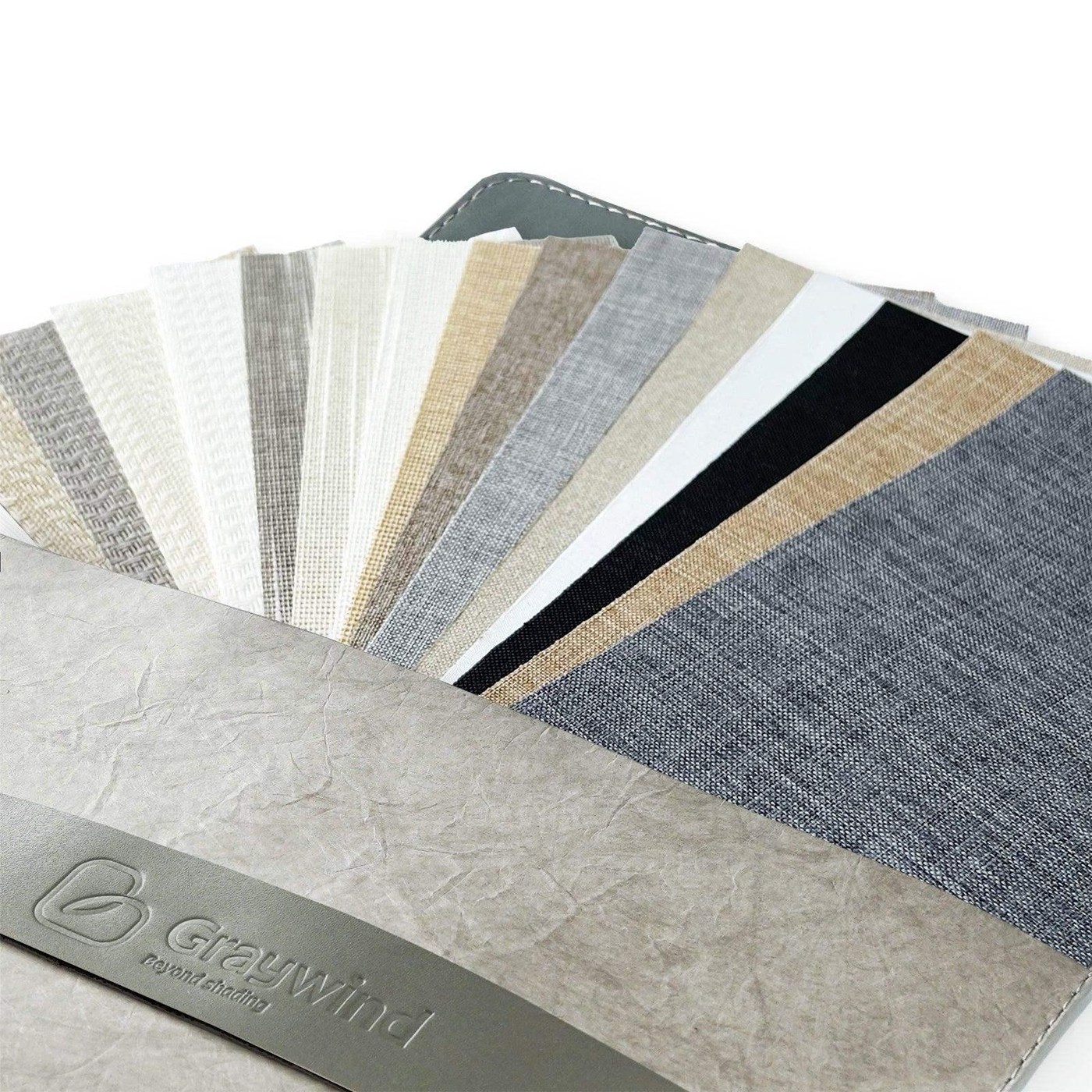
A tighter openness (1%–3%) blocks more sun and increases privacy, while 5%–10% preserves more outward view. For patios facing a neighbor, many homeowners prefer 1%–3%. Browse free outdoor fabric swatches from World Wide Shades to see exactly how different openness levels look and feel before committing.
Some outdoor fabrics prioritize privacy, especially for street-facing porches.
- Best for: porches near sidewalks or close neighbors
- Typical openness: lower openness with heavier yarns
These fabrics can feel darker and more enclosed, but they can make a porch much more comfortable. World Wide Shades can recommend specific fabrics based on how close your neighbors are and which direction your patio faces — call (844) 674-2716 for a free consultation.
Clear vinyl panels can keep wind and rain out while preserving visibility.
- Best for: three-season enclosures
- Trade-off: more condensation potential; needs careful ventilation
If your main problem is wind chill or rain spray, vinyl can be effective, but it's a different product category than a breathable shade.
Openness and orientation: matching fabric to sun exposure
Outdoor comfort depends on the sun angle.
- West-facing patios get intense low-angle afternoon sun. Lower openness (1%–3%) often feels better.
- South-facing patios receive high midday sun. A 3%–5% fabric can balance heat reduction and view.
- East-facing porches may only need glare control in the morning; 5%–10% can be enough.
If you're unsure, order free swatches from World Wide Shades and hold them up outside at the time of day you use the space most. Seeing the actual fabric in your light conditions — not on a screen — is the only reliable way to choose the right openness.
Get started with a custom outdoor shade quote from World Wide Shades once you've confirmed your openness preference.
Wind, privacy, and view: designing for real patio life
Outdoor shades live in a different world than interior shades because wind is always present, even on calm days. The best setup is the one that fits how you actually use the patio.
A useful way to choose openness is to think about how close your neighbors are.
- If the nearest neighbor is within about 15–25 feet, a 1%–3% fabric usually feels more private in the afternoon.
- If your patio faces open space or a backyard, 5% can feel brighter and still comfortable.
At night, any screen fabric becomes less private when your patio lights are on. If nighttime privacy matters, choose tighter openness and consider a darker color that reduces silhouettes.
Dark fabrics typically preserve the outdoor view better than light fabrics because the eye sees through the darker weave with less reflection. Light colors can feel cooler and brighter, but they may reflect more sunlight toward you.
If you want a good "all day" balance, charcoal or bronze fabrics are common choices for patios where you still want to see the yard. World Wide Shades carries both dark and light outdoor fabrics — order swatches of your top candidates to compare them side by side in your actual outdoor light.
Hardware that survives outdoors
Outdoor hardware matters as much as fabric. World Wide Shades specifies corrosion-resistant components on all exterior shades — this is a critical difference between a shade that lasts five-plus years outdoors and one that degrades in a single season.
Look for:
- Aluminum or stainless steel components
- Powder-coated finishes rated for exterior exposure
- Sealed bearings where possible
Wind is the enemy of outdoor rollers. A heavier bottom bar reduces flutter.
For windy areas, consider retention systems:
- Hold-down brackets that secure the bottom bar when the shade is lowered
- Side tracks that guide the shade and reduce movement
Side tracks also improve privacy and reduce edge gaps, but they require more precise mounting. Contact World Wide Shades at (844) 674-2716 to discuss whether hold-downs or side tracks make sense for your patio's wind exposure before you configure your order.
Measuring and sizing for outdoor openings
Outdoor openings can be less square than interior windows. Posts may not be perfectly plumb, and beams can sag slightly over time.
A few sizing guidelines that usually improve results:
- Side overlap: 1–2 inches per side reduces edge glare and makes the shade feel more substantial.
- Multiple shades vs. one wide shade: for very wide spans, splitting into two shades can improve stability and makes it easier to retract quickly when weather changes.
- Drop length: add a bit of extra drop if you want the bottom bar to sit below a railing line for better privacy.
If you're mounting near a railing, measure from the mounting point down to the lowest point you want covered and add a small buffer so the bottom bar doesn't hover awkwardly above the floor line. When you build your shade at World Wide Shades, you enter these measurements directly — no guessing at standard sizes that might not fit.
Mounting options: pergolas, porches, and balconies
Outdoor shades can mount to many structures.
This is the easiest scenario because you can mount brackets to a solid header beam.
- Mount the shade high to maximize coverage.
- Keep the roll protected from direct rain if possible.
For pergolas, you need a solid mounting surface.
- Use a continuous mounting board if the pergola beams are spaced.
- Ensure the mounting surface is straight; outdoor wood can be irregular.
Balconies often have restrictions. Many people choose non-permanent options, but true outdoor roller shades generally require secure fasteners.
If you're renting, verify what attachments are allowed. Contact World Wide Shades to plan a reversible approach for your balcony — our team has worked with dozens of renters in New York City buildings and knows how to find solutions that work within typical lease restrictions. For additional renter-specific strategies, see our roller shades for rental apartments guide.
Sizing and overlap: getting practical coverage
Outdoor shades feel better when they cover the sun's path, not just the opening.
- For a typical patio opening, an extra 1–2 inches of coverage per side helps reduce edge glare.
- If the opening has posts, consider mounting outside the posts for a cleaner line.
For wide openings, multiple shades can be better than one extremely wide shade. A pair of 60-inch shades is often easier to operate and withstands wind better than a single 120-inch shade. World Wide Shades makes it easy to configure multiple shades for a single opening — build both in the same session and compare options before you order.
Manual vs. motorized outdoor shades
Manual exterior shades can use crank systems or chains depending on design.
- Pros: lower cost, straightforward
- Cons: less convenient for large or tall installs
Motorized outdoor shades are increasingly common on patios because they encourage consistent use — and consistent retraction during storms extends product life.
- Pros: push-button convenience, easy to retract during storms
- Cons: higher upfront cost
A realistic planning range for motorization is often an additional $200–$500 per shade depending on size and motor type. If you'll raise and lower the shade daily, it can be worth it. World Wide Shades offers motorized outdoor shades with battery or hardwired options — see our smart home motorized shades setup guide for details on integrating outdoor shades with Alexa, Google Home, and other smart home platforms.
If you're motorizing, think about power early:
- Battery motors are convenient for retrofits, but you'll recharge periodically.
- Hardwired motors are ideal for new builds or major renovations.
Also plan how you'll use the shade in weather. Many homeowners like to retract shades when they're not in use, especially during storms. Motorization makes that habit easier, which can extend product life significantly.
Care, longevity, and weather habits
Outdoor shades last longer when you treat them like outdoor furniture.
- Retract shades during severe wind events.
- Rinse salt spray in coastal areas to protect hardware.
- Clean fabric periodically with mild soap and water; avoid harsh chemicals that can break down UV coatings.
If you live in a region with snow or freezing rain, many homeowners retract shades for the winter to extend life.
Cross-links: related guides for planning your full home
- Energy-efficient window shades for managing sun and comfort indoors
- Best window shades for bedrooms for current style direction if you're updating multiple spaces
- Smart home motorized shades setup for automating outdoor shade control
- Roller shades for rental apartments for balcony-specific mounting strategies
- How to install roller shades for step-by-step bracket and mounting guidance
- Best fabrics for roller shades for a deep dive into outdoor-rated fabric options
FAQ: outdoor roller shades
Most outdoor screen fabrics handle moisture and dry quickly, but they are not typically fully waterproof like vinyl. They're designed to manage sun and light rain, not to act as a sealed rain barrier. World Wide Shades can advise on which fabrics in our line offer the best moisture resistance for your climate.
For strong sun and privacy, 1%–3% openness is common. For a brighter feel with more view, 5% is often a good balance. The "right" choice depends on sun angle and neighbor proximity. Order free swatches from World Wide Shades to test different openness levels in your actual outdoor conditions before deciding.
They can reduce airflow enough to discourage some insects and provide a barrier, but they are not a substitute for screens. If insects are a major issue, pair shades with proper screening.
Choose a heavier bottom bar and consider hold-down brackets or side tracks. Also retract shades during high wind to prevent damage. World Wide Shades builds outdoor shades with wind-rated bottom bars and offers hold-down bracket options — call (844) 674-2716 to discuss the right retention system for your location.
Yes, but you need a solid, straight mounting surface. Many pergolas benefit from a continuous mounting board so brackets align on the same plane. If the structure flexes, retention systems like hold-downs or side tracks help. World Wide Shades can walk you through the best mounting approach for your pergola structure before you order.
Many patios use spans in the 72–120 inch range per opening, but it's common to break larger openings into multiple shades for better stability. Splitting a very wide opening into two shades can also make operation easier. World Wide Shades builds outdoor shades in custom widths — enter your exact measurements in the builder to get a precise quote.
Plan your patio shade setup
A comfortable patio isn't just a nice-to-have — it adds usable square footage to your home and makes summer evenings dramatically more enjoyable. World Wide Shades designs and fabricates custom outdoor roller shades for porches, pergolas, and patios throughout the New York area and across the country.
Configure your shade options at our shade builder, order material samples at /swatches to compare openness levels outdoors, and contact World Wide Shades at (844) 674-2716 if you want help selecting a fabric and retention strategy for your porch, pergola, or patio.