Why Fabric Choice Makes or Breaks Your Roller Shades
When you order custom roller shades, the fabric is the single most important decision you will make. It determines how much light enters the room, how much heat the shade blocks, how the shade looks against your walls, and how long it lasts before showing wear. Two roller shades can look identical from across the room, but the difference between a cheap polyester blend and a premium PVC-coated fiberglass is night and day — in both performance and longevity.
At World Wide Shades, we offer dozens of fabric options across every category, from sheer light-filtering materials to total blackout weaves. This guide breaks down every major roller shade fabric type, explains where each one works best, and helps you match the right material to every room in your home. Not sure where to start? Use our online shade builder to configure and price your custom shades — or browse free fabric swatches to see and feel materials before you order.
Understanding Roller Shade Fabric Categories
Roller shade fabrics fall into three broad categories based on how they handle light. Every other property — material composition, texture, color, thermal performance — is layered on top of this foundational distinction.
Light filtering fabrics allow diffused natural light into the room while reducing glare and blocking direct UV rays. They provide daytime privacy (people outside cannot see in clearly) but do not block light completely — at night, silhouettes are visible from outside when interior lights are on.
Light filtering roller shades are ideal for living rooms, kitchens, dining areas, and any space where you want natural light without harsh direct sun. They typically block 85% to 95% of UV rays while transmitting 10% to 40% of visible light. For an in-depth look at how these fabrics perform room by room, see our dedicated light filtering shades guide.
Common light filtering fabric types include:
- Woven polyester. The most popular and affordable option. Smooth texture, available in hundreds of colors. Pricing starts around $55 per shade for standard sizes.
- Linen-look polyester. A textured weave that mimics natural linen without the wrinkling or sagging. Adds a warm, organic aesthetic to contemporary interiors.
- Sheer mesh. Very open weave that maximizes view-through while still cutting UV. Best for rooms where maintaining the outdoor view is a priority.
Solar fabrics are a specialized subset of light filtering designed specifically for heat and glare management. They are rated by openness factor — the percentage of the weave that is open. Lower openness means more heat blocking and less view-through.
- 1% openness. Maximum heat and glare blocking. Blocks approximately 99% of UV and 80% to 85% of solar heat. Limited outward visibility.
- 3% openness. The most popular choice. Excellent heat and glare control with good daytime visibility. Blocks about 97% of UV and 70% to 78% of solar heat.
- 5% openness. Best outward visibility of the solar range. Good for north-facing windows or rooms where view preservation is the top priority.
- 10% openness. Minimal solar blocking. Acts more like a decorative screen than a true solar shade.
Solar fabrics are typically made from PVC-coated fiberglass or PVC-coated polyester. Fiberglass-core fabrics hold their shape better over time and resist sagging, making them the preferred choice for wider windows (over 60 inches). Learn more about solar shades in our energy-efficient shades guide.
Ready to find your perfect solar fabric? Contact World Wide Shades for a free consultation — call (844) 674-2716 and our team will match you with the right openness factor for your windows.
Blackout fabrics block 100% of visible light when properly installed. They are essential for bedrooms, nurseries, media rooms, and any space where complete darkness is required. Read our detailed guide on blackout shades vs. blackout curtains for installation techniques that maximize light blocking.
Blackout roller shade fabrics achieve total opacity through one of three methods:
- Foam-backed polyester. A layer of acrylic foam is bonded to the back of the fabric. This is the most common and affordable blackout construction. Effective at blocking light, but the foam layer can degrade over 5 to 7 years, especially in high-heat environments near south-facing windows.
- Multi-layer laminated fabric. Three or more fabric layers are laminated together, with a middle layer of opaque material (usually aluminum or dark yarn). More durable than foam-backed and provides better thermal performance. This is the construction method World Wide Shades recommends for most applications.
- Woven blackout. The fabric itself is woven tightly enough to block all light without any coating or lamination. These are premium fabrics — more expensive, but they have the best drape, the most natural hand-feel, and the longest lifespan (10+ years without degradation).
Material Composition: What Your Shade Is Actually Made Of
Beyond the light-control category, the base material determines durability, maintenance, environmental resistance, and price.
Polyester is the workhorse of the roller shade industry. It is affordable, widely available, takes dye well (enabling a vast color range), and resists wrinkling. Most light filtering and blackout roller shades use polyester as the primary fiber.
Pros: Low cost ($55 to $120 per shade), color variety, easy to clean, wrinkle-resistant.
Cons: Can sag on wider windows (over 72 inches) without a heavier weave. Lower-quality polyester may pill or show fiber migration over time. Not inherently flame-retardant.
Best for: Bedrooms, living rooms, offices — any interior space with standard-width windows.
PVC-coated fiberglass is the industry standard for solar and commercial-grade shades. The fiberglass core provides excellent dimensional stability — it does not stretch, sag, or curl, even on very wide windows. The PVC coating adds UV resistance and makes the fabric easy to wipe clean.
Pros: Exceptional dimensional stability, excellent UV resistance, easy maintenance, flame-retardant, ideal for wide spans up to 120 inches.
Cons: Higher cost ($80 to $200 per shade), limited color palette compared to polyester, slightly stiff hand-feel. Contains PVC, which some homeowners prefer to avoid for environmental reasons.
Best for: Solar shades on large or south-facing windows, commercial applications, kitchens, and any environment requiring high durability.
Use our online shade builder to compare fiberglass and polyester options side by side — with real-time pricing for your exact window dimensions.
For homeowners concerned about PVC off-gassing or environmental impact, PVC-free fiberglass fabrics use alternative coatings (typically polyurethane or PVDF) to achieve similar performance without vinyl. These are increasingly popular in LEED-certified buildings and health-conscious residential applications.
Pros: No PVC off-gassing, GREENGUARD certified, excellent dimensional stability.
Cons: Premium pricing (20% to 30% more than standard PVC-coated fiberglass), more limited color and texture options.
Best for: Nurseries, children's rooms, homes with chemical sensitivities, green building projects.
Some roller shade fabrics incorporate natural fibers like cotton, linen, or jute blended with synthetic materials for stability. For a full breakdown of natural materials, see our guide on woven wood shades. These fabrics offer a warmer, more textured aesthetic but require more careful maintenance.
Pros: Beautiful organic texture, warm aesthetic, sustainable appeal.
Cons: Higher price, potential for shrinkage in humid environments, more difficult to clean, may fade faster than synthetics.
Best for: Decorative applications in low-moisture rooms, homes with a natural or bohemian design aesthetic.
How to Match Fabric to Room
Choosing the right fabric depends on three questions: What does this room need from a shade? What are the environmental conditions? And what aesthetic fits the space? World Wide Shades has helped thousands of homeowners across the Bronx and tri-state area answer exactly these questions — here is what we consistently recommend.
Priority: Blackout capability and soft aesthetics.
Recommended fabric: Multi-layer laminated blackout in a neutral tone. For the ultimate sleep environment, pair with side channels to eliminate edge light leaks. If you want a more natural look, woven blackout fabrics in linen-like textures are a premium option that photographs beautifully and feels luxurious. See also our best window shades for bedrooms guide for additional recommendations.
Priority: Light control without sacrificing ambiance.
Recommended fabric: Light filtering woven polyester in a warm neutral or a 3% openness solar shade. If the room has south- or west-facing windows, prioritize solar fabric on those specific windows to manage afternoon heat gain. For other orientations, light filtering polyester provides beautiful diffused light.
Priority: Moisture resistance and easy cleaning.
Recommended fabric: PVC-coated fiberglass solar shade or a moisture-resistant polyester. Avoid natural fiber blends in these spaces. Fabrics should be wipeable and resistant to humidity without warping. Check our guide on roller shades for kitchens and bathrooms for specific product recommendations.
Priority: Glare reduction on screens.
Recommended fabric: 3% openness solar shade. This blocks enough glare to make screen work comfortable while preserving just enough natural light and outdoor connection to prevent the room from feeling like a cave. Neutral gray or charcoal solar fabrics are particularly effective at reducing glare without creating a noticeable color cast on your screen.
Priority: Total blackout, safety, and low chemical emissions.
Recommended fabric: PVC-free blackout or GREENGUARD-certified multi-layer laminate. Pair with cordless operation for child safety. Avoid fabrics with strong chemical odors — premium options off-gas minimally and are safe for sensitive environments.
Get started with a custom quote from World Wide Shades — our builder lets you select fabric, opacity, and mount type for each room individually so every window gets the right solution.
Fabric Weight and Width Limitations
Heavier fabrics require stronger hardware. Here are general guidelines:
- Lightweight fabrics (under 8 oz/yd²). Suitable for windows up to 72 inches wide with standard roller tubes (1.25-inch diameter).
- Medium weight fabrics (8 to 14 oz/yd²). Can span up to 96 inches on a standard tube, or up to 120 inches with a heavy-duty 1.5-inch tube.
- Heavyweight fabrics (over 14 oz/yd²). Require heavy-duty hardware and may need a larger roller tube. Best suited for oversized windows and commercial installations.
When ordering custom shades from World Wide Shades, we automatically spec the appropriate hardware for your fabric and width combination — you do not need to worry about compatibility. For rental apartments where you need the right fit without permanent modifications, our roller shades for rental apartments guide covers mounting solutions that protect your deposit.
Color and Its Impact on Performance
Fabric color affects both aesthetics and thermal performance:
- White and light colors reflect more solar energy, keeping rooms cooler. A white-backed blackout shade reflects approximately 65% to 75% of solar heat.
- Dark colors absorb solar energy and re-radiate it into the room. A dark blackout shade may actually increase room temperature if used on sun-facing windows during summer.
- The back of the fabric matters more than the front. Many premium fabrics feature a white or silver backing regardless of the face color, providing excellent heat reflection while allowing you to choose any decorative color you like.
For maximum energy efficiency, choose a fabric with a white or reflective backing regardless of front color. Browse options on our swatches page — World Wide Shades ships free physical samples so you can see exactly how each color looks in your space before committing.
How to Evaluate Fabric Quality Before You Buy
When comparing roller shade fabrics, look for these indicators:
- Openness factor specification. Quality manufacturers specify exact openness percentages. Vague claims like "semi-sheer" or "room darkening" without numbers are a red flag.
- GREENGUARD or OEKO-TEX certification. These certifications verify low chemical emissions and are especially important for bedrooms and nurseries.
- Colorfastness rating. Look for fabrics rated for UV exposure. A rating of 5 or higher on the ISO 105-B02 scale means the fabric will resist fading for years.
- Warranty length. Premium fabrics come with 5- to 10-year warranties against fading, fraying, and delamination. Budget fabrics typically offer 1 to 3 years.
World Wide Shades only stocks fabrics that meet our own quality benchmarks — every product in our lineup includes full spec sheets, certified ratings, and clear warranty terms. Call us at (844) 674-2716 if you have questions about a specific fabric's certification or performance data.
Frequently Asked Questions
PVC-coated fiberglass is the most durable option. It resists sagging, stretching, fading, and moisture damage, making it the preferred material for commercial installations and high-traffic residential spaces. Expect a lifespan of 10 to 15 years with minimal maintenance. World Wide Shades carries multiple fiberglass lines at different price points — use our builder to compare them.
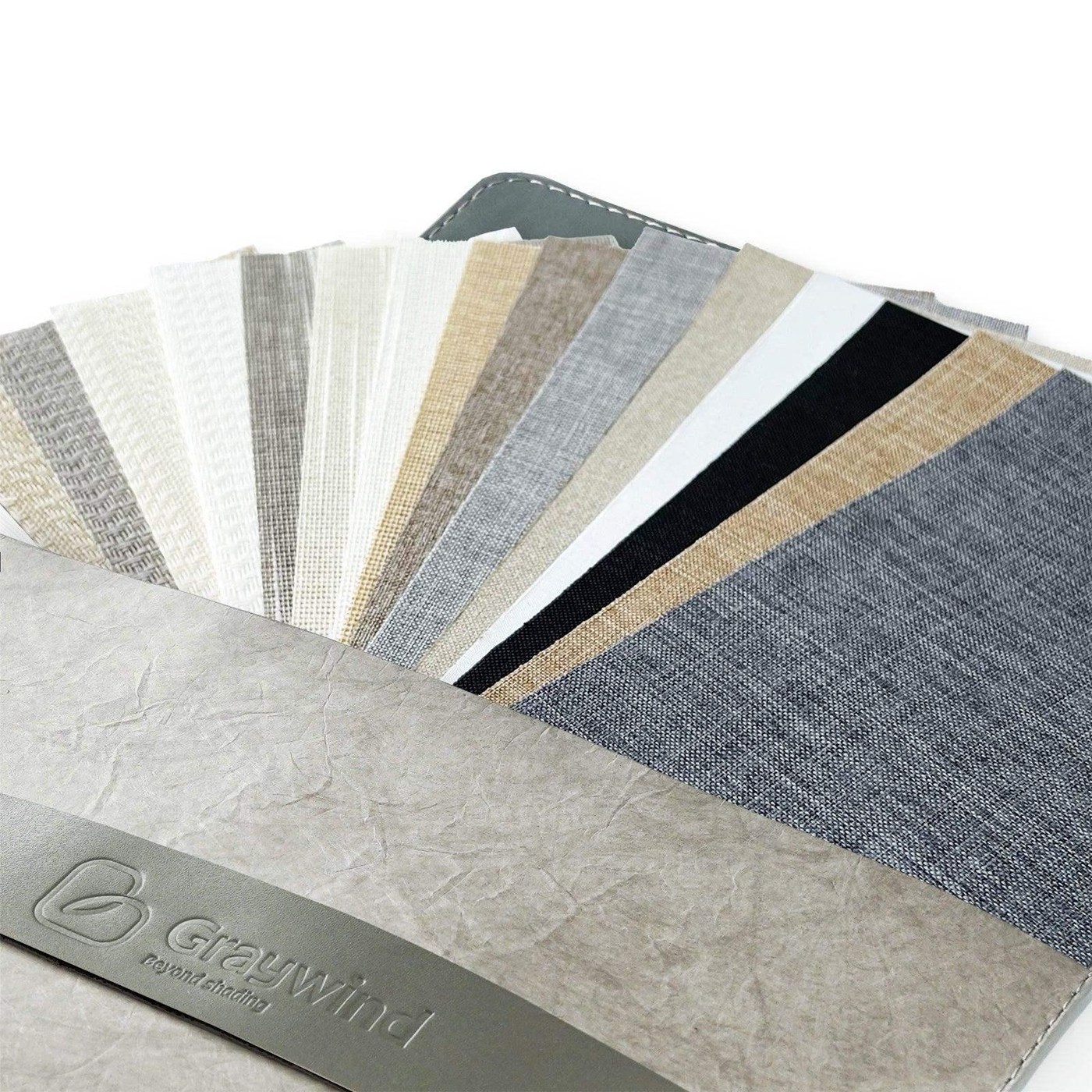
Yes. At World Wide Shades, we offer free fabric swatches so you can see and feel the material in your own space before committing. Request samples through our swatches page or contact us to have them mailed directly.
Fiberglass-core fabrics are the best choice for large windows. They maintain dimensional stability across wide spans without sagging or curling at the edges. Pair with a heavy-duty 1.5-inch roller tube for optimal performance on windows over 80 inches. For a full guide to wide-window configurations, see our post on roller shade valance options which also covers hardware for oversized installations.
Yes — woven blackout fabrics are designed to mimic the texture and appearance of natural linen while providing 100% light blocking. They are more expensive than foam-backed polyester blackout, but the aesthetic upgrade is significant. These fabrics start at around $100 to $150 per shade for standard sizes.
Find Your Perfect Fabric
The right fabric transforms a basic window covering into a high-performance design element. Whether you need maximum solar blocking for a sun-drenched living room or whisper-soft blackout for a nursery, World Wide Shades fabricates every shade to your exact specifications using premium materials. We are based in The Bronx and serve homeowners and businesses throughout New York City — call us at (844) 674-2716 to talk through your project with a real person.
Start by ordering free fabric swatches to see and feel your options. Then use our online builder to configure your custom shades, or reach out to our team for personalized fabric recommendations based on your rooms and windows.