The single biggest source of confusion in solar roller shade ordering is the openness factor — the percentage written on the spec sheet that tells you how "open" the fabric weave is. A 1% openness shade looks dramatically different from a 10% openness shade, even when the color is identical. Pick the wrong one and the room either feels caved-in (too closed) or has no real privacy (too open). World Wide Shades has shipped solar shades in every openness tier from 1% to 14%, and the right answer is almost always room-specific.
This guide walks through what each percentage actually means in practice, the rooms where each is the right call, and the tradeoffs between view, glare control, UV blocking, and nighttime privacy.
Start your solar shade order at the World Wide Shades builder →
What "Openness Factor" Actually Measures
Openness factor is the percentage of the shade fabric that is open space (tiny holes in the weave) versus solid yarn. A 5% openness fabric is 5% open space and 95% solid material.
That tiny difference in open-space percentage has outsized real-world consequences:
- Lower openness = more privacy, more glare control, less view, less light in the room.
- Higher openness = better view to the outside, more daylight, less privacy, less glare control.
The relationship isn't quite linear — going from 1% to 3% changes the view dramatically, while going from 5% to 10% mostly affects privacy.
1% Openness: The Privacy Maximum
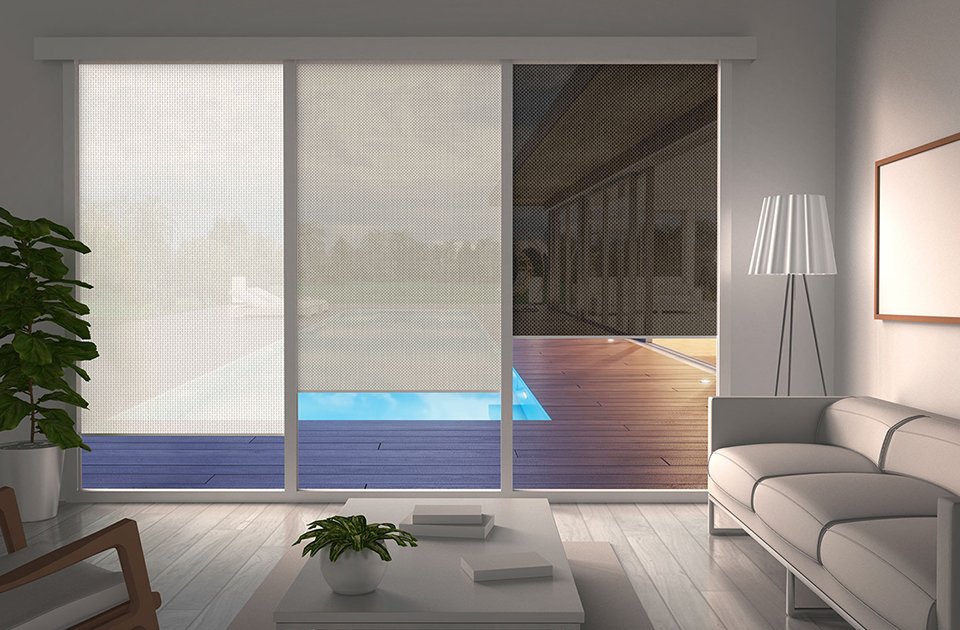
1% openness fabric is the densest solar shade World Wide Shades carries. The view to the outside is essentially eliminated; only an outline of large objects (a tree, a parked car) is visible from inside during bright daylight. At night, when interior lights are on, the inside of the home is essentially invisible to outside observers.
Best for:
- Street-facing bedrooms in dense urban areas where privacy matters more than the view
- Home offices where screen-glare reduction is the priority
- South-facing rooms with intense midday sun
- East-facing primary bedrooms where you want to dim the morning sun without going full blackout
Tradeoffs: The view is essentially gone. UV blocking is maximum (typically 99%). The room is noticeably dimmer.
Color note: 1% openness in light colors (white, ivory) can feel oppressive. Most World Wide Shades customers ordering 1% openness pick charcoal or dark gray, which reads as intentional design rather than "blocking the view."
For UV protection specifics, see UV Protection Window Shades.
3% Openness: The Universal Default
3% openness is what World Wide Shades recommends for roughly 60% of solar shade orders. It blocks approximately 92–96% of UV, reduces visible light by approximately 85–90%, and preserves enough view that you can clearly identify outdoor activity (people walking, cars passing) during daytime.
Best for:
- Living rooms and great rooms where view matters but glare on TVs needs control
- South-facing kitchens
- West-facing dining rooms with afternoon sun
- Most office spaces and home offices
Tradeoffs: Privacy is good during the day, marginal at night with interior lights on. The view is preserved enough to feel connected to the outdoors.
Color note: 3% openness works in any color. Light colors give a brighter daytime feel; dark colors give a more "architectural" look and slightly better glare control.
5% Openness: The View-Preservation Pick
5% openness is the most-recommended option when the view is part of why the home was bought — water views, mountain views, courtyards, gardens. The slight loss of privacy is worth the dramatically better daytime view.
Best for:
- Living rooms with significant outdoor views (water, mountains, garden, courtyard)
- Sunrooms and three-season porches
- North-facing rooms where light is already limited
- Glass-heavy modern and contemporary homes
Tradeoffs: UV blocking drops to approximately 88–92%. Daytime privacy is reduced — close observers can make out shapes through the fabric. Nighttime privacy with interior lights on is minimal (use a layered drapery or secondary blackout shade in privacy-critical rooms).
Color note: Charcoal or dark gray works best at 5% — the darker color enhances perceived contrast through the fabric, which helps preserve view clarity. Light colors at 5% can make the view look washed-out.
For more on layering strategy in view-critical rooms, see Layering Roller Shades With Drapery.
10% Openness: Maximum View, Minimum Privacy
10% openness is the most "open" practical solar shade. The view is preserved to the point where it almost feels like there's no shade at all — you can see colors, faces, and detail through the fabric.
Best for:
- Sunrooms and porches where the primary purpose is enjoying the outdoors
- Glass-walled rooms with no immediate neighbors (waterfront, mountainside, large lots)
- Commercial spaces (restaurants, cafes) wanting glare control without obstruction
- Greenhouse-style additions
Tradeoffs: UV blocking drops to approximately 80–85%. Glare control is meaningful but not dramatic. Privacy is essentially nonexistent — observers can see inside clearly during the day and at night.
Color note: 10% works best in white or off-white. Dark colors at 10% openness are a strange visual — you can see through the shade, but the shade itself looks dark, which creates a "dirty window" effect.
14% and Above: Specialty Uses Only
World Wide Shades occasionally configures 14% openness for very specific commercial applications. For residential homes, 14% is essentially not a window covering — it's a visual texture that does almost nothing functional. Skip it unless a designer or architect specifically specified it.
How Color Interacts With Openness
This is where most buyers get caught. The same openness factor in different colors performs differently:
- Light colors (white, ivory) at any openness: Diffuse light, create a soft glow. Lower perceived privacy. Better for brightening a room.
- Dark colors (charcoal, dark gray, black) at any openness: Preserve view clarity, look more architectural, provide better perceived privacy (the dark color absorbs less light through the fabric, so outside observers see a darker, less-revealing image).
The World Wide Shades rule of thumb: dark colors for view preservation, light colors for room brightening.
Order free swatches in multiple openness levels → (844) 674-2716
Room-by-Room Recommendations
Quick reference for the most common rooms:
- Living room with TV: 3% charcoal — blocks glare, preserves view
- Living room with outdoor view: 5% charcoal — preserves view priority
- Dining room: 3% or 5%, color matched to wall
- Kitchen: 3% white or warm white
- Home office: 1% or 3% (depends on screen-glare sensitivity)
- Primary bedroom (privacy + dimming): 1% dark color, or upgrade to room-darkening
- Primary bedroom (sleep priority): Skip solar — use blackout. See Roller Shades Bedroom Blackout Checklist
- Nursery: Skip solar — use triple-layer blackout
- Bathroom (street-facing): Skip solar — use light-filtering polyester
- Sunroom/porch: 5% or 10%, color matched to outdoor furniture
For broader fabric type comparisons, see Best Fabrics for Roller Shades.
Combining Solar Shades With Other Treatments
In many rooms the right answer is solar shades plus a secondary treatment for privacy or full darkness:
- Solar + drapery panels: Solar controls glare during the day; drapery closes for nighttime privacy. See Layering Roller Shades With Drapery.
- Solar + blackout dual roller: Two shades on the same window — solar for day, blackout for night. Works well in master bedrooms with city views.
- Solar in living spaces + blackout in bedrooms: The most common World Wide Shades configuration for whole-home orders.
Common Buyer Mistakes
After thousands of solar shade orders, these are the patterns we see most:
- Picking 1% openness for a view-critical room. The view is gone. Order 5% instead.
- Picking 10% openness for a street-facing room. Zero privacy. Order 3% or layer with drapery.
- Ordering white solar shade for glare control on a dark west-facing window. White diffuses the glare back into the room. Order charcoal instead.
- Skipping side channels in a tall single-window room. Light leaks around the edges. Order channels or accept the leakage.
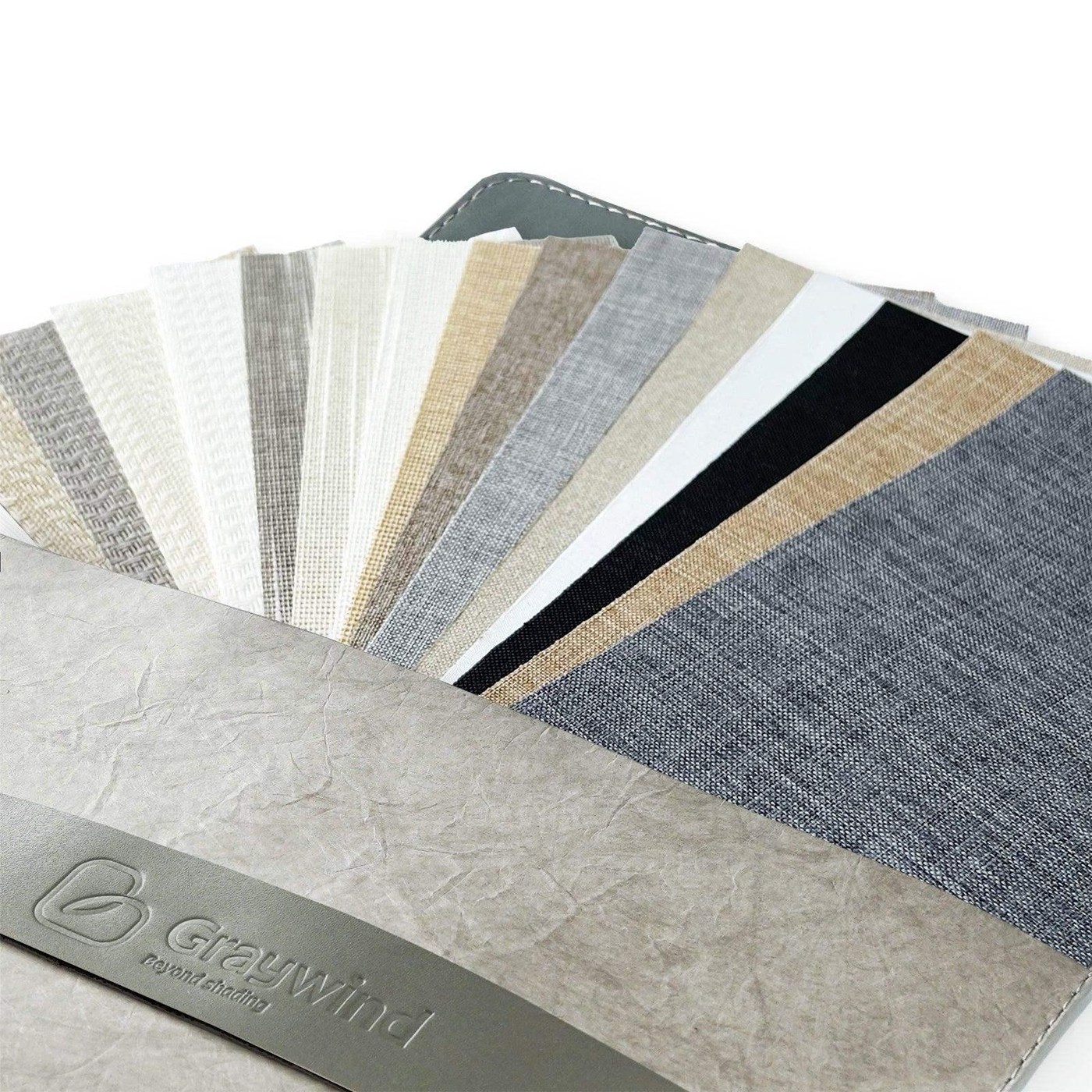
- Not ordering swatches. The catalog photos do not accurately represent how the fabric will look in your light. Always order free swatches from World Wide Shades.
FAQ: Solar Shade Openness
What openness gives the best view? 5% in charcoal or dark gray is the World Wide Shades default for view-priority rooms. 10% is more open but reduces privacy too much for most spaces.
Will 3% openness block enough sun for my home office? For most monitor screen work, yes — 3% reduces glare meaningfully without making the room feel dark. If you do photo or video editing where precise color matters, 1% provides better glare control.
Can I see out at night through solar shades? Minimally. Once interior lights are on, the inside is brighter than the outside and the shade becomes effectively opaque from the inside view. From the outside, observers can see in clearly through anything 5% or higher.
Are solar shades enough for bedroom privacy? For daytime, usually yes. For nighttime with interior lights on, no — pair with blackout or drapery, or use a dual roller system.
Do darker solar shades block more UV? Slightly. The bigger UV blocking factor is openness percentage. A 3% white blocks roughly the same UV as 3% charcoal — but dark colors have better perceived glare reduction.
How long does World Wide Shades take to ship solar shades? Most solar shade orders ship in 7–14 business days. Call (844) 674-2716 to confirm specific fabric stock and lead times.
The Bottom Line
The right solar shade openness depends on the room's primary purpose. View priority? 5% in charcoal. Privacy priority? 1% in dark color. Universal default? 3% in any color that matches the wall. Pair solar shades with blackout in bedrooms and the home is properly covered for both daytime glare and nighttime sleep.
Start your solar shade order at World Wide Shades, order free swatches in multiple openness levels, or call (844) 674-2716 to talk through your specific rooms.