Why French door measurements are different (and why 1/8 inch matters)
French doors look simple, but they’re one of the easiest places to order the wrong shade. You’re measuring a moving surface with glass, trim, weatherstripping, and a handle that sticks out into the shade’s path.
A small error creates big consequences:
- A shade that rubs on the handle can fray fabric, stall a motor, or make a chain clutch feel “sticky.”
- A shade that’s too wide can hit side trim and bind.
- A shade that’s too narrow can leave light gaps you’ll notice every morning.
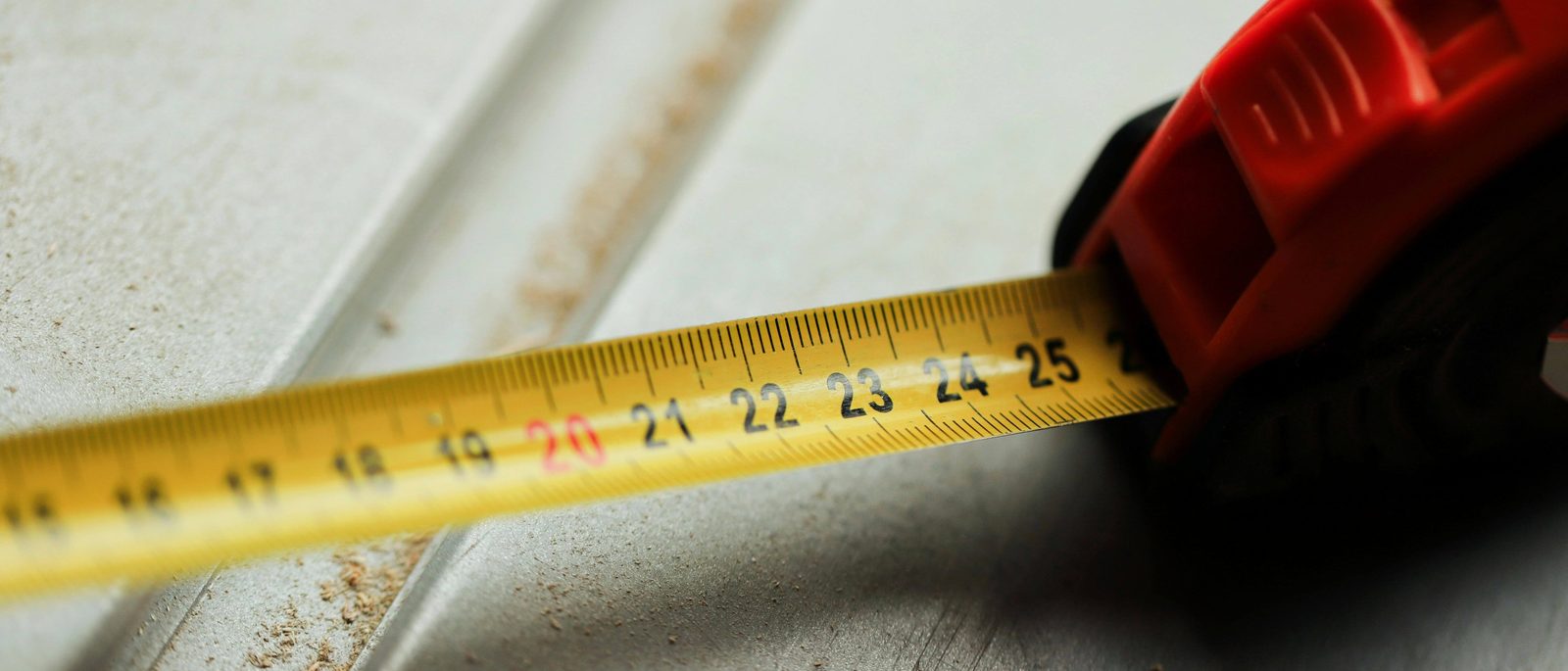
World Wide Shades recommends measuring in inches to the nearest 1/8 inch for French doors, then double-checking width at three points before you order.
Tools you need (and the 60-second pre-check)
Before you start, gather:
- Steel tape measure (preferred over cloth)
- Pencil and notepad (or notes app)
- Small level (optional but helpful)
- Painter’s tape (to mark handle clearance)
Do this quick pre-check first:
- Open and close the door once while watching the glass area and trim.
- Identify anything that protrudes: handles, locks, door levers, alarm sensors, or mullions.
- Decide whether an inside mount is realistic (many French doors are outside-mount by necessity).
If you’re not sure which mount is right, start your project in the World Wide Shades Builder and choose “French door” so you see options designed for door-clearance.
French door roller shade mounting options: inside mount vs outside mount
Inside mount means the shade sits within a recessed area. Many French doors don’t have a deep enough recess because the glass insert is close to the door face.
Inside mount usually works only when:
- You have a flat, recessed frame around the glass, and
- There’s enough depth for brackets and roll diameter, and
- The handle is far enough away that the bottom rail won’t collide.
If you want a clean, built-in look and your door has a true recess, World Wide Shades can help you size it precisely—use the Contact page or call (844) 674-2716 for a quick measurement review.
Outside mount puts the shade on the door face, typically above the glass and covering it.
Outside mount is usually the best choice because:
- You can choose a width that fully covers the glass and minimizes edge gaps.
- You can position the shade to avoid the handle.
- You’re not constrained by a shallow recess.
If you need maximum privacy, pair outside mount with a room-darkening fabric and confirm edge overlap in the World Wide Shades Swatches & Samples page so you know how much light will pass through.
Step-by-step: how to measure a French door for a roller shade
The safest approach is to measure width at three points and height at two points, then choose the “smallest” measurement for inside-mount and the “largest practical coverage” for outside-mount.
Measure the visible glass area at:
- Top of the glass
- Middle of the glass
- Bottom of the glass
Write down all three.
If these numbers differ by more than 1/4 inch, your frame is likely slightly out of square. In that case, World Wide Shades strongly recommends an outside mount so the shade can operate smoothly without side binding.
Measure the visible glass height at:
- Left side
- Right side
Write down both.
Look above the glass:
- Do you have a flat area for brackets?
- Is there trim that could force your brackets to sit crooked?
If the top surface is narrow or uneven, you may need to shift bracket placement slightly or use outside mount that spans trim. If you want a fast confirmation, start sizing in the World Wide Shades Builder and share your rough measurements.
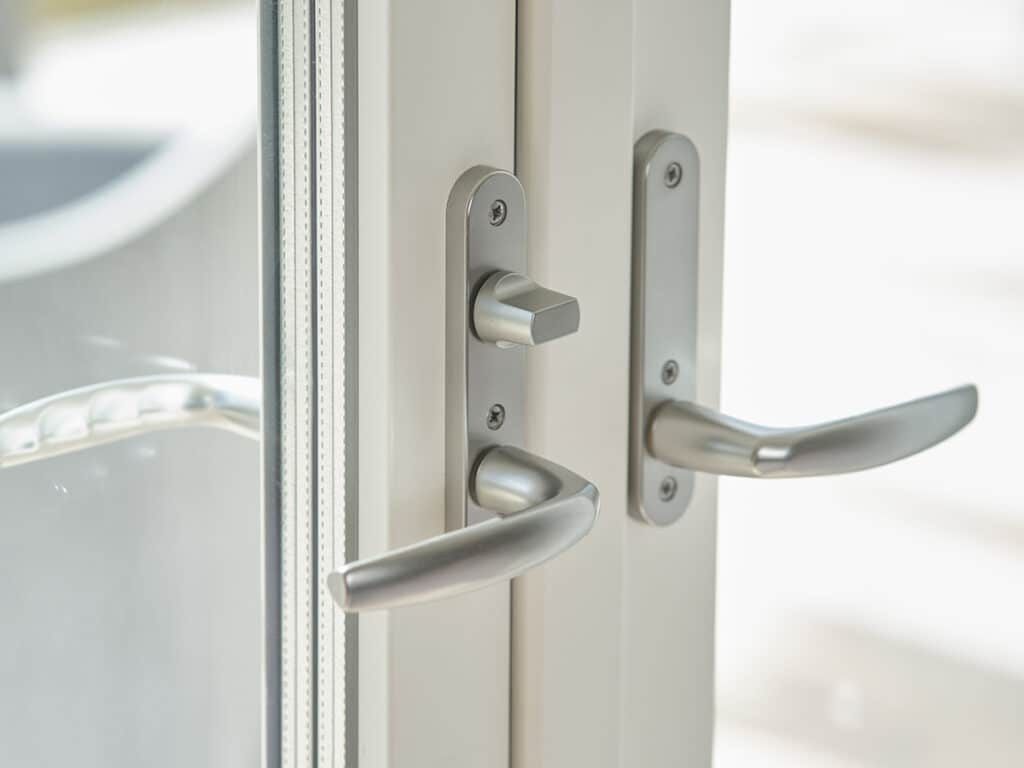
Your handle/lever is the number one reason French door shades fail.
Measure two clearances:
- Handle projection: how far the handle sticks out from the door face.
- Handle height zone: the vertical area where the handle could contact the moving shade or bottom rail.
A practical method:
- Close the shade path mentally from the top to the bottom of glass.
- Place painter’s tape around the handle zone as a reminder.
If you’re ordering a shade that sits over the handle zone, you need enough stand-off or a mounting position that keeps the fabric and bottom rail clear.
If you want help translating clearance into a bracket position, call (844) 674-2716—World Wide Shades can walk through it in a few minutes.
For outside mount, you typically want the fabric to extend beyond the glass to reduce edge light gaps.
A common target is about 1 to 2 inches of overlap per side (2 to 4 inches total beyond glass width), as long as it doesn’t hit door trim or hardware. The exact number depends on your door layout.
Example:
- Glass width: 22 1/2 inches
- Desired overlap: 1 1/2 inches per side
- Target shade coverage width: 25 1/2 inches
If you’re trying to maximize privacy in a bedroom, also read best-window-shades-bedroom and blackout-curtains-vs-blackout-shades to choose the best light control approach.
For outside mount, decide whether you want to cover:
- Only the glass, or
- Glass plus some trim (for better light blocking)
Most homeowners measure from the point where the bracket will mount down to where they want the bottom rail to land.
A practical target is to cover the full glass height plus 1 to 3 inches beyond the bottom edge of the glass for a cleaner finished look.
If you’re unsure, start your sizing in the World Wide Shades Builder and choose the coverage style that matches your goal.
Inside-mount measurement method (if your French door has a real recess)
If you truly have a recessed frame and want an inside mount:
- Measure the inside width at top, middle, bottom.
- Use the smallest width as your order width.
- Measure the inside height at left and right.
- Use the largest height as your order height.
Inside mount on a door can be unforgiving. If any measurement is tight, it’s usually better to switch to outside mount to prevent rubbing and uneven rolling.
If you want a second opinion, send your numbers via Contact or call (844) 674-2716—World Wide Shades reviews measurements daily.
Common French door measurement pitfalls (and how to avoid them)
Even if your handle doesn’t touch the fabric when the shade is down, it can hit the bottom rail when the shade is partially raised.
Fix: check clearance with the shade at multiple positions, not just fully up or fully down.
Trim can look like part of the opening, but it might not be flat enough for brackets.
Fix: identify your bracket surface first, then measure coverage based on where brackets can actually sit.
You’ll almost always see light gaps when there’s no side overlap.
Fix: add intentional overlap (often 1–2 inches per side) when outside mounting.
A door can be slightly out of square even in newer homes.
Fix: measure width at three points. If the variation is over 1/4 inch, prefer outside mount or contact World Wide Shades for guidance.
Choosing fabric and opacity for French doors
French doors often need both privacy and daily usability.
- Light-filtering fabrics: soften glare while keeping daylight.
- Room-darkening fabrics: reduce light and improve privacy.
- Blackout fabrics: best for sleeping areas, media rooms, or street-facing doors.
If you need glare control with UV protection, compare options in uv-protection-window-shades and light-filtering-shades-guide.
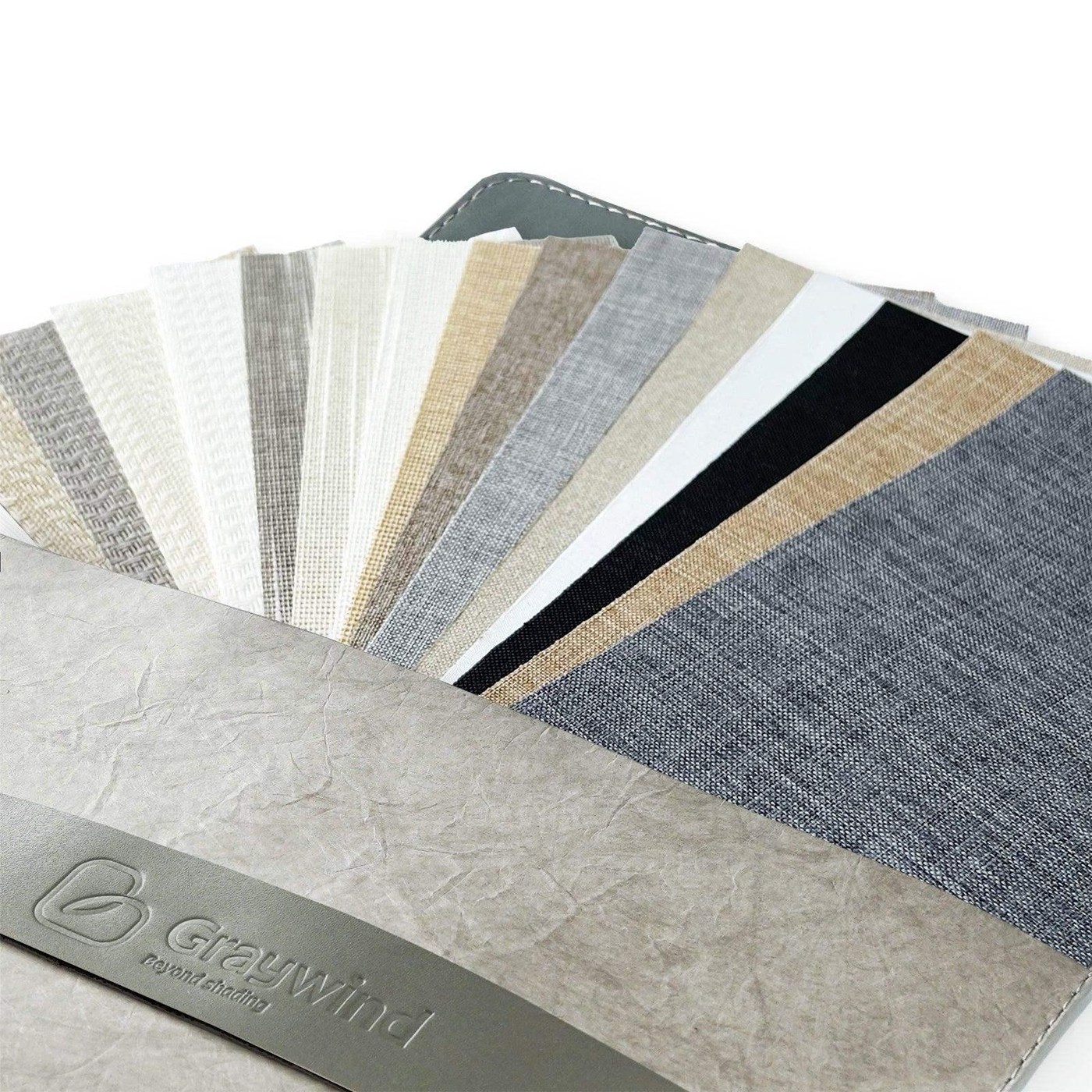
To see materials in person before you order, request sample materials from World Wide Shades Swatches & Samples.
When French doors need a different product (not a standard roller)
Some doors work better with alternatives, especially when the handle zone is complicated.
Consider:
- A slimmer roller system with a smaller roll diameter
- A different mounting height to clear the handle
- A coordinated solution for nearby windows so everything looks consistent
If your French doors are in a kitchen or bathroom zone, see roller-shades-kitchen-bathroom for moisture and wipe-clean fabric tips.
FAQ: Measuring French doors for roller shades
For outside mount, a common goal is 2–4 inches wider than the glass (about 1–2 inches of overlap per side) as long as the shade won’t hit trim or handles.
Most French door shades are sized to cover the glass area plus overlap for privacy. Measure the glass first, then decide overlap based on the door’s flat mounting surface and hardware clearance.
If width varies by more than about 1/4 inch, your frame is likely out of square. Outside mount is usually more forgiving and helps prevent the shade from rubbing.
Measure how far the handle protrudes and identify the vertical zone where it could touch fabric or the bottom rail. If you’re unsure, call (844) 674-2716 and World Wide Shades can help you choose a mounting position.
Yes—door-mounted shades are common for French doors. The key is placing brackets on a flat surface and choosing a width that clears trim and hardware.
Ready to order French door roller shades?
If you want a professional-grade fit without guesswork, start with the World Wide Shades Builder to configure a French door shade in minutes.
If you’d like a human to double-check your numbers, use Contact or call (844) 674-2716—World Wide Shades is here to help.