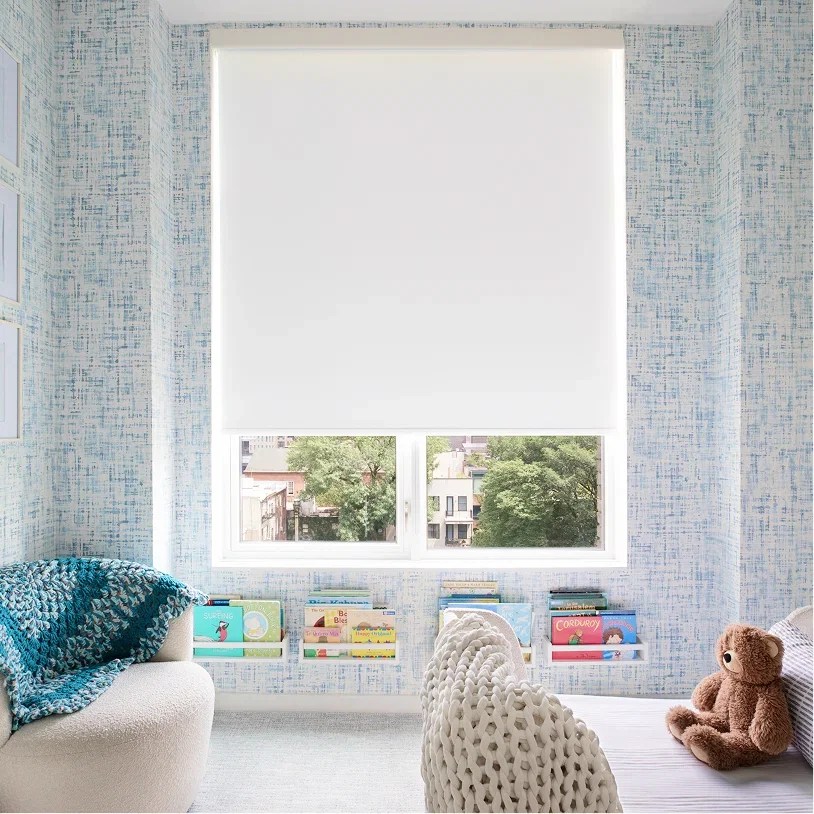
A darker nursery can make daytime naps and early-morning light more manageable, but darkness is only one part of a good window-treatment decision. Parents also need to consider accessible cords, crib placement, light gaps, installation, ventilation, and how easily the shade can be operated. Nursery blackout shades should be selected for the window and the household, not by a “blackout” label alone.
World Wide Shades helps families compare custom shade fabrics and cordless or motorized controls. This guide focuses on window-covering choices; it does not replace pediatric safe-sleep advice. A shade can change room light, but it cannot make an unsafe sleep space safe or guarantee that a baby will sleep longer.
Put cordless operation first
For homes with young children, prioritize a cordless window covering. The U.S. Consumer Product Safety Commission says the safest option when young children are present is to go cordless because accessible cords on blinds, shades, draperies, and other coverings can create a strangulation hazard. See the CPSC’s window-covering cord safety guidance for its recommendations.
Cordless operation may use a spring mechanism, a motor, or another product-designed system. Ask how the shade is raised, whether the bottom rail is reachable, and whether the control includes any cord, chain, loop, or tension device. Do not assume a cord is safe because it is short, behind furniture, or used only by an adult. Keep cribs, beds, and furniture away from accessible window-covering cords while older treatments remain in use.
World Wide Shades can help you compare cordless and motorized configurations for a nursery. For broader household advice, read child-safe window treatments and pet-friendly window treatments. Contact World Wide Shades if you want the control type confirmed in writing.
Understand what blackout means
Blackout fabric is designed to block light through the cloth, but light can still pass around the edges, between the shade and frame, or through gaps created by hardware. A roller shade with no side channels may leave a narrow perimeter glow. That can be acceptable for some families and frustrating for others, especially when a streetlight or sunrise reaches the crib area.
Room-darkening materials generally reduce transmitted light without necessarily blocking it fully. The name printed on a product page is not a universal test result, so ask whether the shade is blackout through the fabric, how the manufacturer describes the edge gaps, and what accessories are available. A cassette can hide the roller; side channels can improve coverage when the opening and product support them.
World Wide Shades can help compare edge-treatment choices before you order. For a useful product comparison, see blackout curtains versus blackout shades and best window shades for bedrooms. Order fabric swatches to assess color and opacity in the nursery.
Plan the crib and furniture layout separately
Follow pediatric guidance for the infant’s sleep space independently of the shade decision. The American Academy of Pediatrics recommends a separate sleep space with a firm, flat mattress and fitted sheet and advises keeping soft objects out of the infant sleep area; review its safe sleep recommendations. Do not place a crib or other furniture where it creates access to window cords or encourages climbing.
If you plan to move a crib, dresser, or chair, consider the door swing and the shade’s bottom rail as well. Keep the control accessible to an adult without dangling a cord near the crib. Motorized operation can move the shade from across the room, but set up the remote or wall control where a child cannot play with it and follow the manufacturer’s installation instructions.
World Wide Shades can help you choose a covering and control that fit your room layout, while a pediatrician can answer medical or safe-sleep questions. For coordinated room light, compare UV protection shade options and window shade color choices. Talk with the team about the window and control placement.
Measure for coverage around the frame
Decide whether the shade will sit inside the window recess or mount over the trim. An inside mount keeps the treatment close to the glass, but it may leave small side gaps and depends on the recess being deep and square enough for the chosen headrail. An outside mount can overlap the frame and improve coverage, but it needs adequate wall space above and beside the opening.
Measure width at the top, middle, and bottom and height at the left, center, and right; record each number rather than averaging. Note the sill, handles, locks, trim, and any obstructions. Do not subtract a clearance unless the manufacturer’s instructions tell you to. A supplier may make specific deductions for hardware, and a homemade subtraction can produce a shade that is too narrow.
World Wide Shades can help review photos and measurements before a custom order. If the opening is shallow, see inside-mount shades with limited depth; if it is near a door or furniture, compare roller shades for French doors. Use the builder to explore a configuration after you have the dimensions.
Select a fabric that balances darkness and daytime comfort
Blackout cloth can make an afternoon nap area darker, but a room still needs appropriate ambient light for safe movement and caregiving. Consider how the space will be used when the shade is lowered: Will an adult need to see a monitor, change bedding, or move around without turning on a bright overhead light? A dimmable lamp or a separate lighting plan may be more useful than relying on the shade for every task.
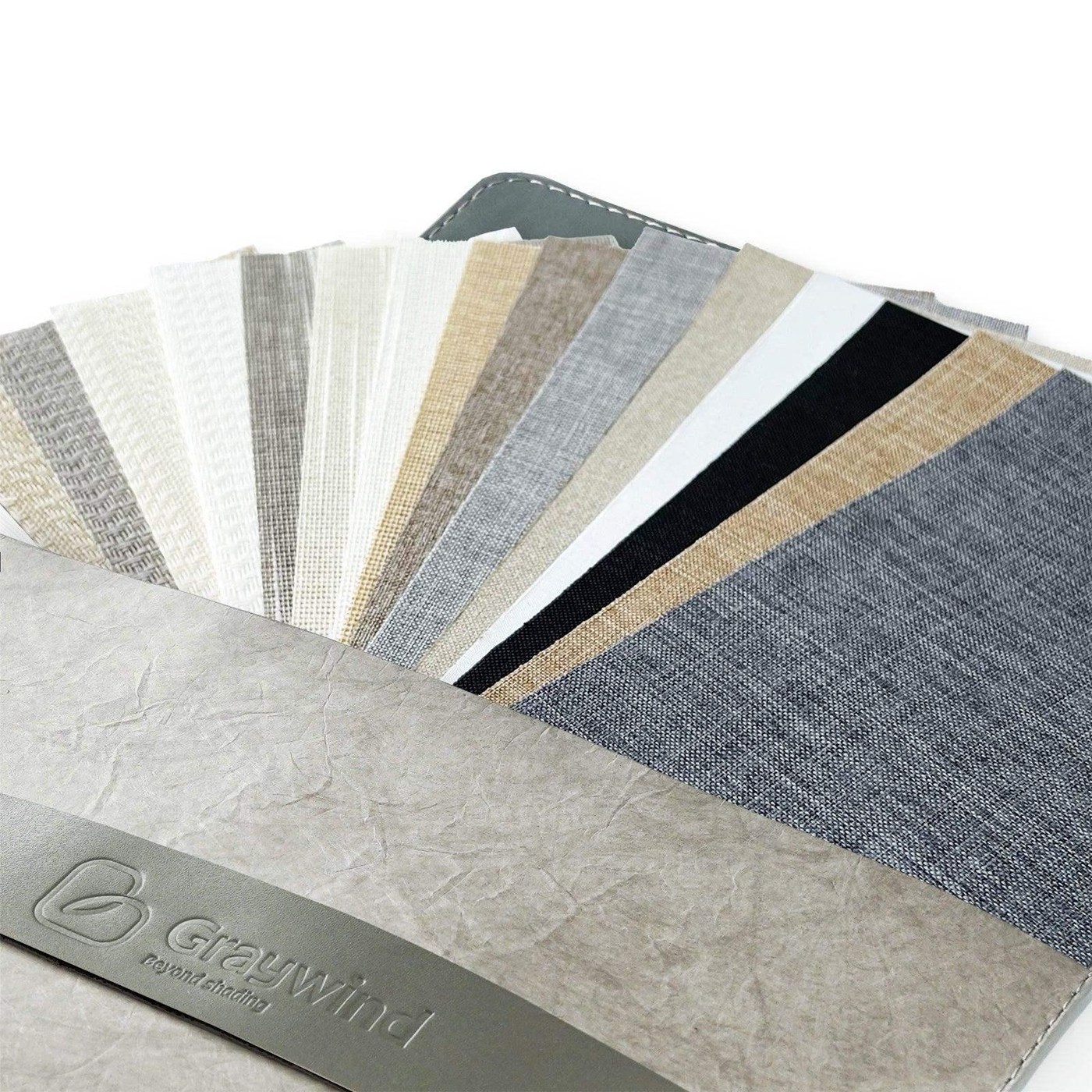
Fabric color affects the room’s appearance and how the sample looks in daylight. A white or cream backing may look different from the room-facing color; ask which side faces inward and whether the backing is part of the quoted construction. If the nursery already uses a specific wall color, view a swatch beside it morning and evening before choosing several matching shades.
World Wide Shades offers swatches to compare the material in your own room. For a broader textile discussion, review best fabrics for roller shades and window shades color guidance. Start a design in the builder once you have selected the general opacity and color family.
Choose manual cordless or motorized control
A cordless spring system can be simple for a shade that an adult can comfortably reach. On a tall or wide nursery window, motorized operation may be easier, especially when the shade is adjusted several times a day. Ask whether the motor runs on batteries, plugs into an outlet, uses hardwired power, or has another power source; also ask how charging or battery replacement works.
If you choose motorization, decide who can operate it and how controls are stored. A wall switch placed out of children’s reach may be more practical than a small remote that gets misplaced. Smart-home schedules can automate a routine, but they should remain optional and should not substitute for checking the room’s actual light and temperature.
World Wide Shades can help compare control types for the nursery and adjacent bedrooms. See smart-home motorized shade setup and Alexa or Google Home shade routines. Call World Wide Shades at (844) 674-2716 if you have questions about power, grouping, or control placement.
Set realistic expectations for temperature and comfort
A blackout shade can change how much sunlight enters through the opening, but it is not an air conditioner, insulation repair, or substitute for a safe room-temperature plan. If the nursery has drafts, condensation, unusual heat, or moisture around the window, address the underlying window or building condition with a qualified professional. A shade may help with glare while leaving those issues unresolved.
Avoid assuming that a darker shade makes a room cooler in every installation. The result depends on glazing, sun direction, fabric, fit, and whether heat is trapped between the glass and shade. When heat management is important, ask about the fabric’s intended use and compare the window itself with the energy-efficient window shades guide. Do not rely on an unverified percentage claim for a custom interior covering.
World Wide Shades can help explain product options, but temperature concerns that affect infant comfort should be discussed with a pediatric clinician or building specialist as appropriate. Use the contact page for fabric and sizing questions; for general product ideas, see best shades for bedrooms.
Make installation and maintenance part of the plan
Mount brackets into an appropriate surface and follow the shade’s instructions. Drywall alone may not be suitable for the hardware; the required fasteners depend on the wall or frame. If you are not certain where the studs or framing are, use a qualified installer. Keep packaging, spare parts, and tools out of the nursery after installation.
Check that the bottom rail moves smoothly, the shade remains aligned, and any control is secured as designed. Clean fabric according to product instructions rather than soaking or scrubbing it with a household solvent. If a motor slows or the shade binds, stop repeated operation and inspect for an obstruction instead of pulling hard on the fabric.
World Wide Shades can help you compare installation requirements before purchase. Read how to install roller shades and window shade warranty questions. Request support if you need help understanding the selected product’s mounting instructions.
Coordinate nursery decisions across the home
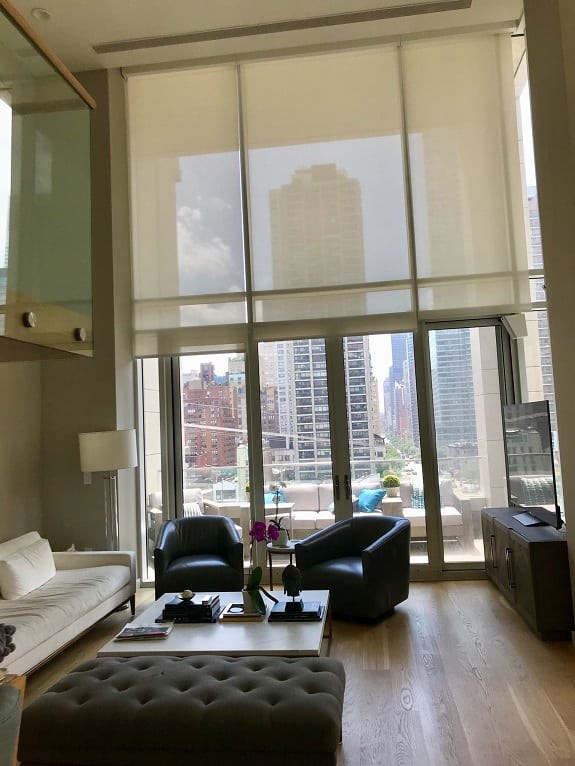
If your order also covers a skylight, tall window, or glazed door, those openings have different access and clearance needs. Compare skylight roller shade light control, roller shades for tall windows, French-door shade fit, and what to expect from a custom shade quote.
FAQs about nursery blackout shades and safety
The fabric’s light-blocking ability is separate from operating safety. Choose a cordless covering when young children are present, install it correctly, and keep furniture away from accessible window cords.
Not necessarily. Blackout fabric blocks light through the material, but light may remain around the sides, top, or bottom. Side channels or a different mounting arrangement may reduce gaps if the product supports them.
No universal label guarantees identical performance across brands. Ask whether the material blocks light through the fabric and what perimeter light gaps to expect from the specific shade and mount.
Follow safe-sleep and household safety recommendations rather than using furniture to hide a cord. The AAP guidance addresses the sleep surface and objects in the sleep space; the CPSC advises choosing cordless window coverings where young children are present.
Motorized systems avoid a dangling operating cord when designed and installed as intended, but they still require safe mounting, child-appropriate control placement, and proper maintenance. Confirm the product’s controls and power setup.
Yes. World Wide Shades can help compare blackout fabric, mounting, and cordless or motorized controls. Call World Wide Shades at (844) 674-2716 for product and measurement questions.