French doors bring daylight and outdoor access into a room, but their glass panels move, handles project, and locks need clear operation. A roller shade that fits an ordinary window may interfere with a door knob, rub the glass, or hit trim when the door swings. Good planning starts with door movement and hardware clearance, then moves to fabric, mounting, and operation.
World Wide Shades helps homeowners plan custom roller shades for glazed patio doors, paired French doors, and individual door lites. The reliable approach is to treat each moving panel as its own opening and verify clearances with the door closed and open.
Map how each door moves
First identify whether the panels swing inward or outward, which leaf is active, where the hinges sit, and how far the handles and locks project. Open each door fully and note its path relative to nearby furniture, walls, and adjacent shade hardware. If one leaf is fixed most of the time, its shade may still need to match the active leaf visually.
Sketch each panel with glass width and height, visible muntins, handle location, and trim. Measure from the glass or frame according to the product’s instructions; “door width” may mean the entire slab, the glazed opening, or the area available for a bracket. A photo with the door closed and another with it open gives a designer better information than a single straight-on picture.
World Wide Shades can help translate those details into an orderable configuration. If the doors open onto a patio, compare the operation with roller shades for French doors and outdoor roller shades for patios. Start a shade configuration once you have the panel dimensions.
Clear the handle, lock, and door swing
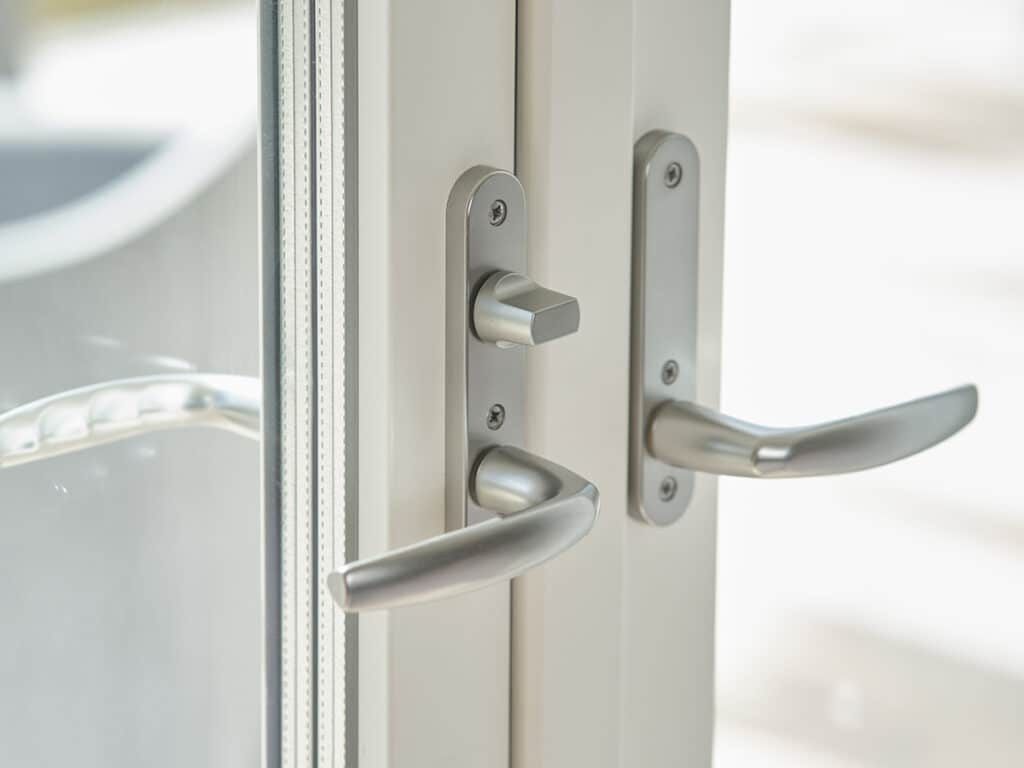
Handle clearance is the most common fit concern. Measure how far the handle projects from the glass or mounting plane and how much room exists between it and the proposed shade. Consider the full handle movement: a lever may rotate, a thumb latch may need space for fingers, and a lock may extend beyond the knob. A shade that clears when the door is shut can still collide when a person reaches around it.
An outside mount can shift the roller above or beyond the handle, but that approach needs enough flat frame or wall. An inside mount can keep the treatment close to the glass, yet it may leave too little room for a bulky headrail or handle. Small extension brackets can change the shade’s projection; they should be specified for the selected model and installed into a suitable surface.
Do not rely on an arbitrary clearance number from another door. Hardware dimensions differ, and custom brackets change the position. World Wide Shades recommends recording the handle projection and confirming the finished shade position in writing. If the frame is unusually shallow, review inside-mount shades with shallow depth before ordering.
Choose between one shade per door and a shared treatment
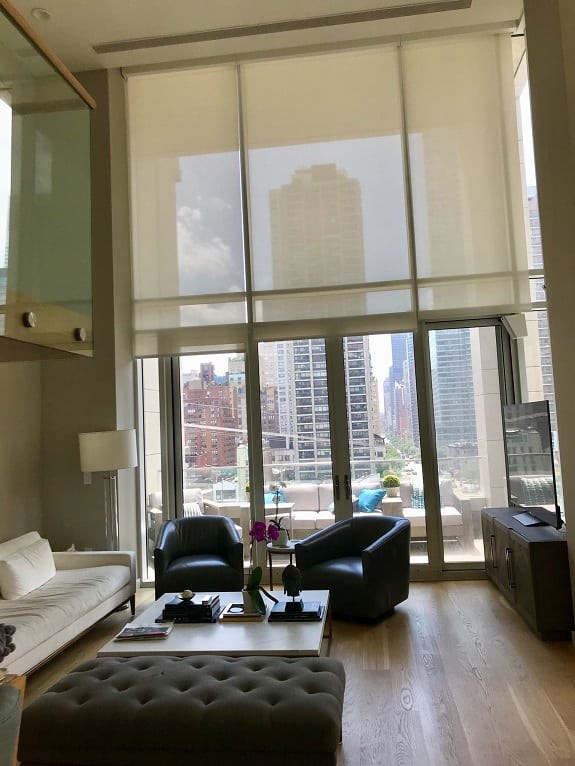
One shade per door panel allows each moving leaf to open without lifting a large shared shade. It also keeps the treatment aligned to the glass and makes it easier to manage privacy on one side only. A shared outside-mounted shade across both doors can look continuous, but it may need to be raised before the doors swing and can be harder to operate across a wide span.
If you use separate rollers, keep headrail height and fabric color coordinated. Slight differences in frame width can make nominally equal door panels visibly uneven; measure both independently. Ask whether the fabric width will be narrower than the overall bracket-to-bracket width and how large the side gaps will be at the glass.
World Wide Shades can help compare a paired layout and a continuous shade. For another narrow or tall opening, see roller shades for tall windows. If you are deciding among product types, the guide to custom roller shades versus Home Depot options explains how fit and customization change the decision.
Decide what light, privacy, and view matter most
French doors often face a yard or street, so the right fabric depends on time of day. Solar screen cloth can preserve a daytime view while softening glare, but privacy reverses when it is brighter indoors than outdoors after dark. Light-filtering fabric gives a softer glow; room-darkening fabric blocks more light through the material, but may still allow light at side gaps.
If the room is a bedroom, consider whether you need deeper darkening and how the shade behaves around the door edges. If the doors open frequently, think about whether the bottom rail could swing or tap the glass. A tensioned or guided system may keep fabric closer to the door, but it must be compatible with the product and door construction.
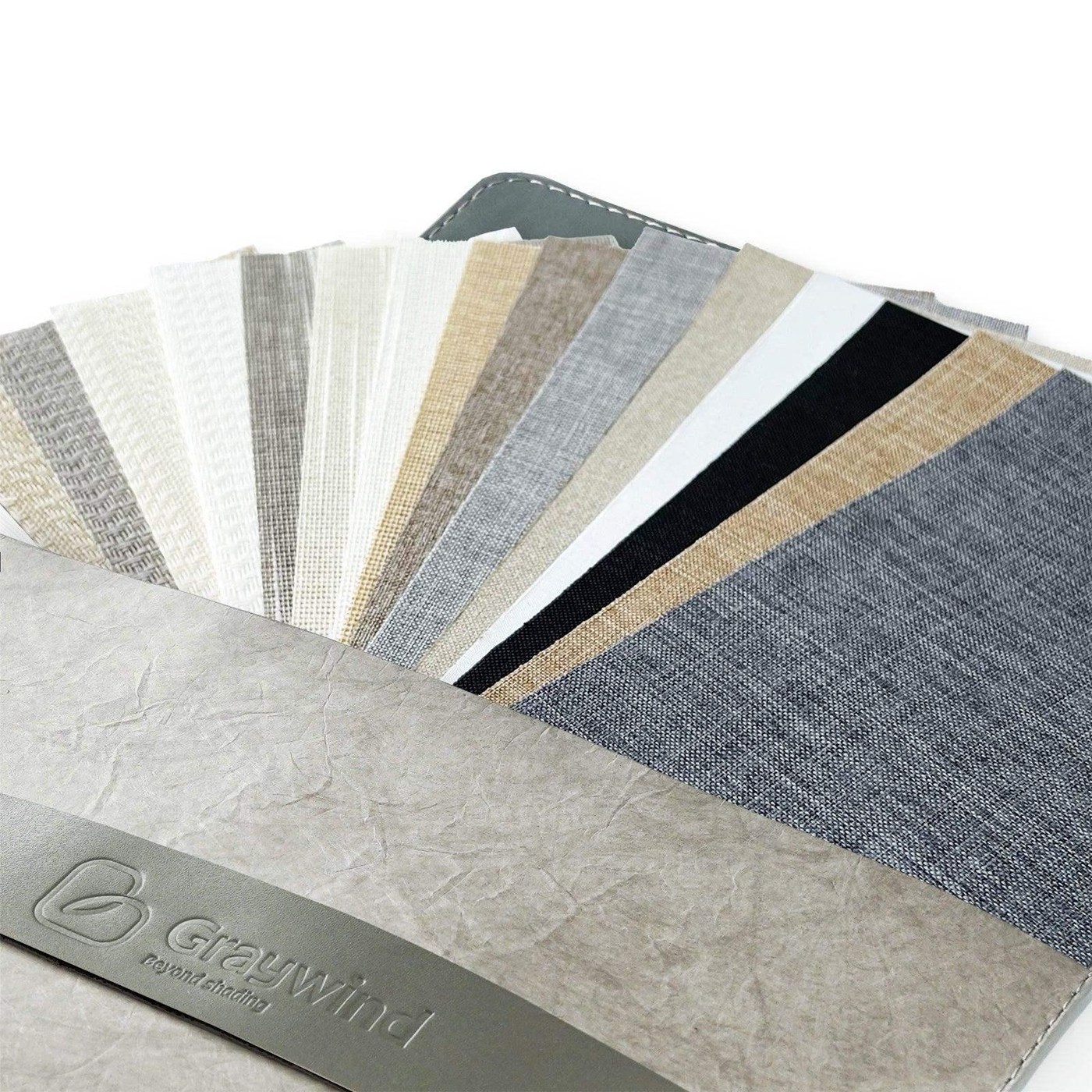
Order physical fabric swatches from World Wide Shades and view them against the door in morning, afternoon, and nighttime conditions. For a wider comparison of weave, opacity, and durability, read best fabrics for roller shades, light-filtering shades, and roller shade valance options.
Choose a control that suits daily door use
A shade on a frequently used door can be raised several times a day. A cordless spring system or motorized shade may be more convenient than a dangling chain, especially where people carry groceries or children pass through. Confirm how the bottom rail is operated, whether the control is reachable without blocking the doorway, and whether the shade can remain lowered while the door is opened.
For motorization, check the battery or power location, remote grouping, and whether the selected system is meant for a moving door panel. For a manual system, clarify whether the shade can be raised and lowered without pulling against a lower guide. Do not add a tether or improvised hook unless it is part of the manufacturer’s designed installation.
World Wide Shades can help compare cordless and motorized controls for doors. If you are planning connected operation, see smart-home motorized shades setup. Call World Wide Shades at (844) 674-2716 to discuss handle clearance and control placement before ordering.
Safety and use around children
For homes with young children, choose a cordless covering where possible. The U.S. Consumer Product Safety Commission says the safest option when young children are present is to go cordless, and notes that accessible window-covering cords can create strangulation hazards. Its window-covering cord guidance is a useful reference when selecting a control for an active doorway.
If you have existing corded coverings, keep children away from operating cords and follow CPSC retrofit advice; replacing a cord with a homemade tie does not remove every hazard. Where a door opens onto an exterior step or balcony, also consider how a lowered shade affects a person’s ability to see outside and operate the latch.
World Wide Shades can help you select cordless or motorized options for a family space. Read child-safe window treatments and pet-friendly window treatments for related household considerations. Use contact if the opening has a continuous loop, unusual latch, or child-access concern.
Check the mounting surface and finish
Door frames can be narrow, rounded, or interrupted by trim. Confirm whether brackets can attach to the top of the frame, the door itself, or the adjacent wall, and whether the surface is solid enough for the hardware. Drilling into a glass panel is not a routine shade installation; choose a method designed for the specific door and follow the door maker’s guidance.
Check for weatherstripping, hinges, muntins, and casing projections. The shade should not compress a seal or interfere with door latching. If attaching to the door slab, remember that the shade and hardware move with it; verify that a fully raised stack and bottom rail do not obscure glass or strike an adjacent wall.
For a clean upper edge, compare an exposed roller with a valance or cassette. Roller shade valance options explains the visual difference and extra space each enclosure can require. World Wide Shades can help you match finish details; explore the builder with your door photos nearby.
Make an accurate quote request
For each panel, send opening width and height, the door manufacturer or a clear photograph, hinge side, swing direction, handle projection, and preferred mounting surface. Add the goal—view-through glare control, privacy, room darkening, or a particular color—and whether the shade should be motorized. These inputs reduce back-and-forth and make it easier to compare alternatives.
Ask the proposal to state the exact finished dimensions, fabric collection and color, control, valance, bracket style, installation scope, and any exclusions. If a supplier recommends an outside mount, ask how far it will project and whether it will clear the handle during a full swing. World Wide Shades can review those questions before fabrication so the selection fits the door, not only the glass.
To coordinate multiple rooms or door types, request help from World Wide Shades. You can also compare color guidance in the window shades color guide and start with the shade builder.
Coordinate French doors with adjacent shade plans
If your project also includes a high opening, overhead glass, or a nursery, compare the separate constraints before approving one combined order. See roller shades for tall windows, skylight roller shade fit and light control, the custom quote process, and cordless blackout shades for nurseries.
FAQs about roller shades for French doors
Yes, if the shade and brackets are compatible with the door’s frame or slab and clear the handle, lock, hinges, and swing. Confirm the mounting method for the specific door before drilling or ordering.
Separate shades usually let each door move independently and make one-panel light control possible. A shared outside-mounted shade creates a continuous appearance, but may need to be raised before opening the doors.
There is no single clearance figure for every handle and shade. Measure projection and movement, then confirm the finished bracket and fabric position against the selected hardware drawing.
Solar screen can reduce glare while keeping some view, light filtering softens daylight, and room-darkening blocks more light through the fabric. Choose based on privacy needs, room use, and nighttime light gaps.
They can avoid accessible operating cords. CPSC identifies cordless coverings as the safest option when young children are present; follow the product’s instructions and keep the door area clear of other hazards.
Yes. World Wide Shades can help review handle projection, swing direction, and mounting options. Call World Wide Shades at (844) 674-2716 with photos and measurements.