Why arched and half-round windows require a different measuring mindset
Arched windows look stunning, but they’re not forgiving. A rectangular window lets you “cheat” with overlap and square corners; an arch has curves, spring points, and uneven trim. If you’re off by even 1/8 inch, gaps and poor fit are obvious.
The two big goals when measuring are:
- Capture the true geometry (arch width, radius, and springline height)
- Identify a mounting method that can actually be installed and operated
If you want an expert to sanity-check your numbers before you order, call (844) 674-2716—World Wide Shades can confirm whether your measurements align with the shade type you’re choosing.
Terms you need to know (simple definitions)
The full width across the arch at its widest point.
Half the diameter. Radius is the distance from the center of the circle to the curve.
The point where the curve begins (where the arch “springs” up from the straight sides).
The vertical height from the springline up to the top of the arch.
The full height from the bottom of the opening to the very top of the arch.
These terms matter because many custom shade specs for arched windows ask for springline width and springline height rather than only total height.
Tools and materials (what makes measurements more accurate)
Use:
- Steel tape measure (not cloth)
- Straightedge or level (24 inches is ideal)
- Pencil and paper
- Painter’s tape
- Cardboard or kraft paper (for making a template)
For complex arches, a physical template is often the most reliable way to get a tight fit. World Wide Shades can help you decide whether you should measure numerically or create a template—start in the World Wide Shades Builder and choose an arched window type.
Step-by-step: measuring a true half-round window (semi-circle)
A true half-round is a perfect semi-circle on top of a straight base.
Measure the width across the arch at the base of the curve (springline). Do it at:
- Left edge
- Middle
- Right edge
If the numbers differ, use the smallest measurement for inside-mount situations.
If your half-round is truly circular:
- Radius = Diameter / 2
Example:
- Springline width (diameter): 60 inches
- Radius: 30 inches
If the window is not a perfect semi-circle (common), you’ll rely on springline height rather than pure radius.
Measure vertically from the springline (where the curve starts) to the top of the arch.
This measurement is critical for matching the curve.
Measure the depth of the recess where brackets or the shade frame would sit.
Depth determines what you can mount. If the recess is shallow or uneven, outside mount may be required.
If you’re also measuring skylights or angled windows, see skylight-shades-guide for angle and depth considerations.
Step-by-step: measuring an arch that is not a perfect half-round
Many “arched” windows are elliptical or have flatter curves.
Measure the width where the arch begins.
Measure from the springline to the apex of the curve.
Measure from the bottom of the opening to the top of the arch.
Measure the width at a point halfway between springline and apex.
This extra measurement helps confirm whether the arch is closer to circular or elliptical.
When in doubt, a paper template is the safest path for a “non-standard” arch.
How to make a template for an arched window (best for tight fits)
If your arch is irregular or your trim is ornate, a template can reduce surprises.
- Tape kraft paper or cardboard over the opening.
- Trace the inside edge carefully.
- Cut the template slightly large.
- Trim gradually until the template fits the opening with minimal gaps.
- Label the template: top, bottom, left, right, and window location.
If you’d like guidance on whether a template is necessary for your project, contact World Wide Shades or call (844) 674-2716.
Inside mount vs outside mount for arched windows
Inside mount works when:
- The recess is deep enough
- The surface is reasonably square
- You can securely fasten mounting hardware
Inside mount tends to show smaller gaps when the opening is consistent, but it can highlight imperfections when the opening is uneven.
Outside mount may be better when:
- The recess is shallow
- The opening is out of square
- You need to hide uneven edges with overlap
For rooms where light control matters (bedrooms, nurseries, media rooms), outside mount can also improve light blocking—compare strategies in best-window-shades-bedroom and blackout-curtains-vs-blackout-shades.
Measuring common arch styles (quick reference)
Different arch shapes need slightly different measurements. Use this as a checklist.
- Springline width (diameter)
- Springline height
- Mounting depth
- Springline width
- Springline height
- Mid-curve width (halfway up)
- Total height
- Springline width
- Springline height
- Two mid-curve widths (at 1/3 and 2/3 up)
- Rectangle width and height
- Arch springline width and springline height
- Mullion widths (if present)
If your arch is part of a Palladian window arrangement, also read best-roller-shades-palladian-fan-window to compare solution paths.
Choosing the right shade type for arched windows
Not every shade style works in a moving arch.
Common approaches include:
- Fixed arch shades (non-operable): purely decorative light filtering
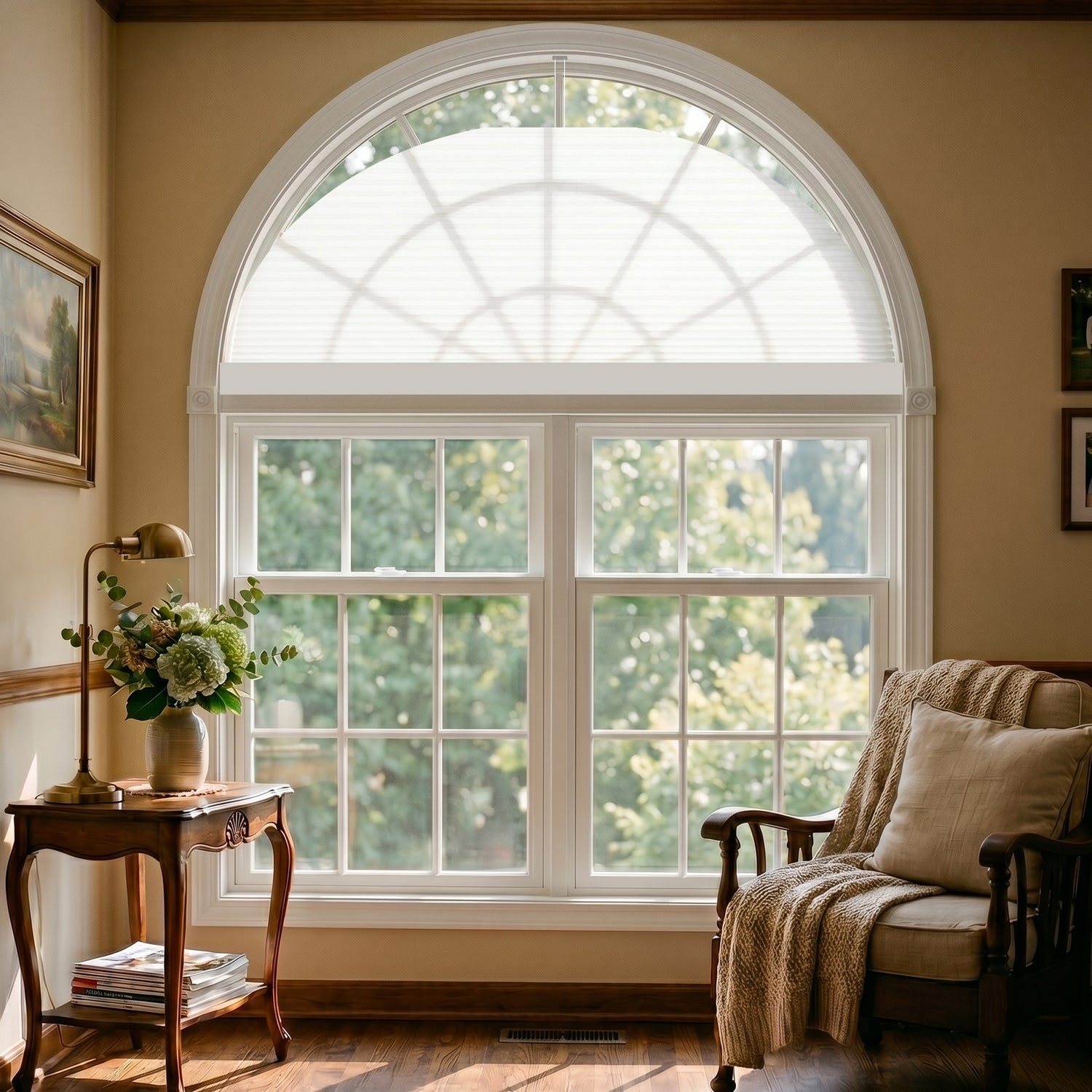
- Coordinated rectangular shade below + fixed arch above: the most popular “best of both” solution
- Specialty systems designed for curves
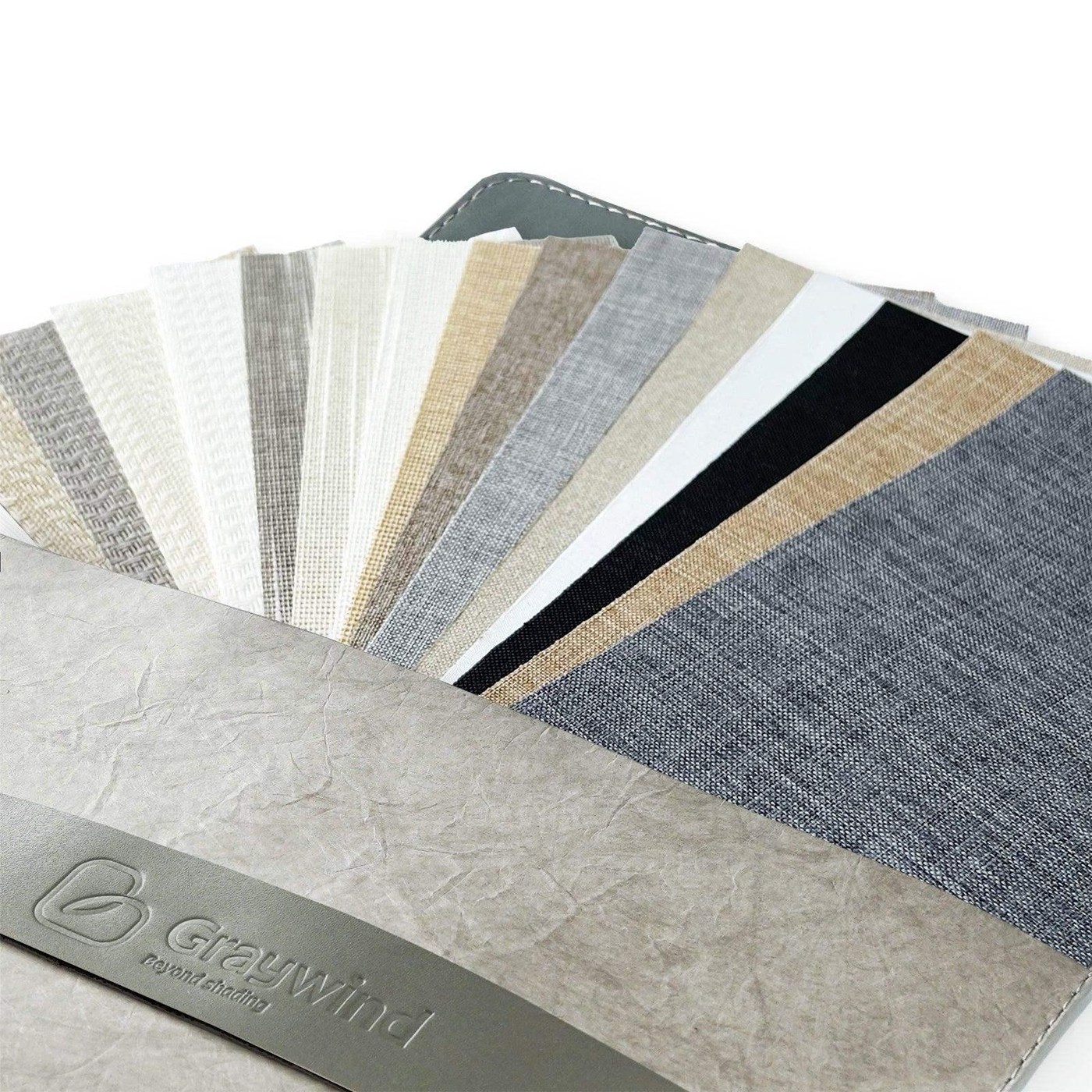
If you have a rectangle window under the arch, consider coordinating fabrics so the whole wall looks intentional. You can preview options in the World Wide Shades Swatches & Samples page.
For overall design decisions, window-shades-color-guide and window-shade-trends-2026 are helpful companions.
Accuracy tips that prevent re-orders
Custom work is sensitive. Rounding to whole inches is a common reason arches don’t match.
Measure springline height on both left and right. Differences suggest the opening is not symmetrical.
Some arches have thick decorative trim that changes the “true” opening.
Most aren’t. That’s why springline height plus a mid-curve width (or a template) is safer.
Take a straight-on photo with a tape measure visible at the springline width and springline height. Photos help catch mistakes before you order.
World Wide Shades can review photos and measurements—start in the Builder or contact World Wide Shades.
Cost and lead-time expectations for arched custom work
Arched and specialty windows can take longer than standard rectangles because production and verification steps are more involved.
If you’re planning a remodel or a move-in timeline, read custom-roller-shade-lead-times-what-to-expect and how-much-do-custom-roller-shades-cost to set realistic expectations.
Room-by-room considerations for arched windows
If the arch is in a bedroom, you may need a coordinated blackout solution on the rectangle below.
Start with best-window-shades-bedroom and light-filtering-shades-guide, then choose fabrics in the World Wide Shades Builder.
South-facing arched windows can create glare and heat gain.
If that’s your situation, best-shades-south-facing-windows and energy-efficient-window-shades can help you choose a fabric that reduces glare without making the room cave-dark.
In new construction, trim thickness and caulking can slightly change the real opening.
For build timelines, read custom-shades-new-construction.
FAQ: measuring arched and half-round windows
Most half-round measurements include springline width (diameter), springline height, and mounting depth. Total height can also help confirm proportions.
Some systems ask for radius, but many custom solutions use springline width and springline height because real-world arches are often elliptical rather than perfectly circular.
If the curve is irregular, the trim is uneven, or you’re trying to minimize gaps, a template is often the safest method.
Measure in inches to the nearest 1/8 inch. Small rounding errors are more visible on curved windows.
Most roller shades are best for rectangular openings. A common solution is a roller shade on the rectangle below plus a fixed arch shade above using matching fabric—World Wide Shades can help you plan it.
Yes. Contact World Wide Shades or call (844) 674-2716 and share your springline width, springline height, and a photo of the opening.
Ready to order the right solution for your arched windows?
Start with the World Wide Shades Builder to choose an arched window configuration and see what measurements are needed.
If you want a quick measurement review, contact World Wide Shades or call (844) 674-2716.