South-facing windows are a double-edged sword. They flood your home with natural light all day, cut your winter heating bill, and make a room feel open and bright. But they also deliver relentless solar heat gain from late spring through early fall, pour harsh glare onto screens and furniture, and pump UV radiation into fabrics and flooring year-round. Getting the window treatment right on a south exposure means balancing all four of those forces simultaneously — and the wrong shade tips the scale badly in one direction or another.
This guide walks through how sun exposure works on south-facing windows, which south-facing window shades and fabric specs address each problem, and how to build a treatment system that stays comfortable in every season without blocking the view.
Why South-Facing Windows Are a Special Challenge
In the Northern Hemisphere, the sun travels along a southern arc from sunrise to sunset. At solar noon in New York City, the sun sits at roughly 73° above the horizon in June and only 27° in December. That low winter angle is helpful — it lets sunlight penetrate deep into a room, warming the floor and reducing heating load. The high summer arc, however, sends intense direct radiation straight through south glass for six or more hours per day.
South windows commonly generate two to three times more heat gain than north-facing windows. A standard double-pane window carries a Solar Heat Gain Coefficient (SHGC) of 0.27–0.40, meaning it admits 27–40% of incident solar energy as heat. On a 90°F July day in the Bronx, that translates to hundreds of watts pouring through a single large window — enough to overwhelm a room's AC zone by early afternoon.
South-facing glass also delivers the highest annual UV dose of any orientation. UV-A and UV-B radiation fade hardwood floors, bleach fabric, and degrade leather. Because UV transmits even on overcast days, protection is not just a summer concern.
SHGC and Openness Factor: The Two Numbers That Matter
SHGC is rated on a 0–1 scale. Lower numbers mean less solar heat admitted. Adding an interior shade creates a combined system SHGC that is meaningfully lower — sometimes 30–50% lower — depending on the shade's reflectivity and openness.
The key variable on the shade side is Solar Reflectance. A fabric with 70%+ solar reflectance (common in light-colored, metallized backings) bounces incoming radiation back through the glass before it converts to heat inside the room. A dark, open-weave fabric absorbs solar energy and re-radiates it inward — counterproductive in summer.
The second variable is Openness Factor (OF), the percentage of the fabric that is open weave:
- 1% OF: Very dense, blocks most light and heat. Good for glare-heavy workspaces.
- 3% OF: Balanced. Maintains an outside view while cutting significant heat and glare.
- 5% OF: More view, less heat control. Better for rooms with supplemental exterior shading.
- 10%+ OF: Primarily decorative. Minimal solar control on a south exposure.
For south-facing windows, World Wide Shades recommends starting at 3% openness or lower in most residential settings, moving to 5% only if exterior overhangs or large deciduous trees already moderate the direct load.
The Best Shade Types for South-Facing Windows
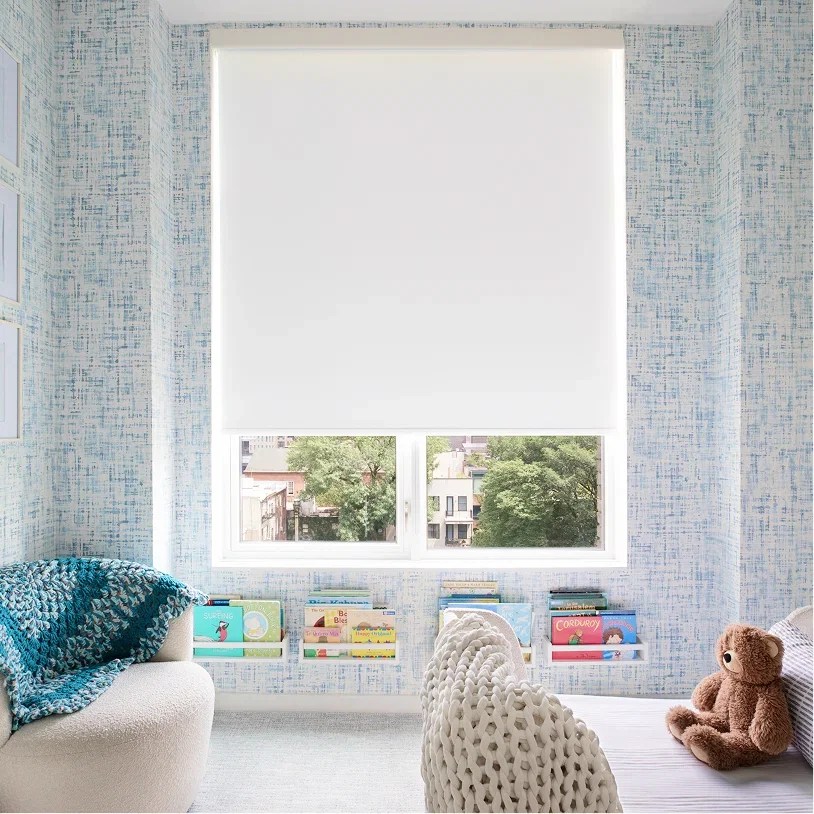
Solar roller shades are the workhorse solution for south-facing windows. They are engineered specifically around solar control, made from fiberglass or polyester yarns woven to precise openness factors, and available in coatings that dramatically increase reflectance.
A solar shade with a white or silver backing and a 1–3% openness factor can reduce solar heat gain by 60–80% compared to bare glass. It preserves an outward view during the day, blocks 99%+ of UV in most fabrics, and fits a clean, minimal profile that works in both contemporary and transitional interiors.
The same 3% weave in charcoal vs. white performs very differently: charcoal absorbs radiation and re-radiates it inward; white or light gray reflects it back. For south exposures, World Wide Shades consistently recommends lighter colorways for maximum summer comfort.
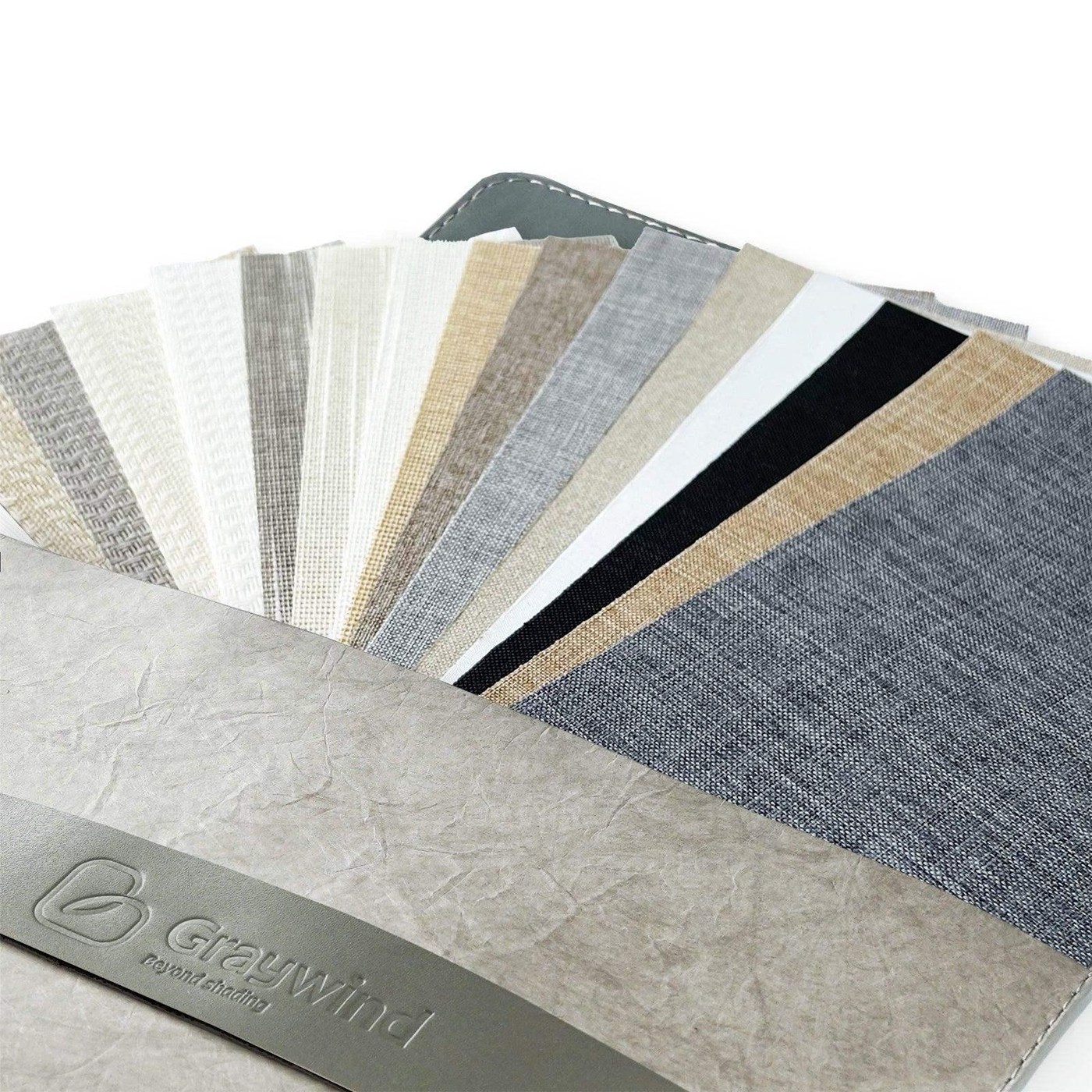
Pricing runs $90–$250 per window depending on size and fabric tier; motorization adds $80–$150 per unit. Request fabric swatches from World Wide Shades before ordering — comparing a white-backed 3% vs. a charcoal 5% side by side against your actual south light makes the thermal difference immediately clear.
For south windows where you need blackout capability at night but solar control during the day, dual shades (also called zebra or day/night shades) offer a two-in-one solution. They alternate opaque and sheer bands that align for full darkness or offset to create a semi-open state.
In the semi-open position, a quality dual shade performs similarly to a 3–5% openness solar shade. In the closed position, they block light completely. The tradeoff is slightly lower raw heat rejection compared to a dedicated solar fabric. For rooms that serve double duty — a home office by day, a media room by night — the versatility justifies that gap. Dual shades typically run $120–$280 per window.
Cellular shades address the south-window problem differently: instead of reflecting solar radiation, they create an insulating air pocket inside the cell structure that slows heat transfer from warm glass into the living space. A double-cell or triple-cell shade significantly reduces conducted heat (as opposed to radiated heat) moving from the glass surface inward.
They are not the best choice for pure glare control, but for northern climates where winter solar gain is beneficial, a cellular shade lets you lower it in summer and raise it in winter to capture passive heating. R-values range from R-3 to R-6 depending on cell count. Cellular shades run $100–$320 per window. For more on how fabric choice affects performance, see the best fabrics for roller shades guide and the light-filtering shades guide.
Reflective Backings: The Hidden Performance Variable
Many homeowners focus on color and openness factor and overlook backing material — but on a south exposure, the backing may matter more than either. A metallized or aluminized backing creates a radiant barrier that reflects a high percentage of incoming solar radiation back through the glass before it heats the room.
A 3% openness solar shade without a reflective backing might block 55–60% of solar heat gain. The same fabric with a white or silver metallized backing reaches 70–80% blockage at the same openness. On a large south window — a 48" x 72" slider, for example — that gap represents dozens of watts of avoided heat on a summer afternoon.
World Wide Shades offers reflective backing options across its solar roller shade line, and the online shade builder lets you select and preview them before you order.
Motorized Shades: Practical Sun Tracking for South Exposures
Manually adjusting shades to track the sun's changing angle throughout the day is something most people stop doing within weeks. The south window that is well-shaded at 10 a.m. may be pouring direct glare onto a couch by 1 p.m. if no adjustment is made.
Motorized shades solve this with schedules or smart-home integrations. A simple program — 40% open from 8–11 a.m., fully closed from 11 a.m.–3 p.m., fully open after 5 p.m. — runs automatically every day without intervention. Systems integrated with Lutron or Somfy can also respond to real-time sun intensity data.
For south-facing installations, World Wide Shades recommends motorization as a default rather than an upgrade. The ongoing comfort benefit easily outweighs the cost premium. The smart home motorized shades setup guide covers integration with major home automation platforms in detail. Motorized solar shades for south windows typically run $170–$400 per window fully installed.
UV Protection and Energy Savings
Heat and glare get most of the attention, but UV damage accumulates silently. Hardwood floors fade visibly within 2–3 years of unprotected south exposure. Upholstery fabrics lose dye saturation. Art, photographs, and leather all degrade faster under sustained UV load.
Most quality solar shade fabrics block 95–99%+ of UV-A and UV-B radiation even at higher openness factors — the UV blockage is determined more by fiber coating than by weave density. The UV protection window shades guide covers the technical difference between UV-blocking and UV-reflecting fabrics. For rooms with irreplaceable rugs or antique furniture, UV protection is a non-negotiable requirement. Contact World Wide Shades if you need help identifying fabrics with documented UV performance specs for your application.
On the energy side, sun control shades with reflective backings can reduce solar heat gain through south-facing glass by up to 77%, according to Lawrence Berkeley National Laboratory research. In a NYC home where AC runs heavily from June through September, that translates to a meaningful reduction in cooling costs. The energy efficient window shades guide breaks down per-window estimates by climate zone.
Choosing Color for South-Facing Shades
Color selection on south windows is functional, not just aesthetic. Lighter shades reflect more solar radiation; darker shades absorb it. But there is also interior light quality to consider: a bright white shade on a south window can create an almost glowing surface at peak sun. A light gray or warm beige at the same reflectance diffuses that glow more comfortably.
For rooms where you spend significant daytime hours, medium-light neutrals in the 3% openness range tend to hit the best balance of solar control, view preservation, and visual comfort. The window shades color guide covers how color interacts with light direction and room tone across all orientations.
Request fabric swatches from World Wide Shades to evaluate samples against your actual south light before committing — monitor colors and real-world south-facing daylight are rarely the same.
FAQ
For most south-facing rooms, a 1–3% openness factor provides the best combination of solar heat rejection, glare control, and UV blocking while still preserving an outside view. Rooms with exterior overhangs or large deciduous trees can sometimes use 5% without comfort issues. Openness factors above 5% provide limited solar control and are generally not recommended as a primary treatment on south exposures.
Not necessarily. A quality solar shade at 1–3% openness eliminates direct glare and cuts heat gain significantly without blacking out the room. Blackout shades — or dual shades with a blackout position — are worth adding for bedrooms or media rooms where full light elimination is needed at certain hours. For a direct comparison of options, see blackout curtains vs. blackout shades.
This is a real trade-off. In winter, south-facing sunlight is a free heat source — passive solar gain reduces heating load when the sun is low. A motorized solar shade handles this cleanly: schedule it fully raised during winter daylight to admit heat and light, then lower it at sunset. Manual shades can do the same but require consistent discipline to adjust.
World Wide Shades offers south-facing solar shades starting around $90 per window for manual roller shades in standard sizes, up to $400+ per window for large motorized installations with reflective-backed fabrics. The online shade builder provides exact pricing based on your dimensions, fabric, and motor type. You can also call (844) 674-2716 to speak with a shade specialist directly.
Get the Right Shade for Your South Windows
South-facing windows deserve more deliberate treatment than any other window in the house. The combination of all-day sun exposure, high UV load, and seasonally shifting sun angle means a shade that performs reasonably well elsewhere may underperform significantly here. The right solution — typically a 1–3% openness solar shade with a reflective backing, ideally motorized — pays back the investment in comfort, lower cooling costs, and protected furnishings within the first few seasons.
World Wide Shades specializes in custom window treatments for demanding applications like these, including south-facing windows in New York City apartments and homes. Use the online shade builder to configure your south-facing shades in minutes, order fabric swatches to compare options in your actual light, or call (844) 674-2716 to talk through your windows with a specialist.
Ready to take control of your south light? Contact World Wide Shades today.