House flippers live and die by two numbers: total cost-of-rehab and final sale price. Window treatments sit in a weird zone of the budget — too visible to skip, too expensive to overdo. Bare windows make listing photos look unfinished. Spend $8,000 on custom drapery in a $400K starter home and ROI evaporates. Custom roller shades are the middle path: enough polish to lift offers, low enough cost to protect margin.
This guide breaks down what flippers need to know — when custom shades increase appraised value, which neutral colors work across buyer demographics, how to make windows photograph well for the MLS, and where the line falls between builder-grade and custom. World Wide Shades has supplied roller shades for hundreds of flips across the country.
Start your flip's shade order at the World Wide Shades builder →
Do Window Treatments Actually Increase Resale Value?
Short answer: yes, but indirectly. Appraisers don't line-item "roller shades" on a comp sheet. What treatments influence is perceived condition — which drives both list-to-sale ratio and days on market.
A 2024 NAR survey of buyer's agents found 71% said "professionally dressed windows" influenced buyer perception of overall home quality. Homes with treatments sold an average of 4.7 days faster than identical bare-window homes in the same zip code.
The math: on a $450,000 sale, a 0.5% bump in offer strength is $2,250. If custom roller shades for the whole house run $1,800–$2,800, you're at minimum breaking even — and almost certainly closing 3–7 days faster, which compounds into reduced carrying costs.
Where custom roller shades pay off most:
- Primary bedroom (blackout protects staging photos, signals "move-in ready")
- Kitchen and breakfast nook (light filtering shows off the renovation)
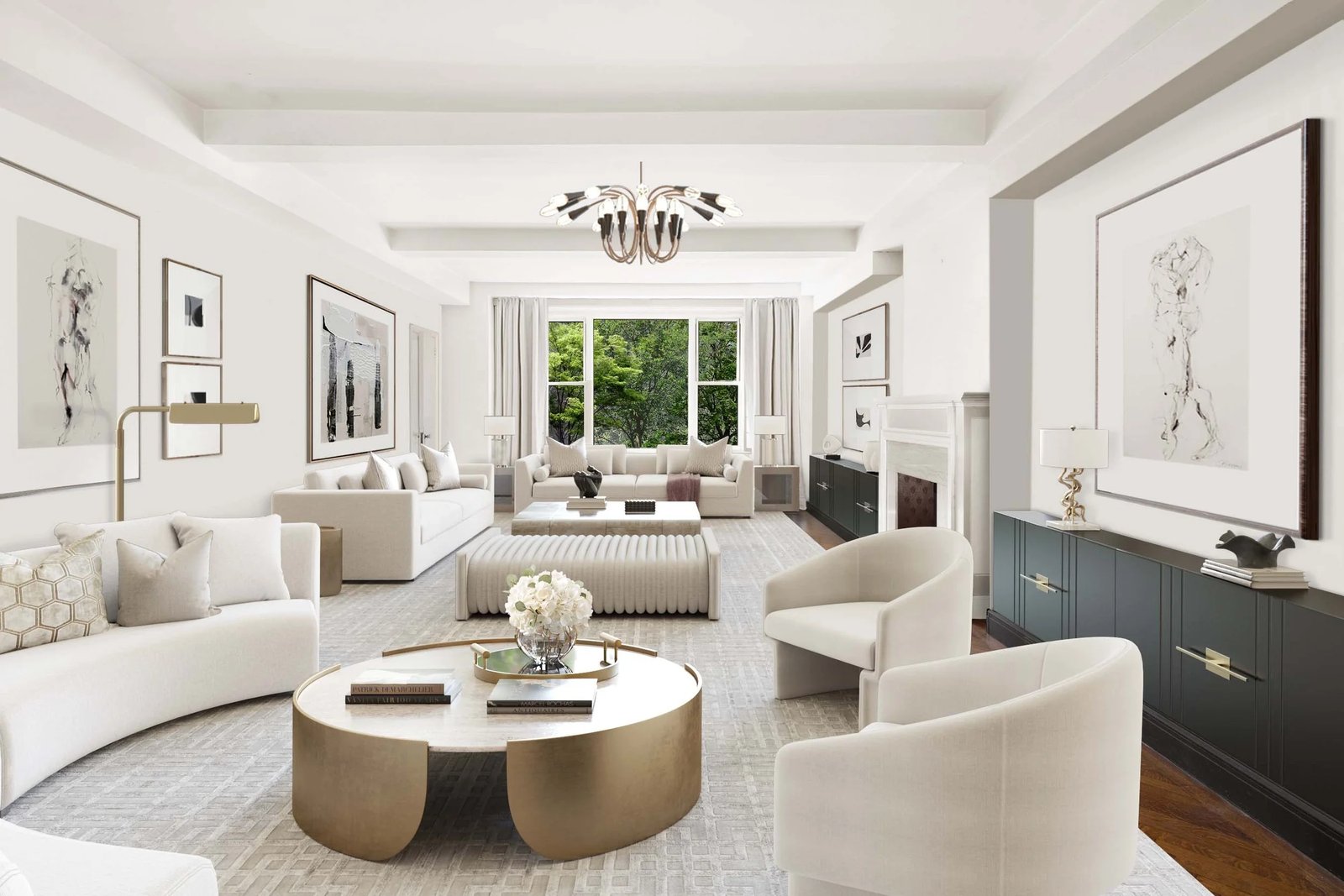
- Living/great room (the hero photo of every listing)
- Bathrooms with street-facing windows (privacy is a non-negotiable for buyers)
World Wide Shades helps flippers prioritize when budgets are tight — typically we recommend hitting these four zones first.
Builder-Grade vs Custom: The MLS Distinction That Matters
Here is what most flippers miss. Listing agents commonly use the phrase "custom window treatments throughout" in the MLS remarks. Buyers and their agents read this. It registers as a quality signal alongside "quartz counters" and "soft-close cabinets."
Buyers can tell the difference, even if they can't name it. Builder-grade shades sag in the middle, have visible hardware, light gaps along edges, and pull cords that don't retract evenly. Buyers walking into a room with builder-grade shades unconsciously file the home under "unfinished" or "investor flip."
Custom roller shades from World Wide Shades read differently:
- Fabric tension is consistent corner-to-corner
- Color matches the wall paint, not default contractor white
- Side gaps are minimized via inside or outside mount
- The hem bar is straight and weighted
- Cordless or motorized operation reads as "modern home" not "rental"
For a cost breakdown, see Custom Roller Shades vs Home Depot — the per-window gap is smaller than most flippers assume, especially after factoring in labor for returning ill-fitting big-box shades.
Order swatches and see the quality difference for yourself →
The ROI Math: Real Numbers from Real Flips
Let's run actual numbers on a typical 3-bed, 2-bath flip with 14 windows in a $475K market.
Builder-grade scenario:
- 14 vinyl roller shades at $35 each from a big box store = $490
- Installation time (DIY or sub): 4 hours
- Visual result: noticeable cheap finish in listing photos
- Estimated offer impact: neutral to slightly negative
Custom roller shades scenario:
- 14 custom roller shades through World Wide Shades, light-filtering fabric in greige neutral, cordless operation = approximately $1,950–$2,400 depending on size mix
- Installation time: 2.5 hours (precise factory measurements)
- Visual result: photographs as a finished, designed home
- Estimated offer impact: $2,000–$4,500 above bare-window equivalent based on agent feedback
The delta is roughly $1,500–$1,900, with expected return of 1.5x to 3x through higher offers, faster sale, or fewer concessions. See How Much Do Custom Roller Shades Cost? for deeper cost analysis.
This math holds in mid-market flips ($300K–$700K). At the low end ($150K–$250K), skip motorization but keep custom fabric. At $800K+, buyers expect motorized and ROI shifts strongly toward full custom.
Neutral Color Picks That Appeal to Every Buyer
Color choice is where flippers most often shoot themselves in the foot. A bold rust-colored shade looks great in your staging photos but eliminates 60% of buyer demographics. Stick to neutrals that disappear into the room and let the buyer mentally place their own furniture.
The five colors World Wide Shades recommends for flips:
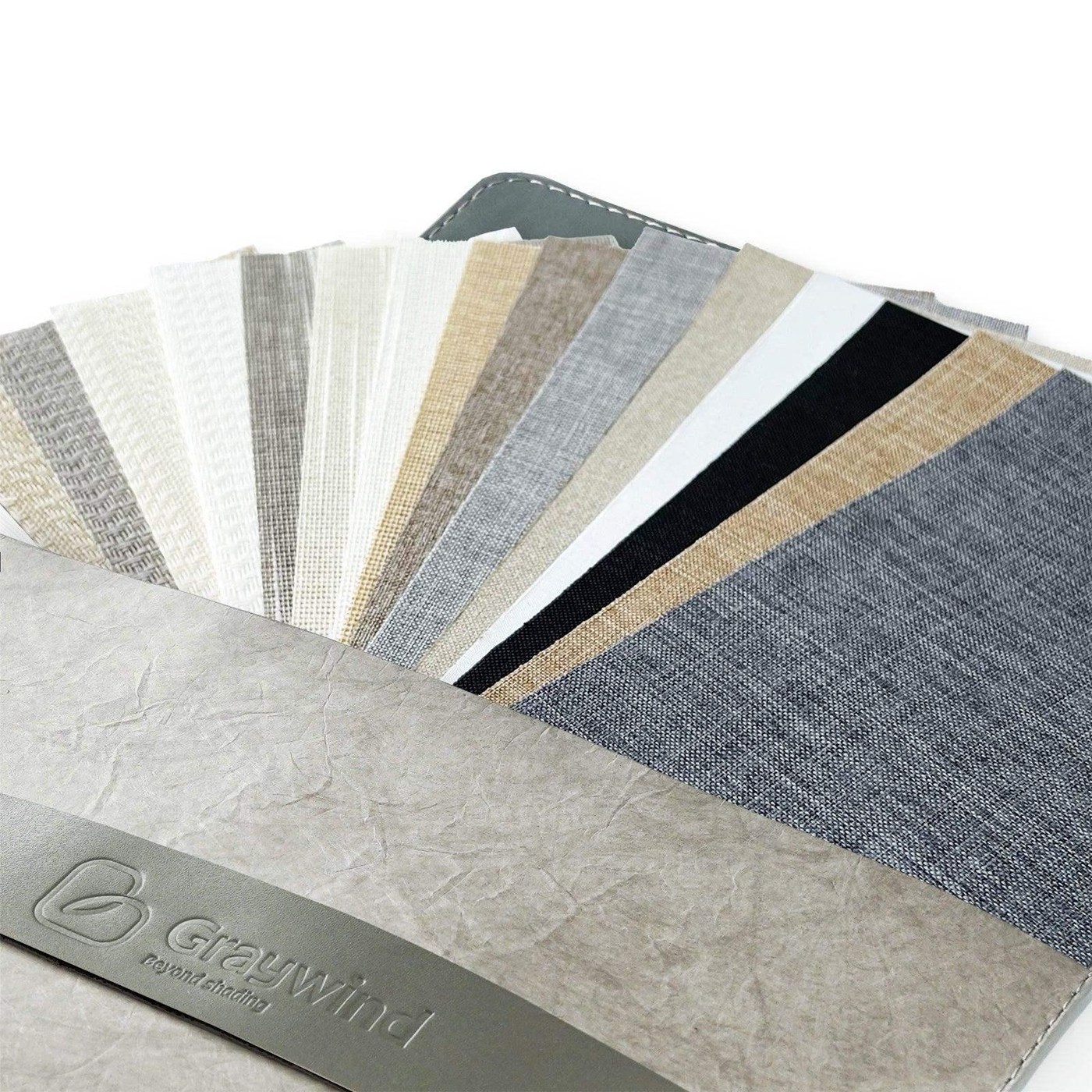
- Warm white / ivory — Universal appeal, photographs as bright and clean, pairs with any wall color. The safest choice for high-volume flippers.
- Greige (gray-beige) — On-trend through 2026 and beyond, neutralizes both warm and cool wall paints, reads as "designed."
- Soft taupe — Slightly warmer than greige, ideal for homes with wood floors and farmhouse-leaning finishes.
- Light gray — Best for modern flips with white or charcoal walls; risk: can read cool/cold in north-facing rooms.
- Cream linen texture — Adds subtle visual interest without committing to a color; works in transitional and traditional homes.
Avoid pure white (shows every smudge during showings), dark gray or charcoal (eats light and shrinks rooms in photos), and any saturated color (eliminates buyer pools). For more on choosing neutrals that work with multiple wall colors, see the Window Shades Color Guide.
If you flip in a specific architectural style — say, mid-century modern or coastal cottage — pull a few free swatches from World Wide Shades and tape them to the actual walls before deciding. Lighting changes everything, and what reads as "warm white" in the catalog can photograph as cream or yellow on-site.
Get free swatches mailed to your flip → (844) 674-2716
Light-Filtering vs Blackout: Which to Spec Per Room
Flippers waste money when they spec blackout shades everywhere. Buyers do not need blackout in their kitchen. Match the fabric to the room's function:
- Bedrooms (primary + secondary): Blackout or room-darkening. This is a buyer hot-button, especially primary suites. A bedroom with blackout shades photographs as a sanctuary; one without reads as incomplete.
- Living room, great room, dining: Light-filtering. You want sunlight in your listing photos, and buyers want a bright, social space.
- Kitchen and breakfast nook: Light-filtering or solar shades (5% openness). Heat reduction is a quiet selling point in south-facing kitchens.
- Bathrooms: Light-filtering with privacy weave, or blackout if the window faces a neighbor.
- Home office / flex room: Solar shades if the window faces a screen-glare direction, otherwise light-filtering.
For deeper room-by-room guidance, two articles flippers should bookmark: Best Window Shades for the Bedroom and Best Roller Shades for the Living Room.
World Wide Shades ships light-filtering, room-darkening, and blackout fabrics in identical neutral colors, so your flip looks visually cohesive even though each room is optimized for function.
Photo-Ready Presentation: How Shades Show Up in Listing Photos
The single highest-leverage place custom shades pay off is in your MLS hero shots. Listing photos drive 90%+ of buyer interest, and bare windows or cheap shades will absolutely tank your photo quality.
Three rules for shade-ready listing photography:
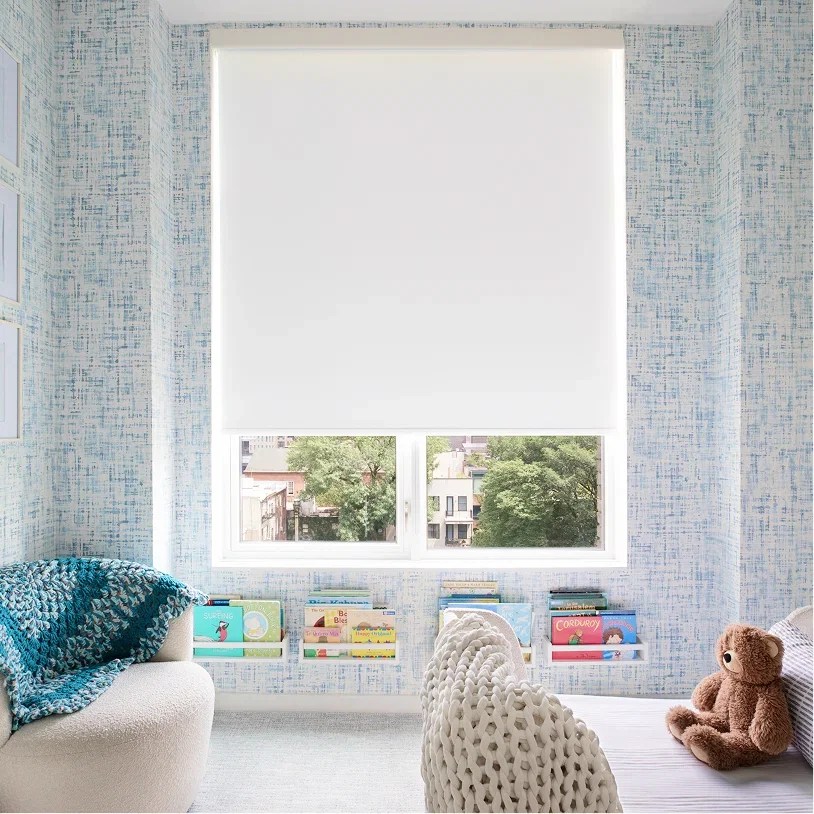
- Roll shades to 80% open during photo day. Fully raised shades look like nothing was installed. Fully lowered shades look like the house is closed up. 80% open shows that shades exist, lets natural light flood in, and creates a clean horizontal line across the top quarter of the window.
- Match shade color to the wall paint, not the trim. This is the single most common flipper mistake. White shades on warm beige walls look stark. A greige shade on greige walls reads as intentional, designer-level work.
- Always use cordless or motorized for photo day. Pull cords ruin a photo. A motorized shade with no visible hardware is the gold standard, but cordless spring-loaded shades from World Wide Shades photograph nearly identically at a much lower price point.
For flips with floor-to-ceiling windows or sliders, the photo impact is even more pronounced. See Roller Shades for French Doors for sliding-door treatments that maintain that floor-to-ceiling sightline buyers love.
Get a quote on shade packages for your flip → (844) 674-2716
Operation Type: Cordless, Motorized, or Continuous Loop?
For flips, the three operation choices each have a use case:
Cordless (spring-loaded): The default flipper choice. No visible cords, child-safe (a federal CPSC requirement on new installations as of 2022), photographs cleanly, easy DIY install. Recommended for 90% of flip windows.
Motorized: Use only on hero windows in higher-end flips ($600K+). One or two motorized shades in the primary bedroom or living room create a "wow" walkthrough moment without spending $200 per window. World Wide Shades' rechargeable battery motors install without an electrician — critical for flippers on a clock.
Continuous loop (chain-driven): Avoid for residential flips. Buyers read these as "commercial" or "office." Reserve for actual commercial properties.
For motorized recommendations and price points, see Motorized Roller Shades: Are They Worth It? and Smart Home Motorized Shades Setup.
Common Flipper Mistakes to Avoid
After supplying roller shades to hundreds of flips, World Wide Shades has seen the same mistakes repeatedly:
- Buying random sizes off a shelf and trimming to fit. Trimmed shades look bad — uneven hem bars, frayed fabric, buyers notice.
- Mixing inside-mount and outside-mount across rooms. Pick one and stick with it. See Inside Mount vs Outside Mount for the decision framework.
- Skipping the primary bedroom blackout. It's the most-photographed room and the buyer's emotional sticking point.
- Ordering measurements off old plans. Measure every window on-site after drywall is finished. See How to Measure Windows for the World Wide Shades protocol.
- Forgetting odd windows. Arched, transom, and skylight openings need their own solutions. See Skylight Shades Guide.
- Choosing fabric color from a catalog photo. Order free swatches from World Wide Shades before committing to 14 shades in the wrong neutral.
Timeline: When to Order Shades in Your Rehab Schedule
Most custom orders ship 7–14 business days from final approval. To avoid delaying your listing date:
- Week 1–2 of rehab: Identify window count, take rough measurements, order free swatches.
- Week 4–6 (after drywall + paint): Final precision measurements.
- Week 6–7: Order through the World Wide Shades builder or call (844) 674-2716 for large-order help.
- Week 8–9: Shades arrive, install in 2–3 hours.
- Week 10: Listing photos with shades installed.
If the timeline compresses, World Wide Shades offers rush production — call (844) 674-2716 to confirm.
When NOT to Use Custom Shades on a Flip
Custom shades are not the right call in every scenario:
- Sub-$200K starter flips: Light-filtering from the value tier still beats builder-grade, but skip lower-priority windows (laundry, garage).
- Long-term rentals (BRRRR strategy): Different math — see Roller Shades for Rental Properties: A Landlord's Guide.
- Luxury flips ($1M+): Consider Roman shades or layered drapery. See Roller Shades vs Roman Shades.
FAQ: Custom Roller Shades for House Flippers
How much does it cost to put custom roller shades in a typical 3-bed flip? Expect $1,800–$2,800 for a 14-window 3-bed, 2-bath flip through World Wide Shades, depending on fabric tier and motorization choices. Compare this to $400–$600 for builder-grade off-the-shelf shades that may hurt rather than help your sale.
Do appraisers add value for custom window treatments? Not as a line item. Appraisers value condition and finish quality holistically. Custom shades improve perceived condition, which influences appraised value indirectly and — more importantly — buyer offers. World Wide Shades' flipper clients consistently report stronger offers on homes with custom shades.
What's the safest neutral color for a flip? Greige (gray-beige) is the most universally appealing neutral for 2025–2026 buyer preferences. It pairs with both warm and cool wall paints and reads as designed rather than default. Order a free swatch from World Wide Shades before committing.
Should I install shades before listing photos or let buyers add their own? Install before photos. Approximately 87% of buyers cannot visualize how a bare-window room will look with treatments. Bare windows in listing photos read as "unfinished" and reduce showings. The custom shade investment pays for itself in stronger photo performance alone.
Are motorized shades worth it for a flip? Only on higher-end flips ($600K+) and only on one or two hero windows. World Wide Shades' battery-powered motorized shades install without an electrician and create a "wow" moment in walkthroughs. On lower-end flips, cordless is the better ROI play.
Will buyers expect shades to convey with the house? Yes — custom-installed shades convey by default in most states (they are considered fixtures once installed). Confirm with your listing agent and include the shades in the MLS feature list to strengthen offers.
The Bottom Line for House Flippers
Custom roller shades sit in the sweet spot of flipper economics: high enough visual impact to lift offers, low enough cost to protect your margin. The combination of neutral color, cordless operation, and inside-mount installation reads to buyers as "designed home" rather than "investor flip" — typically delivering 1.5x to 3x the incremental cost in measured ROI.
Start your shade order at the World Wide Shades builder, grab free swatches, or call (844) 674-2716 to talk through your property with a flip specialist.