Laundry rooms need window shades that work harder than decorative fabric. Steam from a dryer, damp clothing, detergent dust, lint, and frequent cleaning can shorten the life of delicate materials. The best laundry room window shades are moisture-tolerant, easy to wipe, sized for privacy, and mounted where baskets, cabinets, and appliance doors will not damage them.
A practical starting point is a smooth roller shade in coated polyester, vinyl, or another manufacturer-approved moisture-resistant fabric. These materials avoid deep folds that trap lint and can be cleaned with a soft, damp cloth. Use the World Wide Shades Shade Builder to compare opacity, colors, and mounting options for each window rather than assuming every opening needs the same shade.
What makes a laundry room shade durable?
Laundry rooms collect fine particles even when the machines are well maintained. A textured woven fabric can look attractive, but its loops and grooves may hold lint. A smooth, tightly woven or coated roller fabric is easier to dust and less likely to snag on a cabinet corner.
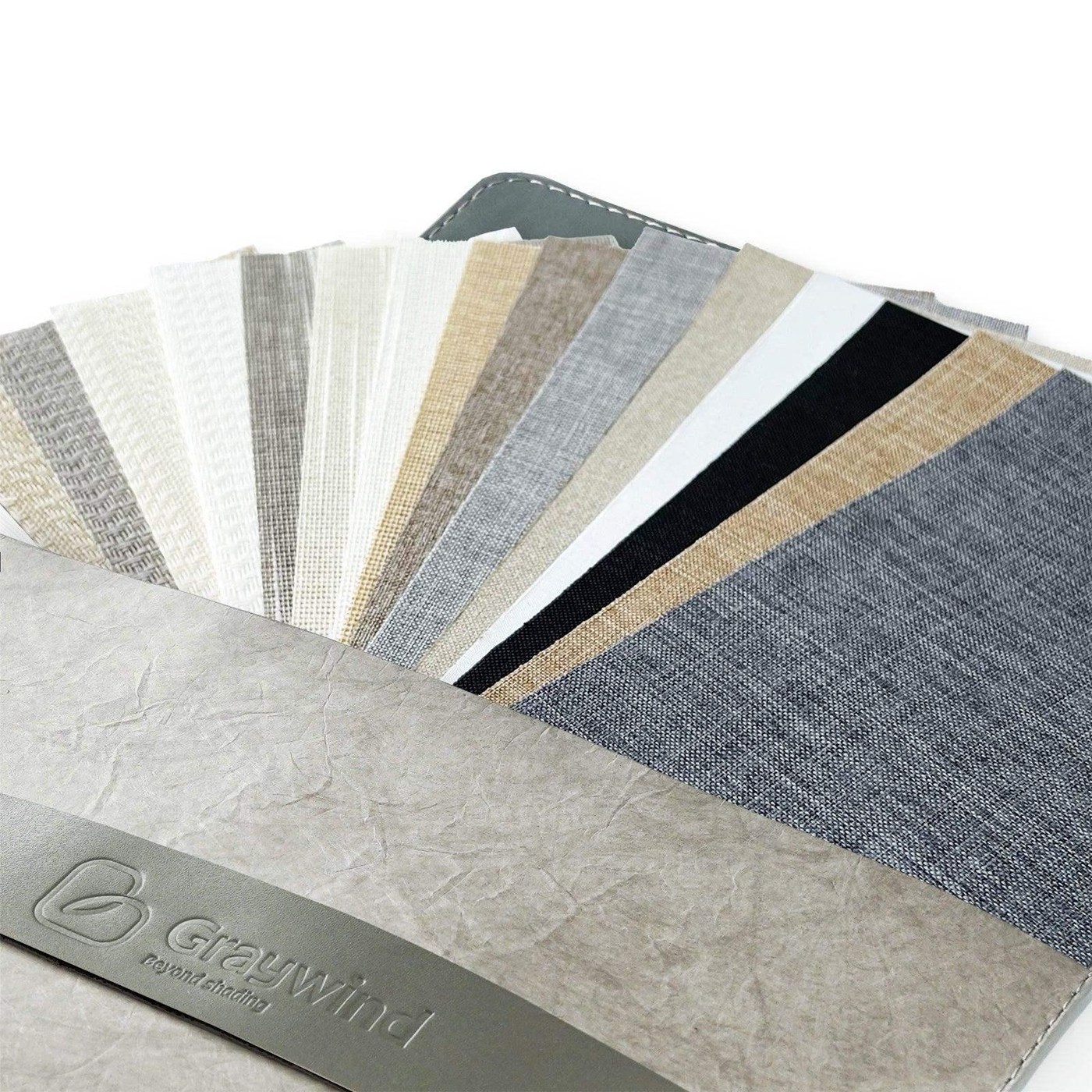
Look for care instructions that permit gentle spot cleaning. Avoid saturating the shade, using bleach, or scrubbing aggressively unless the manufacturer specifically approves it. Most routine cleaning should be a light vacuum with a brush attachment followed by a barely damp microfiber cloth. Order swatches from World Wide Shades to feel the surface and compare how much lint it visually shows.
A dryer can release heat and moisture into a room, especially if the exhaust system is restricted or the door stays closed. Relative humidity is best kept around 30% to 50% in a home; persistent condensation on the glass is a sign to improve ventilation before installing any window treatment. A shade cannot solve a moisture problem caused by poor exhaust.
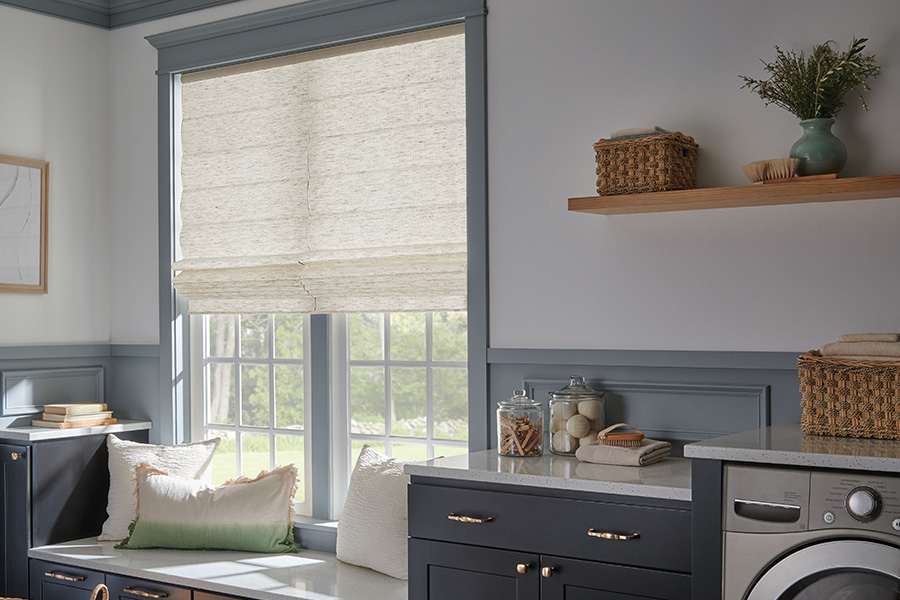
Avoid untreated paper, unlined natural grass, and delicate silk near a washer or dryer. Woven wood can work in a well-ventilated laundry room when the product is rated for the environment and fitted with a moisture-resistant liner, but a coated roller shade is usually the lower-maintenance choice. World Wide Shades can help match the room's humidity and cleaning routine to a fabric construction.
Privacy and light control by window location
A laundry room often sits at the side or rear of a home, where neighbors, delivery drivers, or an alley can look directly in. A light-filtering shade diffuses daylight while obscuring details during the day. At night, interior lights can turn some light-filtering fabrics into silhouettes, so choose a room-darkening or privacy-focused fabric if the window is exposed.
For an especially vulnerable opening, use a top-down configuration if available: light enters from above while the lower glass stays covered. If the room also has a utility sink or folding counter, keep the shade high enough to clear the faucet and backsplash. Contact World Wide Shades with a photo of the window and the nearby fixtures for a practical recommendation.
A transom or high basement window can provide daylight without exposing the whole room. A semi-opaque shade set to cover the lower portion may be enough if the sightline is above eye level. For narrow or high openings, split a long bank into separate units so each shade can be cleaned and operated without reaching over appliances.
See light-filtering shades guide for a deeper comparison of privacy levels. If the laundry room is in a rental, roller shades for rental apartments explains no-drill approaches, but verify that the hardware can support the shade safely.
Roller shade styles that fit laundry rooms
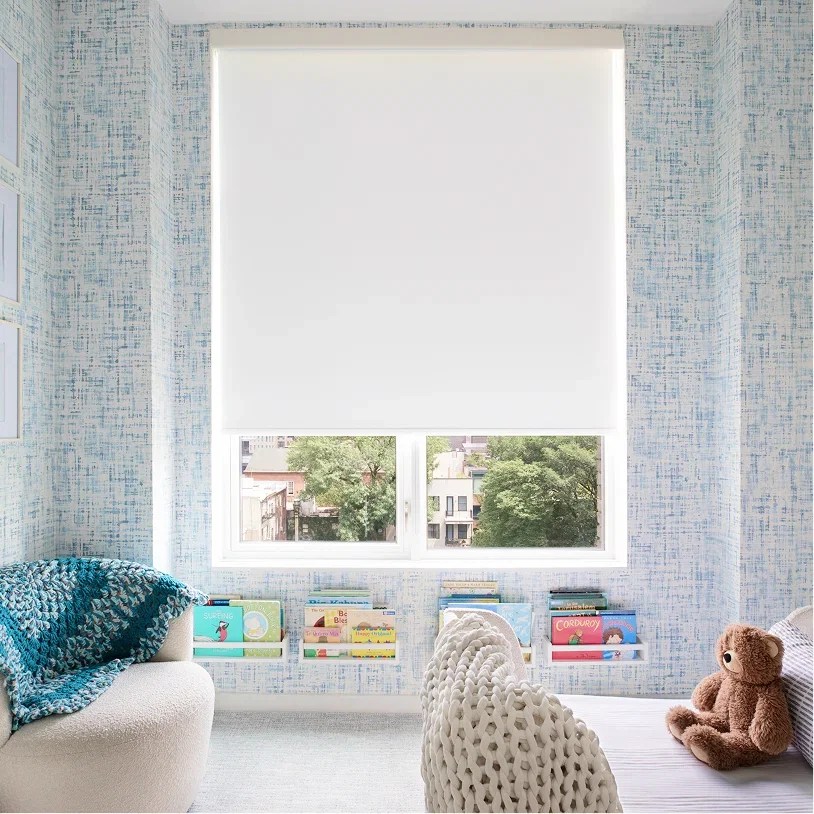
Smooth rollers are the simplest all-around option. They roll into a compact tube, leave counter space clear, and can be ordered in wipeable performance fabrics. Choose a matte white, warm gray, or soft taupe to reflect some daylight without creating a sharp reflection on the glass.
A standard light-filtering roller shade commonly costs about $80 to $250 for a small custom window, depending on width, fabric, and hardware. Room-darkening and specialty moisture-resistant constructions may cost $120 to $350. Exact prices depend on measurements and configuration. Build laundry room shades with World Wide Shades to get a project-specific starting point.
If the laundry room faces south or west, a solar roller shade can reduce glare on a folding surface while preserving a view. Openness factors from 1% to 5% are common: 1% gives stronger glare control, 3% balances view and protection, and 5% keeps the room brighter. Solar fabric is not a full nighttime privacy solution, so add a second layer or choose a tighter privacy construction if the window faces a walkway.
For more on heat and fading, read UV protection window shades and energy-efficient window shades. World Wide Shades can coordinate solar fabrics across utility, kitchen, and mudroom windows so the home feels intentional rather than pieced together.
A cordless shade keeps a looped chain away from children and pets and reduces the chance of the chain catching on a laundry basket. Motorization is useful when the window is behind a stacked washer-dryer or above a counter. Battery motors typically add about $180 to $350 per shade; hardwired options can add $300 to $600 before electrical labor.
Keep motors away from direct spray and allow enough clearance for the appliance door to open fully. Use a wall switch or app rather than reaching over a hot dryer. Ask World Wide Shades for cordless or motorized options, especially if the laundry room window is difficult to access.
Measure around machines and cabinets
Measure the glass, frame, trim, and available wall space before selecting an inside or outside mount. For inside mount, record width at the top, middle, and bottom and use the narrowest measurement according to the product's deduction rules. Check that the rolled shade will not collide with cabinet doors or a detergent shelf.
For outside mount, allow about 2 to 3 inches of overlap on each side when possible. Mark the top of the headrail so it clears upper cabinets and still leaves the shade low enough to cover the desired sightline. If the sill is used as a folding surface, confirm that the hem bar will not rest on wet clothing or cleaning supplies.
The how to install roller shades guide covers bracket placement and basic safety. For a tight recess or an unusual window, contact World Wide Shades before drilling.
Cleaning and maintenance schedule
Dust the shade monthly in a high-lint laundry room and inspect the chain, bottom rail, and brackets every three months. Wipe splashes promptly; detergent residue can leave a film that attracts more dust. Keep the fabric fully dry before rolling it up after spot cleaning.
Do not force a shade that binds against a cabinet or appliance. Repeated rubbing can create a crooked roll or fray the edge. If the shade begins rolling unevenly, stop operating it and check whether the bottom rail is level and whether an object is pressing against the fabric. World Wide Shades can help you specify a replacement that fits the updated layout.
Before ordering, request World Wide Shades swatches and test them near the dryer, washer, and window at different times of day. Ready to make the room easier to maintain? Start a laundry room project with World Wide Shades, or call (844) 674-2716 for help with a difficult opening. For a second opinion on privacy and moisture, contact World Wide Shades or call (844) 674-2716.
Frequently asked questions
Smooth roller shades made from coated polyester, vinyl, or another rated moisture-resistant fabric are usually the best fit. They roll compactly, leave counters clear, and can be wiped more easily than deep folds. Choose light-filtering for everyday privacy, room-darkening for exposed windows, or solar fabric for glare control with a view.
You can in a well-ventilated room if the product is approved for the environment and uses a moisture-resistant liner, but untreated natural fibers need more care. Persistent condensation or high humidity favors a smooth, coated roller shade. World Wide Shades can compare the maintenance requirements before you choose.
Not always. Blackout is useful for a street-facing window or a room that doubles as a mudroom or utility space, but light-filtering fabric often provides enough privacy while keeping the room bright. Remember that some light-filtering fabrics show silhouettes at night when interior lights are on.
A small custom light-filtering roller shade often starts around $80 to $250, while room-darkening or specialty moisture-resistant options may run about $120 to $350. Motorization commonly adds $180 to $350 per shade for battery operation. Use the World Wide Shades builder for a quote based on exact size and fabric.
Vacuum with a soft brush monthly, then use a barely damp microfiber cloth for spots. Follow the fabric care instructions, avoid bleach unless approved, and let the shade dry fully before rolling it up. Inspect hardware every three months and address rubbing or uneven rolling early.