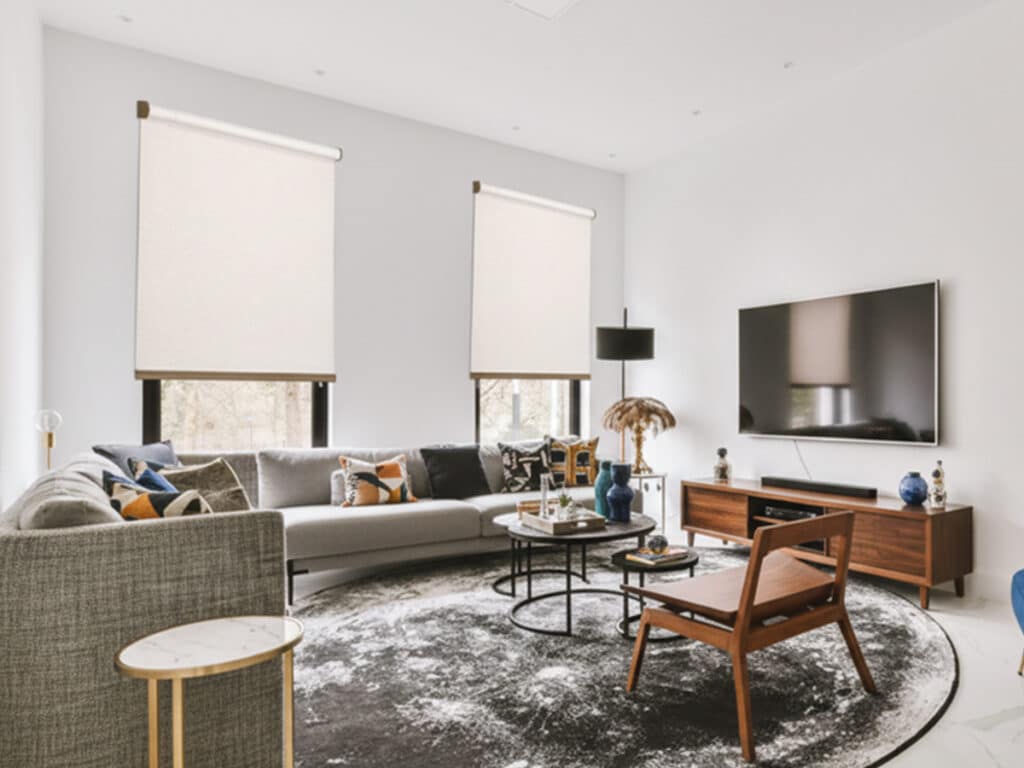
A den or media room has two competing lighting needs: enough natural light to feel inviting, and enough control to keep reflections off the screen. The best roller shades for a den or media room make that balance predictable. They reduce window glare without forcing the room to look like a dark theater all day.
The right specification depends on your screen size, window orientation, projector or television, and whether the room also serves as a reading or work space. This guide explains the measurable choices—openness factor, opacity, mounting depth, and motorization—so you can choose confidently. For a room-by-room recommendation, start with the World Wide Shades Shade Builder and configure each opening separately.
Start with the screen and the direction of light
A window beside or behind a television can create veiling reflections even when the room feels comfortable. A south- or west-facing window usually deserves more aggressive daytime control than a north-facing window. In a room with a projector, direct sun on the screen is the main problem; with a television, reflections from side windows and glossy furniture are often the bigger issue.
Map the room at three times: late morning, mid-afternoon, and after sunset with interior lights on. Note whether sunlight lands on the screen, enters from the viewer's side, or creates a bright rectangle in the camera's field of view. A shade that works at 9 a.m. may need a lower openness factor at 4 p.m. For a broader orientation guide, read best shades for south-facing windows.
For a quick project review, contact World Wide Shades with the room's window widths, orientation, and screen type. A short consultation can prevent buying a fabric that controls heat but still leaves a distracting reflection.
A comfortable media room is not simply the darkest room possible. Many viewers prefer moderate ambient light around the screen, especially for mixed-use dens. Keep the screen away from direct window reflections, then choose a shade that reduces the brightest source without making every daytime activity unpleasant.
A useful planning rule is to place the primary seating about 1.5 to 2.5 times the screen's diagonal measurement from a 4K television. For a 100-inch projector image, that can mean a viewing distance of roughly 10 to 20 feet depending on content and personal preference. The shade should support that viewing zone, not just cover the glass.
Choose the right roller shade fabric
Solar roller shades use an open weave to soften glare while preserving an outward view. Common openness factors are 1%, 3%, and 5%. A 1% fabric blocks more glare and provides greater daytime privacy; a 3% fabric is a practical middle ground; a 5% fabric keeps a brighter view but allows more daylight through.
For a den that doubles as a conversation room, 3% openness is often the best starting point. Choose 1% for a west-facing room, a projector screen, or a home with severe afternoon glare. Solar fabric is not automatically blackout at night: when interior lights are on, people outside may still see silhouettes. Pair it with a second shade or a room-darkening layer when nighttime privacy matters.
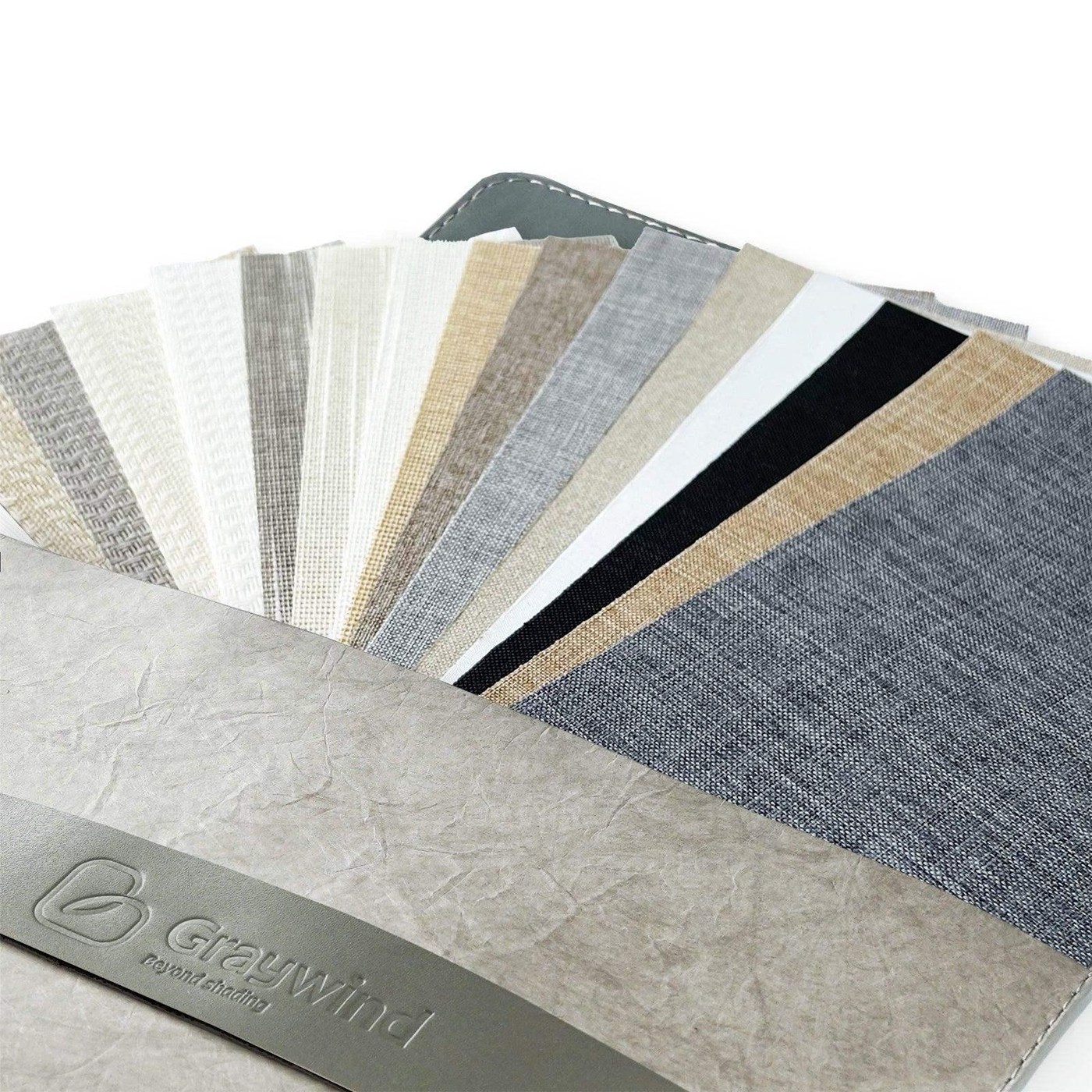
World Wide Shades can help match openness to the room's actual exposure. Order fabric swatches from World Wide Shades and view them against the window at the time you normally watch movies; a sample that looks opaque in a showroom can read very differently in direct sun.
Light-filtering roller shades diffuse daylight rather than preserving a crisp view. They make a den feel softer and reduce the harsh contrast between a bright window and a dark screen. They are a strong fit when the room is used for reading, homework, or daytime meetings as well as movies.
Look for a dense polyester or acrylic-coated fabric with a matte surface. Glossy materials can reflect the screen or ceiling lights back into the room. Light-filtering fabrics typically offer more design variety than solar mesh, including linen-look textures, warm neutrals, and charcoal tones that coordinate with cabinetry.
If the den shares space with a guest bed, compare the sleep-focused options in blackout curtains vs. blackout shades and best window shades for a bedroom.
Blackout roller shades are the most reliable way to darken a room, but the fabric alone does not eliminate every bright line. A standard roller shade can leave light gaps at the sides, top, and bottom. Outside mounting, a cassette, side channels, or a light-blocking hem bar can reduce those gaps.
For a projector, measure the opening and plan at least 2 to 3 inches of overlap on each side when the wall and trim allow it. Side channels are especially useful on shallow-recess windows where outside mounting would interfere with trim. Blackout is also helpful when the room faces a streetlight or when you watch content during daytime hours.
World Wide Shades can configure blackout fabric with a cassette or side-channel solution when the room needs cinema-level darkness. Use the World Wide Shades builder to compare fabrics and mounting configurations before ordering.
Mounting details that control glare
Inside mount keeps the window treatment within the recess and gives the cleanest trim line. It needs enough depth for the tube, brackets, and fabric roll, and it leaves some perimeter light. Measure width at the top, middle, and bottom; use the narrowest measurement and follow the product's deduction rules instead of guessing.
Outside mount covers the frame and can make the window look larger. Extend the shade 2 to 3 inches beyond each side when possible, and mount the headrail high enough to clear the top trim. In a media room, that extra overlap often matters more than a small fabric-price difference.
For installation planning, see how to install roller shades. If the windows are unusually wide or the room has multiple openings, contact World Wide Shades before finalizing measurements.
A cassette hides the roller tube and creates a finished architectural line. It also blocks some light from entering above the fabric. A weighted hem bar keeps the bottom edge steady when air conditioning is running and makes a shade look more intentional when it is partially lowered.
If your room has a 120-inch picture window, do not assume one oversized shade is best. Splitting the opening into two or three coordinated shades can reduce fabric deflection, make operation easier, and let viewers darken only the portion that creates glare. Large openings may cost about $450 to $1,200 per shade depending on fabric, width, and motorization.
Motorization is practical in a media room
Motorized shades eliminate the need to walk in front of the screen to adjust a shade. A remote, wall switch, or app can lower all windows together. A battery motor often adds about $180 to $350 per window, while hardwired systems commonly add $300 to $600 per window before complex electrical work.
Program a “movie” scene that lowers the den shades to a preset level, dims compatible lights, and keeps a walkway illuminated. Add a “daytime” scene that raises the shades to preserve the view without flooding the screen with sun. See smart home motorized shades setup and motorized shades with Alexa and Google Home for integration ideas.
For cord-free convenience and coordinated coverage, ask World Wide Shades for a motorized quote or call (844) 674-2716. World Wide Shades can help you decide which windows need automation and which can remain manual to control the project budget.
A practical buying checklist
Before ordering, record the following:
- Window width and height at three points, plus recess depth.
- Screen type, size, and distance from each window.
- Window orientation and the hours when glare is most distracting.
- Desired daytime privacy and nighttime darkness.
- Whether you need a view-through solar fabric, light-filtering fabric, or blackout.
- Whether furniture, speakers, trim, or door handles limit outside mounting.
- Whether battery operation, hardwiring, or smart-home control makes sense.
Order swatches from World Wide Shades and test them beside the screen, not only against the glass. Ready to see the complete configuration? Build your den shades with World Wide Shades, or call (844) 674-2716 for help with a wide opening.
Frequently asked questions
A 1% openness solar shade is a strong choice for severe glare or a projector, while 3% is a balanced choice for most television rooms. A 5% fabric preserves more view but admits more light. If you need darkness for daytime projection, choose blackout fabric and address perimeter gaps with outside mounting, a cassette, or side channels.
No. Solar shades reduce daytime glare and heat while preserving a view, but their open weave can show silhouettes when interior lights are on. Choose blackout fabric or layer a room-darkening shade when nighttime privacy and darkness are priorities. World Wide Shades can specify a dual treatment for a den that serves more than one purpose.
For an outside-mounted shade, plan roughly 2 to 3 inches of coverage beyond each side of the opening when trim and hardware allow it. More overlap can reduce side light gaps, but the correct amount depends on the headrail, handles, wall space, and fabric roll diameter. A World Wide Shades specialist can review unusual windows before you order.
They are often worth it when windows are behind seating, above built-ins, or numerous enough that manual adjustment is inconvenient. Typical battery motorization adds about $180 to $350 per window; hardwired systems often add $300 to $600 before electrical labor. Scene control also lets you repeat a comfortable viewing setup with one command.
A matte charcoal, medium gray, or warm neutral usually limits visual distraction better than a bright white or glossy fabric. Fabric performance matters more than color alone: openness, backing, and perimeter gaps determine glare and darkness. Contact World Wide Shades for swatches that you can compare in the room's actual light.