Why bow windows need a coordinated plan
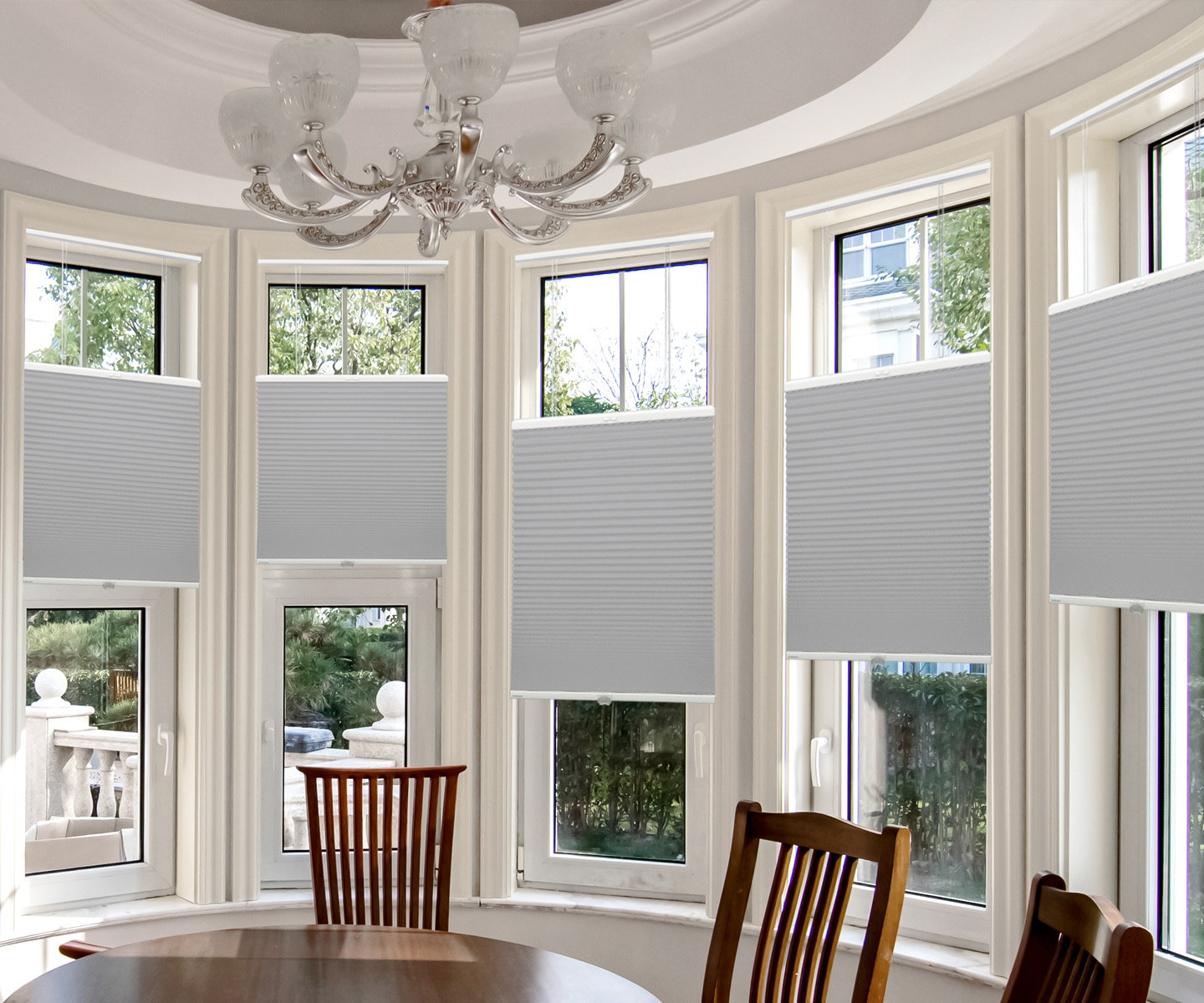
A bow window is a gentle curve made from four, five, or more window units set at small angles. The challenge is not finding a shade for one panel; it is making every shade lift, align, and clear the next panel without a cluttered stack of brackets. Bow window shades should be designed as a group, with the same headrail language and a deliberate answer for the center sightline.
First decide whether the bow is a conversation area, dining nook, reading seat, or a high-glare work zone. A 3% solar screen may protect a view while reducing contrast, while a room-darkening roller fabric can make a media corner usable. World Wide Shades starts with the room's light behavior and the panel geometry rather than selecting a product from a single-window sample.
If your bow window is part of a bedroom, our best window shades for bedroom guide covers privacy timing and sleep-friendly fabrics. For a more traditional room, compare the clean profile with roller shades versus Roman shades.
Three layouts that work
For a single curved opening, compare the approach in our round and circular window shade guide.
Build a panel-by-panel plan with World Wide Shades before ordering hardware.
The panel-by-panel layout is the most flexible. Each shade follows the angle of its glass, so you can close the sunny side while keeping the center open. It also makes service easier because a failed motor or fabric roll affects one unit, not the whole bay. Use a shared top line and consistent cassette color to keep the treatment visually calm.
Allow space between brackets and neighboring frames. A typical 1/2-inch to 1-inch clearance can be enough for compact hardware, but the exact requirement depends on cassette depth and the bow's angle. On narrow side lites, check that the shade fabric does not strike a crank, latch, or window lock when lowered.
A continuous valance or drapery can visually unify the bow, with individual roller shades behind it for daily control. This creates a layered look and hides small differences in panel height. The drawback is that the front layer can reduce access and make the seat area feel narrower. Read our roller shades with drapery layering guide before adding a decorative layer.
Some homeowners keep the center panel as the visual anchor and treat side panels with matching shades. This works when the middle pane is widest or faces the strongest reflection. Use a common fabric, but do not assume each panel needs identical openness. A 1% screen on the west-facing side and a 5% screen on the shaded side can be a practical compromise if the visual color remains consistent.
Measuring a bow window without losing the curve
Contact World Wide Shades with a labeled sketch when angles or mullions are tight.
Sketch the window from above. Label each panel, record the width of the glass and the width of the mounting surface, and note every angle or mullion. Measure each panel at the top, middle, and bottom; older bows can vary by 1/8 inch or more. Also record the overall projection from the wall and the distance to nearby furniture.
For inside mounts, measure the narrowest clear width and the shallowest depth. Check whether the frame can accept brackets without hitting glass, seals, or operating hardware. For outside mounts, document the flat wall area on both sides and above the bow; a shared headrail may require more clearance than a single-panel cassette.
A laser measure is useful for the overall projection, but it does not replace a tape measure for the fabric opening. Photograph the bow straight on and from above if possible. World Wide Shades can use that record to flag a tight center joint or a panel that requires reverse rolling.
Want a second set of eyes? Open the World Wide Shades builder, upload your sketch, or call (844) 674-2716 before ordering.
Fabric, openness, and privacy choices
Compare bow-window fabrics in World Wide Shades swatches in morning and evening light.
Bow windows often receive light from several directions, so fabric choice should be judged by the brightest reflection rather than the average room. Solar shades in 1%, 3%, or 5% openness can reduce glare while retaining an outward view. A dark charcoal weave can improve screen comfort, but a lighter color may better match walls and make the bow feel airy.
Light-filtering fabrics soften silhouettes and offer daytime privacy, yet they may reveal movement after sunset when interior lights are on. If the bow faces a sidewalk or neighboring home, select room-darkening material or add a privacy layer. Our light-filtering shades guide explains the day-versus-night difference in practical terms.
For bedrooms, media rooms, or nurseries, blackout performance is more than a fabric label. Gaps at the mullions and edges can admit halos. Use close-fitting cassettes, side channels where appropriate, or layered curtains. For heat, compare this plan with energy-efficient window shades, especially if the bow faces south or west.
Motorization: when six shades should act as one
Motorization is valuable when a bow contains four or more panels, the seat blocks manual access, or the room benefits from a repeatable sun schedule. Group all motors for one command, but keep individual control available for the bright side. A practical scene might open the center to 40% in the morning, lower the west panel to 20% at 3 p.m., and close the full bow at sunset.
Battery motors simplify retrofit work, but count the charging points and ladder access. Wired power is attractive for a new build or major remodel. Consider radio range through the curved glass, hub placement, and what happens during a power outage. For voice or app control, review motorized shades with Alexa and Google Home and verify the exact motor platform.
Budget by panel. A bow window with five shades may cost roughly five times a single comparable shade before adding shared valances, motors, or installation; the final price changes with width, fabric, cassette, and power. World Wide Shades can separate those line items so you know whether a premium is buying better light control, easier operation, or merely decorative hardware.
Installation details that protect the finished look
Install from the center outward, or use a measured reference line across the full bow. Confirm the top of each cassette is level relative to the room, not just relative to an angled window frame. Test each shade at full extension and watch the side edges for rubbing. On a tight curve, a bracket placed 1/4 inch too close can create a visible conflict with the next panel.
Keep a small service gap around motors and charging ports. Label remotes or scenes if several shades share a room. Vacuum with a soft brush, never pull fabric sideways, and raise shades during window cleaning. Once per year, inspect screws and brackets; movement in a bow seat or repeated contact with furniture can loosen hardware.
Compare fabrics in the World Wide Shades swatch collection, then use the contact page to request a panel-by-panel recommendation. World Wide Shades can coordinate the visual line, control plan, and installation notes in one order. Call (844) 674-2716 if your bow has unusual angles, shallow depth, or a built-in seat.
FAQ: bow window shades
Several shades, usually one per panel, provide the best independent light control and easier service. A single visual treatment can still be created with matching cassettes, a valance, or drapery in front. The panel count and hardware clearance determine the final layout.
Yes. Each shade can be mounted to its own panel, with brackets selected for the angle and available depth. The installer must check neighboring hardware, mullions, handles, and the direction of fabric roll.
A 1% to 3% solar screen is a strong starting point for afternoon glare, while room-darkening fabric suits bedrooms or media spaces. A darker screen often reduces reflected glare, but samples should be viewed in the room before choosing.
They can be because each panel requires its own measurement, fabrication, and hardware. Motorization, cassettes, tight angles, and installation add cost. Request an itemized quote so you can compare panel count and features clearly.
No. Most systems can group multiple shades, while still allowing individual control in an app or with a remote. Confirm whether the motor platform supports scenes, schedules, and the smart-home system you already use.
Label every panel and measure width at the top, center, and bottom, plus the depth, projection, angles, mullion width, and hardware locations. Photograph the curve from straight on and above. Do not apply standard rectangular deductions to a specialty layout without guidance.