A custom shade is made to a number, not a general window label. A width that is off by 1/8 inch can create binding, a light gap, or a bracket that will not fit. Measuring service is therefore less about holding a tape measure and more about identifying the conditions that affect fabrication: square corners, recess depth, trim, handles, obstructions, and the way a room will be used.
World Wide Shades helps homeowners decide whether professional measuring is worthwhile before they buy. Begin with the World Wide Shades builder for a rough project, then contact World Wide Shades with your window count and photos. You do not need perfect numbers to start a useful conversation.
What a professional measuring service actually does
A qualified measurer documents the finished opening and the shade’s operating environment. That usually includes checking width at the top, middle, and bottom; height at both jambs and the center; recess depth; frame condition; and the location of locks, cranks, handles, screens, and nearby walls. The measurer also confirms whether an inside mount or outside mount will produce the intended coverage.
The service should end with fabrication dimensions and a clear record of assumptions. Ask whether the numbers are “finished shade size,” “ordered size,” or “window opening size.” Those terms are not interchangeable. World Wide Shades can explain which dimension applies to the selected product, especially when a manufacturer deducts for an inside mount.
Ask World Wide Shades to review your measurement plan if a quote includes several rooms or mixed window types. A short review can uncover a deduction rule or mounting conflict before money is committed.
When paying for measuring is usually worth it
Professional service tends to pay off when a project includes 10 or more openings, bay windows, corner windows, French doors, skylights, or unusually tall glass. The risk is cumulative: an individual 1/4-inch error is inconvenient, but five mismatched shades can create a full-room problem. A measurer can also standardize how the shades align across a wall.
The best fabrics for roller shades guide and roller-shade valance options show why product details matter. A cassette or valance changes the required space even when the glass dimensions are unchanged.
Measuring service is good insurance when each shade costs $500–$1,500, when a motorized unit will be wired, or when a window is 12 feet above the floor. A replacement fabric may be possible, but a remake can cost hundreds of dollars and delay the project by 3–8 weeks. A service visit may cost roughly $75–$250, with some companies crediting the fee toward the order.
World Wide Shades can help compare the fee with the risk of a remake. Call (844) 674-2716 with the number of openings and approximate heights; the right decision depends on the product, access, and location.
An inside mount may require as little as 1 1/2 inches of depth for one shade style and more for another. Window casings, tilt latches, storm windows, and screens can reduce usable space. Professional eyes are especially useful when the recess is shallow or varies from top to bottom.
Use the how to install roller shades guide to understand bracket space, but do not assume installation instructions replace a site measurement. World Wide Shades will match the measurement method to the hardware that will actually be ordered.
When DIY measuring can be reasonable
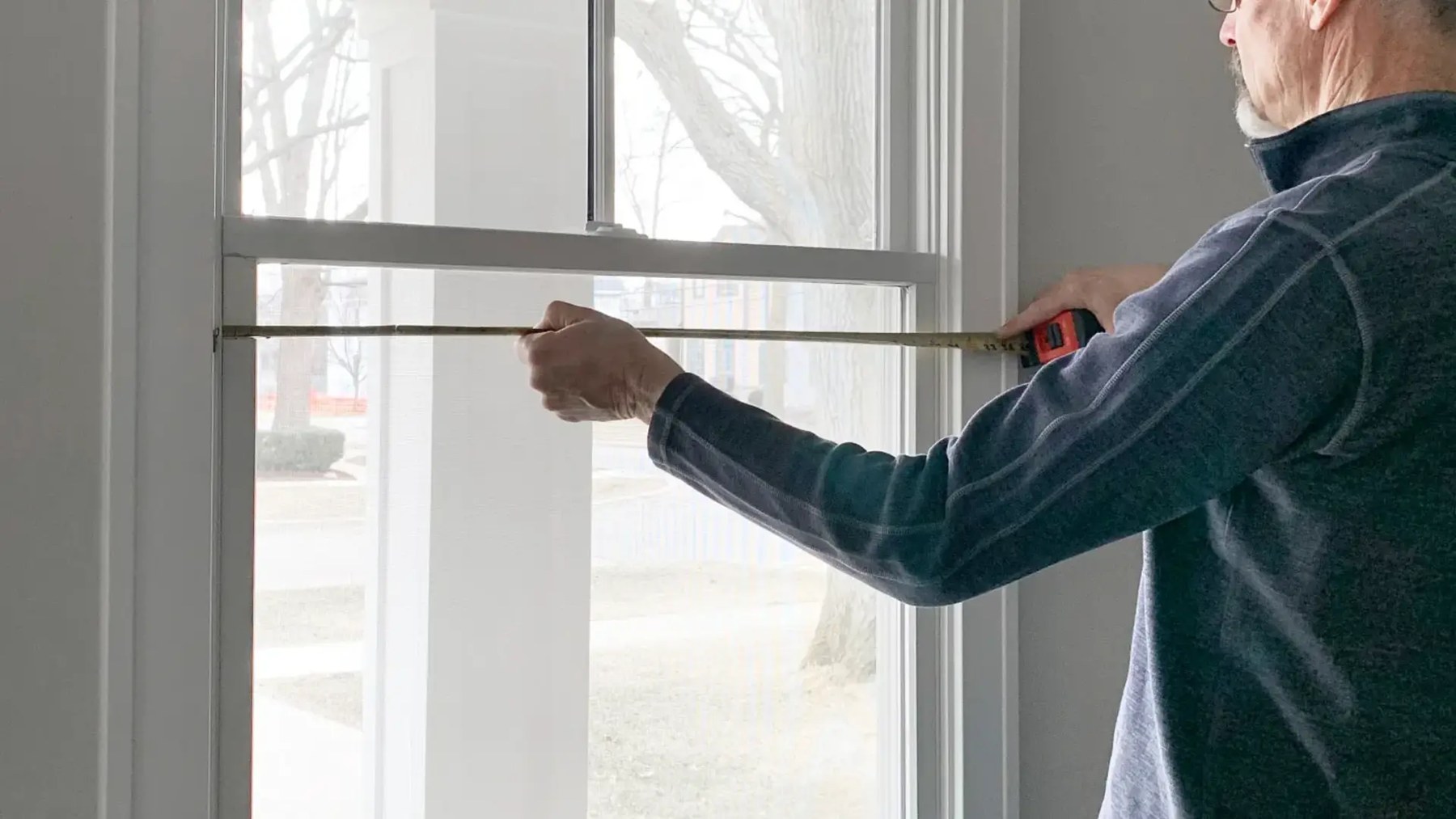
DIY measuring can work for one or two standard rectangular windows, an outside mount over flat trim, and a manual shade with generous coverage. Use a rigid steel tape, not a soft sewing tape. Record measurements to the nearest 1/8 inch, keep width and height in separate columns, and measure each window independently even if they look identical.
Do not subtract anything yourself unless the seller explicitly instructs you to. Provide the raw opening or finished outside dimensions requested by the product. Take photos with the tape visible, and mark which side has a handle or crank. Send those details to World Wide Shades for a second look before ordering.
DIY is less attractive for bay windows, arches, sliders, bifold doors, skylights, and windows that are not square. For those openings, a small service fee is often cheaper than a custom remake, a second installation visit, or a shade that cannot move.
The cost of a measuring mistake
The direct cost is only one part of the problem. A remake can include fabric, freight, labor, disposal, and a new appointment. If a room is being painted or furnished at the same time, a delayed shade can also force other trades to return. For a five-window order, a $150 measuring service may be less than 5% of a $3,000 project and far less than replacing one premium motorized unit.
Common consequences include:
- A shade is too wide and rubs inside the recess.
- A shade is too narrow and leaves a visible light line.
- A bracket conflicts with a window crank or insect screen.
- A cassette projects into a door swing or cabinet.
- Shades on one wall do not align at the same head height.
- A tall window requires a ladder plan that was never discussed.
World Wide Shades can document those tradeoffs before fabrication. Start a quote with World Wide Shades when the cost of a wrong dimension would affect your schedule or finish quality.
Questions to ask before booking a service
Confirm whether the measurer guarantees the dimensions, whether the retailer or installer assumes responsibility, and what happens if a shade does not fit. Get that answer in writing. Also ask whether a second visit is included after construction changes.
A roller shade, Roman shade, woven wood shade, and motorized cassette can require different clearances. A generic window measurement is not enough. Compare roller shades with Roman shades before the appointment if you are still choosing a style.
Ask whether trim, paint, flooring, screens, and hardware must be installed. A measurement taken before casing is fitted may be obsolete. If construction is still moving, World Wide Shades can use preliminary dimensions for planning and schedule a final verification at the appropriate milestone.
A good service plan addresses ladder access, stairwells, skylights, and windows above tubs or counters. Do not climb onto a counter to save a service fee. Read the skylight shades guide if the project includes overhead glass, then ask World Wide Shades about safe access.
How the appointment usually works
A typical visit takes about 15–30 minutes for a small group of standard windows and 60–120 minutes for a whole-home project with doors or specialty shapes. The measurer confirms the scope, records each opening, checks obstructions, discusses mount type, and photographs unusual conditions. You should receive a room-by-room schedule or quote notes afterward.
Use the appointment to test the desired operation. Open a casement, tilt a window, slide a door, and move any furniture that might block a shade. Discuss whether you want all headrails aligned, whether privacy is needed at night, and whether a shade should stop at a particular sill height. These decisions can be harder to change after fabrication.
Book a planning conversation with World Wide Shades and bring your priority rooms, target budget, and timing. World Wide Shades can separate “must fit” requirements from aesthetic preferences.
How to prepare your own measurements
Even when a professional will measure, rough numbers help build a realistic budget. Measure the overall wall, count openings, note approximate height, and mark each window as standard, door, skylight, bay, or specialty. Record the direction the window faces and whether the room needs sleep darkness, glare reduction, or privacy.
The how much do custom roller shades cost guide explains why width, height, fabric, controls, and installation change the range. Use World Wide Shades swatches to narrow the fabric family before the final visit; a selected fabric makes the discussion more precise.
FAQ: custom shade measuring service
A common planning range is $75–$250 for a visit, although location, window count, and product complexity change the price. Some providers credit the fee toward an order. World Wide Shades can tell you whether the service is included or separate after reviewing the scope.
Not always. DIY measuring can be reasonable for one or two simple rectangular windows with an outside mount and generous trim. It is more valuable for tight recesses, multiple rooms, specialty windows, motorization, and expensive fabrics.
The shade may bind, leave gaps, collide with hardware, or require a remake. Review the seller’s responsibility policy before ordering and provide raw measurements in the requested format. Contact World Wide Shades if you want help deciding whether a professional visit is cost-effective.
A small group of standard windows may take 15–30 minutes. A whole-home visit with doors, bays, or tall windows can take 60–120 minutes. Add time if you need product selection, mount comparisons, or a discussion of motorized controls.
Yes. Approximate widths, heights, photos, room use, and window count are enough to begin planning. Use the builder and then call (844) 674-2716 or contact World Wide Shades for the next step.