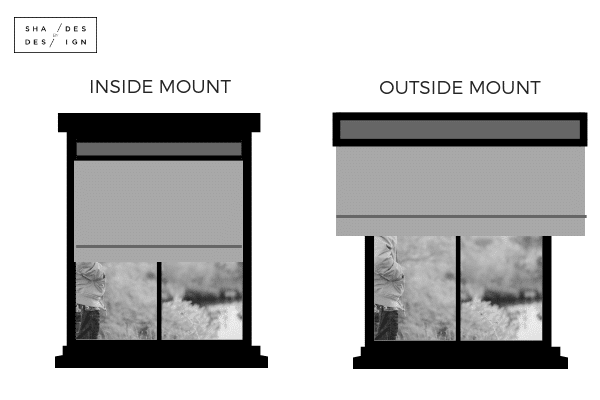
Inside mount and outside mount roller shades can use the same fabric and roller, yet they produce noticeably different results. Inside mount sits within the window recess for a built-in appearance. Outside mount attaches to the wall, trim, or ceiling and covers part of the surrounding frame. The right choice depends on depth, trim, handles, light control, and the visual proportion you want.
World Wide Shades measures the opening and the finished look together. Start with the online builder, order swatches, or contact the team for help deciding between the two mounting methods.
The quick decision
Choose inside mount when the recess is deep and square, the frame is attractive, and a small perimeter light gap is acceptable. Choose outside mount when the recess is shallow, the window has handles or obstructions, maximum darkness matters, or you want the window to appear larger.
As a starting point, an inside mount often needs around 1 1/2–2 inches of usable depth for a roller headrail, although the exact requirement depends on the selected cassette and brackets. An outside mount typically extends 3–4 inches beyond each side of the opening and 3–6 inches above it to reduce edge gaps and stack the roller above the glass.
Those dimensions are planning ranges, not universal rules. World Wide Shades confirms the actual bracket and cassette requirements for each order; use contact before drilling.
What inside mount means
Inside mount places the shade inside the window jamb or recess. The finished shade follows the opening’s geometry and leaves trim visible around it. In a well-built opening, the result is quiet and architectural: the fabric fills the recess without covering casing, tile, or adjacent wall.
The weakness is that every imperfection in the recess becomes relevant. Measure width at the top, middle, and bottom; if the numbers differ by more than about 1/4 inch, the opening may be out of square. Check depth at several points, not just the front edge, because a crank, latch, or projecting stop can block the shade.
Inside mount also leaves a side gap. A typical roller can show roughly 1/4–1/2 inch of total light leakage at each side depending on hardware, fabric roll, and installation tolerance. For a bedroom, consider an outside mount, side channels, or a blackout configuration. The light-filtering shades guide explains why fabric opacity cannot eliminate a mechanical side gap.
World Wide Shades can review photos of unusual recesses and recommend an inside-mount cassette or a cleaner outside-mount solution. Begin through contact or call (844) 674-2716.
What outside mount means
Outside mount covers the opening and sits on the wall, trim, or ceiling. The shade can overlap the glass on all sides, which reduces light leakage and hides an uneven or shallow recess. It is also useful when the window trim is too narrow for brackets or when door handles project into the shade path.
A common planning approach is to add 3–4 inches to the left and right of the glass or frame and 3–6 inches above it. A 36-inch-wide opening might therefore receive a 42–44-inch finished shade, subject to available wall and trim clearance. The extra width improves privacy and makes the window read as taller and wider.
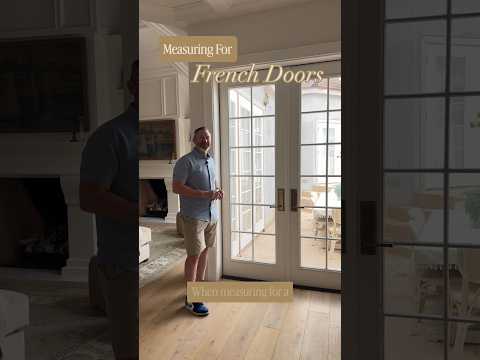
Outside mount requires a clear wall. Check nearby switches, artwork, crown molding, casing, radiators, and adjacent windows. For doors, verify that the shade clears the handle and swings freely. Read roller shades for French doors before specifying a door opening.
If you want a confident outside-mount plan, use the builder and share finished measurements with World Wide Shades. The team can help balance overlap and proportion rather than blindly adding inches.
Measuring an inside mount
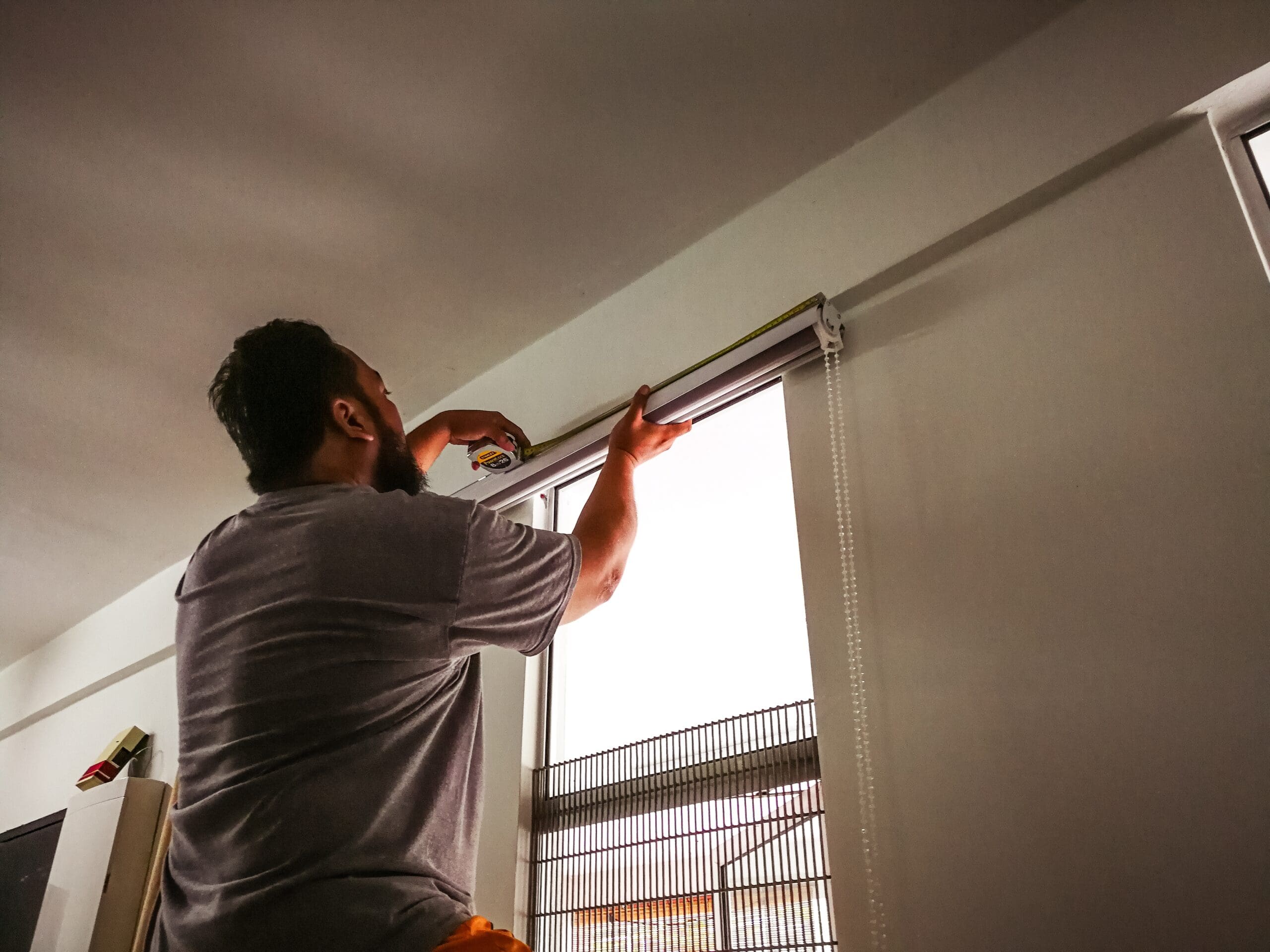
Measure the inside width in three places and record the smallest number to the nearest 1/8 inch. Measure height at the left, center, and right; record the largest height. Measure the recess depth from the front mounting surface to the nearest obstruction. Note whether the sill slopes, whether the window opens inward, and whether the shade must clear a latch.
Do not round a tight opening up. A shade that is 1/8 inch too wide may bind or fail to sit squarely. A small manufacturer deduction may be applied for clearance, but the deduction varies by product. Ask World Wide Shades what the ordering convention is for the exact hardware before submitting the width.
For windows with a shallow recess, a fabric valance or cassette may require more depth than an exposed roller. Read roller-shade valance options and use swatches to compare the visible hardware and fabric finish.
Measuring an outside mount
Start by measuring the glass and frame, then decide what should be covered. For privacy, the fabric should extend beyond the glass so no sightline remains when the shade is down. For light control, overlap the frame on each side and above the headrail. Mark the planned finished width and height with painter’s tape before ordering; open the window and door to make sure nothing collides.
A 3-inch side overlap on both sides adds 6 inches to the shade width. A 4-inch top overlap adds 4 inches above the opening. If the wall cannot accept that size, consider a side-channel system, a narrower fabric, or an inside mount with realistic expectations about light gaps.
World Wide Shades can configure outside mounts for bedrooms, media rooms, and doors where coverage matters. Request help through contact or start a quote in the builder.
Light gaps and blackout performance
Mounting often matters more than shoppers expect. An inside-mounted blackout shade can still leave visible brightness at both sides and along the top. Outside mount reduces those gaps, and side channels can reduce them further. A dark fabric may look blackout while still allowing a bright halo if the shade does not overlap the recess.
For a nursery or bedroom, compare mounting with the best window shades for bedrooms and the child-safe window treatments guide. World Wide Shades can match a blackout fabric with a cassette, overlap, or channel strategy; order swatches before you decide based only on a screen image. For a fast recommendation, call (844) 674-2716 or use contact.
Style and room proportion
Inside mount emphasizes the window’s existing architecture. It suits clean casing, deep jambs, and rooms where trim is part of the design. Outside mount creates a larger visual rectangle and can make a small window appear more generous. It can also hide dated trim or an irregular recess.
Use fabric color to reinforce the choice. A shade close to the wall color makes an outside mount recede; a contrasting shade becomes a deliberate architectural frame. See the window-shades color guide for undertone and sample advice. World Wide Shades can send swatches so the shade is judged beside paint, flooring, and trim rather than in isolation.
Cost and installation differences
Inside mount can use less fabric, but it is not automatically cheaper. Complex recesses, shallow-depth cassettes, or out-of-square frames can increase fabrication and installation time. Outside mount may use more fabric and a larger headrail, but installation is often straightforward when the wall is clear.
As a rough planning range, a standard custom shade may fall around $125–$400 per opening, while blackout cassettes, side channels, motorization, and extra-wide widths can push a project to $350–$900 or more. Installation commonly adds $50–$150 per opening, with access and region affecting the final quote. World Wide Shades provides project-specific pricing through the builder and contact.
Room-by-room recommendations
Outside mount is usually the stronger choice when sleep-quality darkness matters. Use an overlap of roughly 3 inches per side where wall space allows and consider side channels for a bright exposure.
Inside mount keeps the shade clear of counters and mirrors when depth allows. Confirm moisture exposure and handle clearance. The shades for kitchen and bathroom guide covers fabrics and ventilation.
Either can work. Choose inside mount to showcase trim; choose outside mount to enlarge a short or narrow opening and reduce glare around a television.
Outside mount or a shallow door-mounted system often clears the handle more reliably. Measure the operating path and read roller shades for French doors.
Frequently Asked Questions
Outside mount is generally better for blackout because it overlaps the opening and reduces side and top gaps. Inside mount can work with a cassette or side channels, but the recess must be square and the remaining perimeter gap should be acceptable. World Wide Shades can recommend the right construction through contact.
A common starting point is 3–4 inches beyond each side of the opening and 3–6 inches above it. The ideal overlap depends on wall space, trim, handles, and desired darkness. Mark the proposed dimensions with tape before ordering.
Many roller systems need roughly 1 1/2–2 inches of usable depth, but a cassette or valance may require more. Measure to the nearest obstruction and confirm the selected bracket specification with World Wide Shades before ordering.
Only if the unevenness is within the product’s tolerance and you accept the visual result. Measure at three points; if widths differ by more than about 1/4 inch, outside mount may hide the irregularity more effectively.
Yes. Extending the fabric beyond the frame and mounting several inches above it creates a larger visual rectangle and can make a short or narrow opening feel more substantial. Order swatches from World Wide Shades to test how a wall-matched color changes the effect.