French doors bring light into a room, but their narrow glass panels and projecting handles make window shades more demanding than ordinary windows. A shade that looks perfect when the door is closed can hit the lever, swing when the door moves, or prevent the latch from operating. The installation plan has to account for the complete door motion, not just the glass size.
The reliable formula is a slim roller shade, a mount that clears the handle, and hold-down hardware or a guide that keeps the bottom rail stable. This guide explains how to plan and install the treatment, when to choose inside or outside mount, how to protect the door, and when motorization is worthwhile. World Wide Shades can review handle photos and provide a shade plan through the online builder.
Why French doors need a dedicated shade plan
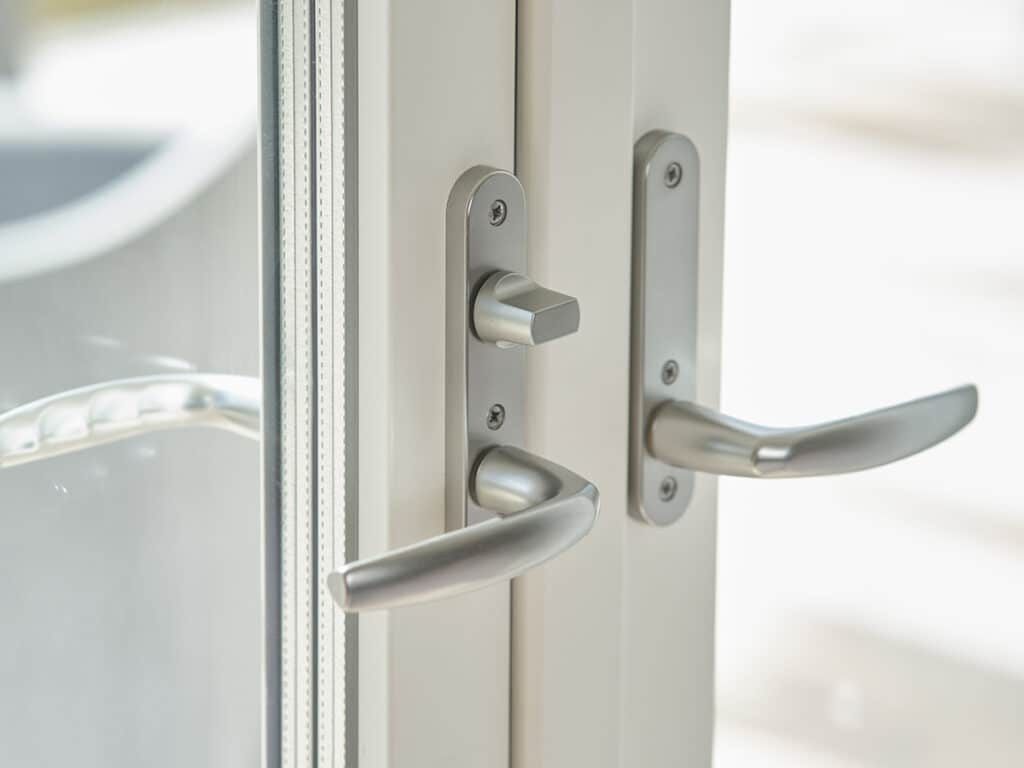
A French door can move through a 90–180-degree swing, flex slightly at the hinges, and vibrate when it closes. The shade is attached to the moving panel, so its headrail and fabric must remain aligned with the glass while the door operates. A handle can project 2–3 inches from the panel, and a standard cassette may be deeper than that clearance allows.
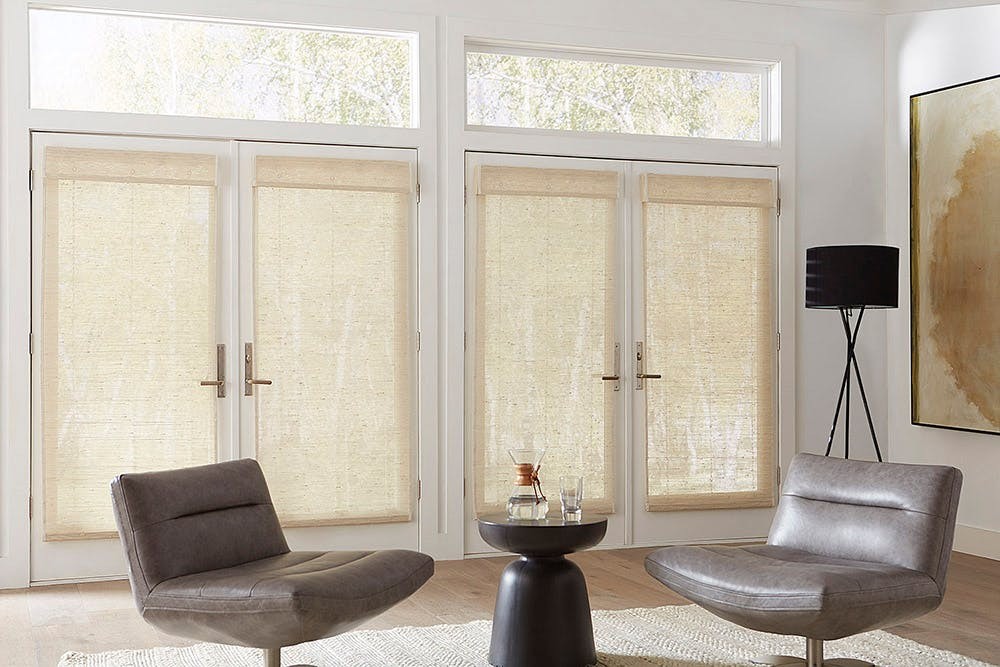
The two doors may also meet at the center, leaving only a narrow strip for each bracket. A single shade spanning both doors usually interferes with the opening seam. Plan one shade per active glass panel unless the door manufacturer and shade supplier specify another arrangement.
For a review of shade styles made for door panels, visit roller shades for French doors. You can also call World Wide Shades at (844) 674-2716 or send a photo through /contact before drilling.
Choose inside mount or outside mount
Inside mount places the shade within the glazing recess. It gives the cleanest appearance when the recess is deep enough, but French-door glass often has only 1–2 inches of usable depth. Check the handle, glazing bead, hinge-side clearance, and the full roll diameter before selecting it.
Outside mount attaches to the door face or a header above the glass. It is usually more forgiving and can cover a shallow recess, but the shade must be positioned so it does not hit the handle or adjacent door. A low-profile headrail mounted above the glass often works better than a bulky fascia on a narrow stile.
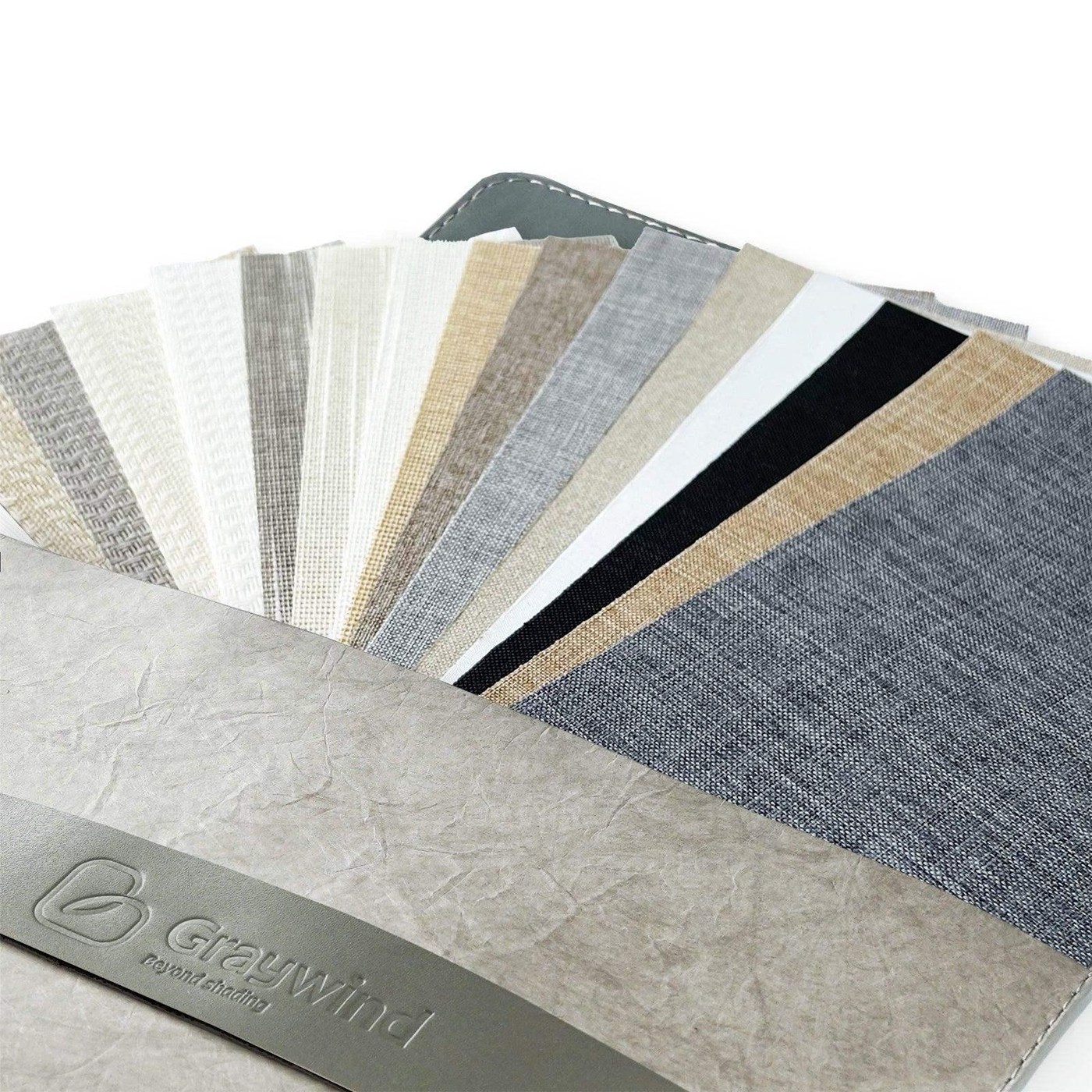
Measure the glass, recess, handle projection, and distance from glass top to handle. If the handle is within the shade’s travel path, do not guess at an offset. World Wide Shades can recommend a bracket and fabric combination that keeps the clearance intentional; start with /swatches to see low-profile materials.
Select the right shade style
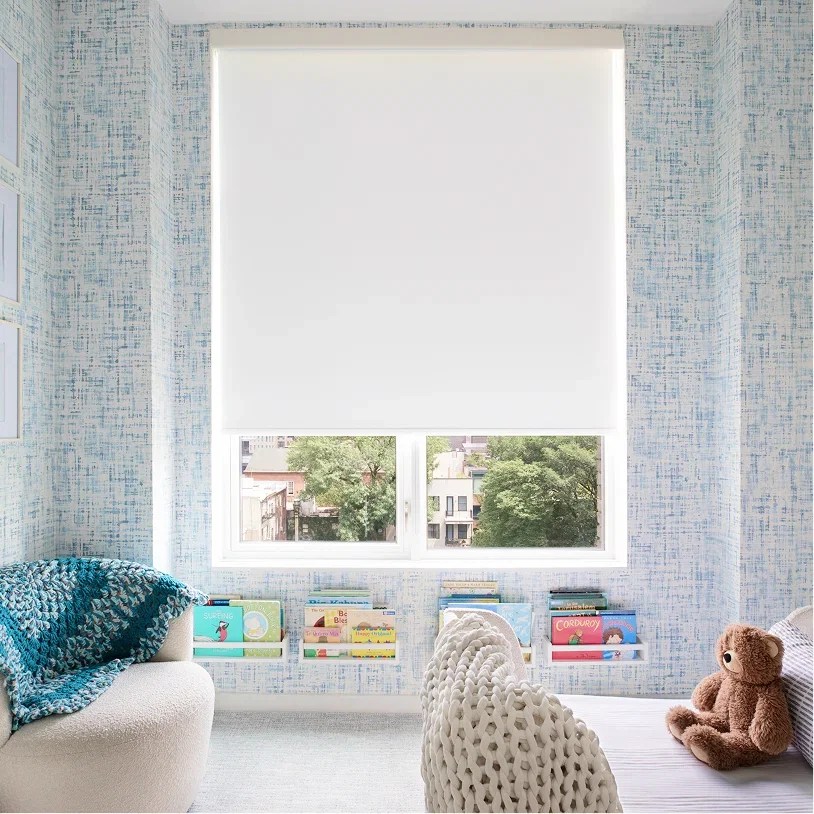
A roller shade is usually the most compact option for a French door because the fabric rolls into a small headrail. Light-filtering fabric provides daytime privacy while keeping the room bright. Room-darkening or blackout fabric helps bedrooms and media spaces, but perimeter gaps may still allow light unless side channels or overlapping mounts are used.
Solar screen fabric is useful when the priority is glare and UV protection, especially on a south- or west-facing door. It can preserve the view during daylight, but it is not fully private at night with interior lights on. Read UV protection window shades before selecting a screen openness percentage.
Cordless operation is preferable on a door because a dangling chain can catch on a handle or become a safety hazard. Motorization is a strong option for tall doors, paired doors, or a room where the shades are adjusted several times a day. The smart home motorized shades setup guide explains control options.
Measure the door in motion
Start with the door closed and measure the clear width and height of the glass or recess. Take three width readings if the recess is irregular and record the smallest. Then open the door slowly while watching the handle, shade location, wall, adjacent door, and nearby furniture.
Measure handle projection from the door face, not from the glass. Note the distance from the glass edge to the handle center and the distance from the top of the glass to the top of the handle. Photograph both the front and hinge sides. If there is a center astragal or overlapping stop, record how far it projects.
Check the door’s swing clearance with a piece of painter’s tape marking the planned headrail and bottom rail. Open the door fully and confirm that the tape does not hit a wall, cabinet, or neighboring panel. World Wide Shades can use those dimensions to help choose a safe offset; contact /contact before finalizing an order.
Installation tools and hardware
Most installations need a drill, driver bits, a pencil, a steel tape measure, a level, and the supplied screws. A stud finder helps for a header mount, while a small bit can make a pilot hole in wood. For metal door panels, use hardware specified for the door construction rather than forcing wood screws.
Hold-down brackets attach the bottom rail to the door so the shade does not swing every time the door moves. Some systems use magnetic hold-downs; others use clips or side channels. Choose hardware that lets the rail release without bending the fabric and that does not obstruct the latch.
Never drill through glass, glazing seals, weatherstripping, or the door’s internal lock mechanism. If you cannot identify a safe mounting surface, pause and ask for professional help. World Wide Shades can explain the hardware requirements by phone at (844) 674-2716.
Step-by-step installation
Place the headrail or brackets at the planned location without fastening. Confirm that the fabric roll clears the handle, the door opens, and the shade will cover the intended glass. For a pair of doors, dry-fit both sides and verify the center gap.
Use a level across the headrail. Keep bracket spacing within the manufacturer’s limits and leave enough room for the end caps or motor. On a narrow stile, center the hardware on the strongest available surface rather than forcing it close to the glass edge.
For wood, use a pilot bit slightly smaller than the screw shaft. For metal or composite panels, use the supplied fastener guidance. Keep the drill square to the door face and avoid excessive torque that can strip a thin panel.
Lock the headrail into the brackets, then lower the shade slowly. Watch both sides of the fabric for rubbing or telescoping. If the fabric drifts toward one edge, stop and correct the level before adding hold-down hardware.
Lower the shade to its normal closed position, mark the rail ends, and install the hold-downs so the rail is secure but not under tension. Open and close the door several times. The fabric should remain flat and the rail should release or engage as designed.
Operate the lever, deadbolt, latch, and door sweep. Check the shade at fully raised, halfway, and fully lowered positions. A shade that clears the handle at 50% may still touch it when fully raised because the roll diameter changes.
For general installation sequencing, see how to install roller shades. World Wide Shades recommends at least 10 complete open-close cycles before calling the installation finished.
Preventing common French-door problems
Use a shallower headrail, an outside mount offset, a handle-compatible bracket, or a side-mounted guide. Do not bend the fabric around the obstruction. A small repositioning of 1–2 inches can solve the problem if the glass coverage remains adequate.
Add magnetic or clip-style hold-downs. If the door is exposed to a strong draft, consider side channels or a more stable guide system. Make sure the hold-downs align with the door, not the stationary frame.
Measure each door independently. Doors and frames can differ by 1/8–1/4 inch, and the center astragal may not be symmetrical. Match fabric and hardware, but do not assume identical finished widths.
A tilted headrail, uneven mounting surface, or incorrect roll alignment can make the fabric migrate sideways. Recheck level and bracket seating. If the drift persists, stop using the shade and ask the supplier to inspect it.
When motorization is worth it
Motorization eliminates chains, keeps both French-door shades synchronized, and makes tall or frequently used doors easier to operate. A battery motor avoids running wires through the moving panel. A hardwired solution can make sense during a remodel, but the power path must be planned around the door swing and electrical code.
If you want one button for both doors, specify whether the motors should move together or independently. Independent control is useful when one panel receives more sun or when privacy is needed on only one side. World Wide Shades can plan paired-door scenes and integrate them with Alexa or Google Home; see motorized shades Alexa Google Home.
Cost planning
A custom cordless roller shade for a French door commonly falls around $180–$550 per panel, depending on fabric and hardware. Add $250–$700 per panel for motorization, and budget $75–$200 per panel for professional installation when access is straightforward. Side channels, unusual door construction, and wiring can increase the total.
Two matched motorized shades may therefore land near $1,000–$2,500 installed. A precise quote depends on panel width, handle projection, fabric, mount, and control system. Use the how much do custom roller shades cost guide for broader project context, then contact World Wide Shades for a door-specific quote.
FAQs about installing roller shades on French doors
Yes, if the headrail attaches to a safe, flat mounting surface and clears the handle, latch, hinges, and door swing. Hold-down hardware is often needed to keep the bottom rail from moving.
Inside mount is clean when the recess is deep and unobstructed. Outside mount is more flexible when the recess is shallow or the handle projects into the shade path. The correct choice depends on the exact door hardware.
Use magnetic or clip-style hold-downs, or a compatible side-channel guide. Install the hardware on the moving door and test it through the full swing before tightening everything.
Usually. Cordless operation removes a chain that can catch on a handle or hang near a walkway. Motorized shades are another option when the door is tall or the treatment is adjusted frequently.
Yes. Battery motors are common because the door moves, while hardwired power is usually planned during construction or remodeling. Paired doors can be synchronized or controlled separately.
Share photos, handle measurements, and door-swing notes through /contact, browse /swatches, or build a starting configuration at /builder. Call (844) 674-2716 for help selecting clearance-friendly hardware.