When choosing custom shades for a Greenwich, CT estate home, start with the windows that ask the most of a shade: tall glazing you cannot reach, a bedroom exposed to evening sightlines, or a study where the light falls across a screen. These windows often need different fabrics and controls, even when they are visible from the same hall. A coordinated plan starts by deciding what should look consistent across rooms and what needs to work differently.
A single room can reveal the trade-offs faster than a whole-house specification. Start a representative shade in the World Wide Shades builder using the opening you know best. Compare fabric and control options on that window before carrying any choice through to the rest of the house.
Choose fabric by what each room needs
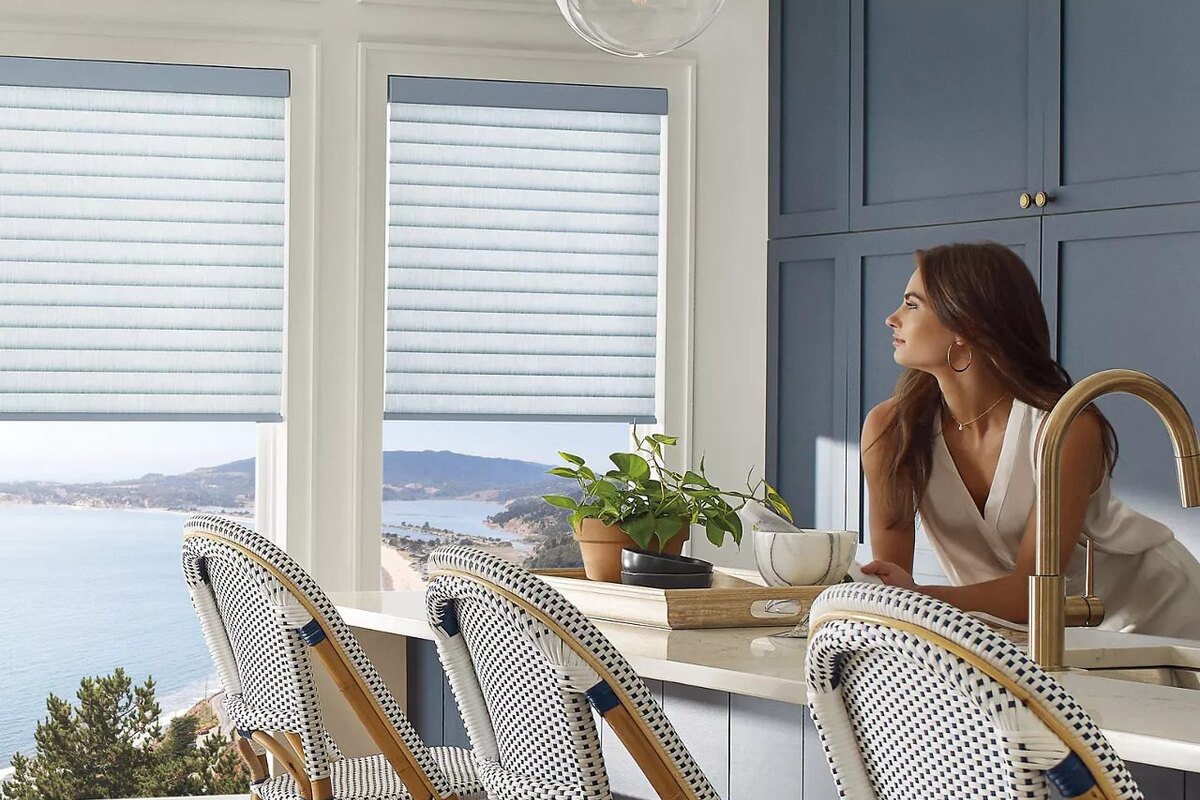
If the view matters more than nighttime privacy, start with solar fabrics. Openness describes how much of the weave is open: a lower openness generally reduces the view through the fabric, while a higher openness generally lets you see more of the landscape. Color matters separately. At the same openness, charcoal can offer a clearer daytime view through the weave, while a pale fabric may sit more quietly against painted trim. The white versus charcoal solar fabric comparison helps explain why two fabrics with the same rating can still look different in a room.
Don't choose the weave from the view alone. Imagine sitting on the sofa with the shade down after sunset and the lamps on. If that room faces a drive, walkway, or neighboring property, a solar weave is not a reliable nighttime privacy treatment. Where you mainly want soft daylight rather than a view, consider light-filtering fabric and evaluate privacy separately. The light-filtering shades guide explains the distinction.
For a primary suite or media room, choose blackout fabric if darkening the room is the main goal. Blackout describes the fabric, not the entire installation: light may still enter around the edges. That matters most on a window facing the bed or directly across from a projection screen. The bedroom shade guide is useful when deciding where darkness takes priority over preserving a view.
For a study, pay attention to the desk position instead of treating every window the same. A window behind a monitor and one reflected in the screen can cause different kinds of glare. If the desk is staying put, choose fabric for the troublesome window first. If the room doubles as a library or sitting room, think about how dark you want it when the computer is off.
World Wide Shades lists 500+ colors across 40+ fabric families from mills including Phifer, Texstyle, Mermet, Ferrari, Copaco, and Senbesta. The catalog shows fabric photos and the mills’ published openness factors; World Wide Shades does not provide physical swatches. Browse the World Wide Shades fabric catalog to narrow your palette, treating photos as a comparison aid rather than a promise of how a color will read against your trim.
Decide where motorization earns its place
Motorize shades you cannot comfortably reach and groups you expect to move together, such as a bank of family-room windows. A single guest-room shade within easy reach may not need the same control as a stair landing or a wall of glass used every afternoon. Picture a normal day: which shades move together in the morning, and which should be able to stay down when their neighbors go up?
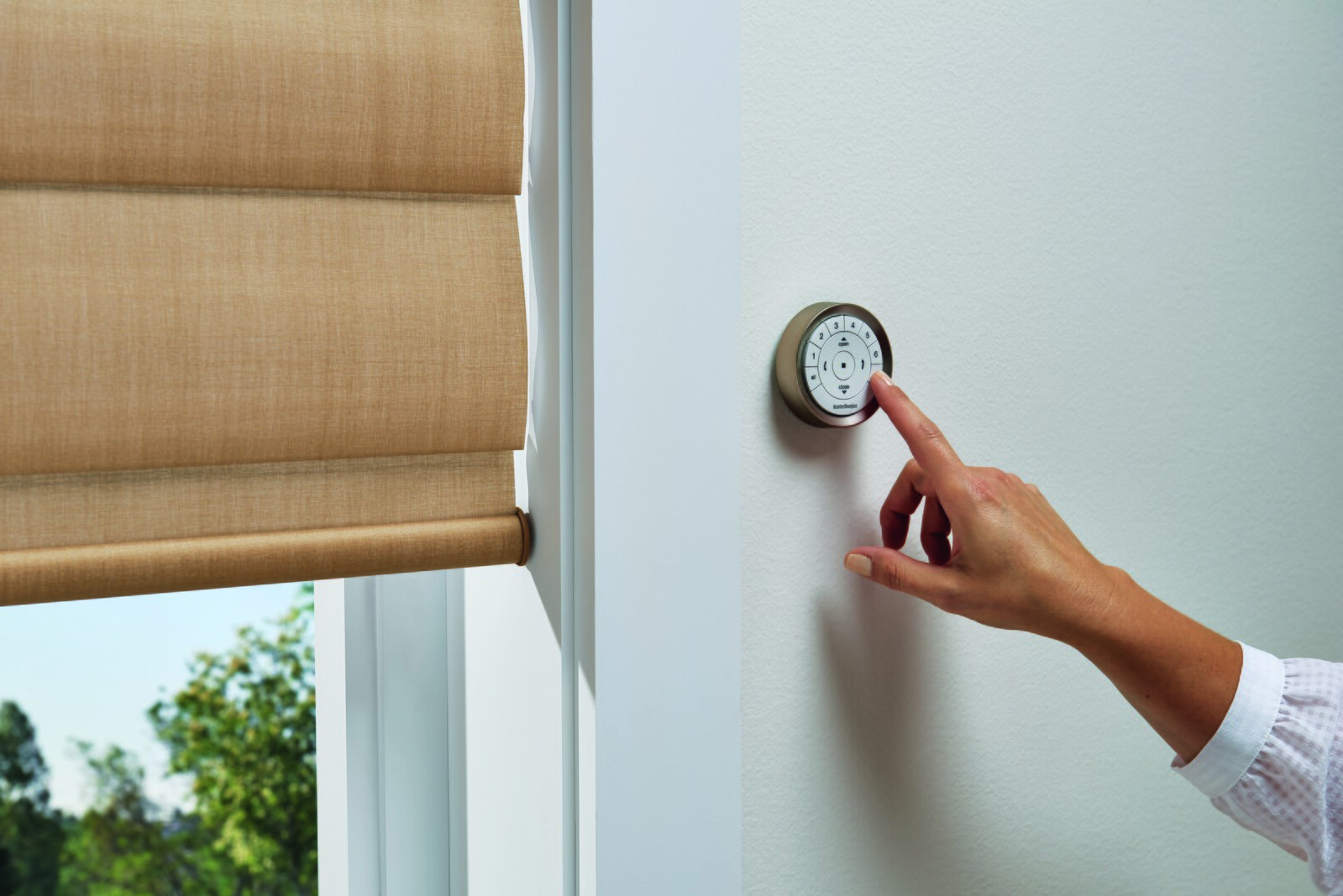
World Wide Shades uses rechargeable battery motors that require no wiring. Automate is the default; a Somfy motor is an option only if you already own a Somfy remote. A remote is required, and the Push 5 can control up to five shades. If you want to add a hub, the Pulse 2 is for Automate, not Somfy. The PowerView versus Somfy comparison is useful background if you are comparing systems, and the Hamptons second-home guide offers a separate perspective on planning controls for a property you do not occupy full time.
Plan charging access before placing a motor high above a stair or landing. The charger is not included; use a USB-C charger you already own or add the Motor Charger in the builder. For each high window, decide who will reach the charging connection and how they will do so safely once furniture, stair rails, or millwork are in place. Review World Wide Shades motorized shades before settling on the control arrangement.
Coordinate tall and differently shaped windows
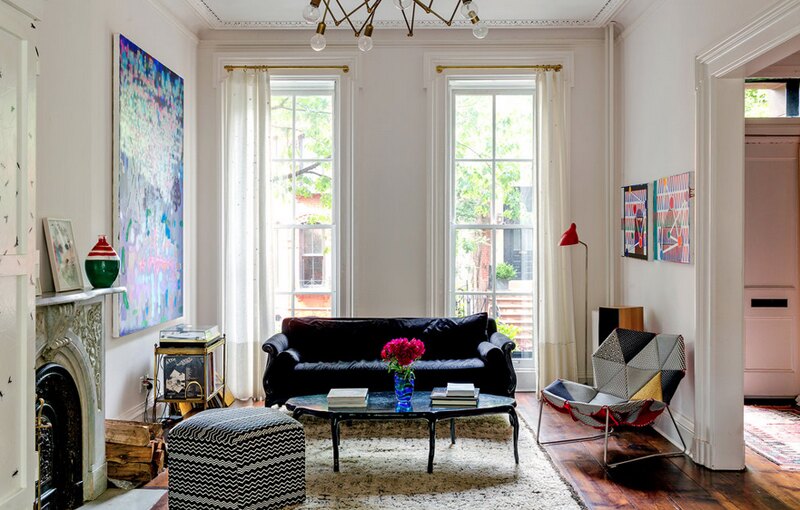
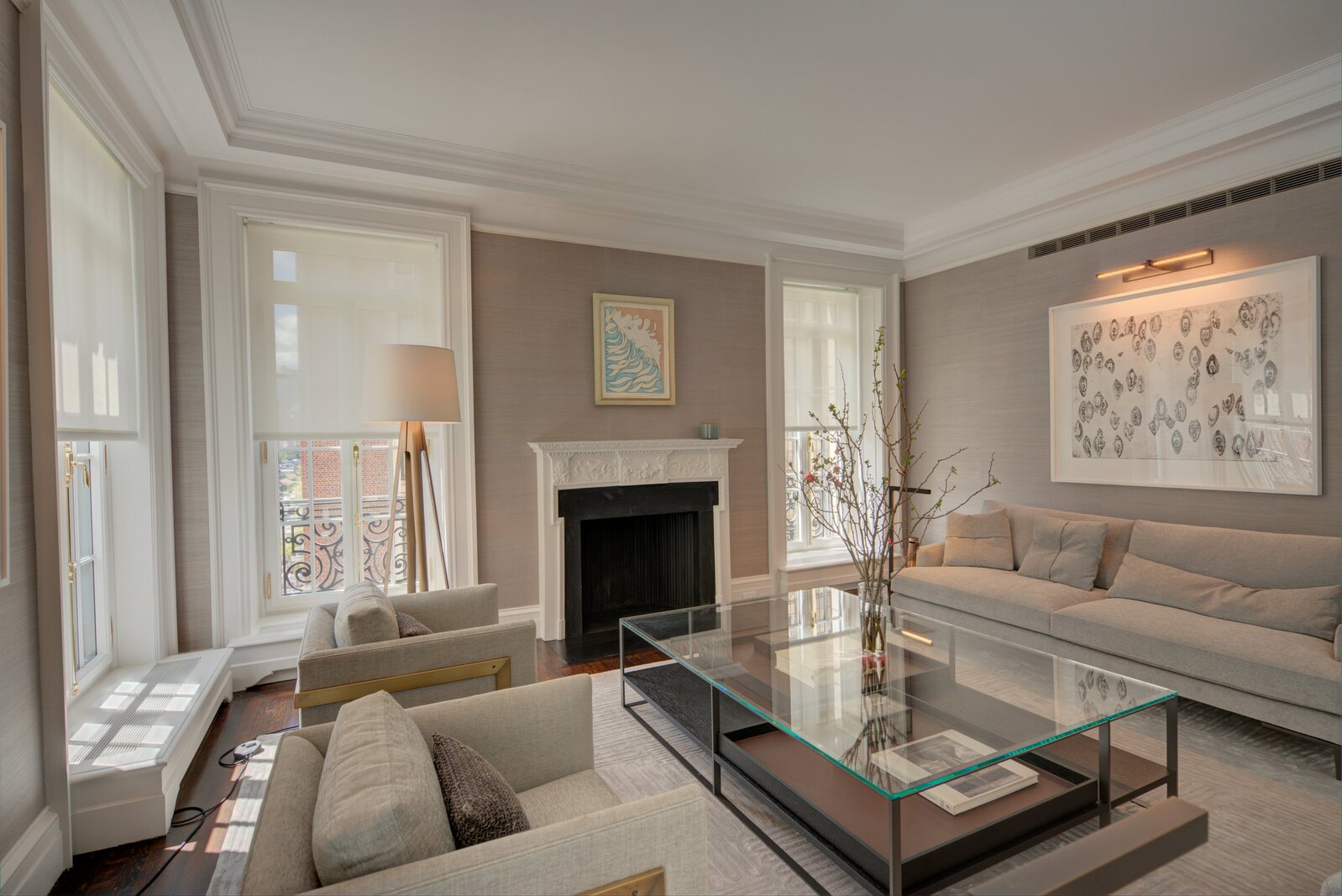
Across connected rooms, pick one or two details to repeat: an undertone that works with the trim, a consistent visual starting line, or the same fabric across a row of windows with similar needs. Take a step back to the doorway or opposite end of the hall. A row of nearly identical shades can look disjointed from there if the tops step up and down unintentionally, while a slightly different fabric may go unnoticed in a room with a different purpose. The Brooklyn brownstone guide offers another example of working with varying trim and opening depths rather than imposing the same treatment everywhere.
Treat an arch or angled upper opening as a separate decision. In a stair hall, you may want to leave an upper arch visible while shading the rectangular opening below; in a media room, leaving that same shape uncovered might defeat the point. Record the opening independently instead of assuming the lower window’s fabric or controls will carry over. Explore specialty shapes before specifying an irregular window, then check the combination you want for that individual opening.
Inside mounts preserve the outline of trim when there is enough usable recess. World Wide Shades requires a minimum depth of 1.5 inches for an inside mount and recommends 2.5 inches for motorized shades. Use an outside mount if the opening is too shallow. Also check whether a crank, handle, or projecting sill sits in the intended path. For an outside mount, plan 2–3 inches of coverage beyond the opening on each side and 3 inches above it; look at how that will sit against adjacent casing or millwork.
For an inside mount, measure the width at the top, middle, and bottom and use the narrowest reading. Measure the height at the left, center, and right and use the tallest reading. Enter the exact opening dimensions; the factory makes the deductions. If a pair of windows looks identical, measure each anyway. For uncertain openings or mixed mounts, contact World Wide Shades or call (844) 674-2716 before you finalize the specification.
Plan the order around finished work
Give each opening a room and window label that everyone uses, from designer and homeowner to installer. Keep the mount, fabric selection, and control assignment next to that label, and mark any high windows that need a charging access plan. This makes it easier to spot an accidental mismatch before checkout and to tell two similar openings apart on installation day.
If the project includes new trim or millwork, shortlist fabrics while the work is underway but wait for the actual mounting surfaces to be finished before taking final measurements. Choose who will confirm those measurements and who will approve the fabric in each room. For help sequencing a renovation, see the guide to ordering shades for new construction.
World Wide Shades makes every shade by hand to order in the USA, with free U.S. shipping. The lead time from order to delivery is 2–4 weeks, or 3–4 weeks for limited-stock fabrics and specialty shapes. If a room must be ready for guests or a move-in, build your schedule around the items that take longer and leave time for installation after delivery. Check live pricing in the builder for the dimensions, fabric, and controls you actually intend to order.
Frequently asked questions
Not necessarily. Check the view from outside before committing to an exact match; it may matter most across windows you see together. If a study and bedroom have different privacy needs, you can prioritize how each room works while coordinating color and visible shade placement.
Yes. Start with a shared undertone or a similar relationship to the trim instead of asking two different fabrics to look identical. Keep the living room’s daytime view and the bedroom’s need for darkness as separate buying decisions.
Not if the shade will rarely move or the glazing is better left uncovered. Motorization makes the strongest case when a shade needs frequent adjustment and is hard to reach. Confirm charging access as part of the decision, not after the shade is installed.
Custom orders are not returnable. Manufacturing defects are remade free within 30 days, and motors are covered for 1 year. For a mismeasured shade, World Wide Shades provides a one-time free recut, with the customer covering shipping. Read the fit policy before ordering.
Ready to Order?
- Measure each finished opening and confirm its mount.
- Choose the fabric and color for each room’s light, view, and privacy needs.
- Assign manual or motorized control to each shade and confirm remotes and charging access where needed.
- See live pricing in the World Wide Shades builder with those selections entered.
- Review the room labels, configurations, and delivery timing, then place your order.
If one opening is holding up the rest of the project, contact World Wide Shades or call (844) 674-2716 before submitting the order. Have the room label, mount choice, and opening dimensions handy so you can discuss that window directly.