Choosing white vs charcoal solar shades starts with what you want to notice when the shade is down: the room or the view. A white solar fabric can blend into pale trim and give a sunny window a softer look. A comparable charcoal fabric often makes it easier to pick out outdoor detail in daylight, especially when brightness on the shade itself competes with the view (Phifer’s solar shade fabric guide).
Neither color tells you how open the weave is or whether the fabric is opaque. Compare the exact fabrics you’re considering, then judge them against your glazing, room orientation, and privacy needs. Start with the World Wide Shades fabric library, where genuine swatch photos and mill-published openness factors let you compare color and construction separately.
White vs Charcoal Solar Shades in Daylight
White can be the more discreet choice against a painted casing, pale stone, or a wall of warm plaster. Imagine three tall windows in a dining room: with the shades lowered, a white fabric can keep the window wall from feeling divided into three dark panels. First compare the undertone with the surrounding finishes. A cool white against cream millwork may stand out more than you expect.
The trade-off is that a light fabric can reflect more light and appear brighter in front of the glass, which can make the scene outside less distinct than it would be through a comparable dark fabric (Phifer’s comparison of light and dark fabrics). That can work well where the outlook is a neighboring wall or a service courtyard. If you bought the house for a garden view, judge the white shade by what you can still see through it, not just by how well it matches the trim.
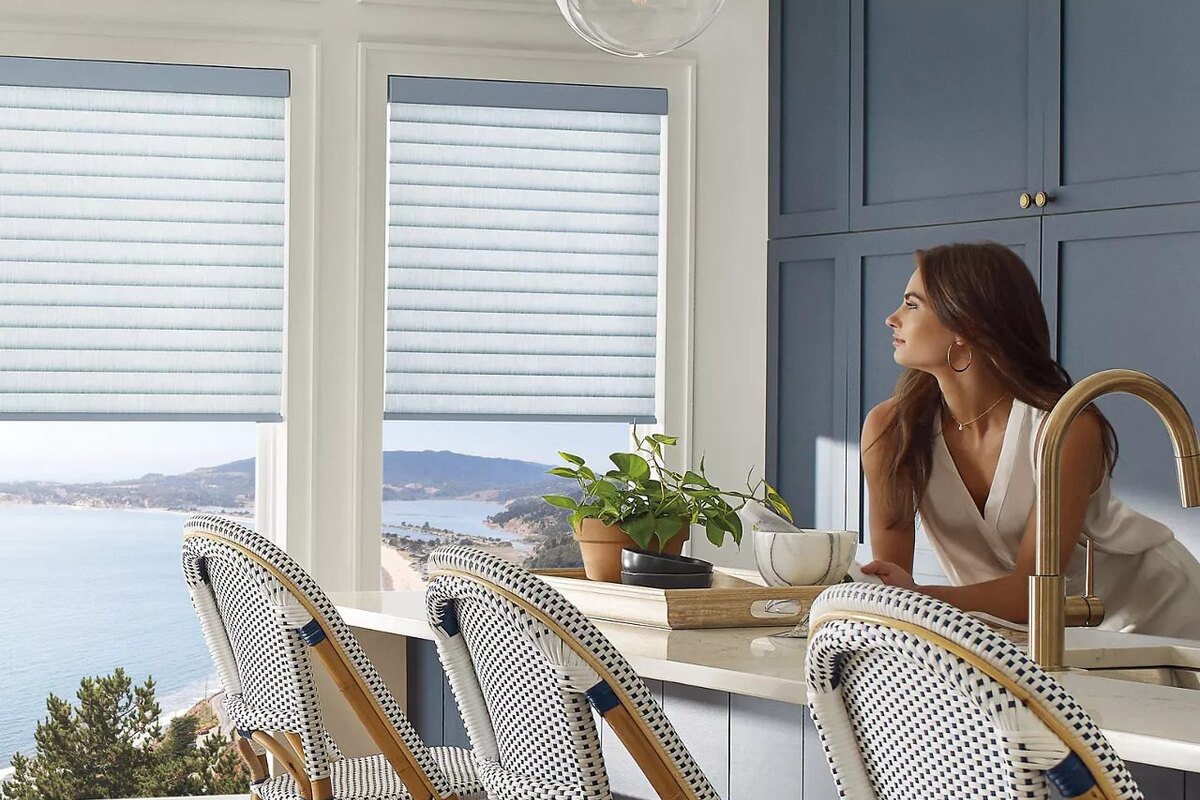
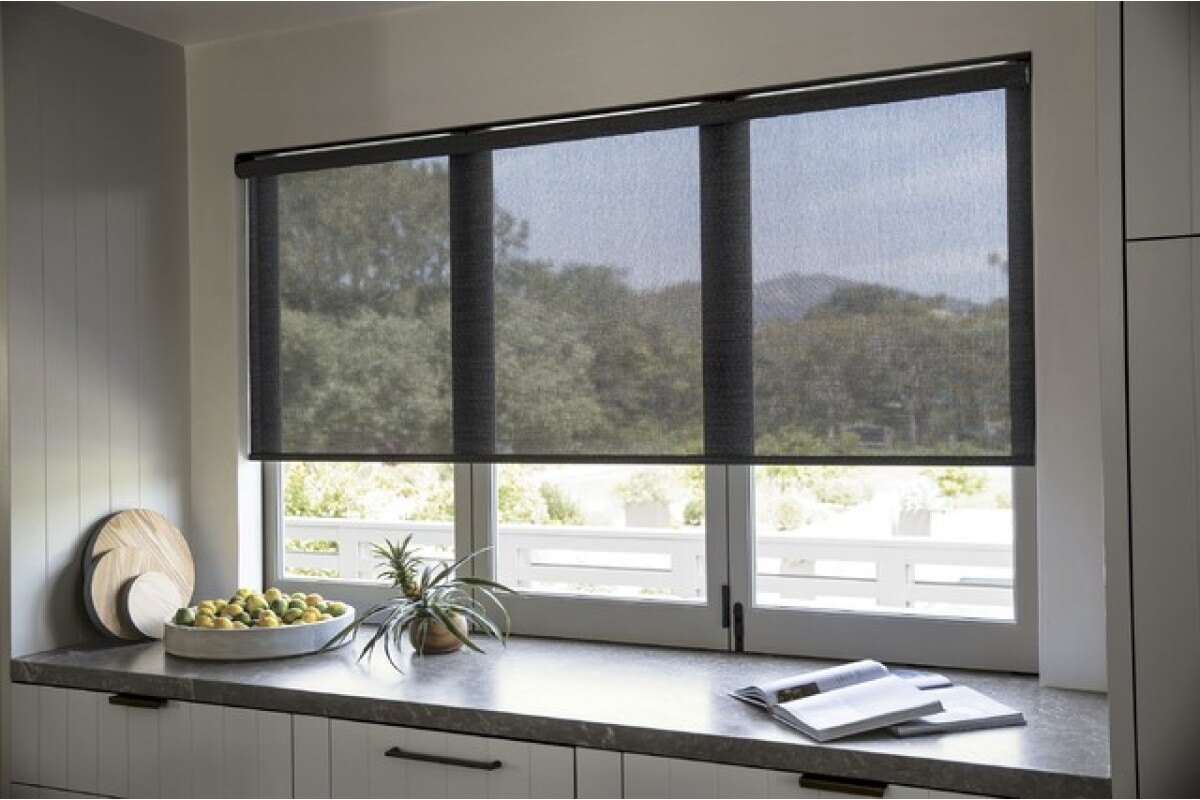
Charcoal is a useful starting point for a window overlooking a garden, water, or a skyline. In comparable fabrics, dark yarns can look less bright than light yarns in strong daylight, making it easier to see outdoor details through the mesh (Phifer’s guide to glare and outward visibility). In a room with light walls, however, the lowered shade may read as a distinct dark panel, especially when there’s little daylight outside.
Consider the color from across the room as well as from your favorite seat. Charcoal may sit quietly against a dark metal frame but become a feature against white-painted sash. Compare the white and charcoal fabric listings at World Wide Shades, and use the window shade color guide if you’re coordinating several finishes.
Compare Openness Before You Pick a Winner
The mill-published openness factor describes the open area in the weave. A more open construction generally leaves more room for light and the view to come through, while a tighter weave generally screens more of the scene. Openness is not a complete measure of visible-light transmission, and fabrics with matching openness can still look different through the window (Phifer’s explanation of weave and color).
For the fairest comparison, start with one fabric family offered in both colors at the same openness, if available. That gives you a better sense of what color changes before you bring a different weave into the decision. Then compare a tighter and a more open option in your preferred color. A charcoal fabric with a tight construction is not automatically easier to see through than a white fabric with a more open construction.
Pay attention to the weave in the close-up photos. You might prefer a fine, quiet texture at a small reading nook and a more visible pattern on a tall uninterrupted shade. World Wide Shades carries 500+ colors across 40+ fabric families, including blackout and light-filtering options from Phifer, Mermet, Ferrari, Copaco, Senbesta, and Texstyle. Open the fabric library and keep a short list with the full family name, color, and mill-published openness for each contender.
Match the Fabric to the Room’s Toughest Hour
Think about the hour you actually use the room with the shade down. On a west-facing window, that might be late afternoon, when the sun hits the glass as you sit down to read. In an east-facing kitchen, the problem might be glare at breakfast, not how the fabric looks at noon. For broad southern exposures, the guide to shades for south-facing windows can help you organize your shortlist.
For a landscape-facing living room, pick one detail you want to recognize, such as branches on a tree or the edge of a distant path. For a desk, sit where you work and note whether the window is in front of you, beside you, or reflected in your screen. And for a home with water views on one side and close neighbors on another, start with the Hamptons second-home shade guide and set priorities for each side separately.
Neither white nor charcoal open-weave solar fabric is a dependable nighttime privacy layer. When the outdoors is dark and your room is lit, people outside may be able to see in, regardless of fabric color (Phifer’s guidance on lighting and privacy). Consider actual sightlines, including a sidewalk below the window, a neighbor’s upper floor, or a path used by guests after dusk.
If privacy is important and you also want a daytime view, plan for two functions: solar fabric for daylight and a separate opaque layer for evening. If you don’t need a view while the shade is lowered, start by comparing opaque fabrics and consider coverage at the sides as well as through the fabric. Our Brooklyn brownstone roller shade guide is a useful companion for street-facing rooms. Talk through your shortlist with World Wide Shades or call (844) 674-2716 if you’re unsure whether to specify one layer or two.
Coordinate the Windows Without Giving Every Room the Same Fabric
Plan the finish from two places: where you live inside and where the windows are seen outside. A row of matching windows may call for a consistent glass-facing color, while the library and guest bedroom have very different privacy needs. If you’re comparing two-sided fabrics, check which face will be visible in the room and which will face the glass before carrying the choice across an elevation.
For a larger property, use the Greenwich estate homes shade guide to think through which rooms should match. A useful starting point is to group windows that share an elevation, then flag any with a different function, such as an office, a guest bedroom, or a staircase landing. The goal is a coordinated result without making a bedroom live by the same rules as a public room.
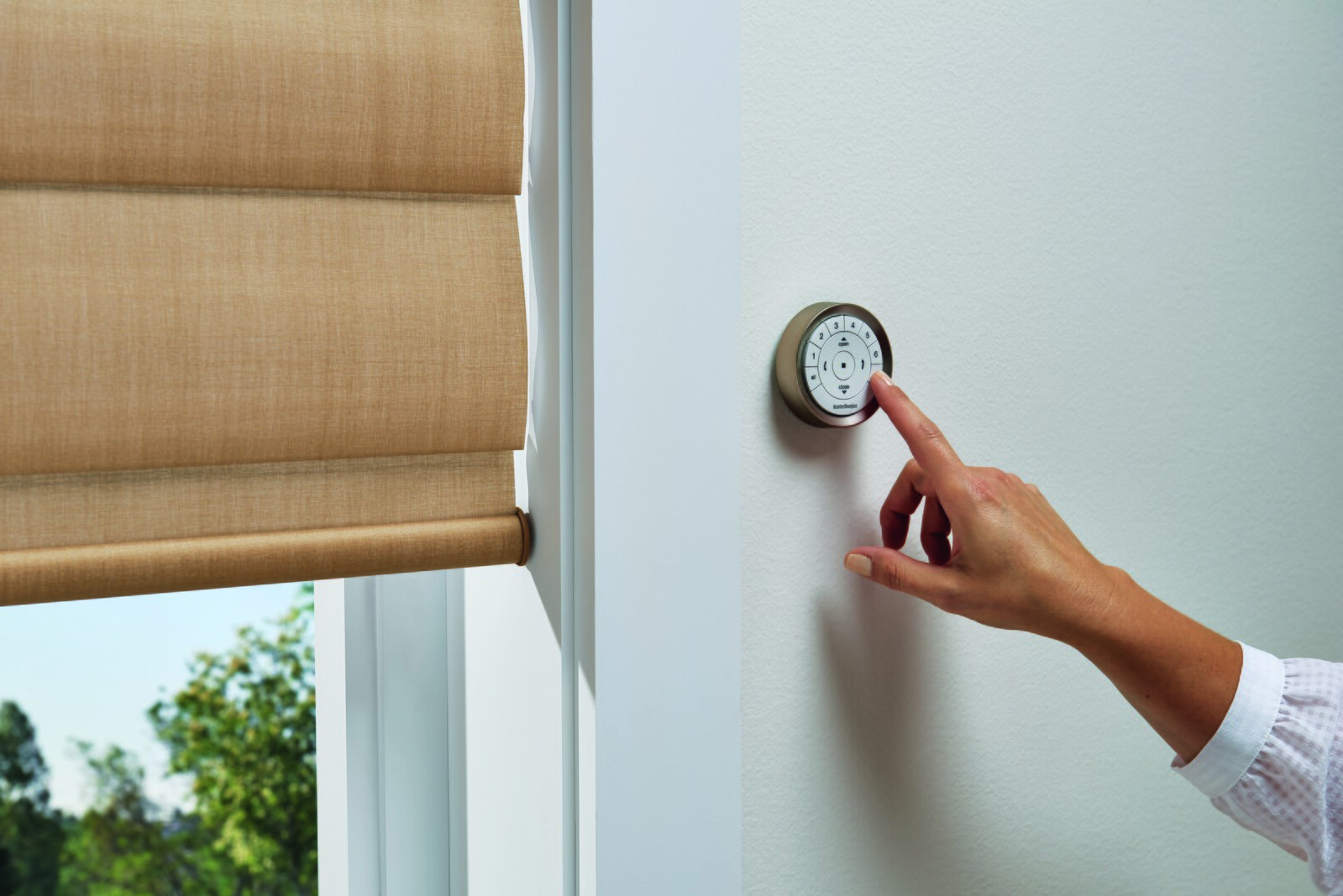
Decide how you want the shades to operate before finalizing a group of windows. At a picture window you may want one shade lowered only when glare reaches a seating area. In a row of windows you may care more about adjusting everything together. Explore motorized shades from World Wide Shades, and read the PowerView vs. Somfy comparison if you’re evaluating control systems alongside fabric.
Frequently Asked Questions
No. Charcoal often offers a clearer daylight view when you compare similar weaves at the same openness, but that observation is not a rule across fabric families (Phifer’s guide to color and openness). Compare the actual fabrics first, and consider whether you’re looking through the shade at a bright garden or at a scene already in shadow.
Neither. Use the mill-published openness factor and the fabric description for the exact option you’re considering. A dark solar mesh is still a mesh, not a blackout fabric, and a pale fabric can have a tight weave (Phifer’s guide to interior shade fabrics).
Start with a dark fabric of suitable openness if the glare comes from a bright window in your line of sight; darker shade fabrics often help reduce glare (Phifer’s guide to solar shade materials). Where direct sun hits your desk, compare tighter and more open weaves rather than assuming a darker color alone will solve the problem.
Don’t rely on it. Light inside the room can make the interior visible through an open-weave solar fabric even when it looked private during the day (Phifer’s bedroom privacy guide). If the window faces a street or neighboring home, consider an opaque layer and plan its coverage.
Use the genuine swatch photos and published openness factors for the exact fabrics, but remember that a screen image won’t show how your glazing, daylight, or paint will influence the finished look.
Ready to Order?
Use the World Wide Shades builder to turn your shortlist into an order. Have your opening dimensions, fabric family, color, openness, and preferred control on hand.
- Measure and choose your mount. For an inside mount, measure width at the top, middle, and bottom and use the narrowest. Measure height at the left, center, and right and use the tallest. Enter the exact opening dimensions; the factory makes the deduction. The minimum frame depth is 1.5 inches, with 2.5 inches recommended for motorized shades. For shallower openings, use an outside mount, adding 2–3 inches on each side and 3 inches above. See the measuring guide before entering your dimensions.
- Choose your fabric. Confirm the exact color and mill-published openness, and make sure the fabric fits the window’s main job.
- Select your control. Think through how you’ll operate each shade, particularly if several windows share a wall.
- See live pricing in the builder. Review the configuration before submitting your order.
World Wide Shades makes each shade by hand in the USA, with free U.S. shipping. Lead time is 2–4 weeks, with specialty and limited-stock options taking 3–4 weeks. To confirm a fabric or fit choice before ordering, contact World Wide Shades or call (844) 674-2716.