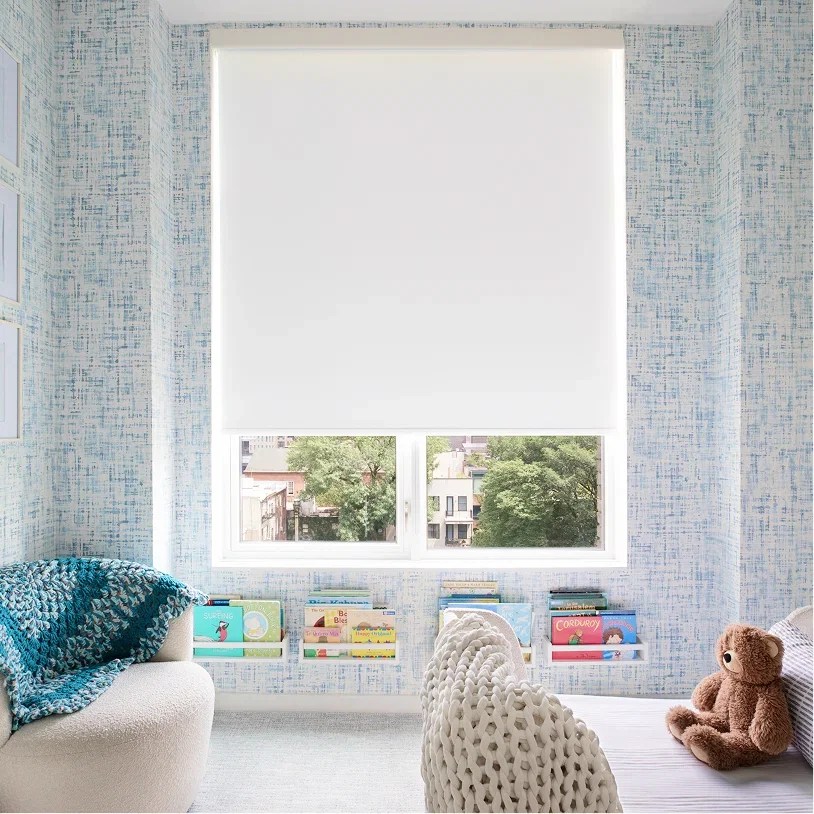
Learning how to measure sliding doors for roller shades is mostly a clearance exercise. The glass opening is only part of the answer: you also need room for handles, the sliding path, the roller tube, the raised fabric stack, and the door panel's movement. A measurement that looks correct on paper can fail if the shade projects into a handle or prevents the active panel from opening.
World Wide Shades builds custom shades around the dimensions and operating conditions you provide. Before you order, use the World Wide Shades builder, then contact the team if your door has a deep handle, a narrow jamb, or multiple panels.
Decide how the door and shade will work together
Start by identifying the active panel, fixed panel, screen, handle side, and direction of travel. A single wide shade can cover the entire opening, but it may need to be raised whenever the door opens. Two or more shades can follow separate panels and provide better control, but the gaps between shades and the headrails must be planned.
For a frequently used patio door, a panel-by-panel approach often protects clearance. For a stationary picture-like slider that opens only occasionally, one outside-mounted shade may be simpler. Review roller shades for French doors for the same handle-and-clearance logic on hinged doors.
Tools and a reliable starting point
Use a metal tape measure with 1/16-inch markings, a pencil, a notepad, and a 24-inch level. Have a second person hold the tape at the top of a tall opening. Record every dimension in inches, and label whether each number is width, height, or depth.
Do not round your raw measurements up or down. Give the exact dimensions to World Wide Shades and follow the builder's instructions about whether the factory makes deductions. If you are measuring an inside mount, the manufacturer usually calculates the fit deduction; changing the width yourself can create a shade that binds.
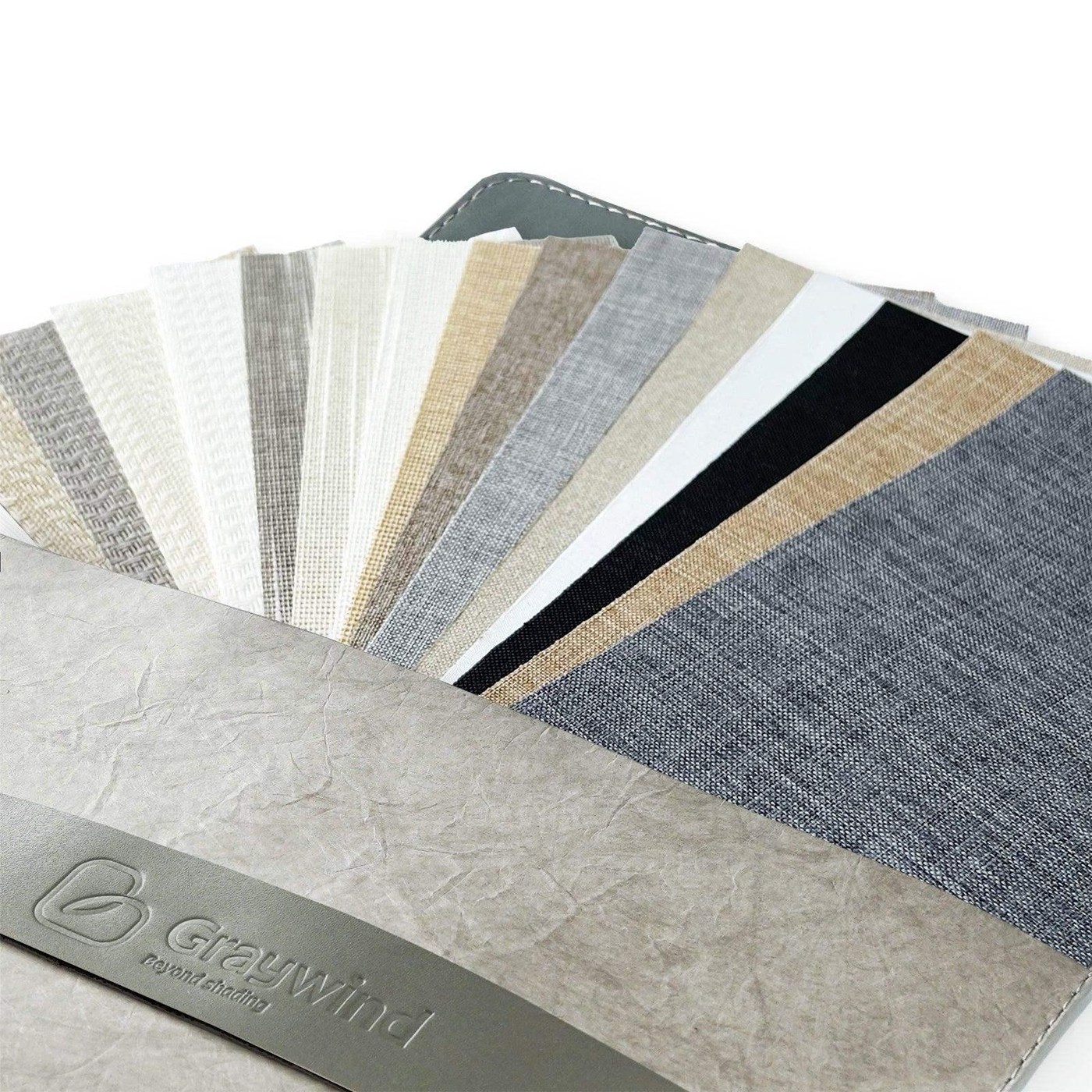
Start a sliding-door shade configuration or request fabric swatches before committing to a fabric that may look different across a 72-inch opening.
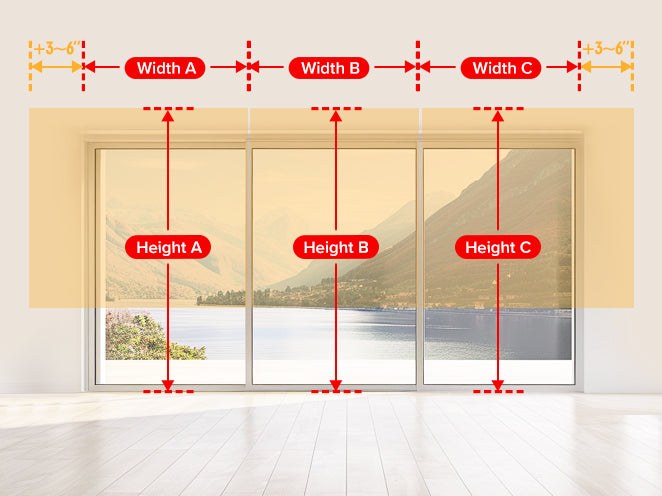
Measure the width in three places
For an inside mount, measure the clear width at the top, middle, and bottom of the opening. Write down all three numbers and use the smallest as the limiting width. A difference of 1/4 inch can matter on a shade that must move within a tight jamb.
Check the width again with the door fully closed and with the active panel in its normal position. Note any weatherstrip, screen track, mullion, or trim that narrows the path. Do not measure the visible glass alone; measure the actual surface where brackets and fabric can sit.
For an outside mount, measure the area you want covered and add overlap. A common starting point is 2–3 inches beyond each side of the opening, so a 72-inch opening might need a shade around 76–78 inches wide. Increase overlap if privacy and edge light control matter, but verify that the shade will not hit nearby walls or a handle.
Measure the height and the raised stack
Measure clear height at the left, center, and right. Record the largest dimension for outside mount so the fabric reaches the sill or floor on every side; for inside mount, provide all three measurements and follow the product instructions. If the shade will stop above the floor, decide the desired bottom position before ordering.
Then measure the space above the door where the rolled fabric and headrail will stack. A light solar fabric may form a smaller roll than a heavy blackout fabric. Plan roughly 3–6 inches of headrail and roll space for many roller systems, but verify the selected product because wide or thick fabrics can need more.
World Wide Shades can check the shade width, drop, and fabric weight together. Send the measurements to World Wide Shades before fabrication if the stack would overlap a transom, lock, or decorative casing.
Check handle projection and operating clearance
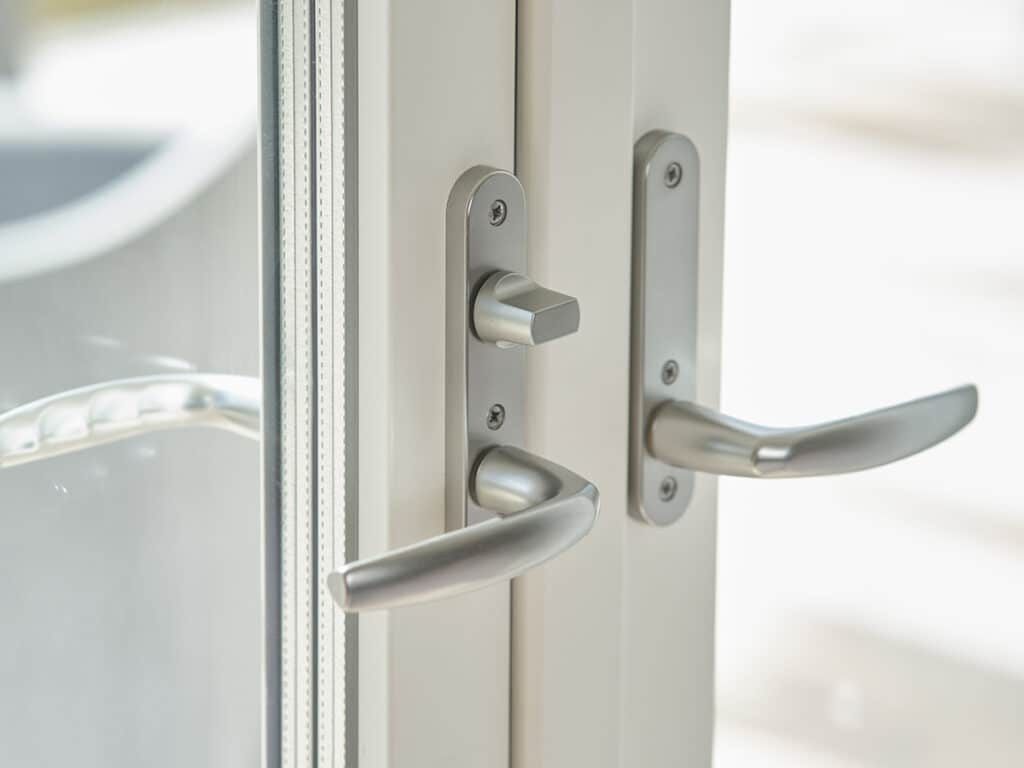
Measure from the glass or door face to the farthest point of the handle, latch, or lock. A roller shade needs enough room to lower without rubbing that projection. For an outside mount, a spacer or extension bracket may move the headrail forward; do not assume a deeper bracket will solve every interference problem.
Open the door while holding a straightedge at the proposed shade plane. Confirm the panel, handle, screen, and curtain track can all move. Leave at least 1/2 inch of practical clearance from a moving handle where possible, and more if the hardware flexes or the door is used roughly.
On a double slider, mark the center meeting rail. Decide whether the two shades will meet at the rail, overlap slightly, or remain independent. A 1/4-inch visual mismatch at the center can be noticeable, so write the preferred meeting point on the order notes.
Choose inside mount or outside mount
Inside mount keeps the shade close to the frame and can preserve a clean sightline. It requires enough depth for the brackets and tube, and it usually leaves a small side gap. Sliding-door jambs often contain tracks, trim, or handles that make an inside mount impractical.
Outside mount usually offers better coverage and more flexibility. It can cover the full glass area plus overlap, reduce edge light, and clear a shallow jamb. The trade-off is a larger visual projection and the need for a strong mounting surface above the opening. For installation technique, read how to install roller shades.
Ask World Wide Shades to review your mount choice if the header is drywall, the door reaches the ceiling, or the opening is wider than about 72 inches.
Fabric and control choices for doors
Solar fabrics at 3% or 5% openness can reduce glare while keeping a view of the patio. Room-darkening fabric improves privacy after sunset, while a blackout layer is more useful when the opening faces a bedroom or media room. The outdoor roller shades for patios guide explains how sun and exposure change fabric choices.
Cordless or motorized operation avoids a dangling chain beside the handle and keeps the door area cleaner. A battery motor can be useful when the shade is wide or raised frequently, but make sure the control is reachable and the motor has adequate capacity for the fabric weight. Child-safe options are especially important around doors; see child-safe window treatments.
Common measuring errors to avoid
Measuring only the glass misses the frame and hardware. Measuring once misses a bowed header. Adding a factory deduction yourself can make an inside-mount shade too narrow. Ordering the full opening width for an outside mount can cause the fabric to collide with a wall.
Other frequent errors include ignoring the raised stack, failing to identify the active panel, and forgetting a screen door. Photograph the opening from straight on and from the side with the door open. Include a ruler or tape in one photo so the team can understand scale. World Wide Shades can use those details to catch a clearance problem before production.
How to send measurements for a quote
Send the opening width and height, the three-point readings, proposed mount type, handle projection, headrail space, panel count, and photos. Include the fabric category you are considering and whether you want manual, cordless, or motorized operation. If the door is extra wide, provide the center meeting point and note any header material.
A 72-by-80-inch opening with a 3-inch overlap per side would need approximately 78 inches of outside-mounted shade coverage, but the final width depends on the headrail and nearby walls. A 96-inch opening may be better divided into two 48-inch shades to reduce tube deflection and make daily operation easier. Use the custom roller shade cost guide for planning, then call (844) 674-2716 for a fit review.
Build your sliding-door shade with World Wide Shades, order swatches, or contact World Wide Shades with your dimensions before you place the order.
Frequently asked questions
Outside mount is often more forgiving because it can clear handles and cover the full opening with overlap. Inside mount works when the jamb has sufficient depth and the hardware does not interfere with the roll or fabric.
A practical starting point is 2–3 inches of overlap per side. A 72-inch opening might therefore use a 76–78-inch shade, provided walls, handles, and the raised stack allow that width.
Measure the overall opening, identify the active and fixed panels, and mark the center meeting rail. If using two shades, measure each panel or planned coverage area separately and note whether the shades should meet or overlap.
Leave at least 1/2 inch of practical clearance from a moving handle where possible, then confirm the hardware's actual projection and flex. Spacer brackets may help, but the shade plane must still clear the full handle path.
Yes, if the width and fabric weight are within the motor and tube limits. Very wide doors may operate better as two shades, which reduces deflection and makes control more flexible.
Record every reading rather than averaging it. Use the smallest width for a tight inside opening, the largest height needed for outside coverage, and send photos to World Wide Shades for confirmation.
Start the correct sliding-door configuration, request fabric swatches, or call (844) 674-2716 for help protecting door clearance.