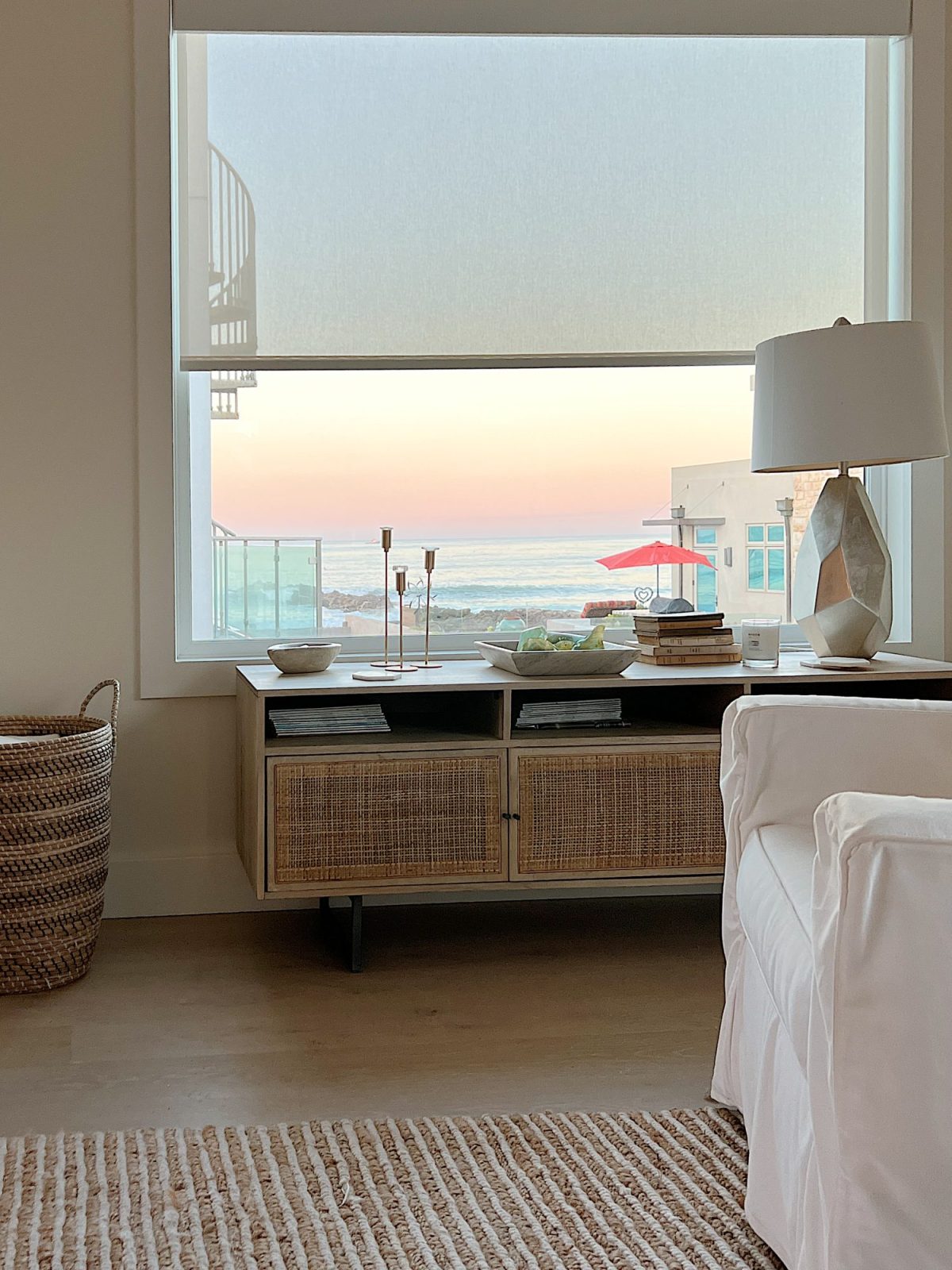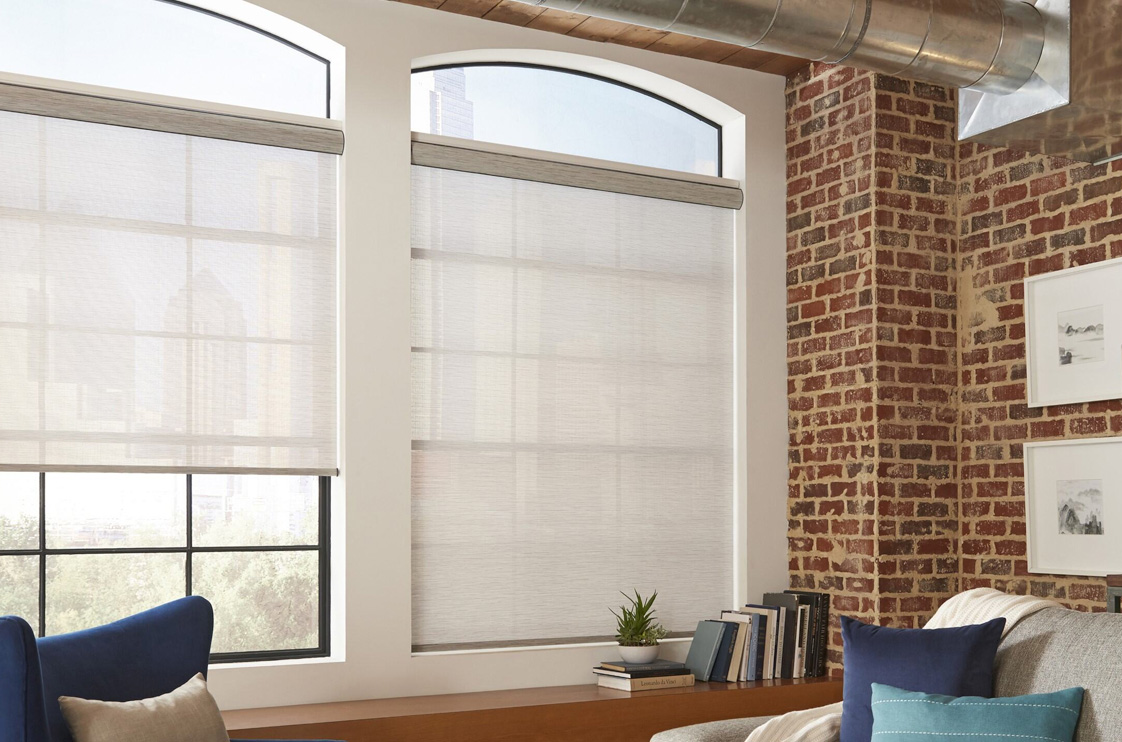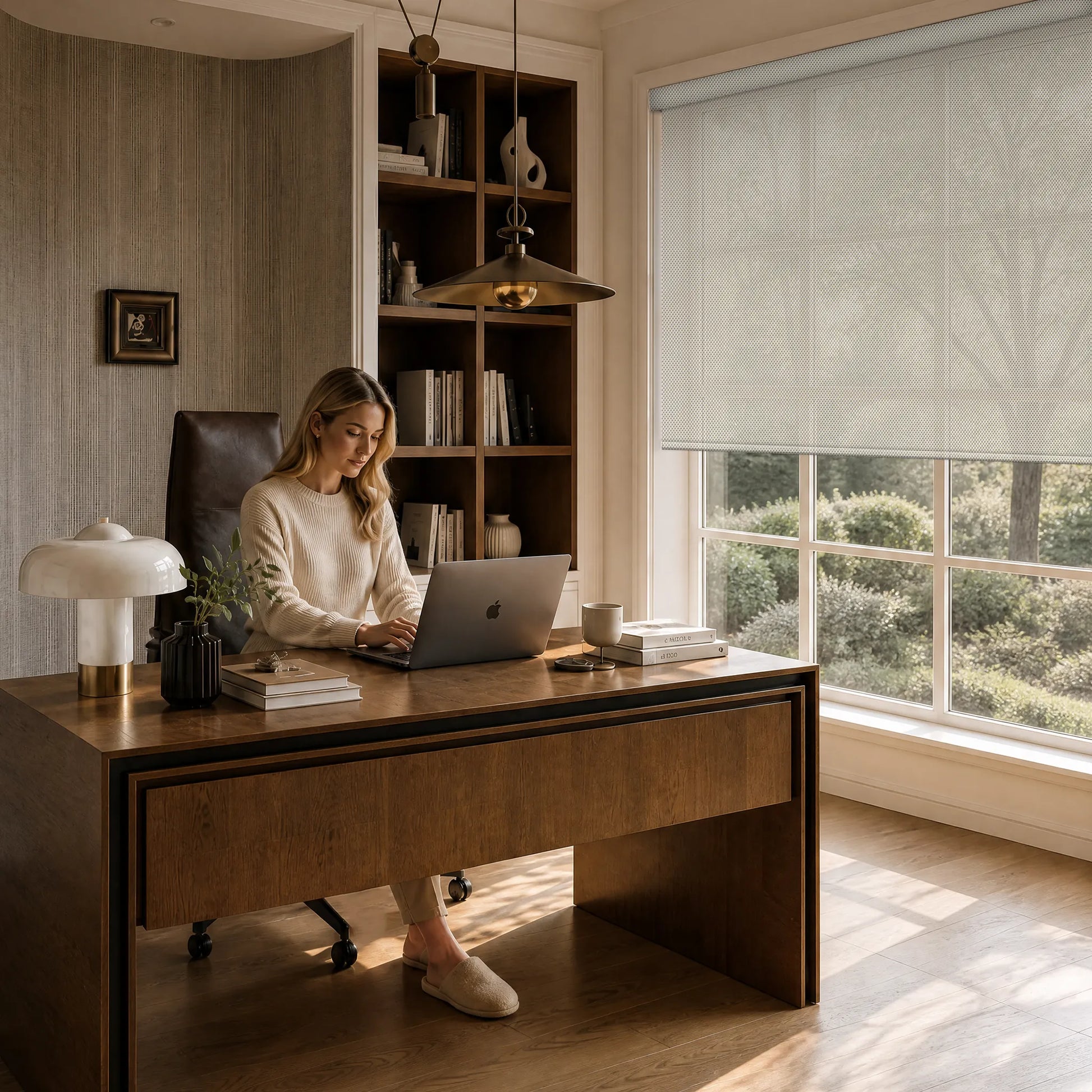
A sunny home office can look inviting until a bright window competes with your monitor. If screen reflections interrupt spreadsheets, reading, or video calls, 1 percent openness solar shades deserve a close look. They prioritize glare control while preserving some connection to daylight, rather than creating a blackout workspace.
World Wide Shades helps you compare the fabric, color, and controls around the hours you actually work. Explore light-filtering shades to start with daytime light management, or build your home-office shade to see live pricing in the builder as you make selections.
What 1 Percent Openness Solar Shades Actually Mean
Openness is the fabric’s open-area ratio: the proportion of its surface occupied by openings in the weave. A 1% fabric has a tight weave, but that number is not a blackout rating, a promise of 99% visible-light blockage, or a guarantee of privacy.
Visible light can interact with the yarn as well as the openings. For example, Phifer’s published SheerWeave BASIC table lists different visible-light transmission values for different colors at the same 1% openness, demonstrating why openness alone cannot describe brightness (Phifer SheerWeave BASIC specifications).
At World Wide Shades, compare each fabric’s mill-published openness alongside its genuine swatch photo. Read the light-filtering shades guide for an overview, then browse fabrics to compare colors and each fabric’s published optical data. The roller-shade fabric guide reviews common material categories, while the UV protection guide explains why UV blockage is a separate specification.
Compare 1%, 3%, and 5% Around Your Workday
Within a comparable fabric family, 1% generally favors glare control over view-through compared with 3% or 5%. That makes it a strong starting point when a bright window is the main obstacle to comfortable screen work, not an automatic winner for every office.
- 1% openness: Prioritize this when persistent brightness or distracting reflections outweigh the desire for a clear view. Expect a tighter visual screen, not an opaque wall.
- 3% openness: Consider this middle option when you want to balance screen comfort with outdoor visibility. Evaluate the exact color and published fabric data before deciding.
- 5% openness: Include this when maintaining a view matters more and the window is not creating severe glare during working hours. Do not assume it will solve direct sun on a monitor.
Choose around your hardest working hour, not the room’s appearance on an overcast afternoon. World Wide Shades offers a broader starting point in its home-office shade collection, while our office roller-shade guide helps frame screen-focused priorities.
Start With the Desk, Window, and Camera
Before selecting a weave, sit at your normal working position and note what is distracting you. Is the window reflected in the screen, visible directly behind the monitor, or creating a bright patch across printed documents? A shade choice should answer that specific problem.
Try placing the monitor so the window is beside it rather than directly behind you or directly beyond the display. Compare the result at your normal screen brightness, then check whether the same arrangement makes paper reading comfortable. A tighter weave can address window brightness, but it cannot correct every desk lamp or glossy-surface reflection.
Review the office during the morning, midday, and late afternoon. An east-facing room deserves particular attention during morning work, while west-facing windows warrant a late-day check; for sustained exposure, use the south-facing window shade guide to organize your comparison. Nearby buildings, trees, and overhangs also belong in your decision.
Test the camera view as well as your own view. If the window sits behind your chair, compare how lowering the shade changes the background and your face on screen; a separate task light may still be useful. If the window is beside your desk, assess whether the remaining outdoor view is enough for you.
For a difficult layout, contact World Wide Shades or call (844) 674-2716 before choosing the fabric. Describe the window direction, desk position, and time of day when glare becomes disruptive.
Compare Fabric Color, UV Data, and Mill
A darker-looking swatch is not simply a more opaque version of a lighter one. Evaluate openness, visible-light transmission, and color together, then decide whether your priority is a brighter-looking room, a less distracting window, or stronger visual connection outdoors.
UV blockage is another separate specification. Phifer reports approximately 99%, 97%, and 95% UV blockage for its SheerWeave BASIC 1%, 3%, and 5% fabrics respectively; those figures apply to that named collection, not every solar fabric (Phifer SheerWeave BASIC).
Mermet M Screen has its own 1%, 3%, and 5% openness options and publishes a 95%–99% UV-blockage range for the collection, so use its own specifications rather than transferring another mill’s figures (Mermet M Screen specifications).
World Wide Shades offers 500+ colors across 40+ families from Phifer, Mermet, Ferrari, Copaco, Senbesta, and Texstyle. Each fabric includes its mill’s published openness and a genuine swatch photo; physical samples are not offered. Compare the fabric collection, then use our Phifer-versus-Mermet comparison and roller-shade fabric guide to refine your shortlist.
When Blackout Is the Better Office Choice
Choose 1% solar fabric when you want daytime light management and accept some visibility through the weave. If your office also serves as a bedroom, projection room, or space for work requiring darkness, compare blackout roller shades instead. Room-darkening or blackout options address a different priority from maintaining daylight and view-through.
Nighttime privacy also needs a separate decision. With indoor lights on and a darker exterior, visibility through solar fabric can reverse, making the interior easier to see. Do not select 1% openness as your sole assurance of privacy after sunset.
World Wide Shades can help distinguish those needs before you order. Compare light-filtering shades for daytime work, or ask about your privacy requirements if the office faces a sidewalk, nearby apartment, or neighboring house.
Match the Shade to Your Home, Not Just the Window
A street-facing desk and an upstairs office overlooking a yard have different tradeoffs even when both windows face west. Consider how close other people can stand to the glass, whether you work after dark, and whether the office shares space with another activity. One openness does not have to be the answer for every room.
For location-specific planning, our guides to custom roller shades for NYC apartments, New Jersey homes, and Long Island homes offer useful next reading. Bring the same room-by-room approach to a city-facing apartment window, a suburban front room, or a larger home office.
Choose Controls You Will Actually Use
A useful shade is one you can adjust when the light changes. At World Wide Shades, a battery motor requires no wiring, making motorized shades worth considering when the window is behind a desk or otherwise awkward to reach. A remote is required.
Automate is the default motor option; choose Somfy only if you already have a Somfy remote. A Push 5 remote runs up to five shades, while an Automate Pulse 2 hub supports app control, voice control, and schedules with Automate motors. Choose the control system with the shade rather than assuming every accessory works with every motor.
The rechargeable motor needs no wiring. A charger is not included; any USB-C charger works, or add the Motor Charger to your order.
Configure your controls in the builder and see live pricing alongside your fabric selection. Our Alexa and Google Home motorized-shade guide can help you think through how shade control fits your work routine.
Get the Fit and Ordering Details Right
For an inside mount, measure width at the top, middle, and bottom, and use the narrowest measurement. Measure height at the left, center, and right, and use the tallest. Enter the exact opening dimensions; World Wide Shades makes the factory deductions, so do not subtract anything yourself.
Inside mounts require at least 1.5 inches of frame depth, with 2.5 inches recommended for motorized shades. Use an outside mount for a shallower frame; add 2–3 inches on each side and 3 inches above the opening. Follow the measuring guide before entering dimensions, especially where handles or trim affect placement.
Every World Wide Shades shade is handmade and Made in USA, with free U.S. shipping. Allow 2–4 weeks from order, or 3–4 weeks for limited-stock fabrics and specialty shapes. Custom orders are nonreturnable; the policies include a defect remake within 30 days, one-year motor coverage, and a one-time free recut for mismeasured shades with shipping paid by the buyer.
Keep Energy Expectations Specific
Select the fabric for your office’s light and privacy needs rather than a promised utility-bill reduction. The DOE’s modeled window-attachment study evaluates varied climates, window constructions, and shade-use patterns, so its results should not be treated as guaranteed savings for a particular home office (DOE window-attachment modeling study).
For broader planning, read our energy-efficient window shade guide. Treat energy performance as a whole-window question alongside fabric choice, not a benefit established by the 1% label alone.
Frequently Asked Questions
No. The 1% label describes open area in the fabric, not total visible-light blockage. Compare the exact fabric and color’s published data rather than converting openness into a universal light-blocking percentage.
Some view-through is possible, but it depends on the fabric, color, and lighting conditions. Within comparable fabrics, expect 1% to prioritize glare control over the more open view usually associated with 3% or 5%.
It can be a useful choice when a bright window is the problem, but fabric alone does not determine your camera image. Test the camera angle, screen position, and room lighting before treating a tighter weave as the complete solution.
They are not a reliable standalone nighttime privacy solution. When the room is lit and the exterior is darker, people outside may see through the fabric; consider blackout or another privacy-focused treatment if that is unacceptable.
Not automatically. Compare each window from the seated working position and at the hours it causes trouble, then decide whether consistent appearance or different light-control needs should lead the selection.
Ready to Order?
World Wide Shades lets you work from the actual office problem to a custom shade specification. Keep glare, view-through, and nighttime privacy as separate decisions, then follow this sequence:
- Measure: Use the measuring guide and enter the correct inside- or outside-mount dimensions.
- Choose fabric: Browse fabrics, comparing the mill-published openness and genuine swatch photo.
- Choose control: Select the control option and, for motorized shades, the required remote and any compatible hub.
- See live pricing: Open the builder and review pricing for your actual configuration.
- Order: Confirm the fabric, measurements, controls, and production timing before submitting your custom order.
Need help narrowing the choices? Contact World Wide Shades or call (844) 674-2716 to discuss your home office before ordering.