Choosing phifer vs mermet solar shade fabric starts with the exact collection, color, and openness, not a winner between two manufacturers. For a premium home or design project, the useful question is which specified fabric supports your room’s appearance, daylight priorities, and daily routine.
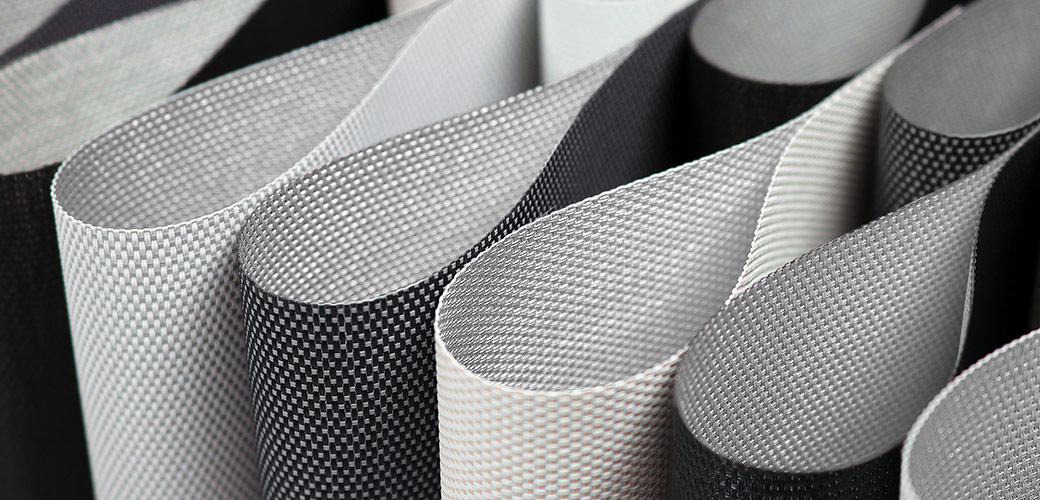
World Wide Shades offers 500+ colors across 40+ fabric families from Phifer, Mermet, Ferrari, Copaco, Senbesta, and Texstyle. Explore the World Wide Shades fabric library to compare genuine swatch photos and published openness factors before building your shade.
Phifer vs Mermet Solar Shade Fabric: Compare Specific Lines
Phifer SheerWeave BASIC and Mermet M Screen provide a useful comparison because both list 1%, 3%, and 5% openness options, but their published descriptions and performance information are product-line specific. Do not extend these specifications to every fabric sold by either manufacturer. (Phifer BASIC specifications; Mermet M Screen specifications)
- Phifer SheerWeave BASIC: Phifer lists a composition of 38% fiberglass and 62% vinyl on fiberglass. Its specification table gives approximately 99% UV blockage for BASIC 1%, 97% for BASIC 3%, and 95% for BASIC 5%. (Phifer BASIC specifications)
- Mermet M Screen: Mermet describes vinyl-coated fiberglass constructed with a 1x2 rib weave and a linen appearance. Its M Screen overview lists 1%, 3%, and 5% openness, 95–99% UV blockage, and 2–18% visible light transmittance across the collection. (Mermet M Screen specifications)
Those figures do not establish identical weave, identical view-through, or identical performance at matching openness. Mermet’s collection-wide ranges are not a color-by-color comparison against Phifer’s individual BASIC entries; use the exact specification sheet for the selected fabric and color before deciding.
These examples are reference points, not a promise that every manufacturer combination is selectable for your order. With World Wide Shades, confirm the actual fabric shown in your configuration rather than substituting a familiar mill name for a complete specification.
What Openness Tells You, and What It Leaves Out
Openness describes the share of the weave that is open space. It is not an all-in-one measurement of visible-light transmission, UV performance, nighttime privacy, or how a color will look against your glazing.
The distinction is visible in Phifer’s own data: within BASIC 1%, White has a listed visual transmittance of 15%, while Charcoal has 1%. Both carry the same approximate 1% openness designation, demonstrating why openness and visible-light transmission should not be treated as interchangeable. (Phifer solar optical properties)
For a disciplined comparison, record the exact collection, color code, openness, visible-light transmittance when published, and relevant glazing assumptions. If a value is missing, ask about it instead of calculating it from openness alone.
Read the light-filtering shades guide for the selection framework, then use the UV protection guide to keep UV considerations separate. World Wide Shades recommends making those decisions together without assuming one percentage answers every question.
Start With Appearance, Then Test the Specification
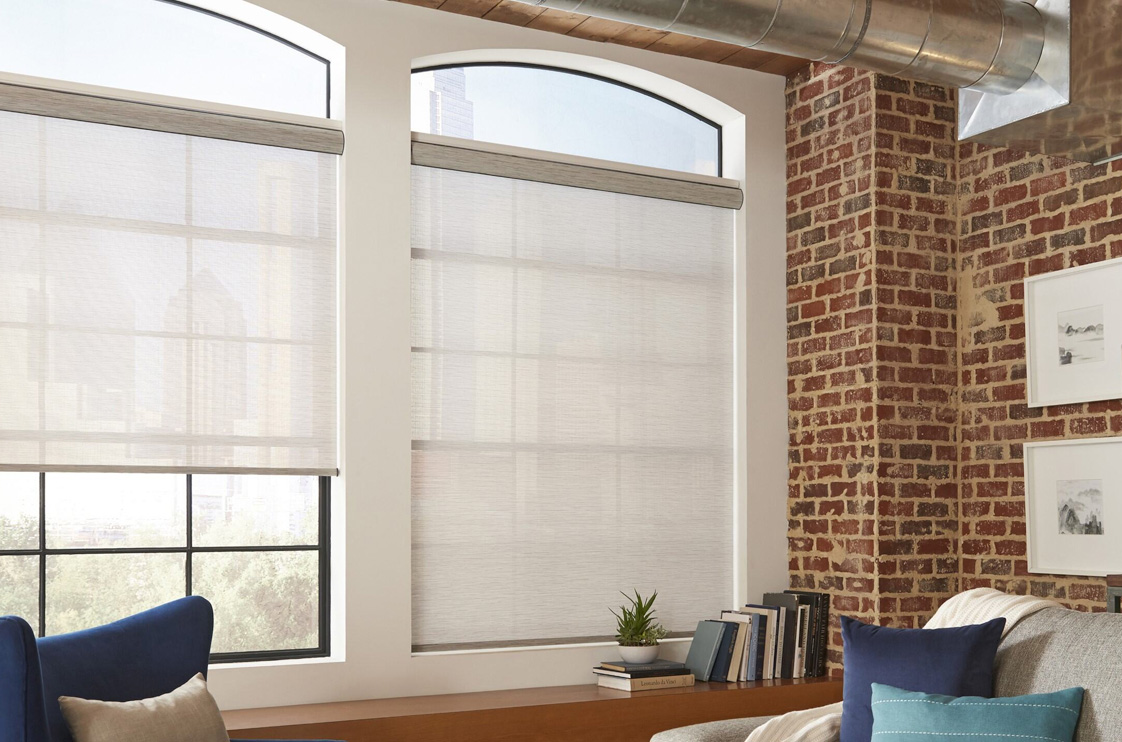
A designer’s shortlist should describe what the fabric needs to do visually: recede into a white window wall, introduce a woven-looking surface, or coordinate with darker frames. M Screen’s manufacturer-described rib weave and linen appearance make texture a specific feature to evaluate, rather than a reason to declare the entire Mermet portfolio more decorative. (Mermet M Screen description)
For SheerWeave BASIC, compare the exact color’s imagery and optical data rather than assuming the name BASIC defines its suitability for a finished interior. Phifer lists colors including White, White/Bone, White/Platinum, Charcoal, and Charcoal/Gray, with color-specific optical properties. (Phifer BASIC colors and technical data)
World Wide Shades provides a genuine swatch photo and the mill’s published openness factor for every fabric it offers. Use those images to compare candidates, while recognizing that a screen image is not a guarantee of appearance under your room’s lighting; World Wide Shades does not offer a physical swatch or sample program.
Compare fabric imagery and published openness in the library, then narrow your choices to specific names and colors. The window shade color guide and roller shade fabric guide can help organize the visual brief.
Choose for the Room’s Hardest Hour
Define the problem at a particular time and position: an afternoon screen reflection, seating beside a bright window, or a view you want to retain while the shade is lowered. That description is more useful than asking which manufacturer is best for every room.
For an office, separate the view from your chair, the brightness around the monitor, and the hours when you need the shade down. Compare the selected color’s visible-light data where available, rather than automatically choosing every fabric labeled 1%.
Our guide to 1% openness solar shades for a home office explores that focused use case. Take your shortlisted fabric names to World Wide Shades and ask for configuration guidance, or call (844) 674-2716 before ordering.
For a living room, decide whether preserving the daytime outlook or creating a softer decorative surface matters more to your scheme. Keep evening privacy as a separate requirement; do not interpret a solar fabric’s openness number as a nighttime privacy guarantee.
If your brief emphasizes filtered light rather than an open-weave screen, compare light-filtering shades alongside solar options. Review the living room shade collection and living room roller shade guide before carrying one fabric across several rooms.
World Wide Shades can be your starting point for room-by-room selection rather than a single fabric choice for the whole property. Write down each room’s priority before repeating an order.
Match the Comparison to Your Windows
Keep the same fabric shortlist, but review each elevation separately. A large glass wall, a street-facing apartment window, and a recessed bedroom opening need different questions about placement, operation, and the finished appearance.
- NYC apartments: Use the NYC apartment roller shade guide to frame your project, then identify where an exterior view and a separate privacy solution belong in the brief.
- New Jersey homes: Follow the New Jersey custom roller shade guide when planning a coordinated order, without assuming all rooms require identical fabric.
- Long Island homes: Consult the Long Island roller shade guide when organizing multiple openings and deciding where one specification should repeat.
For especially exposed glazing, the south-facing window guide helps frame additional selection questions. Bring orientation, glazing information if known, and expected shade positions to the comparison.
Energy performance also requires context: the Department of Energy’s window-attachment study shows outcomes varying with climate, baseline windows, attachment properties, and operating position or schedule. Its modeled findings are not guaranteed energy savings for either fabric in your home. (DOE window-attachment study)
Use the energy-efficient window shades guide as background, not a substitute for project-specific analysis. Choose fabric for a documented set of priorities rather than a promised utility-bill result.
Specify Controls Alongside the Fabric
Fabric selection and daily operation belong in the same conversation. Decide whether you want individual control or grouped operation before completing the shade configuration, especially when several windows form one visual composition.
World Wide Shades motorized shades use rechargeable batteries and require no wiring. Automate is the default motor option; Somfy is only for owners of a Somfy remote, and a remote is required.
The Push 5 remote controls up to five shades. For Automate motors only, Automate Pulse 2 adds app control, voice control, and schedules; do not assume that hub applies to a Somfy configuration.
The rechargeable motor needs no wiring. A charger is not included; any USB-C charger works, or add the Motor Charger to your order.
Explore motorized shades and confirm your preferred control arrangement before finalizing fabric selections. If connected control is part of the brief, read the smart-home motorized shades setup guide alongside the specific motor configuration.
Confirm Fit and Order Terms Before Committing
For an inside mount, measure width at the top, middle, and bottom and use the narrowest reading; measure height at the left, center, and right and use the tallest. Enter the exact opening dimensions, because the factory makes deductions; do not subtract anything yourself.
World Wide Shades requires a minimum depth of 1.5 inches, with 2.5 inches recommended for motorized shades. Use an outside mount for a shallow opening; for outside-mount coverage, add 2–3 inches on each side and 3 inches above.
Follow the measuring guide before entering dimensions in the builder. Every World Wide Shades shade is custom-made by hand and Made in USA, with free U.S. shipping and delivery in 2–4 weeks; limited-stock fabrics and specialty shapes take 3–4 weeks.
Custom orders are nonreturnable. The policy includes a defect remake within 30 days, a one-year motor warranty, and a one-time free recut for a mismeasured shade, with shipping paid by the buyer, so review dimensions and selections carefully before ordering.
Frequently Asked Questions
Choose the exact product and color, not a universal brand ranking. SheerWeave BASIC and M Screen have distinct published descriptions and data, so compare those details against your visual brief and room priorities. (Phifer BASIC; Mermet M Screen)
No; openness and visible-light transmission are different measurements. Phifer’s BASIC 3% optical table lists different visual-transmittance values by color, which is why the selected color’s data matters. (Phifer BASIC optical table)
No; the figures here apply to SheerWeave BASIC and M Screen specifically. Mermet’s page even presents M Screen Deco separately, so do not transfer M Screen’s overview values to a similarly named collection. (Mermet collection specifications)
World Wide Shades does not have a physical swatch or sample program. Compare genuine swatch photos and each offered fabric’s mill-published openness factor in the fabric library instead.
Use the builder to see live pricing for your configuration. Compare your actual fabric, dimensions, and controls rather than relying on a generic manufacturer-level price assumption.
Ready to Order?
Turn the comparison into a specific World Wide Shades configuration using these five steps. Keep your chosen fabric name and color beside your dimensions as you proceed.
- Measure: Follow the measuring guide and enter the correct dimensions for your mount.
- Choose fabric: Revisit the fabric library and confirm the exact fabric, color, and published openness.
- Choose control: Select your control arrangement and review the motorized options if applicable.
- See live price: Open the builder and review your configured shade’s live pricing.
- Order: Verify the complete configuration, then place your custom order through the builder.
Need a final review before committing? Contact World Wide Shades or call (844) 674-2716 to discuss your selections before you order.