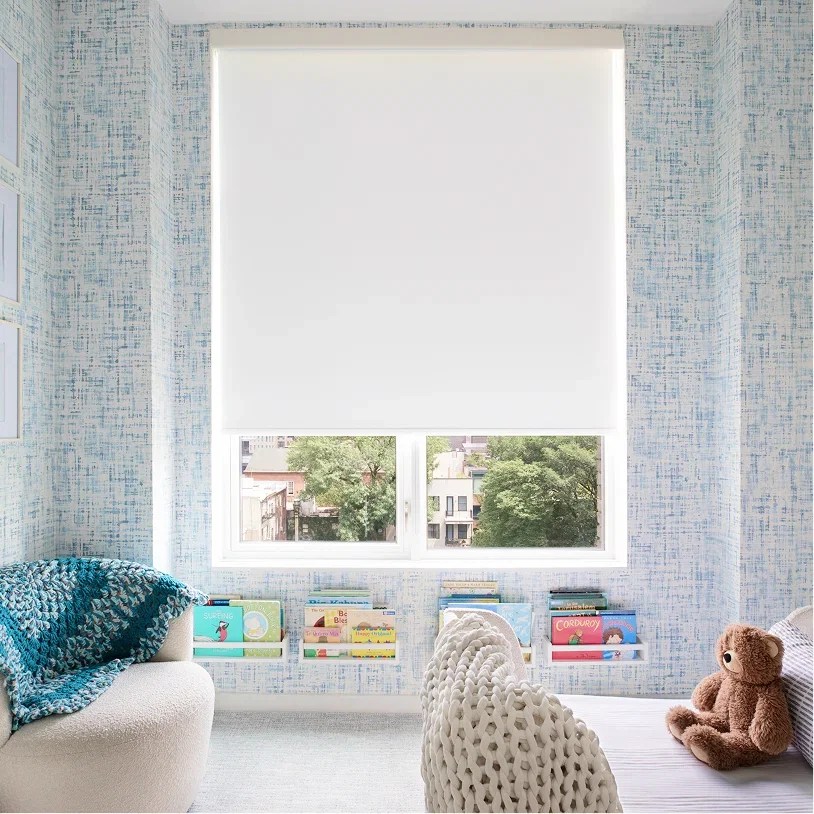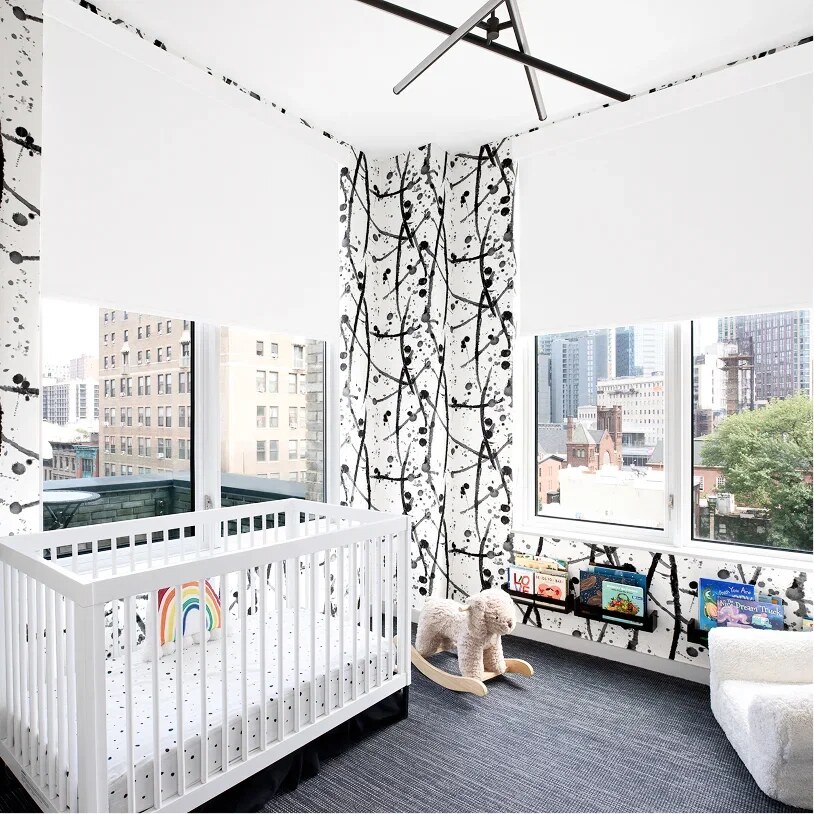
Start with safety, then solve the room
A playroom window treatment has two jobs that can conflict: it must be easy for a child to use, but it cannot introduce a reachable cord or loop. The safest starting point is a cordless or motorized roller shade with the operating hardware kept out of climbing reach. The U.S. Consumer Product Safety Commission window-covering guidance has long warned families about accessible cords and strangulation hazards, so safety should be a design requirement rather than an afterthought.
World Wide Shades can help you specify a cordless, chain-free, or motorized setup around the room’s real activities. Start with the World Wide Shades shade builder to compare control styles and get a configuration that fits each opening instead of adapting a standard size after the fact.
For a quick rule of thumb, choose cordless for reachable windows and motorization when windows are high, extra-wide, or part of a daily routine. Keep furniture, play kitchens, and climbing toys at least 12 inches from the sill where practical. A shade that is safe on its own can become less safe when a bookshelf creates a launch point beside it.
Match light control to the way children play
Playrooms usually need several light levels in one day. A 1% to 3% openness solar or screen fabric can cut harsh glare while preserving a useful view. It works well for drawing tables, reading corners, and rooms with a screen. A light-filtering fabric, often around 5% to 10% openness or a woven translucent construction, softens daylight without making the room feel closed in.
Blackout fabric is different. It blocks most visible light through the material, but bright lines can still appear at the sides unless the shade is mounted outside the opening or paired with side channels. Use blackout when the playroom doubles as a nap room, media room, or guest space. For a full explanation of fabric behavior, see the World Wide Shades light-filtering shades guide.
A practical two-window plan might use a 3% screen shade at the art table and a room-darkening shade at a reading nook. If the same room hosts a movie afternoon, use a cassette and side-channel option on the widest opening. World Wide Shades can build the two windows to coordinate in color while giving each one a different opacity.
Choose fabrics that survive playroom traffic
Look for smooth, tightly woven polyester or polyester-blend fabrics that can be dusted without catching on toys. Polyester is popular because it resists stretching, dries quickly, and holds color consistently; a coated blackout textile adds stronger light control but should still be cleaned gently. Avoid loose fringe, delicate open weaves, and untreated natural fibers directly beside finger paint or a snack station.
For most playrooms, a medium-weight fabric is a good balance. Very thin fabric can show handling marks and may flutter near an HVAC register. Very heavy fabric can increase roller load and make a manual lift less pleasant. Read the manufacturer’s care instructions before using a cleaning spray: a soft brush attachment or dry microfiber cloth is safer than saturating the fabric.
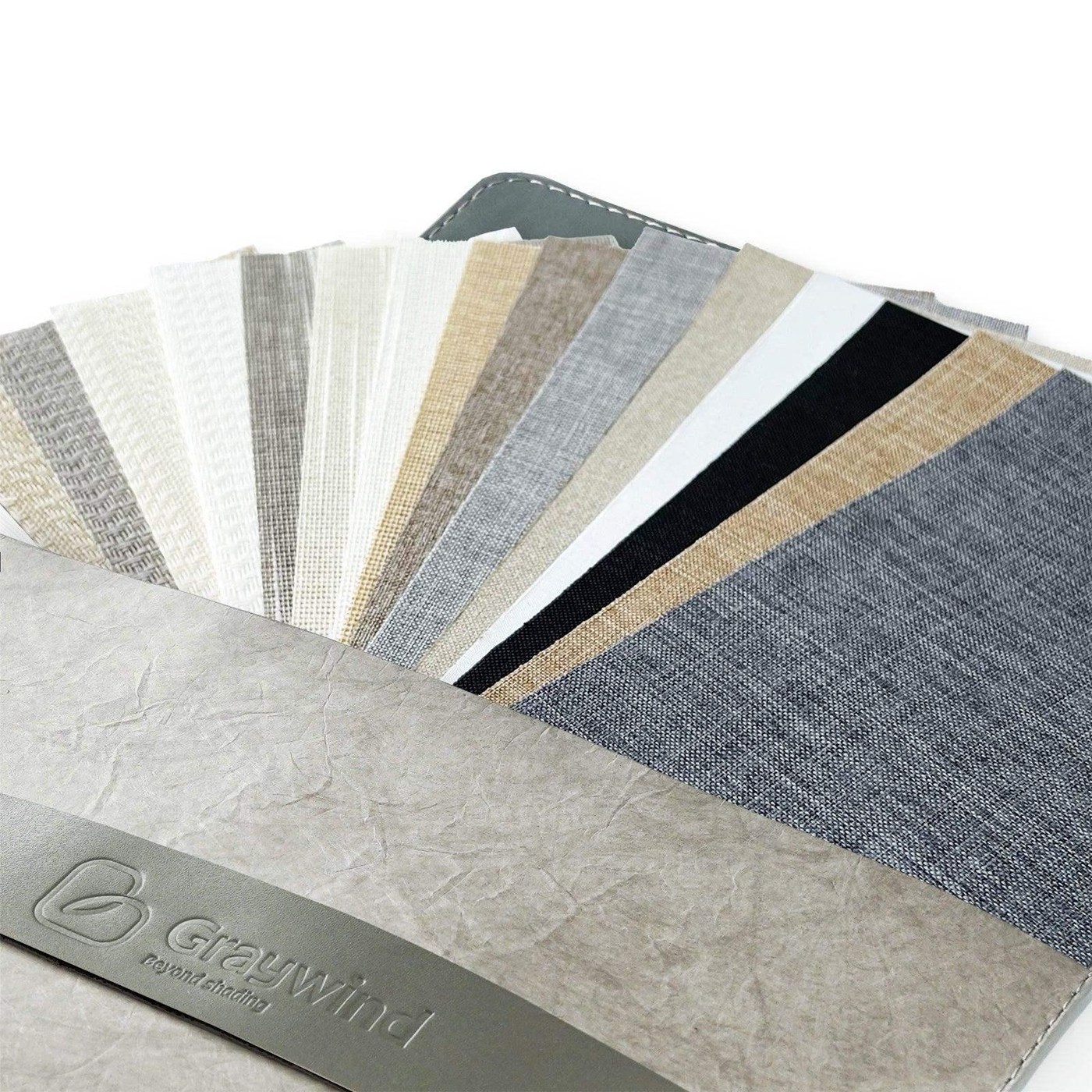
World Wide Shades can send coordinated samples so you can test color in morning, afternoon, and artificial light. Order World Wide Shades swatches before committing to a bright white, pale blue, or patterned shade; the same color can look 10–20% darker beside a colorful toy wall than it does on a phone screen.
If a playroom has pets, choose a fabric with a smooth face and keep the bottom rail above the pet’s usual reach when the window allows it. The pet-friendly window treatments guide covers similar durability decisions for homes where children and animals share the same space.
Make the shade work with furniture and screens
Glare is a geometry problem, not just a brightness problem. A west-facing window can put a white reflection across a tablet or television even when the room feels comfortable. Lowering a screen shade to the sightline often removes that reflection while keeping the upper glass open for daylight. If the window faces south, a solar shade with a tighter 1% or 3% openness usually controls more direct brightness than a pale, loose weave.
Mounting matters, too. An inside mount gives a clean, built-in look when the frame has at least 2 inches of usable depth. An outside mount can cover trim and reduce edge light, but plan for at least 2–3 inches of overlap on each side when space permits. For blackout, more overlap is better. The how to install roller shades guide explains the basic mount decisions before you order.
Keep the bottom rail clear of play surfaces. A shade that ends at the sill is usually easier to live with than one that brushes a desk, craft table, or toy bin. On a door or window beside a play tunnel, consider a fixed lower position or motorized limit so the fabric does not become part of the game.
Control temperature and UV without making promises the fabric cannot keep
Window shades can reduce glare and solar heat entering through glass, but they are not a replacement for insulation, HVAC, or storm protection. A screen fabric filters light and view; it is not automatically a blackout or thermal product. A cellular shade can add air-trapping pockets, while a roller shade prioritizes a slimmer profile and easier cleaning.
Use a shade to protect artwork, rugs, and foam mats from direct sunlight. UV exposure can fade finishes over time, and the UV protection window shades guide explains why openness, lining, and daily exposure matter. For a playroom with expensive books or a wood train table, close the shade during the brightest 2–4 hours rather than leaving it half-open all day.
World Wide Shades can help compare a solar screen, light-filtering roller, and blackout roller by window orientation. Ask World Wide Shades for a room-specific recommendation and include photos, approximate dimensions, and whether the room needs naps or screen viewing.
Cleaning and maintenance that children can live with
Dust the fabric once a month in a high-use playroom, and inspect the bottom rail, brackets, and motor battery every three months. Use a clean, dry microfiber cloth or a vacuum brush on low suction. Do not yank the fabric to remove a crayon, and never twist the roller tube by hand; uneven force can make the shade track crooked.
For a small spot, blot with a barely damp white cloth and mild soap only if the care label allows it. Test on an inconspicuous edge first. Keep markers, washable paint, and slime away from the fabric because water-soluble does not always mean residue-free. If a shade needs deeper treatment, contact World Wide Shades before applying a solvent or removing the fabric.
Motorized shades deserve a simple routine. Replace or recharge batteries according to the motor instructions, keep the remote in a high location, and set a stop limit that leaves the bottom rail safely above a nearby toy surface. A smart schedule that closes shades before the strongest sun can reduce daily handling and protect the room’s contents.
A simple playroom specification
For a 60-by-48-inch window beside a craft table, specify a cordless 3% screen roller shade, inside mount if depth allows, with a white or warm-gray cassette. For a 72-by-60-inch window used for movies and naps, specify a motorized room-darkening shade with an outside mount and generous side overlap. For a high clerestory opening, use motorization with a wall switch or app so no child needs to climb.
That specification is a starting point, not a universal answer. World Wide Shades can adjust fabric, roll direction, fascia, and control based on the opening, trim, and furniture. Build your playroom shade plan with World Wide Shades, or call (844) 674-2716 for help comparing options.
FAQ: playroom window shades
Cordless and motorized shades are the strongest choices because they eliminate a dangling operating cord. Select products that meet current safety requirements, keep remotes out of reach, and position furniture so children cannot climb directly to the window.
Choose light filtering for everyday play, art, and reading when you want soft daylight. Choose blackout or room darkening when the space also serves as a nap or movie room. If edge light is distracting, use an outside mount or side channels.
A smooth, tightly woven polyester or polyester blend is generally easier to dust and spot-clean than a loose weave. Always follow the care label and test any damp cleaning on a hidden area first.
A small manual custom shade may start around $150–$350, while larger, blackout, specialty, or motorized shades can range from roughly $400 to more than $1,000 per opening. Exact pricing depends on dimensions, fabric, control, mounting, and installation.
Yes. Many systems can be programmed to open in the morning and close during the brightest part of the day. World Wide Shades can help you choose a compatible control system and set safe travel limits for the room.
Ready to make the room safer and more comfortable? Contact World Wide Shades or call (844) 674-2716 for a practical recommendation.
Plan for growth and changing routines
A playroom changes quickly. A window beside a toddler table may later sit beside a homework desk, and a room that needs naps today may become a gaming or craft space in two years. Choose a neutral fabric and a control system that can remain useful as furniture moves. A motorized shade with programmable limits can serve both a young child’s room and an older child’s media setup without adding a reachable chain.
If the room connects to a bedroom or has a second sleep space, compare privacy and darkness across both openings. The best window shades for bedrooms guide explains why edge coverage, opacity, and operating habits matter as much as color.