Prairie style roller shades should support the architecture rather than compete with it. On windows with strong horizontal muntins, leaded-glass borders, or substantial wood trim, the best starting point is a quiet fabric plane that rolls away cleanly and leaves the window’s proportions legible.
That does not mean every window needs an identical treatment. A living room overlooking a private garden may need occasional glare control, while a street-facing bedroom needs dependable nighttime privacy. World Wide Shades recommends resolving those everyday needs alongside the visual arrangement, not after choosing a color.
Let the window establish the horizontal rhythm
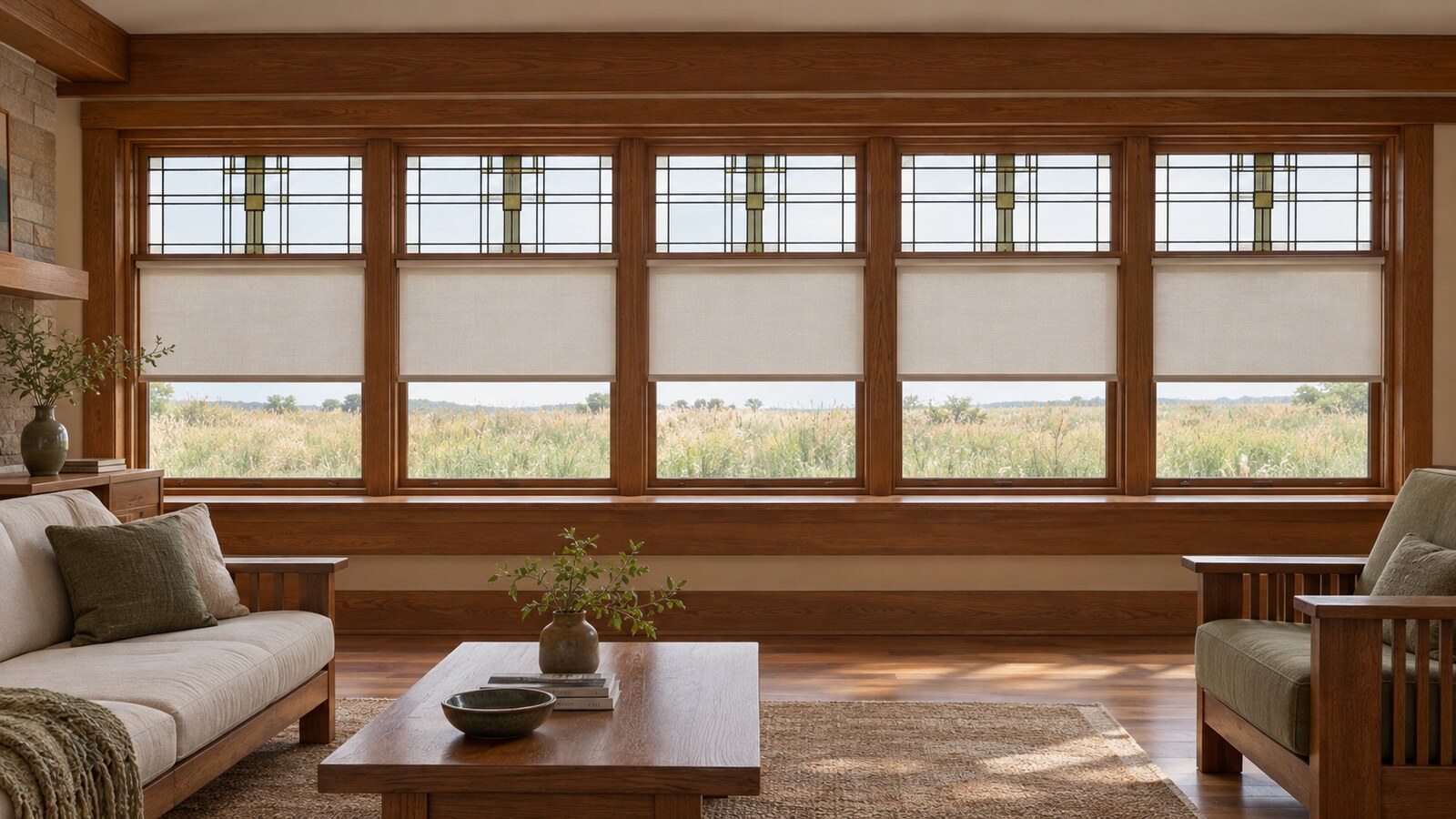
Prairie architecture gives horizontal window groupings a central role: the Metropolitan Museum of Art describes low-lying structures, long roofs, and horizontal bands of leaded-glass windows that echo the Midwestern landscape in its architectural overview. The museum’s Frank Lloyd Wright room also demonstrates how repeated geometric glazing and oak trim can establish a continuous composition.
The National Park Service similarly identifies horizontal lines and integration with the setting as characteristics in its discussion of Prairie School architecture. That suggests a useful decorating principle: treat the window wall as part of the room’s architecture, not as a collection of unrelated openings.
For shade selection, that suggests keeping roller tops on a common visual line and avoiding a bulky treatment that interrupts the band. A contrasting cassette across the middle of decorative glazing can become the first thing you notice. A restrained treatment positioned above the principal pattern lets the glass remain the focal point.
Start a preliminary design in the World Wide Shades shade builder, using the window grouping rather than an isolated sash as your reference. Keep the configuration provisional until mounting clearances are confirmed.
Choose individual shades or one continuous span
One shade per opening usually makes sense when substantial vertical mullions divide a window bank. Each roller can sit within its own recess, allowing the woodwork to remain visible and giving occupants independent control over sunlight.
Consider a clearly labeled sample layout: three rectangular openings, each approximately 28 inches wide, separated by 4-inch wood mullions. Three separate shades could preserve that cadence more naturally than one broad panel. These illustrative dimensions are not ordering measurements, product limits, or universal spacing rules.
The tradeoff is repetition. Three brackets, three lower rails, and three fabric edges can look busy unless the hardware and lowered positions align. World Wide Shades can help you discuss whether the divisions you see are separate mounting openings or simply decorative elements within one larger window.
A continuous shade can read as a single calm surface across several windows, especially where the openings already form one broad rectangle. It also avoids intermediate fabric edges, although side gaps and the supporting hardware still need consideration.
The compromise is reduced independence: lowering one shade covers the entire group, including any decorative glass within its travel. Wide spans also require confirmation of available widths, fabric behavior, bracket support, and operating-system suitability. Do not assume a configuration that works over one sash can simply be enlarged across a whole wall.
If you are still deciding how the glazing and shade recesses should relate, the guide to custom shades for new construction is a useful companion. For an existing house, work with the openings you have rather than concealing their strongest details unnecessarily.
Fit the mounting method to the trim
An inside mount can keep a roller shade visually contained and leave a broad wood casing exposed. However, the available mounting depth must accommodate the selected brackets, tube, fabric roll, and any cassette without interfering with handles or moving sashes.
A sample planning scenario might involve a recess that measures 2¾ inches deep but has a casement handle projecting into the shade’s path. That depth alone does not establish compatibility. Actual hardware dimensions, handle movement, and the specified roll direction determine whether the shade can operate freely.
Avoid placing a roller directly across a prominent leaded border simply because the top of that border offers a convenient visual line. The hardware needs an appropriate structural mounting surface, and the fully raised roll should not obscure the feature you want to preserve.
An outside mount may let the fabric clear projecting handles or place the roller above decorative glazing. The challenge is keeping the treatment from appearing pasted onto the surrounding wall.
Match the mounting height across the group and consider a discreet finish related to the trim or wall. A valance can conceal hardware, but its depth and profile should not overwhelm a slender window band. Compare approaches in roller shade valance options before settling on a cover.
Before ordering, contact World Wide Shades or call (844) 674-2716 to discuss the mounting surface and proposed hardware position. For original woodwork or historically significant windows, also involve an installer or preservation professional before approving new holes.
Align the shades without slicing through the glazing
The lowered rail becomes another horizontal line in the room. Its position matters most when it sits close to an existing muntin or the edge of an ornamental glass border.
As an illustrative spacing example, imagine three adjacent shades with one lower rail stopping an inch above a prominent horizontal muntin and the other two stopping several inches below it. The mismatch can make a carefully composed window bank feel accidental. A shared stopping position above the decorative band, or a consistent fully lowered position, is often calmer.
There is no universal reveal that suits every Prairie window. Evaluate the visible space between the fabric, casing, and mullions from normal seating positions, and account for manufacturer-specified fabric deductions rather than assuming the ordered shade width equals the cloth width.
World Wide Shades encourages thinking about raised, partially lowered, and fully lowered appearances together. A treatment that looks excellent when open may introduce an awkward line when used for afternoon glare.
This is also where control preferences matter. If coordinated stopping positions are important, ask how the selected operating system establishes and maintains them; do not assume multiple shades will move in perfect synchronization without a compatible system and setup.
Use matte neutrals to keep the geometry visible
Warm ivory, stone, muted taupe, and restrained gray are useful starting points, not mandatory historical colors. Choose the undertone in relation to the existing wood, plaster, masonry, and glass rather than trying to match a screen image.
A matte fabric with subtle texture can sit quietly behind strong geometric borders. A pronounced stripe, reflective finish, or high-contrast woven pattern may create a second visual grid, especially when seen through leaded glazing from outdoors.
Try samples near both the clear glass and the decorative sections. Then view them against the trim in daylight and under your usual evening lighting. The window shade color guide can help organize those comparisons, while best fabrics for roller shades addresses fabric selection beyond color alone.
Order fabric swatches from World Wide Shades before committing to a whole window wall. Compare a warm neutral and a cooler alternative at the actual windows instead of relying on their names.
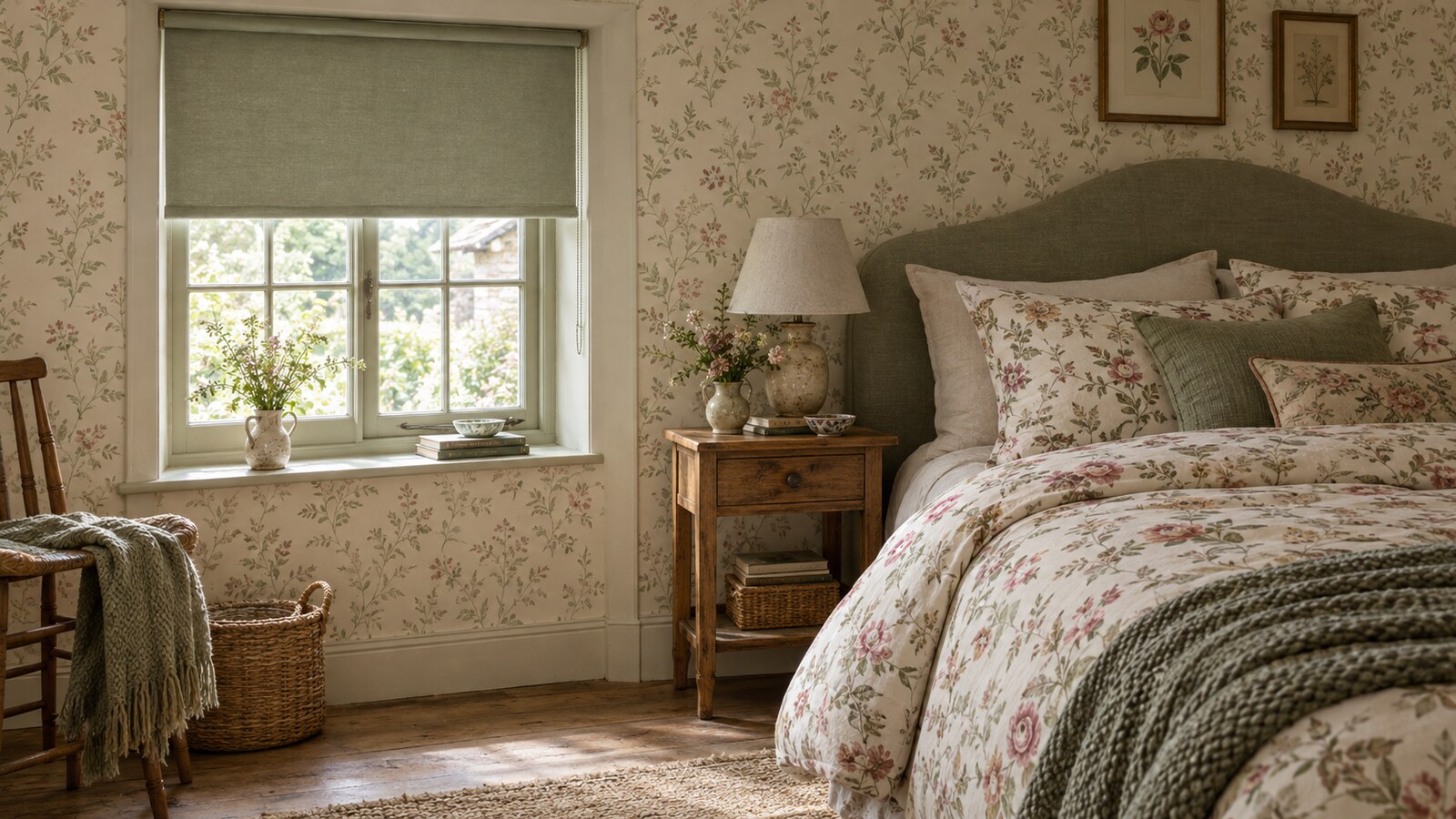
For a contrast in architectural mood, see English cottage roller shades. The point is not to borrow another style’s detailing, but to recognize how much fabric texture can change a room even when the basic roller mechanism stays simple.
Balance daylight, outward views, and nighttime privacy
A fabric that softens direct sun is not necessarily a privacy fabric. Consider how much visibility you want through the lowered shade, how close neighboring buildings are, and how the room looks after its interior lights turn on.
Sheer or open-weave materials deserve particular scrutiny at night. Do not treat an openness percentage as a guarantee of privacy, and do not assume a denser-looking neutral will conceal silhouettes without testing the actual material.
For many living spaces, a light-filtering fabric is worth evaluating because the goal is moderated daylight rather than a dark room. Use the light-filtering shades guide to compare that objective with your privacy requirements. Where sleep or sensitive activities require more darkness, remember that opaque fabric does not eliminate light around an ordinary roller shade’s edges.
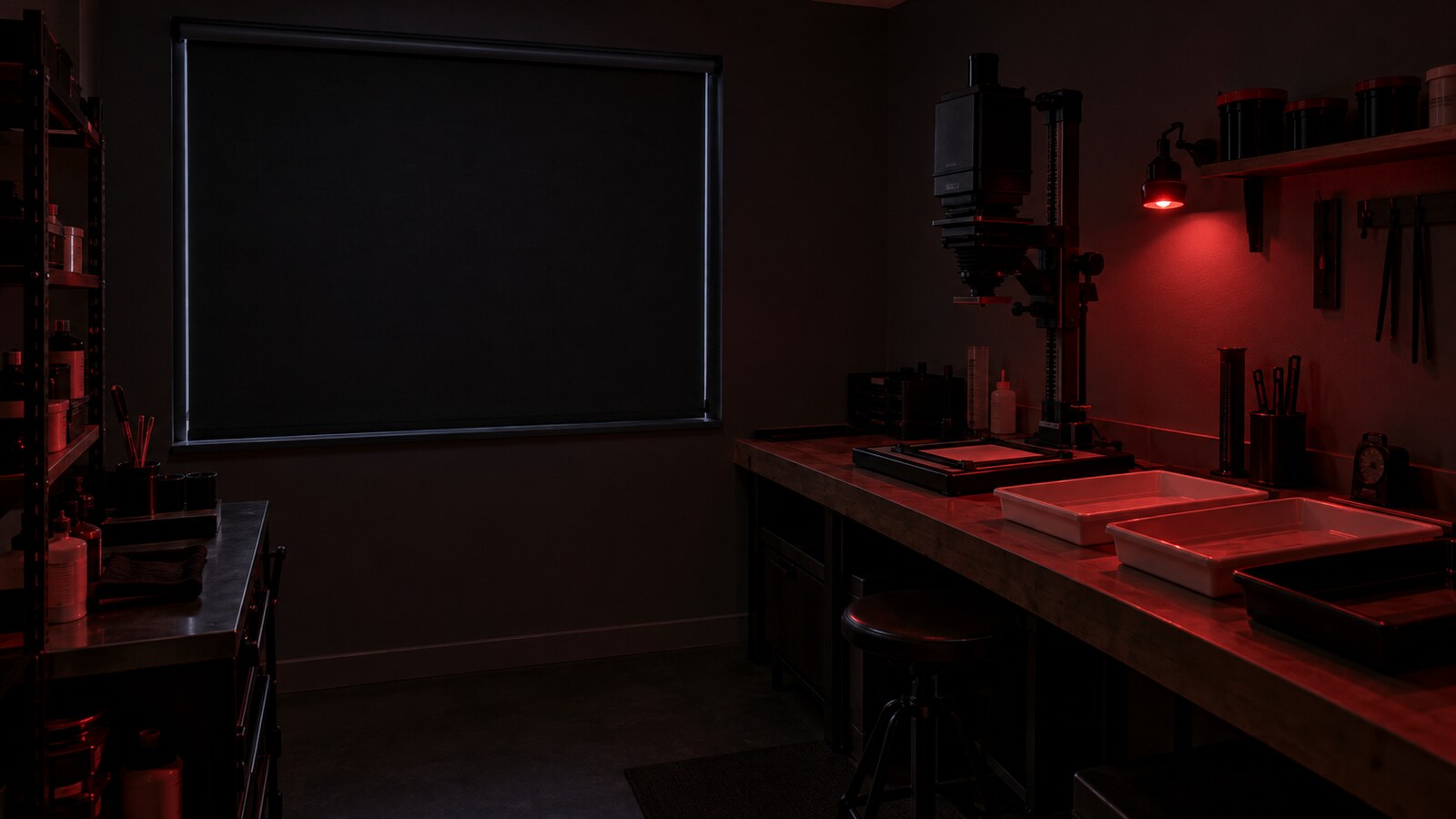
The difference between fabric opacity and a complete light-control installation becomes especially important in blackout roller shades for home darkrooms. A Prairie-style bedroom may not need darkroom performance, but the distinction prevents unrealistic expectations.
Discuss your daytime and evening routines with World Wide Shades through the contact page, or call (844) 674-2716 for help narrowing the fabric direction. Explain whether preserving the view, concealing activity, or reducing glare takes priority.
Handle unusual glazing and installation carefully
Prairie-inspired windows may include rectangular main lights, narrow side panels, high transoms, or decorative glazing that does not form a simple shade opening. Plan around each usable rectangular mounting area rather than assuming the fabric can follow every leaded shape.
A conventional roller shade rolls a rectangular sheet around a tube. Do not cut notches into it to trace intricate leads, angle it around a stepped glass border, or promise a custom shape without confirming a specifically engineered solution. A rectangular shade mounted above the complete feature may be more practical than trying to reproduce its outline.
For installation, locate sound fastening material and use the selected product’s bracket spacing, fastener requirements, and operating clearances. Never attach hardware to glass, lead cames, or fragile decorative glazing, and do not treat thin trim as adequate support without assessment.
Review how to install roller shades alongside the instructions for the actual product. After installation, confirm that fabric clears the handles throughout its travel and that casements can open as intended without striking the treatment.
Frequently asked questions
They can, but a close match is not essential. A quiet neutral related to the wall can let the trim stand out, while a complementary warm fabric can soften the contrast around darker wood.
Potentially, if the overall opening, support, operating system, and available product dimensions allow it. Compare the uninterrupted fabric surface with the loss of independent control before choosing a continuous span.
Any lowered opaque or translucent fabric can obscure its detail from inside the room. Positioning the raised roller carefully and choosing consistent partial stopping points can preserve more of the pattern when full coverage is unnecessary.
Do not assume it is. Evaluate the specific material under realistic evening lighting, and choose a privacy-oriented alternative when concealing the room matters more than maintaining a view through the fabric.
Ask about a rectangular outside mount or separate treatments for suitable sections rather than altering fabric around decorative leads. Share photographs and opening details with World Wide Shades so the proposed design can be reviewed before you order.