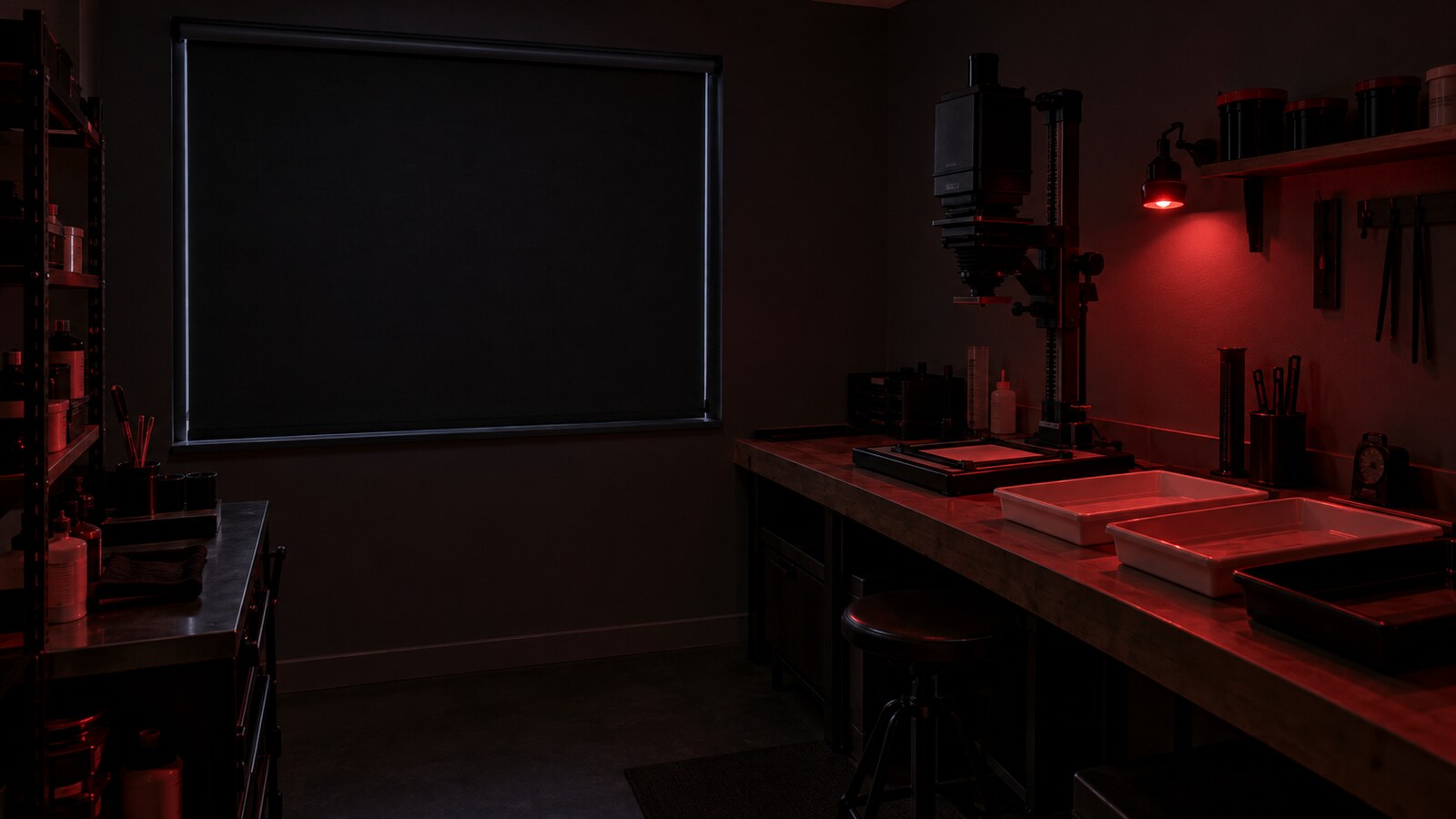
Choosing blackout shades for home darkroom projects means solving two problems: light through the fabric and light around the window covering. Treat the shade as one part of a room-wide light-control plan, not proof that sensitive photographic materials can be handled safely.
World Wide Shades can help you compare window-covering options, while your film or paper manufacturer's instructions should determine the required working conditions. Start with the room's intended use, then explore the shade builder with that requirement in mind.
Define what your darkroom needs to protect
A temporary printing room and a space for loading camera film are not interchangeable. ILFORD explains that a room can become a home darkroom if it can be light sealed, and suggests opaque window covers and sealed door edges as practical starting points (ILFORD's beginner guide).
For compatible black-and-white printing papers, a manufacturer-approved safelight may provide working illumination within specified limits; ILFORD notes that even suitable safelighting can eventually affect sensitive material (ILFORD safelight guidance). The goal is therefore to exclude uncontrolled daylight first, then establish appropriate safelight conditions separately.
Film loading requires a different assumption. Kodak identifies color camera films and most panchromatic black-and-white films as materials that require total darkness, so a red lamp is not a general solution for loading reels (Kodak's darkroom illumination guide). Follow the current instructions for the exact material rather than transferring a paper-printing setup to film.
Write down whether the room will serve printing, film handling, or both. Give World Wide Shades that context when you contact the team at (844) 674-2716, and ask which window-covering details can be evaluated before ordering.
Choose blackout shades for home darkroom fabric coverage
Begin with a blackout fabric specification, not a dark-looking color. Ask what creates the opaque barrier, whether a coating, laminate, or internal layer, and how that barrier should be handled and cleaned.
Separate your appearance preference from the performance question. A charcoal face may suit the workspace, but the supplier should confirm the material's blackout classification rather than asking you to infer it from its color.
Use our roller shade fabric guide to organize your questions about construction and finish. World Wide Shades recommends requesting fabric swatches before finalizing the room-facing color and texture, while treating those samples as a selection aid rather than a finished-room darkness test.
Do not substitute light-filtering fabric simply because it reduces glare or obscures the view. Our light-filtering shades guide offers a useful comparison for rooms that remain living spaces between photography sessions.
Ask whether the proposed material is intended to block transmitted visible light, and request any relevant documentation. Do not interpret a weave percentage or a general privacy description as proof that a fabric is suitable for photographic work.
Plan to inspect the installed material for visible defects without folding, scratching, or otherwise damaging its blocking layer. Follow the supplier's care instructions, and avoid applying tape or improvised coatings to the fabric unless explicitly approved.
Keep the recommendation modest: an opaque fabric is a starting component, not a guarantee about the entire opening. The installation must address the routes around it.
Design the perimeter, not just the shade
Sketch the window covering as a system with a top, two sides, and a bottom. Ask the installer to explain how each boundary will be treated, including where components meet and how the shade will move without obstruction.
A cassette or valance should not be assumed to form a light seal merely because it hides the roller. Ask how the top assembly meets the wall or trim, and whether its ends and operating clearances need a separate treatment.
Likewise, compare an overlapping outside mount with a compatible side-track system rather than choosing only by appearance. Ask about the relationship between the actual fabric width and the complete shade width, including brackets and controls, so the proposed coverage is unambiguous.
World Wide Shades can discuss the window-covering configuration, but confirm the availability and compatibility of any channels before specifying them. For a layered approach, review blackout curtains versus blackout shades, then test the proposed combination rather than assuming an extra layer creates a photographic seal.
Decide where the bottom rail is meant to land and how it will meet that surface. An uneven sill, projecting handle, or decorative molding deserves attention during planning, not after the first printing session.
Inspect the surrounding casing and wall as well as the shade assembly. If a removable opaque panel is necessary, design it as a separate, repeatable component with accessible removal points; ILFORD's beginner guide specifically describes thick card and black canvas tape as a simple window-covering approach (ILFORD's window-sealing advice).
Bring these details to World Wide Shades and discuss the mounting approach before purchase. Avoid attaching makeshift tracks to a product without approval or compromising access to a required exit.
Build the room in practical phases
Use a phased process so that an attractive window treatment does not become the stopping point. Resolve the intended photographic workflow first, install the covering second, and reserve time for testing and correction.
Choose where the enlarger, paper storage, and processing area will sit before deciding how the shade will operate. ILFORD recommends separate dry and wet work areas, with a physical divide or splash barrier where practical (ILFORD's darkroom layout guidance).
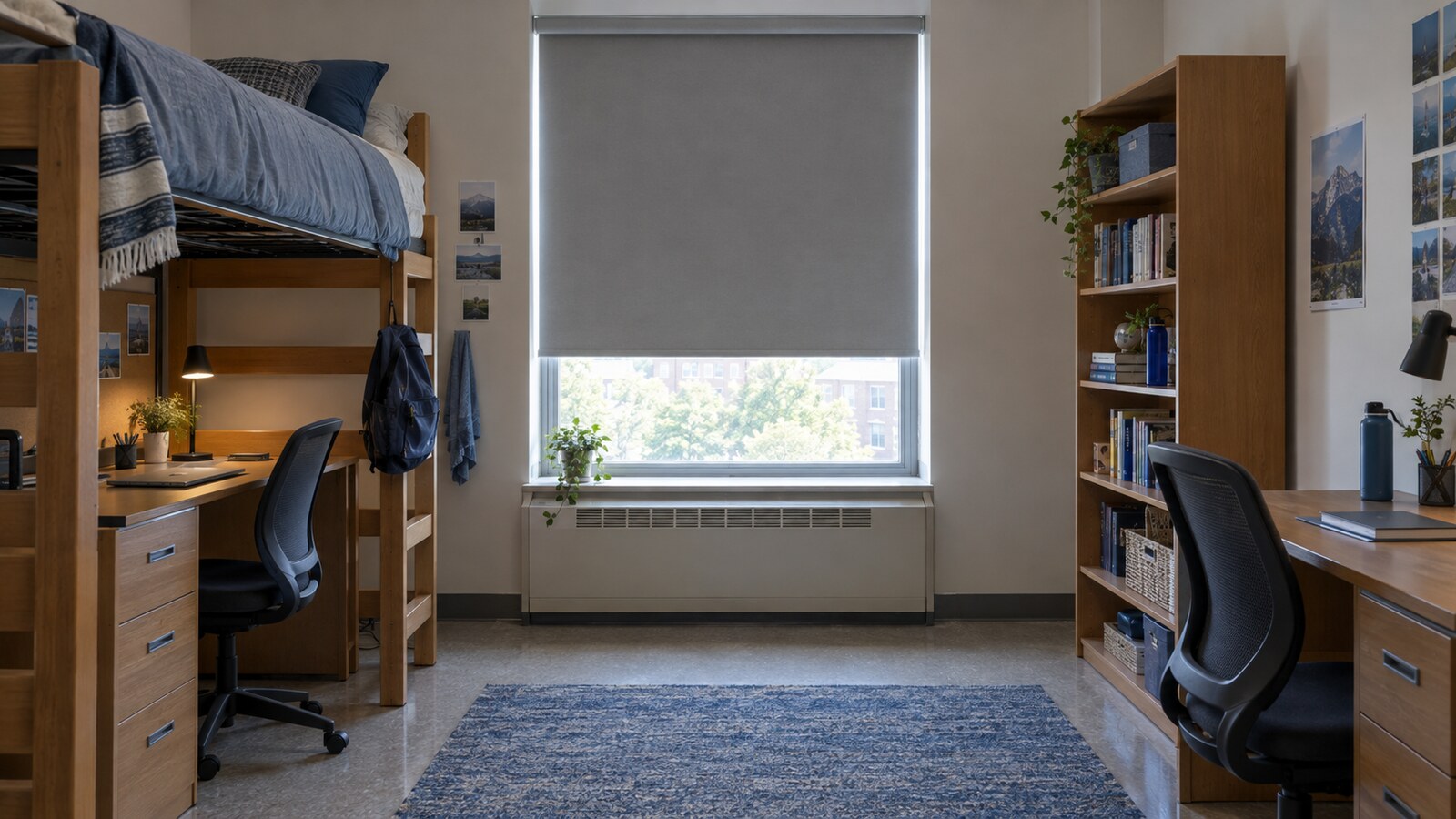
Keep the shade controls accessible without reaching across trays. For a shared bedroom or borrowed space, our guides to roller shades in rental apartments and dorm-room window shades can help you think through permissions and everyday use; neither replaces photographic testing.
Decide which temporary sealing pieces must come off when the room returns to normal use. Label those pieces so the next setup follows the same arrangement, rather than relying on memory.
Use the product's installation instructions and our roller shade installation guide as planning references. Confirm the mounting surface, bracket position, shade travel, and any approved sealing accessories before considering the window complete.
Operate the shade repeatedly with no sensitive materials exposed. Check whether the bottom rail returns consistently to its intended position and whether removable components can be fitted without pushing the fabric out of alignment.
Then inspect the rest of the room. Kodak identifies lighted equipment controls, leaks from enlargers, and nonopaque construction materials as possible sources of unwanted exposure, not just windows (Kodak's darkroom precautions). Examine door edges, outlet areas, and adjacent trim for visible light without opening electrical fittings or obstructing required ventilation.
With sensitive materials secured, close the room and switch off room lights, safelights, and unnecessary illuminated devices. Allow about 15 minutes for your eyes to adapt before looking for leaks, as advised in ILFORD's safelight guidance (ILFORD's dark-adaptation instructions).
Test during the daylight conditions you expect to work in, and repeat with nearby hallway lighting on. Inspect from the actual paper-handling and film-loading positions, not only from beside the window.
A visual inspection is a troubleshooting step, not the final photographic test. Kodak warns that poor safelight conditions can reduce image quality before obvious fog is visible and provides testing procedures that account for photographic exposure as well as safelight exposure (Kodak's testing guidance).
Follow the relevant manufacturer's test procedure for your material and working duration before committing important work. If the room fails, identify and correct the problem rather than accepting “nearly dark” as the target.
Keep the darkroom usable between sessions
A useful setup needs a repeatable routine as much as a tidy appearance. Store removable seals together, note the tested shade position, and repeat your checks after a component is moved, damaged, or replaced.
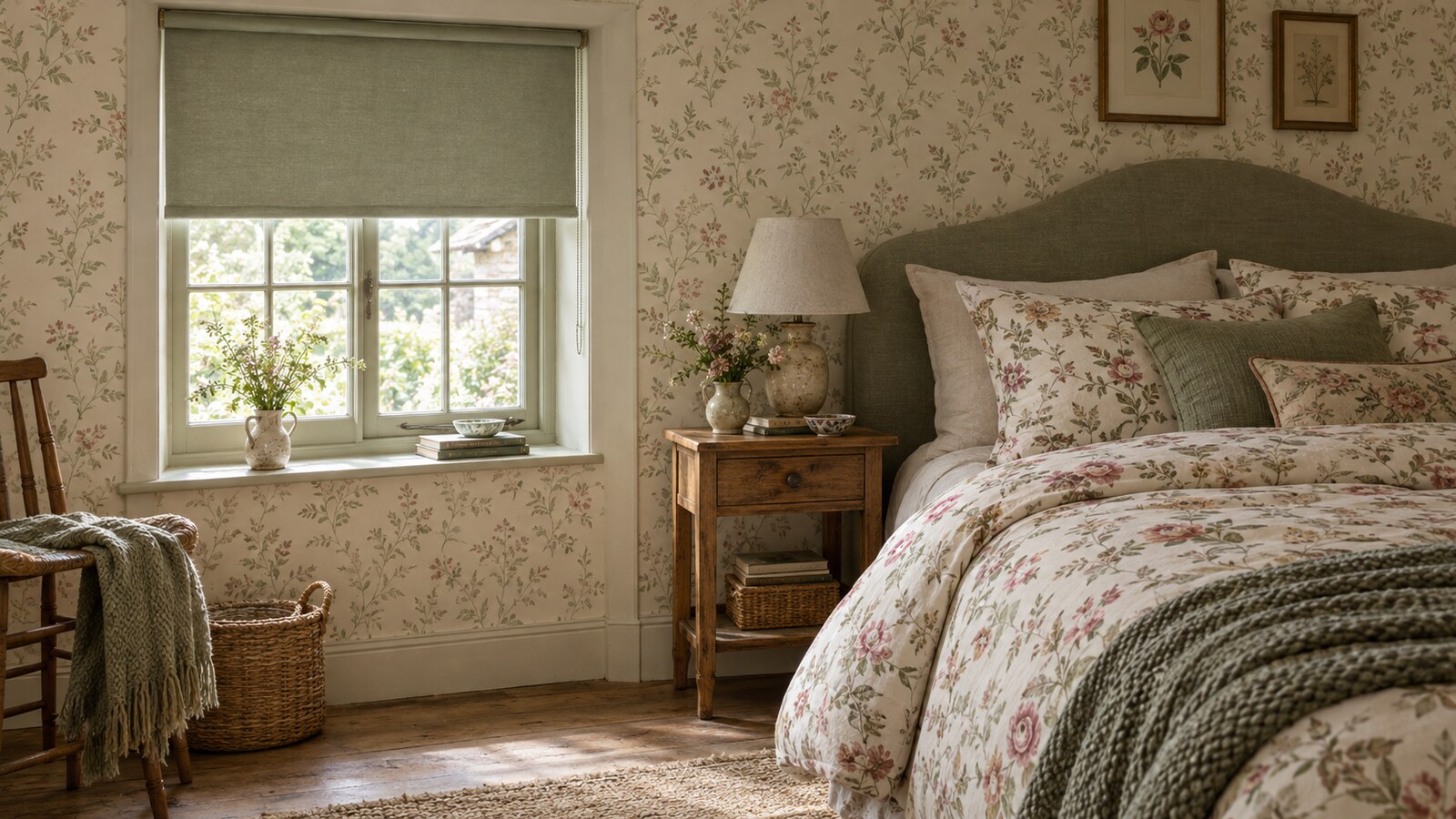
For a room that also serves as a guest space, select a finish you like when the darkroom equipment is stored. Our English cottage roller shade guide offers a separate design perspective, while the photographic light-control requirements should remain the deciding constraint.
World Wide Shades can help you move from appearance choices to a clearer window-covering specification. Start a shade configuration, then confirm the unresolved installation details before placing your order.
Frequently asked questions
Do not assume it will. Treat the fabric, top assembly, sides, bottom, and surrounding room as separate inspection points, and verify the result before exposing photographic material; ILFORD's room setup guidance calls for checking the completed space for light leakage (ILFORD's beginner guide).
Not as a general rule. Kodak specifies total darkness for most panchromatic black-and-white films, while some other film types have different recommendations, so use the instructions for your exact film (Kodak's material-specific guidance).
Choose by documented blackout construction rather than appearance alone. Ask World Wide Shades about the proposed material, then compare swatches for the finish you want without treating sample color as proof of room performance.
Ask which approach fits the window and the proposed shade, including top and bottom details. Neither label removes the need to inspect the assembled system, so choose a configuration you can install, operate, and test consistently.
Check the photographic material's instructions for the recommended filter, lamp, distance, and handling limits, then follow a proper safelight test; ILFORD explains that apparent lamp color alone is not a reliable guide to suitability (ILFORD safelight guidance). For window-covering questions, contact World Wide Shades at (844) 674-2716 and describe the room's intended photographic use before selecting the shade.