Give a patterned room somewhere to rest
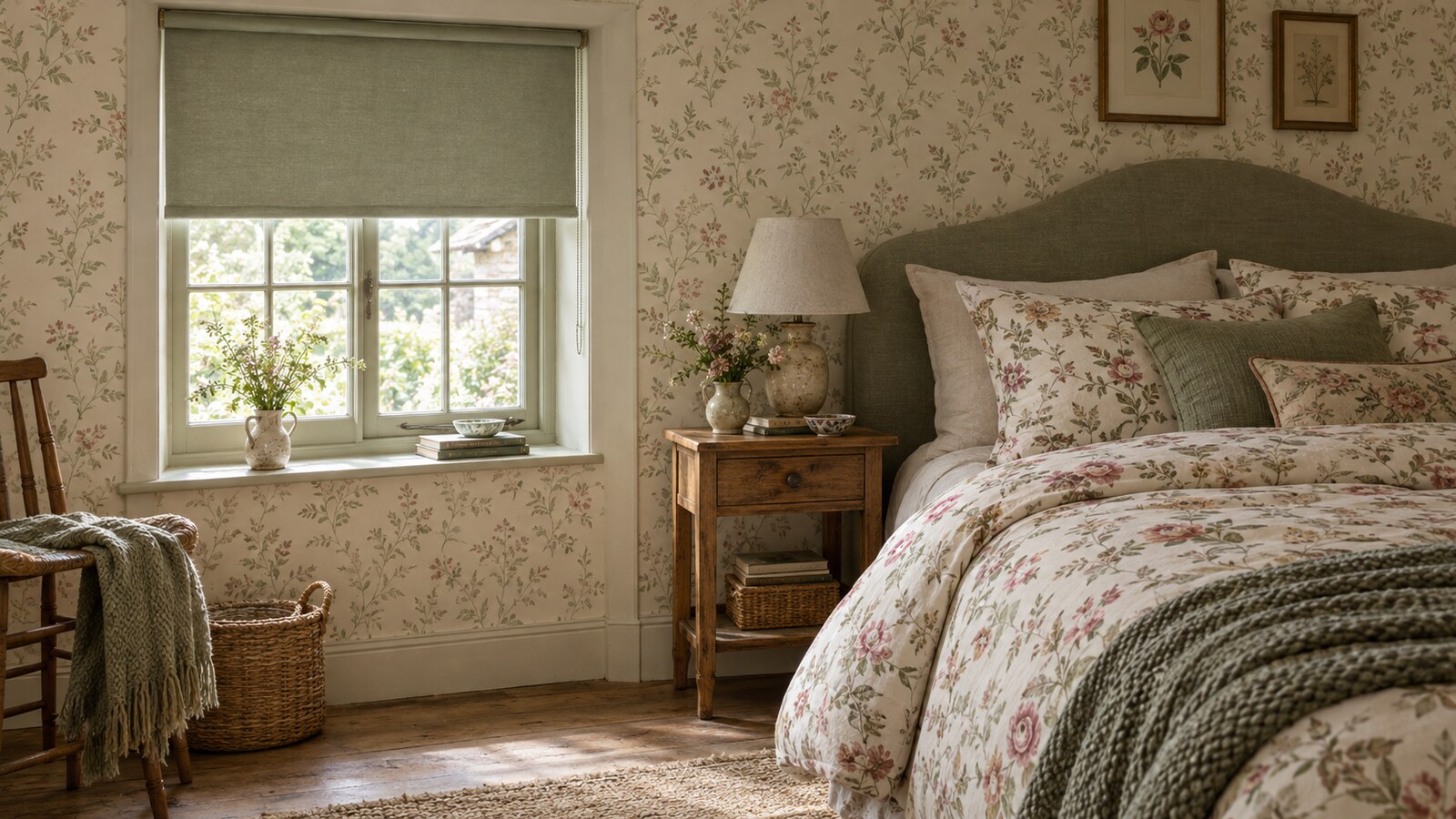
English cottage roller shades work best as a restrained background layer: softly textured fabric, a considered color, and a simple outline that lets wallpaper, curtains, and collected furnishings lead. Choose the shade for the light control you need, then coordinate its undertone and texture with the room rather than adding another competing print.
Think of a sitting room with rose-patterned curtains, a checked chair, and a painted dresser. A plain oatmeal roller shade can finish that window without becoming another focal point. At World Wide Shades, the useful starting question is not whether a roller shade looks antique, but whether it makes the whole window feel settled.
Begin with a small group of colors rather than a finished specification. Order World Wide Shades swatches so you can compare the actual fabrics against your wallpaper, curtain material, and painted woodwork.
English cottage is a layered approach, not a rigid period style
Avoid treating English cottage interiors as a single historical recipe. In its discussion of cottage reinvention, Country Life describes approaches ranging from minimal intervention to contemporary comfort and richly furnished rooms. That variety leaves room for a practical modern window treatment without requiring the rest of the room to abandon its character.
For this project, take your cues from the particular house: its period, local materials, rural setting, and existing furnishings. A low-ceilinged stone cottage might suggest a different palette from a painted timber room or an airy renovation. These are design starting points, not tests of authenticity.
Arts and Crafts pattern offers one possible influence rather than a definition of the whole cottage look. The V&A describes interiors combining plain, rustic-style furniture with highly decorative curtains, textiles, wallpapers, and rugs. You can borrow that balance of quiet surfaces and decorative richness without claiming that a modern roller shade is a historical reproduction.
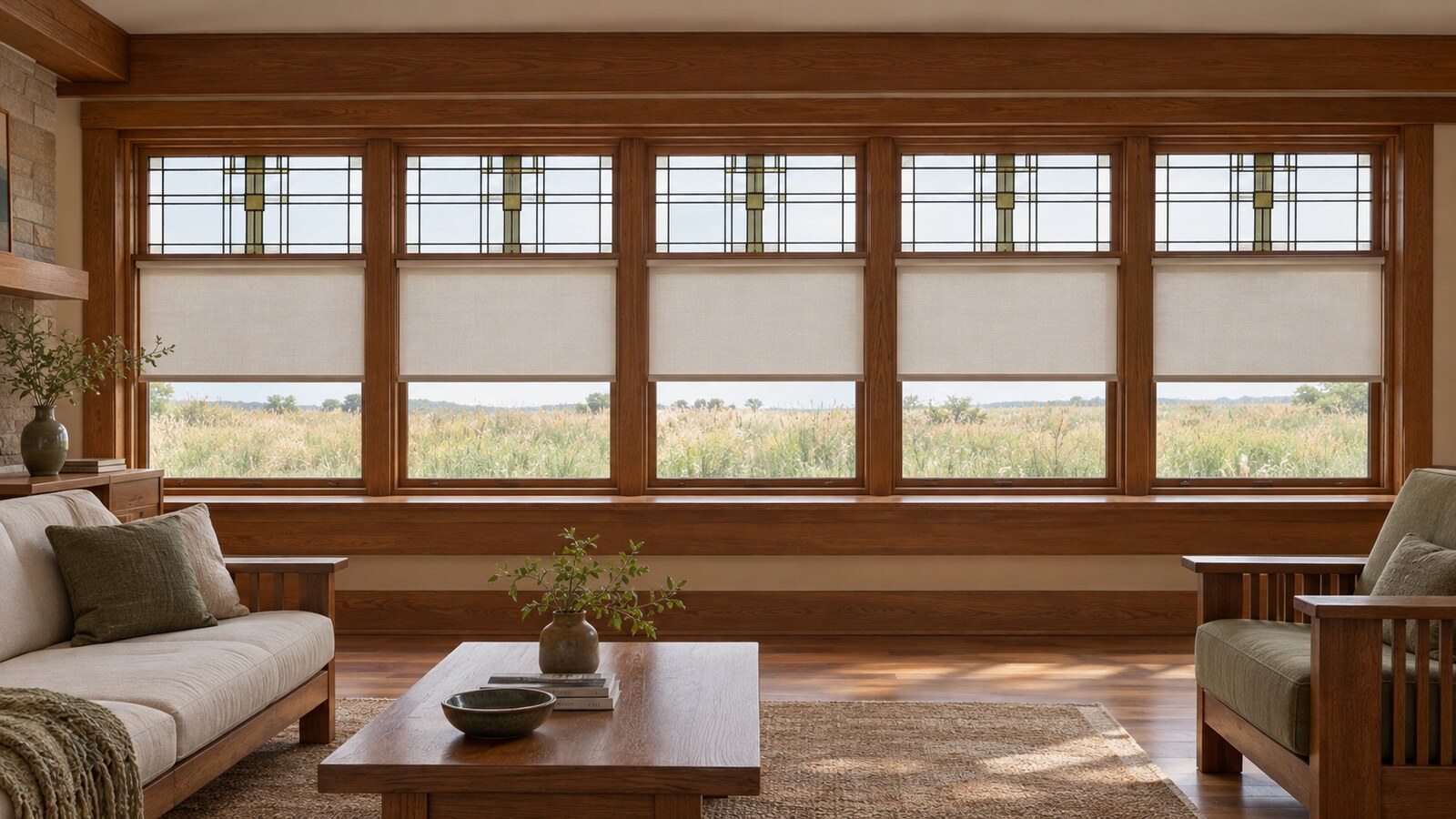
For a useful comparison, explore our Prairie-style roller shade ideas. Use that article to consider a different design vocabulary, then return to the softer, more collected effect you want here.
Balance floral, checked, and striped patterns
Start by identifying the room’s strongest pattern. It might be a curtain with large trailing flowers, a botanical wallpaper, or upholstery with a crisp geometric repeat. Let that pattern establish the mood while the roller shade supplies a calmer surface.
As a practical example, imagine curtains with flowers approximately 8 inches across, a chair with a 1-inch check, and cushions with narrow stripes. A plain shade gives those three scales room to coexist. Adding a medium-size botanical print at the window could make the composition harder to read.
Those dimensions are examples, not decorating rules. Stand at the doorway and judge whether you notice the room as a whole or several equally demanding prints. If the window already feels crowded, simplify the shade before replacing a textile you love.
Look beyond the obvious flower color. A faded leaf, a pale background, or a soft brown outline may provide a more restful shade color than repeating the brightest pink or green. Keep the shade related to the pattern without trying to reproduce it exactly.
For example, pair cream-ground chintz with a muted flax tone, or try a gray-green shade beside wallpaper with sage leaves. Use our window shade color guide to develop alternatives before narrowing the choice to physical samples.
World Wide Shades can help you compare a subtle supporting color with a more noticeable accent. Contact the team, or call (844) 674-2716 with your shortlisted colors and a description of the surrounding patterns.
Choose soft texture without assuming performance
For a cottage-inspired scheme, consider a fine slub, a restrained woven appearance, or a smooth matte surface. Let the actual sample decide whether the texture feels sympathetic to your curtains. A conspicuous weave can become another pattern, especially beside detailed botanical wallpaper.
Treat “linen-look,” “cotton-look,” and similar descriptions as appearance cues unless the product specification confirms the fiber content. Do not infer blackout performance, cleanability, or suitability for damp conditions from the name of a textile. Ask for the selected fabric’s documented properties and care instructions before ordering.
Our roller shade fabric guide provides a starting point for comparing fabric categories. Use it to prepare questions, then confirm the details for the specific material you are considering.
In a kitchen, choose a fabric only after checking its care requirements against the likely exposure to splashes, cooking residue, and condensation. A pretty texture is not a substitute for an appropriate specification. For a more demanding moisture-related setting, see our separate window shades for indoor pool houses guide, rather than transferring a sitting-room choice into that environment.
Separate daylight, privacy, and darkness
Decide what the window must do before choosing the final color. Write down whether your priority is an inviting daytime glow, protection from overlooking, reduced glare, or a darker sleeping space. Do not ask a visual style description such as “soft cottage fabric” to answer those functional questions.
For a sitting room, start by comparing light-filtering candidates and checking their stated privacy characteristics. For a bedroom facing nearby homes, ask specifically about visibility with the room lights on after dark. Our light-filtering shades guide can help frame that conversation, but the selected fabric and installation still need individual evaluation.
If darkness matters, distinguish the fabric’s light-blocking specification from the performance of the completed window treatment. Ask how edge gaps, the mounting arrangement, and any additional treatments will be handled. Do not assume that choosing blackout fabric alone promises a completely dark room.
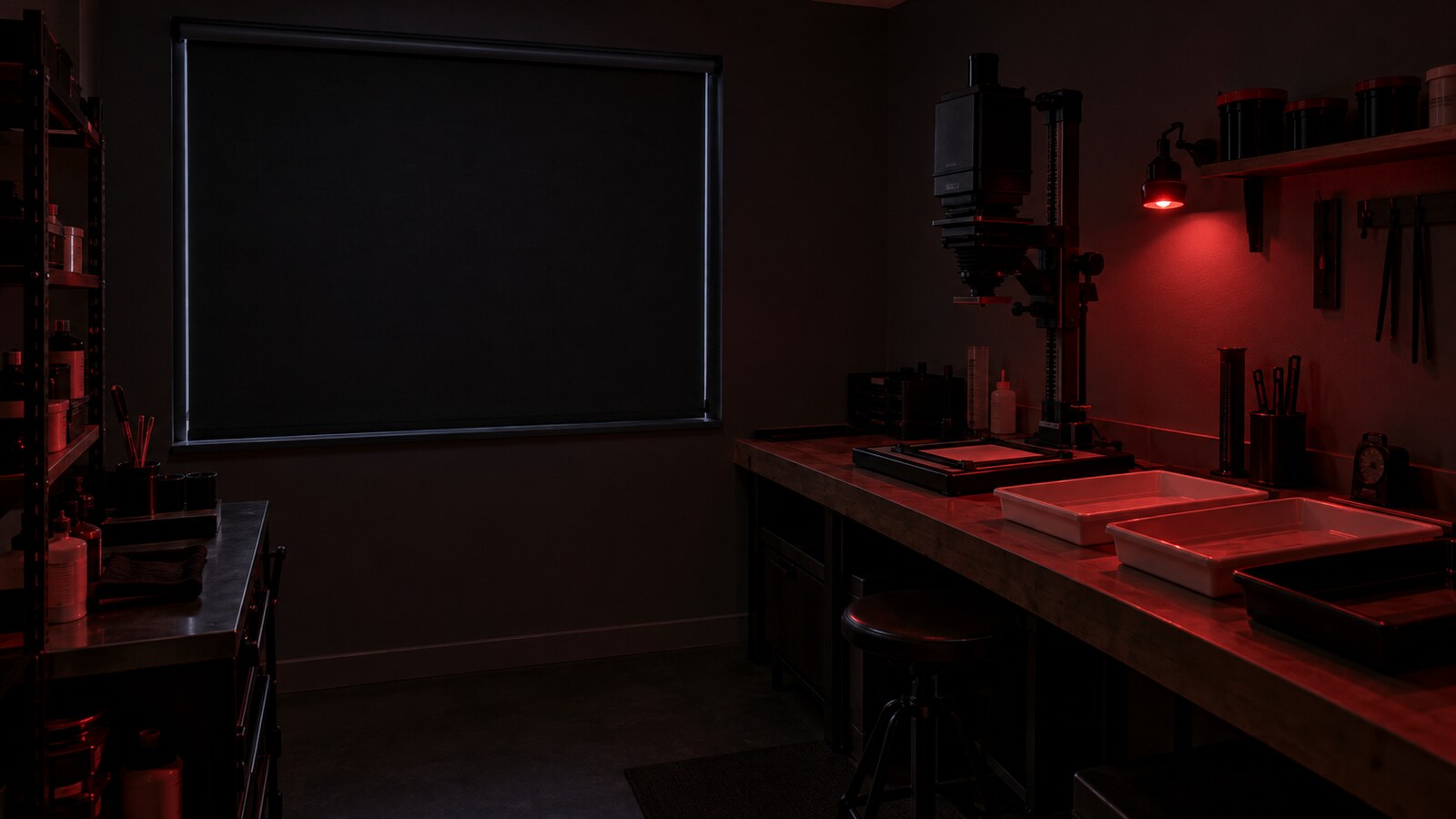
The specialized requirements discussed in our home darkroom roller shade guide provide a useful contrast. A cottage bedroom should be designed around its own sleep and privacy needs, not described as light-tight without evidence.
Bring those priorities to World Wide Shades before finalizing the decorative details. Start a configuration in the shade builder, then confirm the fabric and installation choices that match the room’s intended use.
Keep trim and hardware in proportion
A roller shade can sit visually behind curtains or remain visible as a deliberately simple window treatment. Choose which role it will play before adding decorative trim. In a richly patterned room, a quiet top treatment is often the more useful design choice.
As an illustrative proportion study, picture a window opening about 30 inches wide with generous floral curtains on either side. A large contrasting headbox could become a third strong shape at the window. Compare a discreet finish with one that relates to the painted trim, subject to the available hardware and installation requirements.
On a wider opening, consider whether one broad fabric surface or separate shades better supports the window’s divisions and your operating needs. Treat a 72-inch opening, for example, as a design scenario rather than a promise that every fabric or control is available at that size. Confirm product limits before settling on the composition.
Our roller shade valance options guide can help you compare the visual effect of different top treatments. If you are considering border trim, try a modest sample strip beside the curtain fabric first; a border around 1 inch deep is one possible experiment, not a universal recommendation or an assurance of availability.
Layer with curtains without making the window heavy
Use the roller shade for the everyday task you have specified, and let curtains supply decorative fullness where desired. Before ordering, confirm that the proposed mounting arrangement leaves the shade and curtains enough room to operate independently. A beautiful pairing still needs to function comfortably.
For a small room, experiment with a shade close to the wall or trim color and retain pattern at the sides. For a larger sitting room, a slightly deeper shade color can be worth sampling if the furnishings already contain that tone. Neither approach requires every textile to match.
If you are undecided about the silhouette, compare roller shades and Roman shades. For this scheme, choose the treatment whose visible shape supports the curtains rather than competing with them.
World Wide Shades can help you work through the relationship between shade, curtain, and window trim. Discuss the window with our team, or call (844) 674-2716 before committing to a layered arrangement.
Test swatches in the room throughout the day
Order a focused selection: perhaps a warm off-white, a flax tone, and a muted color borrowed from your pattern. Compare similar textures first so you can judge color clearly, then introduce a different weave if none feels right. Three to five samples is a practical starting example, not a purchasing requirement.
Hold each swatch beside the wallpaper, curtain fabric, and woodwork, then place it at the window. Compare it in morning daylight, midday light, late afternoon, and under the lamps you normally use at night. Record which combination you prefer rather than relying on a memory of the showroom or screen.
Check both close up and from the usual seating position. A sample you like against an individual cushion may not be the best choice across the room. If privacy is important, ask what the small swatch can establish and what requires a larger sample, documentation, or an installed demonstration.
Return to World Wide Shades swatches if the first group misses the mark. It is better to refine the undertone before ordering than to force a nearly right fabric into a carefully layered palette.
Frequently asked questions
They can suit a cottage-inspired room when you want a simple layer alongside more decorative textiles. Choose a quiet color and texture, then judge the whole window rather than expecting the shade itself to look antique.
It does not need to match exactly. Try borrowing the curtain’s background color or a subdued leaf tone, and compare both options beside the actual fabric before deciding.
Use them as a composition to test, not a formula to follow. Give one pattern the lead, vary the scale of the others, and consider a plain roller shade if the window needs a calmer element.
Do not make either assumption from the appearance description. Request the actual fiber composition, privacy information, environmental suitability, and care instructions for the specific fabric you are considering.
Confirm the room’s light-control priorities and compare physical swatches against its existing palette throughout the day. Then contact World Wide Shades to resolve fabric, hardware, and installation questions before placing your order.