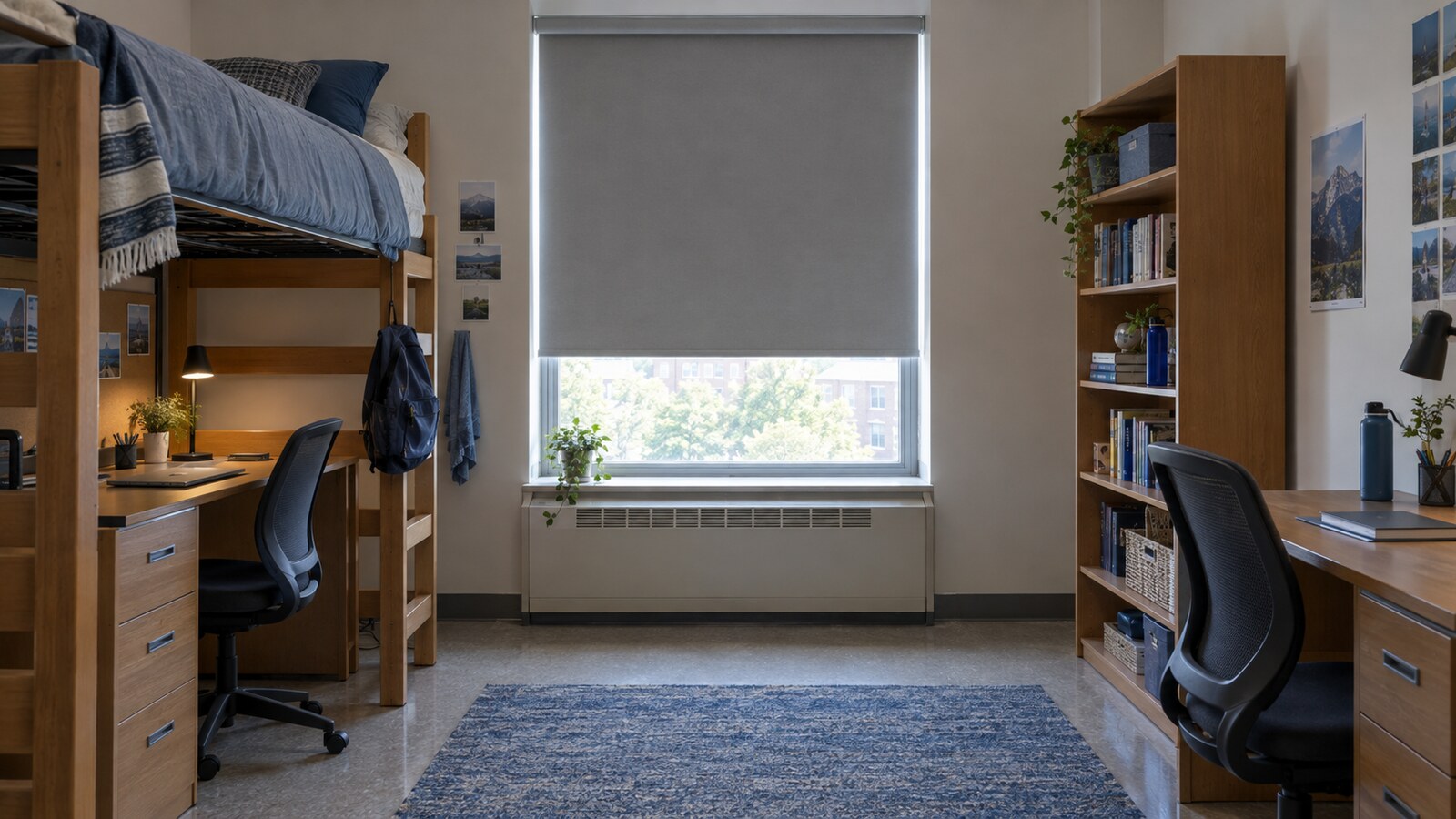
Roller shades for dorm rooms should solve a specific problem without creating a housing-policy problem. Start with your residence hall’s written rules, inspect the assigned window after move-in, and then choose the fabric and mounting system. Blackout fabric may help with morning light, but it cannot compensate for an unapproved installation or a poor fit.
World Wide Shades recommends treating permission, attachment, and light control as three separate decisions. Before ordering, contact World Wide Shades or call (844) 674-2716 to discuss the room’s restrictions and the information needed to evaluate a shade. A product recommendation is not a substitute for written approval from housing.
Read the residence-hall rules before shopping
Do not assume a product labeled “renter friendly” is allowed in student housing. Ask housing whether supplemental shades are permitted, whether the supplied blinds must remain accessible, and whether approval applies to the exact product and attachment method you are considering. Keep the response with your move-in records.
Two university examples show why campus-specific guidance matters. UT Austin lists window coverings with spring-hanging tension rods among optional items and recommends measuring the specific room’s windows after moving in before purchasing or bringing coverings. That guidance is for its residents, not blanket permission for other campuses (UT Austin Housing and Dining).
Radford University states that curtains in rooms must be flame retardant, as shown on the manufacturer’s label. Its room-setup page also discusses supplied blinds and restrictions on damaging attachments; it does not establish that every roller shade or no-drill bracket is approved (Radford University Housing).
Ask how your school classifies roller shades, which documentation it requires, and whether a fire-safety review is necessary. If documentation is requested, obtain it for the exact fabric and product rather than assuming that blackout fabric, polyester, or a marketing description establishes compliance.
Choose the light-control level for your routine
Think about when the window bothers you most. Sunrise across a pillow, reflections on a laptop, and a brightly lit room facing another building are different problems. Choose the fabric around the most important one, then consider how you will manage the others.
Choose blackout fabric when limiting transmitted daylight through the material is the priority. Evaluate the whole assembly, however: light can enter around the sides, above the roller, or below the hem. Ask for fabric specifications and the finished dimensions rather than interpreting “blackout” as a promise of a completely dark room.
A dorm installation may not permit side channels, overlapping wall coverage, or extra attachments. Set expectations accordingly. Our guide to blackout curtains versus blackout shades can help frame the choice between a roller and a fabric panel, subject to housing approval.
Room-darkening fabric is worth considering when you want less incoming light without making maximum darkness the only goal. Product terminology varies, so compare actual samples and written descriptions instead of assuming every room-darkening material performs alike. Your roommate may prefer this compromise for daytime studying.
Light-filtering fabric is an option when the goal is gentler daylight rather than a sleep-focused barrier. Do not assume that a fabric that looks private during the day will provide the privacy you want after sunset. Assess the specific material under contrasting indoor and outdoor lighting.
World Wide Shades can help narrow that comparison before you commit. Request fabric swatches, hold them against the actual window, and compare opacity and appearance with the room lights on and off. The light-filtering shades guide explains the questions to ask when daylight matters as much as darkness.
Treat nighttime privacy and screen glare separately
For a ground-floor room or a window facing another residence hall, evaluate privacy from the relevant sightline rather than from the desk alone. With a roommate or trusted helper, assess the covering after dark while the interior lights are on, without entering restricted areas or exposing yourself. If that assessment is impractical, choose a more opaque material and ask the supplier about its privacy characteristics.
Glare deserves its own test. Sit at the actual study position at the time reflections are strongest, then consider whether lowering the shade partway would address the problem. A desk arrangement that avoids a bright window directly behind the screen may also be worth trying before purchasing another covering.
Agree on a daily routine with your roommate. Decide how much daylight to keep during study hours, when stronger coverage is needed, and who will operate a shared shade. Our bedroom window-shade guide offers another way to weigh sleep and daytime use without treating a dorm like a private bedroom.
Match the mounting system to written permission
“No drill” describes one installation feature, not the complete effect on a window. A system can avoid screws yet still press against trim, interfere with an existing blind, or use adhesive that housing prohibits. Evaluate the exact attachment, its support requirements, and its removal procedure before ordering.
- Tension or compression systems: Consider only a purpose-designed shade system approved for the opening. Confirm its compatible surfaces, width range, load limits, and clearance requirements. Do not attach a roller shade to a generic curtain tension rod unless the manufacturer explicitly designed that combination.
- Adhesive brackets: Avoid them unless both housing and the product instructions permit the exact application. A removable label is not assurance that a finish will remain unchanged, and adhesive mounting should not be an improvised substitute for required hardware.
- Screw-mounted brackets: Do not drill into walls, trim, window frames, or existing hardware without explicit authorization. If the shade requires fasteners and housing prohibits them, choose another approved approach rather than modifying the brackets.
Leave school-provided coverings in place unless housing authorizes removal. Ask staff about any conflict with opening the window, reaching a handle, or operating the existing blind. Preserve access to required equipment and obtain guidance before using a covering near a heater or other obstruction.
World Wide Shades can review the proposed configuration, but your residence hall controls what may be installed. Ask about mounting compatibility or call (844) 674-2716 before buying. The rental-apartment roller-shade guide provides useful permission-first questions, while our roller-shade installation guide is background reading, not authorization to alter university property.
Measure only after you can inspect the assigned room
A floor-plan illustration or another student’s measurements should not determine a custom order. Wait until the room is assigned and you can inspect its actual opening, existing hardware, and usable mounting surfaces. UT Austin specifically recommends measuring the room’s windows once moved in before buying or bringing window coverings (UT Austin Housing and Dining).
Once you have permission, follow the selected product’s measuring instructions. Clarify whether an order dimension means bracket-to-bracket width, total assembly width, or fabric width, and who applies any deductions. Those distinctions matter when you are balancing usable clearance against light entering beside the fabric.
An inside-mounted shade needs compatible recess space and unobstructed operation. An outside-mounted shade needs approved support beyond the opening; do not assume you can extend onto the wall just because more overlap sounds desirable. Photograph the window with the supplied blind raised and lowered so the discussion includes real obstacles.
World Wide Shades recommends resolving those uncertainties before entering custom dimensions. Explore the shade builder after confirming a compatible product and permitted attachment method. Save the final configuration and written housing approval together so the order reflects the installation you are actually allowed to use.
Choose controls and fabric for shared living
A cordless control is worth prioritizing when a suitable approved option is available. CPSC encourages cordless window coverings and identifies accessible window-covering cords as a strangulation hazard to young children; that safety guidance should not be presented as a universal dorm-specific installation code (U.S. Consumer Product Safety Commission).
Do not solve a mounting restriction by omitting a required safety component. If the selected product needs a secured cord-tension device and housing will not approve its attachment, choose a different compatible system. Our child-safe window-treatment guide provides additional context for discussing controls and accessible cords.
For fabric, prioritize documented performance and care instructions over a dramatic product name. Ask how to remove dust, whether spot cleaning is allowed, and what cleaning agents to avoid. Compare texture and color in the room; use the roller-shade fabric guide to organize those decisions.
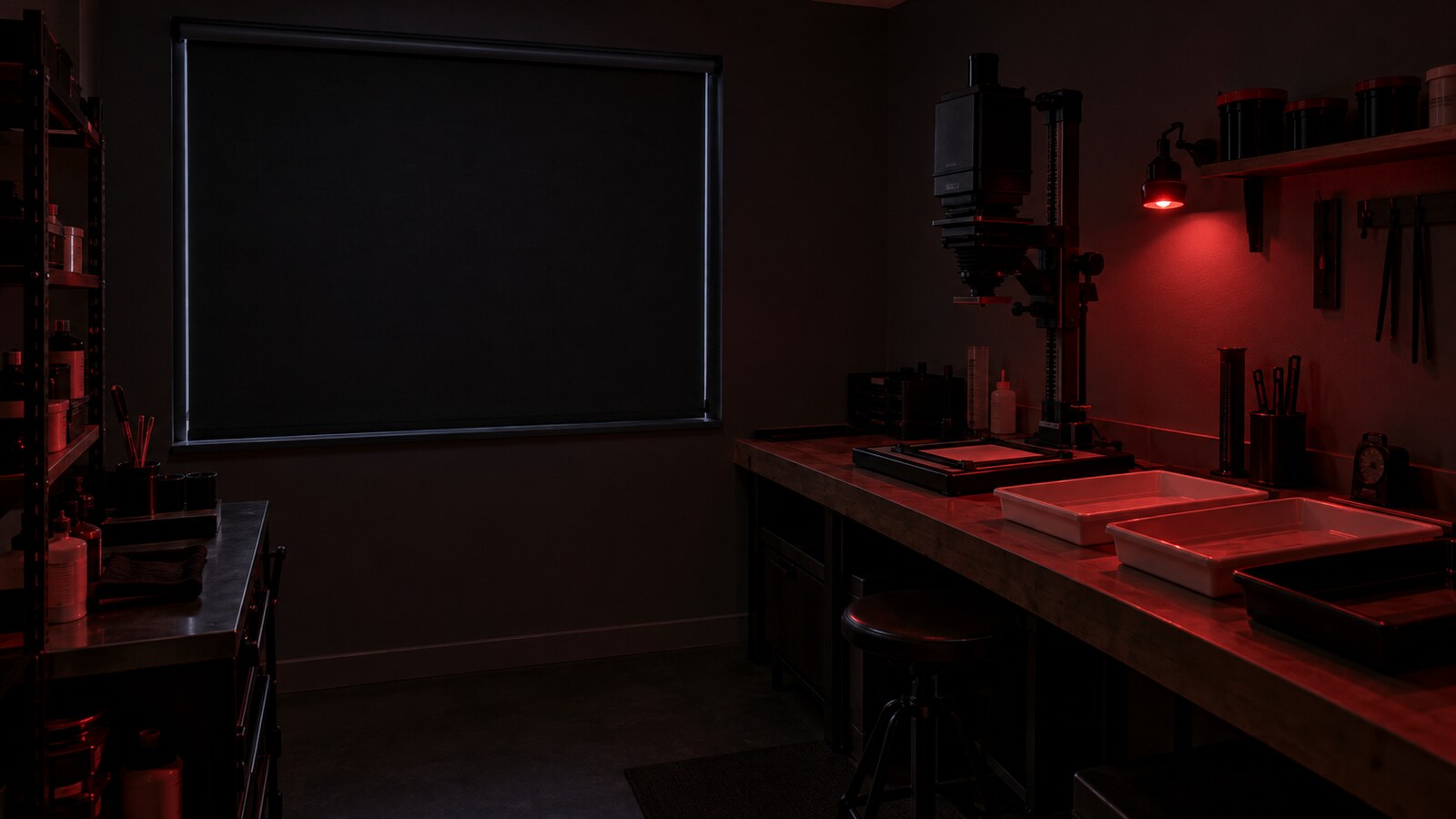
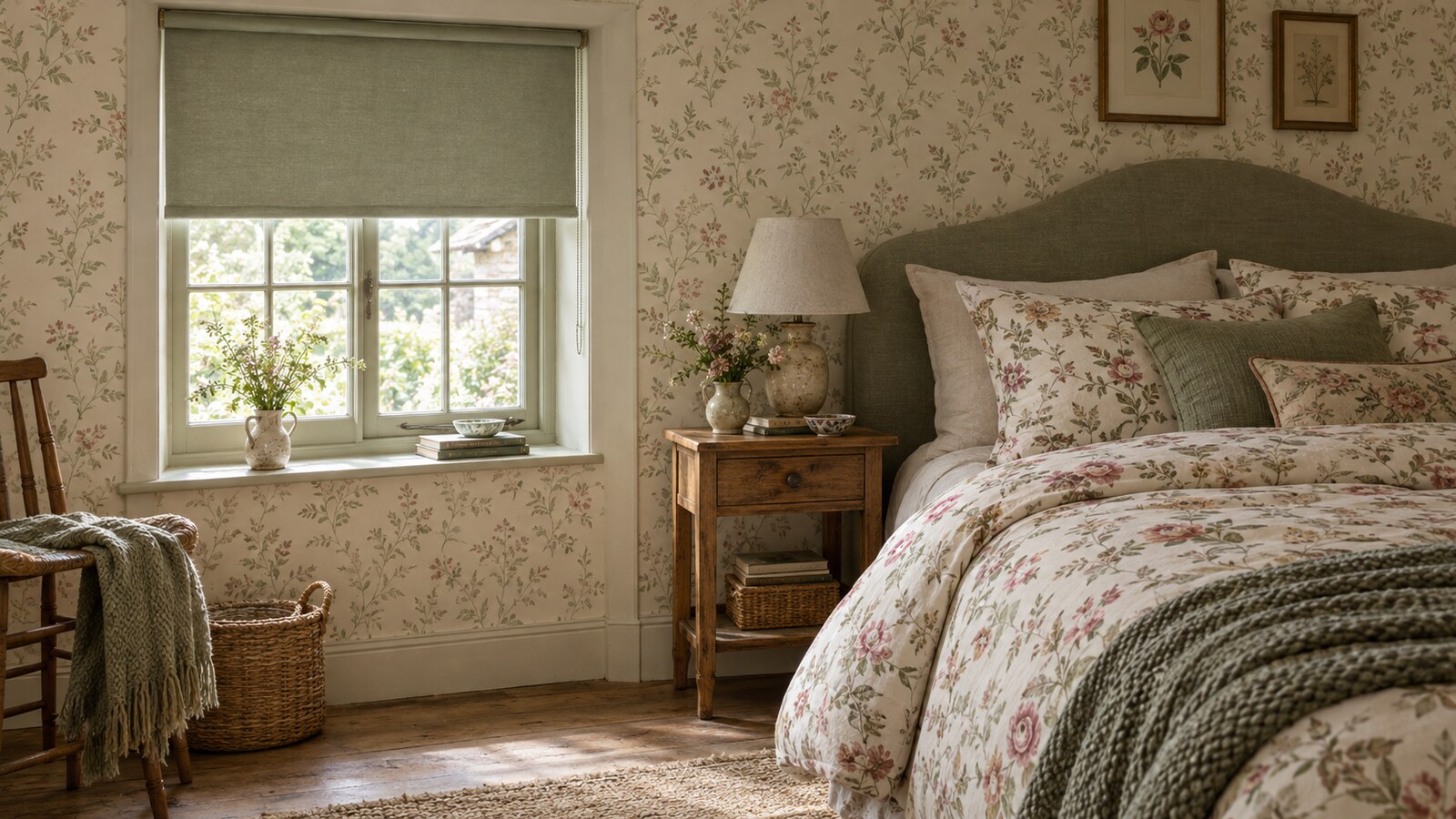
Keep inspiration separate from the dorm’s constraints. Our guide to blackout roller shades for home darkrooms addresses a different light-control goal, not a standard a residence hall must accommodate. For a gentler decorative direction, English-cottage roller shades offer ideas to discuss without adding unapproved layers or hardware.
Frequently asked questions
No universal permission should be assumed. Ask your housing office about the exact shade, fabric, controls, and attachment method before purchasing; a policy allowing curtains or a specific tension rod may not cover a different roller-shade system.
Do not expect fabric selection alone to eliminate all incoming light. Evaluate edge gaps, mounting limits, and the full assembly, then choose the best approved configuration for your needs rather than relying on the word “blackout.”
Only consider an adhesive installation when housing permits it and the shade manufacturer specifies that exact method. Do not suspend a roller assembly from improvised hooks or replace required mounting hardware with a removable adhesive product.
Research products and request samples early, but postpone a custom order until you can verify the assigned opening and approved mounting method. UT Austin’s own guidance recommends measuring specific windows after moving in (UT Austin Housing and Dining).
Keep the supplied covering and ask housing to address defects or explain approved alternatives. Do not work around a prohibition with hidden adhesive, replacement hardware, or an unsupported tension setup; adapt the purchase to the room’s rules.
Make the approved solution the starting point
The best roller shades for dorm rooms balance the roommate’s routine, the actual window, and the residence hall’s permission. Establish the mounting limits first, compare fabrics second, and order only when the dimensions and product requirements are settled.
World Wide Shades can help turn those constraints into a focused selection. Contact the team with your approved attachment method and room photos, or request swatches while you confirm the details with housing.