Window shades for indoor pool rooms should solve a light-control problem without interfering with the systems that keep the enclosure dry. Start with privacy, glare, and daytime comfort, then confirm that the entire shade assembly is suitable for the actual environment. A fabric description alone is not enough to approve a shade for installation beside an indoor pool.
World Wide Shades recommends separating two decisions: how the room manages moisture, and how its windows manage light. The first belongs with the pool-room designer and HVAC professional; the second involves fabric, mounting, operating hardware, and manufacturer-approved conditions. Keeping those decisions connected, but not interchangeable, makes the selection process more useful.
Determine whether the shades are inside the pool enclosure
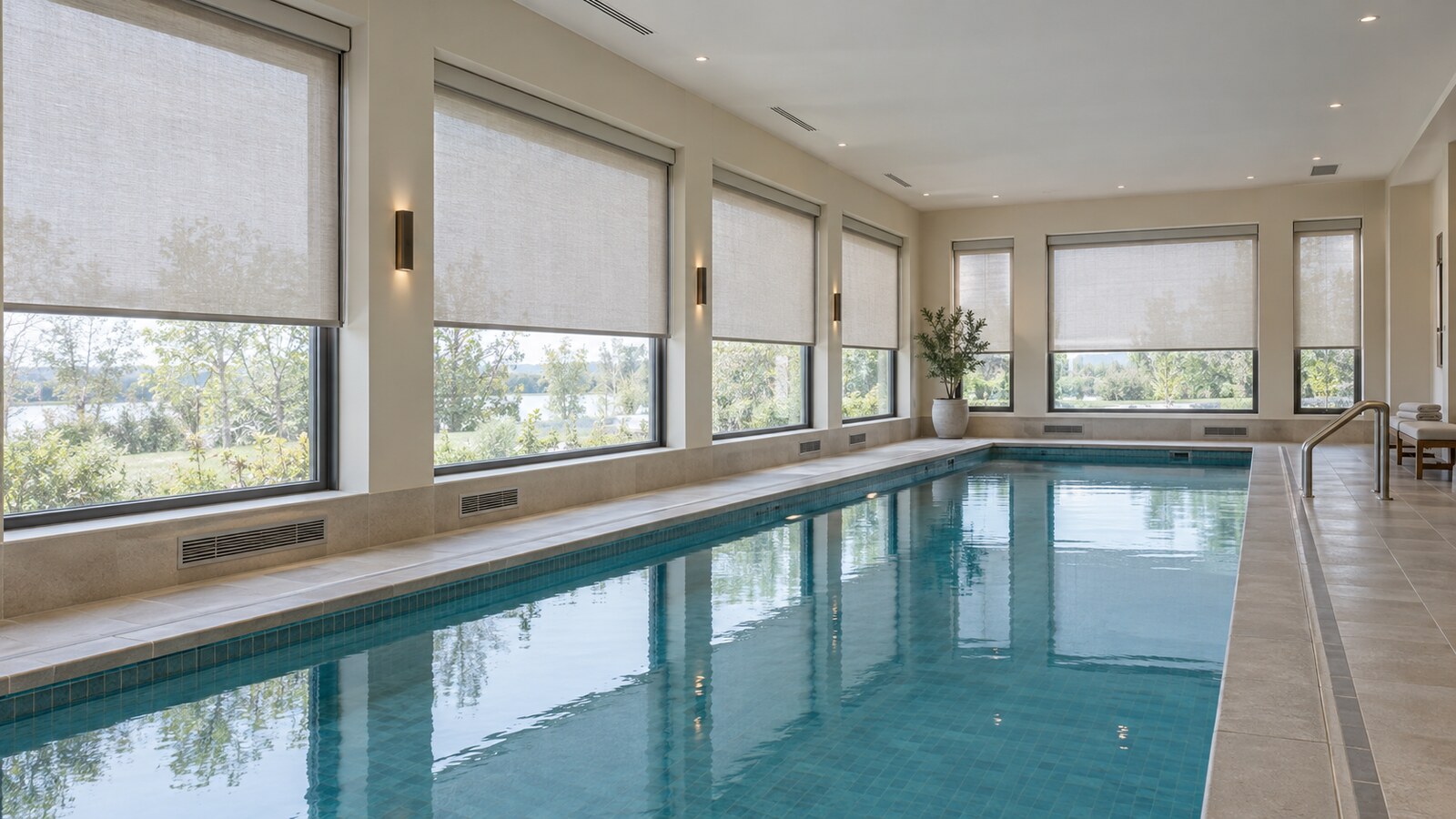
A window overlooking an indoor swimming pool is not necessarily exposed to the same conditions as a window inside it. Before comparing materials, identify which side of the enclosure will hold the shade and whether doors routinely connect that space to the pool.
For an indoor installation, describe the room as a natatorium or indoor pool enclosure when requesting approval. Give the supplier the expected temperature and humidity range, proximity to splash, cleaning practices, and ventilation arrangement. Do not substitute “bathroom suitable” or “moisture resistant” for a specific assessment of the proposed application.
An adjacent lounge, changing area, or detached pool house deserves its own evaluation. Ask whether it has separate climate control, whether wet swimmers use it, and whether pool air reaches the windows. An ordinary living-area recommendation should follow an assessment of that room, not its name on a floor plan.
To discuss the setting before selecting a product, contact World Wide Shades or call (844) 674-2716. Explain whether the shades will be inside the pool enclosure or in an adjoining room.
Humidity control belongs to the building, not the shade
ASHRAE describes indoor pools as special-application spaces and identifies 50–60% relative humidity as the recommended operating range for typical pool applications, with humidity, ventilation, air distribution, and building-envelope design all requiring coordination (ASHRAE indoor swimming pools guidance). That range is HVAC design guidance, not a humidity rating for any window shade.
A shade does not remove water vapor from the room or replace the dehumidification and ventilation design. If the enclosure has persistent condensation or unexplained moisture, ask the pool-room professional to investigate before adding a window covering. Choosing a different fabric is not a correction for an unresolved building problem.
ASHRAE recommends keeping glass and window-frame surface temperatures at least 3–5°F above the pool-room dew point and allowing unobstructed air movement along indoor window surfaces (ASHRAE window condensation guidance). These are glazing and HVAC design objectives; they are not a universal clearance specification for shades.
Have the HVAC professional review the proposed shade position both lowered and raised. Ask whether it would interrupt supply air directed toward the glass, cover a grille, or create an enclosed pocket where moisture could collect unnoticed. A mounting arrangement should not be approved solely because the shade physically fits.
World Wide Shades encourages treating shade placement as part of that coordination conversation. For related background, the guide to energy-efficient window shades can help frame comfort goals, but energy-focused shade selection does not replace pool-room moisture engineering.
Choose fabric by documented suitability and cleaning needs
Begin with the cleaning method and the manufacturer's permitted operating conditions rather than a broad material label. Ask for written confirmation that the exact fabric, backing, seams, and finished assembly are appropriate for the proposed indoor pool environment. If that confirmation is unavailable, keep looking rather than assuming approval.
Request the manufacturer's humidity limits, temperature limits, permitted exposure conditions, and relevant warranty exclusions. Ask specifically about sustained humidity, occasional condensation, splash, and the cleaning products used at the facility. A statement about one of those conditions should not be treated as permission for all of them.
For fabric comparisons, review the roller shade fabric guide and then narrow the options using project-specific documentation. Treat cleanability and environmental suitability as separate questions: a surface that can be wiped clean still needs approval for where it will operate.
Request a sample and evaluate its color, texture, and visibility against the actual glass. Ask for the approved cleaning instructions before testing any cleaner, and do not expose a sample to chemicals in ways the manufacturer prohibits. Keep the maintenance instructions with the final product selection.
Use the World Wide Shades swatch request to start the visual comparison. A swatch helps with appearance; it is not a substitute for written approval of the complete shade assembly.
Evaluate hardware and operation as carefully as fabric
The fabric is only one part of the order. Ask about brackets, tube, fasteners, hem bar, clutch or motor, end caps, and any enclosure, including the hardware finish and its suitability for the specified conditions.
ASHRAE notes that pool exhaust air contains moisture and can contain corrosive chloramine compounds, and it cautions that even stainless steels require careful consideration in natatorium applications (ASHRAE materials guidance). That warning concerns building systems and materials, not a certification of any particular shade component.
Avoid interpreting “metal,” “stainless,” or “coated” as a complete answer. Request the manufacturer's corrosion-related limitations, inspection requirements, and replacement procedures for the proposed assembly. Also ask whether approved maintenance differs from that used in an ordinary residential room.
For motorized operation, confirm the motor's environmental rating and safe operating temperatures, along with requirements for power connections and controls. Have the appropriate installer determine electrical placement and applicable safety requirements near the pool. World Wide Shades recommends resolving these questions before finalizing a motorized configuration.
If you want a starting point for discussing configurations, explore the shade builder and retain the options you prefer. Treat those choices as provisional until suitability and installation requirements have been confirmed.
Balance glare reduction with dependable privacy
Define privacy by viewing position and time of day. Consider neighboring windows, pathways, outdoor seating, and any elevated sightlines, then evaluate the proposed fabric with the interior lights on as well as off.
For a pool room, glare control should also be reviewed from the places where people swim, sit, and supervise. Ask the designer to consider changing sun angles and reflections rather than selecting a fabric solely from its appearance when viewed straight on.
If maintaining an outdoor view matters, ask for an appropriate light-filtering or screen sample and assess the trade-off against your privacy expectations. Do not accept a daytime demonstration as proof of nighttime privacy. Have someone inspect the room from the relevant exterior viewpoints under the lighting conditions you expect to use.
The light-filtering shades guide provides another place to begin comparing light-control priorities. If the room also contains furnishings or finishes you want to protect, add questions from the UV-protection window shades guide to the product discussion without assuming that UV performance establishes privacy.
If evening privacy is nonnegotiable, request a solution intended for that objective and review potential views around the fabric edges. Ask the supplier to explain what the selected assembly can and cannot conceal. Fabric opacity and coverage around the opening should both be discussed.
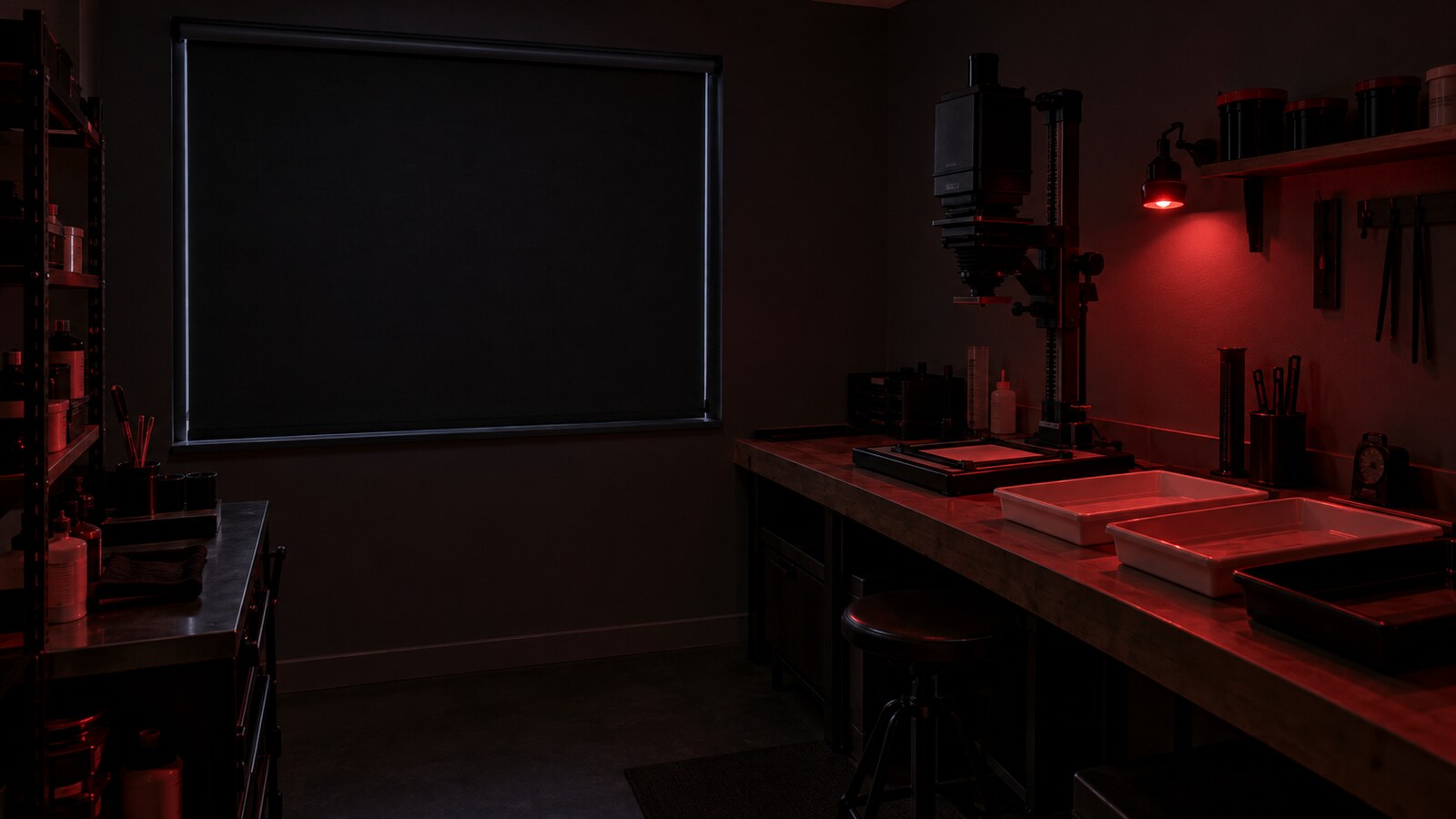
For a useful contrast, the home darkroom roller shade guide addresses a different light-control brief. A pool room should not inherit a sealed or tightly enclosed mounting approach without HVAC review.
To compare privacy priorities with available options, contact World Wide Shades or call (844) 674-2716. Describe when privacy is needed and which exterior sightlines matter most.
Plan mounting and maintenance together
Choose a location that leaves access to the window, sill, shade hardware, and ventilation components. Ask the installer how the area will be inspected and cleaned with the shade in place. A visually tidy installation is not sufficient if routine inspection becomes impractical.
Before specifying a decorative cover, review the roller shade valance options and ask how each proposed enclosure affects access and airflow. Do not add a fascia or enclosed pocket simply to hide components without considering the space behind it.
Agree on a maintenance routine based on manufacturer instructions and actual use. Include how staff or household members should report visible moisture, finish deterioration, unusual operation, or fabric changes. Do not improvise chemical treatments or lubricants without approval.
For shared facilities, the commercial roller shades guide offers a separate planning perspective, while the dorm room roller shade guide provides context for another shared-use setting. Neither should be treated as evidence that an ordinary commercial or residential shade is approved for pool exposure.
World Wide Shades can be your starting point for organizing product questions around the room's needs. Request swatches once you have identified the privacy goal, and confirm environmental suitability before proceeding to a final order.
Frequently asked questions
The best candidate is an assembly whose manufacturer approves the actual environment, cleaning method, mounting arrangement, and operation. Start with the required privacy and glare performance, then verify fabric and hardware together rather than choosing by material name alone.
Do not specify shades as humidity-control equipment. ASHRAE treats pool humidity management as a coordinated building and HVAC task involving ventilation, air distribution, room conditions, and the envelope (ASHRAE pool-room design guidance).
Do not assume nighttime privacy from a product's daytime appearance or view-through description. Ask the supplier for the intended privacy performance and assess a sample from outside with the pool-room lights operating as they normally would.
There is no universal clearance established here. Have the installer and HVAC professional coordinate the location because ASHRAE calls for unobstructed air movement along indoor window surfaces as part of condensation prevention (ASHRAE glazing guidance).
Possibly, but evaluate that lounge's operating conditions rather than assuming it matches the pool enclosure or a dry living room. Before ordering, contact World Wide Shades with the room's intended use and ask which manufacturer confirmations are needed for the proposed product.