What “rolling unevenly” can mean
A roller shade may look crooked because the whole headrail is out of level, the fabric is walking sideways across the tube, one bracket is loose, or the bottom rail is not hanging square. These symptoms can look alike from across a room, but they point to different causes. Before replacing the shade, watch one slow cycle and note whether the fabric drifts toward the left or right, whether the bottom rail is level when stopped, and whether the problem happens at the same height each time.
If the fabric edge approaches an end cap, stop operating the shade before it rubs, folds, or frays. A few careful observations can narrow the problem without taking the roller apart. World Wide Shades can review a photo or product details if you want a second opinion; contact our team before ordering replacement parts. You can also use our shade builder to compare replacement dimensions, or call (844) 674-2716 for a product-fit review.
Start with a safe, repeatable check
Move furniture away from the window and clear anything that could catch the hem bar. Raise the shade fully, then lower it only about 12 to 18 inches at a steady pace. Repeat that short movement two or three times while watching the side edges and bottom rail. A short test is easier to compare than one long run, and it reduces the chance of winding damaged fabric all the way around the tube.
For a motorized shade, use the normal remote or wall control and pause if the fabric starts to bunch. Do not pull on the fabric while the motor is running, and do not keep pressing the button against a jam. Check the manufacturer’s instructions for resetting limits or disconnecting power; motorized drives vary by brand and model.
Take a straight-on photo at the same height as the headrail. Include both brackets and the full fabric width, not only the crooked edge. A second photo of the bottom rail can show whether the bar itself is tilted. For help with the window opening or mounting positions, see how to install roller shades and our guide to shallow inside mounts.
Identify the symptom before adjusting anything
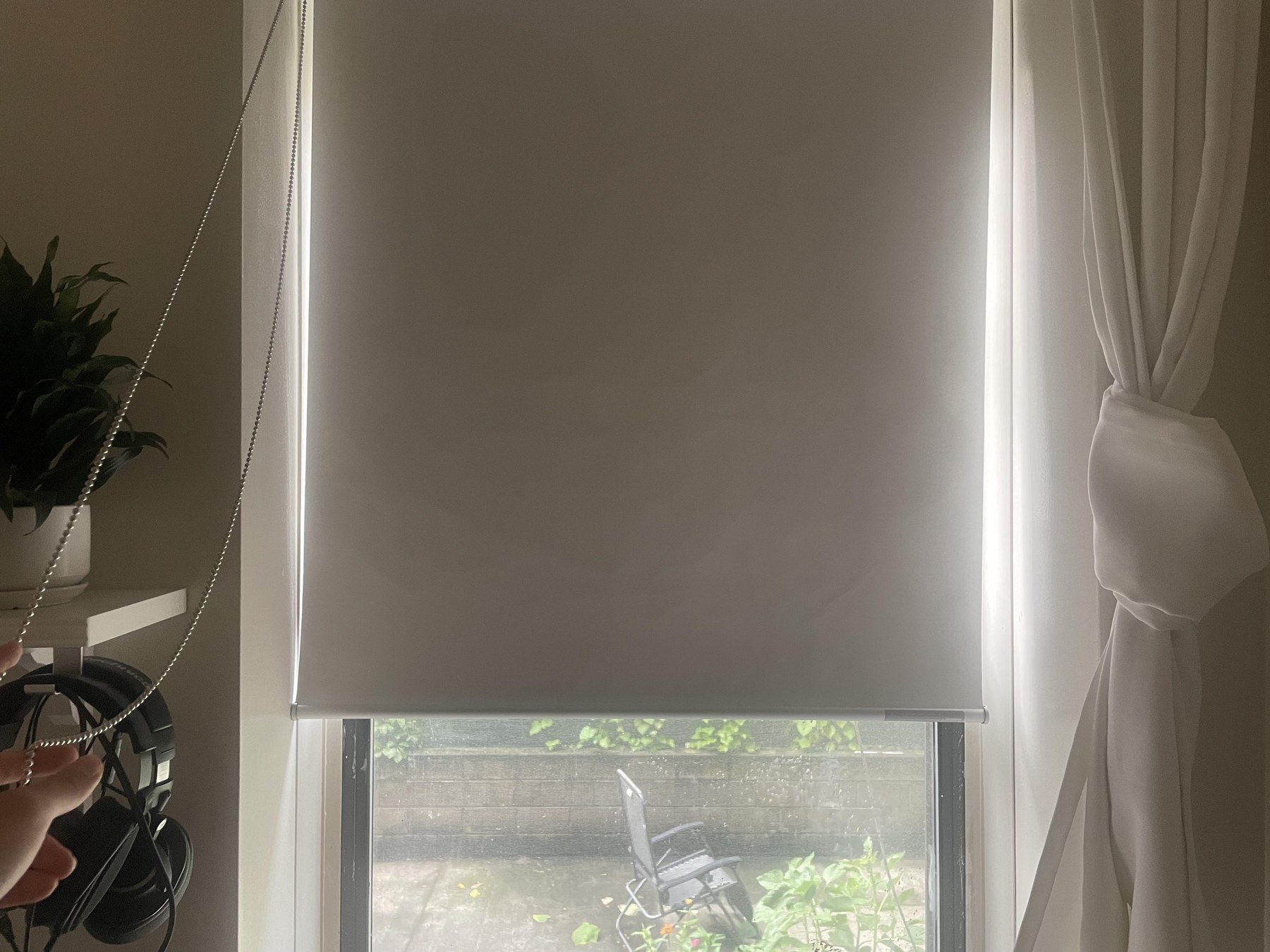
This is often called telescoping: the roll travels sideways as it winds. A roller tube that is not level, fabric that is not square to the tube, or friction at one edge can contribute. A shade that drifts a little on the first cycle after installation may have a placement issue; a shade that begins walking after months of use may have a new obstruction, loose bracket, or change in the fabric edge.
Look for contact marks on the side of the fabric, fascia, window trim, crank, or handle. A small rub point can push the fabric sideways over repeated cycles. Also inspect whether the bottom hem sits level when the shade is halfway down. A fabric edge that already looks wavy or fuzzy may be deteriorating rather than simply misaligned. Our article on fraying roller-shade fabric helps distinguish abrasion from an uneven roll.
If the headrail is visibly sloped, the brackets may not be level, the fasteners may have loosened, or the window frame may be out of square. Compare the headrail with a small level and look at the mounting surface. A shade can hang at an angle even when the bottom rail is straight relative to its fabric.
Do not compensate for a sloping bracket by bending the tube or forcing the fabric sideways. First check whether each bracket is fully seated and fastened as the installation guide specifies. If a screw has pulled out of drywall or thin trim, stop using the shade until the mount is repaired with an appropriate anchor. World Wide Shades can help identify the right bracket configuration before you patch holes or change the mount.
Inspect the end caps and fabric attachment at the bottom bar. If one end cap is missing, loose, or caught on the sill, the rail may not track freely. Check whether a cord, chain, or item on the sill is obstructing its path. On a pair of adjacent shades, compare their full-down positions; motors or lift limits may need model-specific adjustment.
If the shade is new and the hem is noticeably diagonal before it is raised, contact the supplier with the order number and photos. A manufacturing issue should not be “corrected” by cutting the hem, shifting the fabric on the tube, or altering the end cap.
Check the brackets and window opening
With the shade fully raised and the control released, check whether the headrail moves inside the brackets. A bracket that twists under ordinary operation may be loose or mounted into a weak surface. Do not remove a spring-loaded, clutch, or motor end unless the model’s directions explain how to release it safely.
Look around the entire travel path for:
- A window crank, latch, or handle that contacts the tube or fabric.
- A screw head, decorative trim, or protruding nail that touches one edge.
- A sill that is not level or has an object catching the bottom rail.
- A fascia or valance that has shifted inward on one side.
- Dust, a loose thread, or a damaged edge wound into the roll.
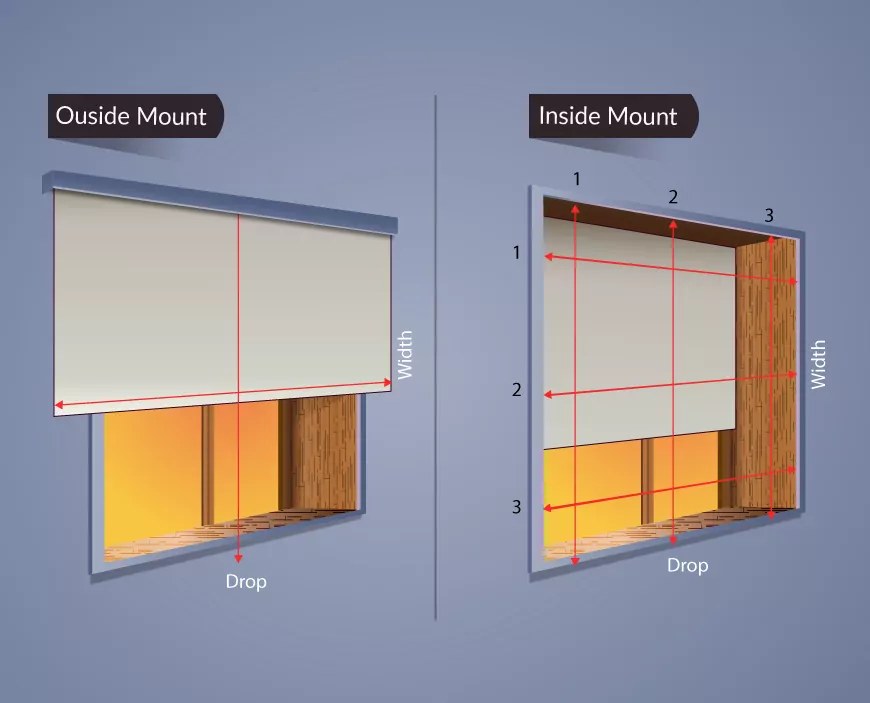
Compare the shade width with the clear opening. An inside-mounted shade that is pressed tightly against a tapered jamb may rub at the narrow end. A deep or uneven recess can make a bracket sit differently from one side to the other. For a tight opening, read inside-mount depth and clearance guidance. If a valance is part of the assembly, our roller-shade valance guide explains what to check around the cover.
If the installation instructions allow bracket repositioning, first mark the current locations and support the shade before loosening anything. Recheck the tube with a level, keep both brackets at the same height, and secure fasteners into the material specified by the manufacturer. Some systems require a precise bracket orientation or minimum edge clearance. When in doubt, ask the product maker or an installer instead of improvising.
Avoid sticking coins, folded paper, masking tape, or improvised shims onto the roller. These additions can unbalance the roll, transfer adhesive to the fabric, or make a temporary improvement that disappears after a few cycles. Do not apply lubricant to the clutch or tube unless the manual identifies a service point; oils can stain textile and screen fabrics.
For an illustration of the sideways “telescoping” symptom, see MyDirectBlinds’ troubleshooting guide. It can help name the problem, but its repair steps should not replace the instructions for your shade’s actual bracket and drive.
When the fabric itself is the problem
Roller fabrics are cut and finished differently. A bent edge, a frayed selvedge, a crease in the roll, or uneven tension may keep the fabric from winding square. Examine the fabric with the shade lowered enough to see both full edges. If it contacts the window only on one side, determine whether the fabric is misaligned on the tube or the window opening is forcing it off center.
Do not trim a frayed or wavy edge while it is attached to the shade. Cutting can make an edge less stable, remove a factory finish, or change the width enough to expose a gap. Different fabrics also have different cleaning limits. Follow the maker’s care guide and test any approved cleaner on an inconspicuous area. The best roller-shade fabrics guide explains how weave, weight, and openness affect use, while our fabric-fraying article covers damage prevention.
World Wide Shades can help decide whether a fabric panel, operating mechanism, or complete shade is the sensible repair. Send the shade width, approximate drop, mount type, fabric name if known, and a photo through contact or call (844) 674-2716. If the fabric is no longer available, a coordinated replacement may be simpler than trying to match an aged panel. World Wide Shades can also compare swatches against the existing room finishes.
Repair, service, or replace?
Service is worth exploring when the fabric is sound and the problem is limited to a loose bracket, failed chain clutch, or motor limit that the manufacturer can adjust. Keep the order label, purchase date, and any warranty paperwork. A repair can be economical for a standard-size shade with a replaceable drive; custom-sized parts may have different availability.
Replacement makes more sense when the fabric has a permanent diagonal crease, a torn edge, repeated contact damage, or a tube that is bent. It is also a chance to choose a headrail that clears a crank or frame that the existing design cannot avoid. Compare the cost of a component, service visit, and new shade rather than assuming one is always cheaper.
When young children are present, inspect all window treatments, not only the shade with the alignment problem. The U.S. Consumer Product Safety Commission identifies cordless coverings as the safest option in homes with young children and recommends keeping accessible cords away from cribs, beds, and furniture (CPSC window-covering safety). World Wide Shades can help you select a safe operating style and confirm the mounting plan. Use the builder to configure a replacement or browse fabric swatches to compare materials.
Frequently asked questions
Common causes include a tube that is not level, fabric that is not square on the roller, an edge rubbing on trim or hardware, a loose bracket, or a bent tube. Observe a short cycle and check for contact marks before changing any part.
Do not use tape or improvised weights unless the shade manufacturer specifically instructs you to. Added thickness can change the roll balance, adhesive may transfer to the fabric, and the shade can drift again after a few cycles.
Stop if the fabric is bunching, rubbing, or approaching the bracket. Continued operation may crease or fray the edge and turn a small alignment issue into fabric damage.
Travel limits control where a motor stops; they generally do not correct a headrail that is physically out of level or fabric that is winding crookedly. Follow the motor maker’s reset procedure only when the shade is mounted and moving freely.
No. Check that the bar is not caught on the sill and that both end caps are present. If the fabric edge is diagonal, torn, or permanently creased, replacement may be more practical than service.
Provide the shade’s width and drop, inside- or outside-mount type, control type, product label if available, and a straight-on photo showing the headrail, brackets, and fabric edges. World Wide Shades can use those details to suggest the next safe step.