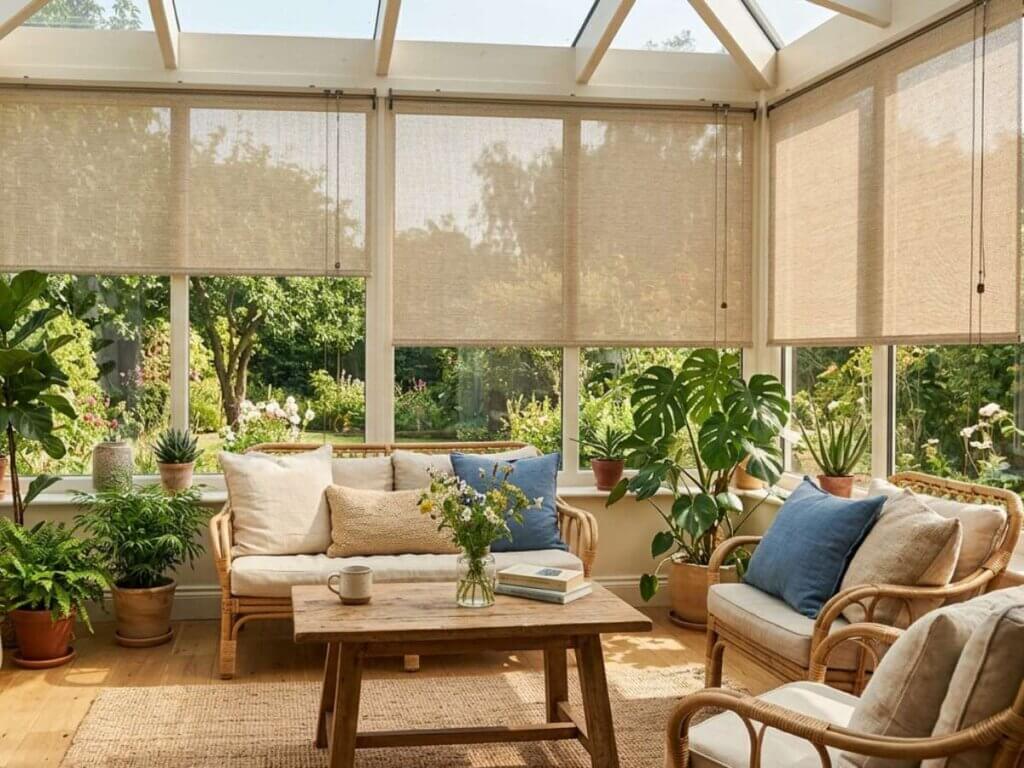
A sunroom can be the brightest, most comfortable room in a house—or the room everyone avoids between June and September. Sunroom roller shades make the difference by controlling solar heat, reducing eye-level glare, and protecting floors and furniture from ultraviolet exposure without erasing the view.
The best choice is rarely “the darkest shade available.” Start with the glass area, window orientation, ventilation, and the room's primary use. A breakfast room may need view-through glare control; a south-facing lounge may need stronger heat management; a projector-equipped sunroom may need blackout. Build a sunroom shade plan with World Wide Shades and configure each elevation for its actual light.
Why sunrooms overheat so quickly
Sunlight passing through a large area of glass can raise indoor temperature quickly because the room gains heat faster than it can release it. West-facing glass is especially challenging in late afternoon, when low-angle rays enter beneath exterior overhangs. South-facing glass can create a longer midday load, particularly in winter gardens with many panes.
Interior shades work best when they are lowered before the room becomes hot. Once furniture, flooring, and air inside the room absorb heat, lowering a shade cannot instantly reverse the temperature. Pair shades with working exhaust fans, operable windows where appropriate, and HVAC that is sized for the glass exposure.
For orientation-specific ideas, read best shades for south-facing windows and energy-efficient window shades. If the room is consistently uncomfortable, contact World Wide Shades with its approximate glass area and direction.
Solar shades reduce glare and solar gain while preserving a view, but they do not create a dark room. Blackout roller shades create darkness but may remove the visual connection that makes a sunroom appealing. Many homeowners use solar shades for daily comfort and add a second layer only where stronger privacy or darkness is needed.
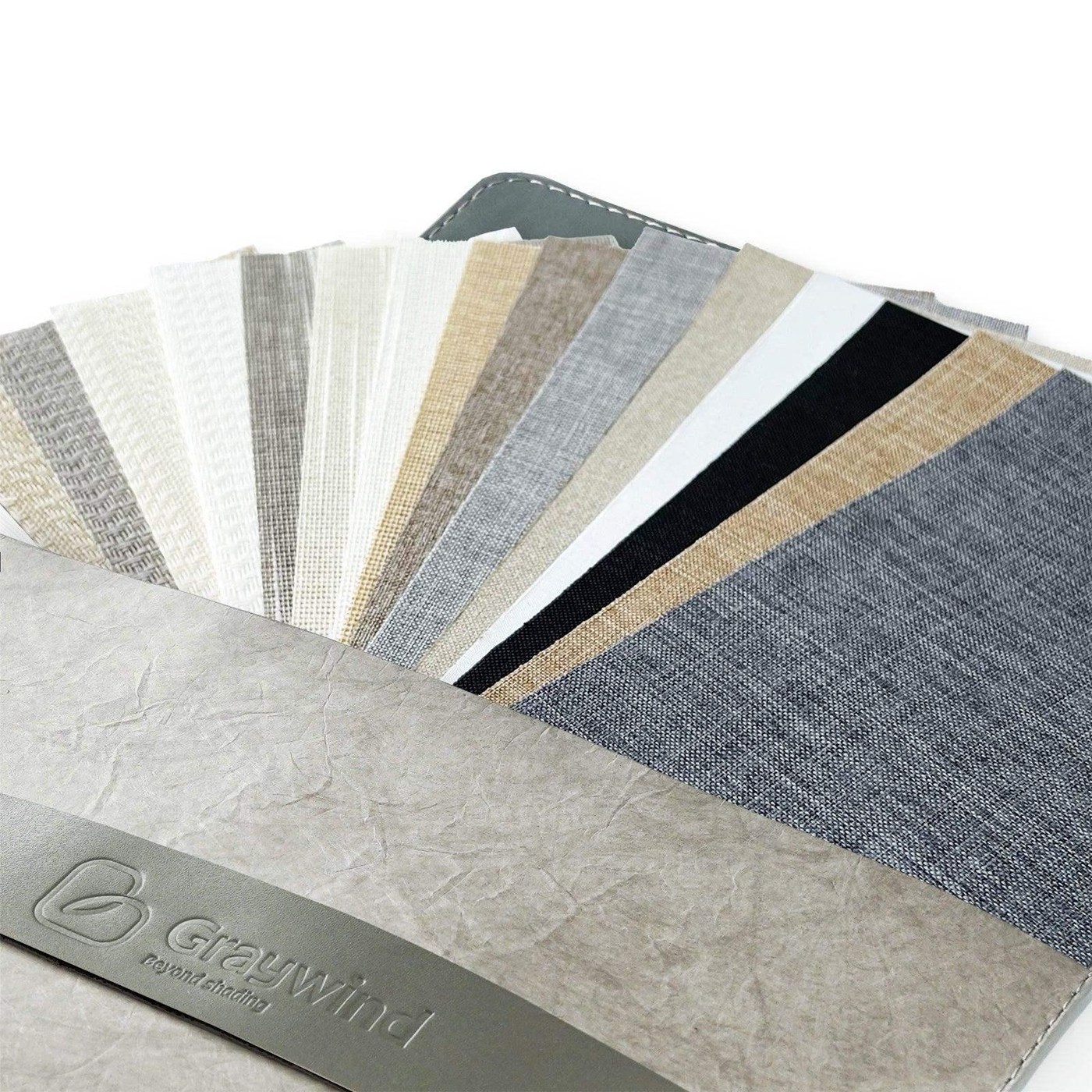
That distinction matters when comparing samples. Test a shade with the sun behind it, not only under showroom lighting. Order swatches from World Wide Shades and hold them against the glass during the hottest part of the day.
Understand openness factor and fabric color
Openness factor describes the approximate percentage of open area in a solar screen weave. A 1% fabric has a tighter weave, a 3% fabric balances visibility and glare control, and a 5% fabric admits more daylight and preserves a brighter view. The exact heat and glare performance also depends on glass, interior color, exterior shading, and fabric color.
For a south- or west-facing sunroom, 1% to 3% is a practical starting range. Choose 1% when glare is severe or seating faces the windows. Choose 3% when you want a clear view and moderate glare control. A 5% fabric can work on a north-facing wall or where the windows already have exterior shade.
Many solar fabrics block roughly 95% to 99% of UV radiation, depending on weave and product construction. That can slow fading, but it does not make furnishings fade-proof. World Wide Shades can help compare colors and openness factors across the same fabric family.
Dark solar fabrics often provide a sharper outward view and can reduce perceived glare, while light fabrics reflect more visible light into the room. A light-colored backing or light-facing interior can keep the room feeling brighter, but the best result depends on the window's orientation and the shade's openness.
Do not choose only by a small color chip. Compare a full swatch against white trim, flooring, and upholstery. For palette guidance, see window shades color guide. World Wide Shades can coordinate different openness factors in one family so the elevations still look consistent.
Pick the right roller shade type
Solar screen shades are the best all-around choice when the sunroom's priorities are heat, glare, and a view. They roll into a small headrail, work with large expanses of glass, and can be motorized so they lower automatically during peak sun. A 3% openness solar shade is often a good first sample for a multipurpose room.
A custom solar shade for a standard 36-by-60-inch opening may cost about $120 to $350, depending on fabric and hardware. Large widths, cassettes, side channels, and motors raise the price. Use the World Wide Shades builder for a configuration-based estimate rather than relying on a generic per-window number.
Light-filtering roller shades diffuse sun into a softer glow. They are useful when the sunroom is used for meals, plants, or reading and the main goal is to reduce harsh contrast. They provide less view-through clarity than solar mesh and may feel warmer on a hot west wall, so sample them before committing to every window.
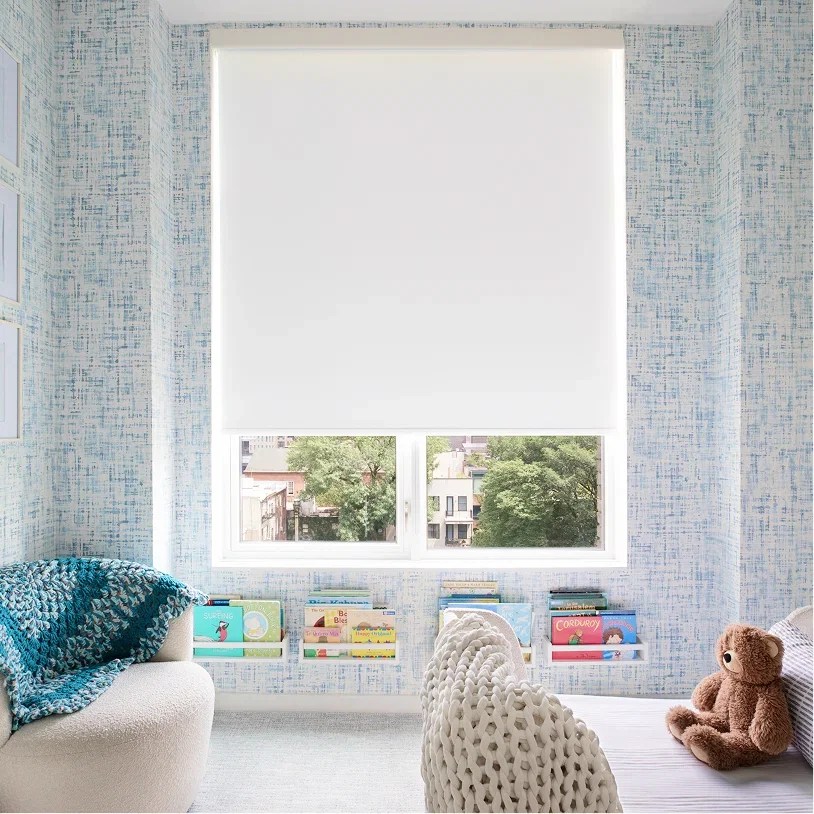
Blackout is useful when the sunroom is also a guest suite, nursery, or media area. Add side channels or a cassette when edge light matters. A blackout shade on every pane can make the room feel closed, so consider using blackout only on the windows facing the strongest sun and solar shades on the remaining elevations.
For a detailed light-control comparison, read blackout curtains vs. blackout shades and light-filtering shades guide. Contact World Wide Shades if you want two fabrics to operate as a coordinated system.
Mounting and ventilation details
Inside mounting preserves trim and lets multiple shades align closely across a bank of windows. Confirm recess depth, handle clearance, and whether the rolled fabric will interfere with the window's operation. For casements or awning windows, leave enough space for the sash to open without striking the headrail.
Outside mounting extends the fabric beyond the glass and reduces side light gaps. Plan roughly 2 to 3 inches of overlap on each side when trim and wall space allow it. On a tall sunroom bank, align headrails at one height for a calmer sightline. Use a cassette when the top edge is visible from the rest of the home.
Do not block a required ventilation window or emergency egress. The shade should move freely without resting against a crank, latch, or insect screen. The how to install roller shades guide explains basic bracket planning; for a custom glass wall, ask World Wide Shades to review the layout.
Motorization and heat-management schedules
Motorized shades are especially useful in sunrooms because the critical adjustment often happens when nobody is in the room. A light sensor or schedule can lower shades before peak heat and raise them when the sun moves away. Battery motors commonly add $180 to $350 per window; hardwired systems can add $300 to $600 before electrical labor.
Create three simple scenes: “morning,” which keeps the east wall partially open; “afternoon,” which lowers the west and south walls; and “evening,” which closes privacy shades. See smart home motorized shades setup for automation basics. World Wide Shades can help decide whether the entire room needs motors or only the hard-to-reach windows.
For a finished plan, start the World Wide Shades builder, then request World Wide Shades swatches before ordering. Call (844) 674-2716 if you have a wide opening, a vaulted ceiling, or a motorization question.
A sunroom selection checklist
Before you order, record:
- Window orientation and the hours when glare is worst.
- Glass dimensions, total glass area, and whether the windows open.
- Desired view-through level: 1%, 3%, or 5% openness for solar fabric.
- Whether the room needs heat and glare control, darkness, privacy, or all three.
- Recess depth, handle location, trim width, and ventilation requirements.
- Which windows are reachable and which need motorization.
- Fabrics and colors viewed in direct sun, not only in a showroom.
When you're ready, contact World Wide Shades for a room-specific plan or call (844) 674-2716. The right specification can turn a seasonal problem room into a comfortable daily living space.
Frequently asked questions
Solar screen roller shades with a 1% to 3% openness factor are usually the best starting point for a hot sunroom. They reduce glare and solar gain while preserving the view. Performance also depends on glass, shade color, exterior shading, and whether shades are lowered before the room heats up.
They can reduce solar heat and glare, but no interior shade eliminates all heat gain through glass. Solar fabrics with tighter weaves generally provide stronger control, and automated schedules can lower shades before peak sun. Ventilation, glass performance, and exterior overhangs also affect results.
Choose 1% for severe glare, strong west or south exposure, or seating that faces the windows. Choose 5% when preserving a brighter view is more important and the windows have less direct sun. A 3% fabric is the common compromise. Order World Wide Shades swatches to compare them in place.
A standard custom solar roller shade may cost about $120 to $350 per opening. Wide shades, cassettes, side channels, and motorization raise the total; battery motorization often adds $180 to $350 per window. Use the World Wide Shades builder for a quote tied to your exact measurements.
Motorization is valuable when windows are tall, numerous, or difficult to reach and when heat control depends on timing. A schedule can lower the west-facing shades in the afternoon and reopen them after sunset. Manual shades may be more economical for reachable windows with simple exposure.
Many solar screen fabrics block roughly 95% to 99% of UV, depending on construction, but protection is not absolute. Lowering shades during peak exposure helps slow fading of rugs, wood, upholstery, and artwork. Combine shades with UV-rated glazing or window film when valuable furnishings are at risk.