Transitional rooms work because they balance two instincts: the comfort and proportion of traditional design with the clean restraint of modern spaces. Window treatments are where that balance can succeed or fail. A heavy patterned drape may make a room feel formal, while a shiny bare roller can make it feel unfinished. Transitional window shades create the middle ground with tailored lines, quiet texture, and layers that change with the light.
World Wide Shades designs custom combinations for living rooms, bedrooms, dining rooms, and open-plan spaces. Start with the World Wide Shades builder, order World Wide Shades swatches, or contact World Wide Shades for a plan that accounts for trim, furniture, privacy, and sun exposure. This guide explains the most reliable shade pairings, mounting proportions, color strategy, and practical costs.
What makes a window treatment transitional?
A transitional window treatment should look intentional but not ornate. It usually has a simple silhouette, a warm or balanced neutral, and enough texture to keep a large glass wall from reading as flat. The shade should support the room instead of becoming a period statement.
A useful formula is one tailored base layer plus one softer optional layer:
- Light-filtering roller plus lined drapery for everyday flexibility.
- Solar roller plus decorative side panels for glare control and softness.
- Woven wood shade plus a simple fabric liner for texture and privacy.
- Room-darkening roller plus a lighter daytime shade in a bedroom.
The U.S. Department of Energy’s window covering guidance explains that coverings can influence heat, glare, and privacy. In a transitional home, those performance benefits can be hidden inside a calm layered composition. World Wide Shades can show fabric and liner options through swatches before you choose the final combination.
The best base shades for transitional rooms
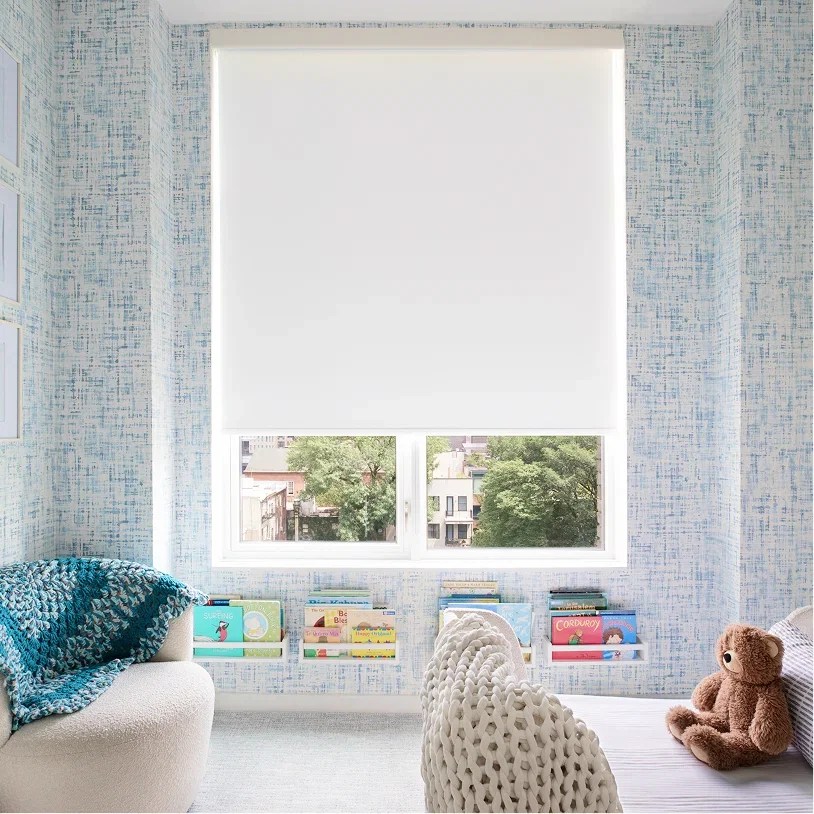
A matte linen-look roller shade is a dependable transitional starting point. It has the clean geometry of a modern roller but enough weave to sit comfortably beside wood furniture, upholstered chairs, and classic molding. Choose light filtering in living areas, room darkening in bedrooms, and a solar screen where glare or views dominate.
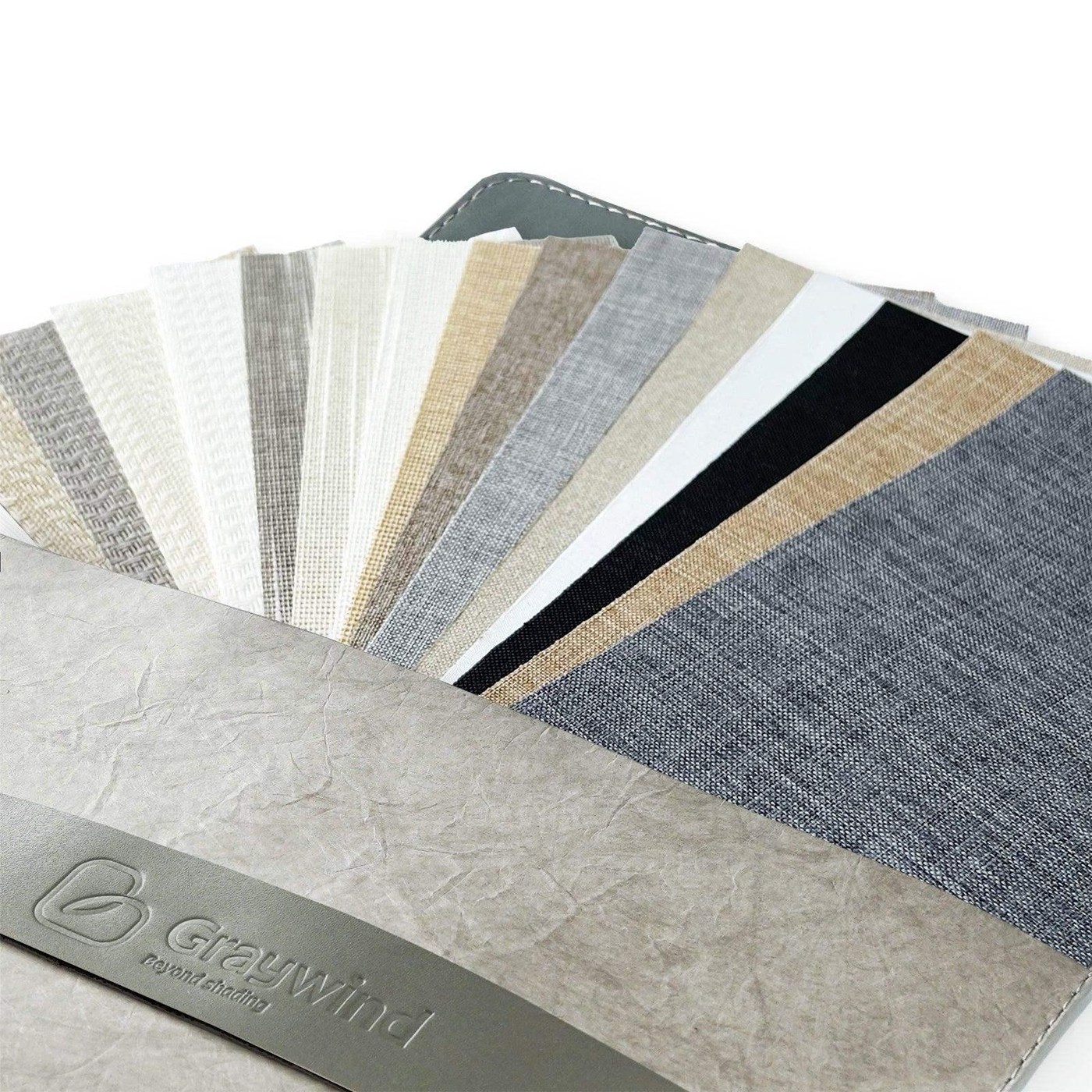
For color, try warm white, mushroom, oatmeal, taupe, or soft stone. A fabric that is one or two values away from the wall can make the window look finished without drawing a hard rectangle. Compare roller construction in roller shades versus roman shades and use the World Wide Shades builder to test fabric families.
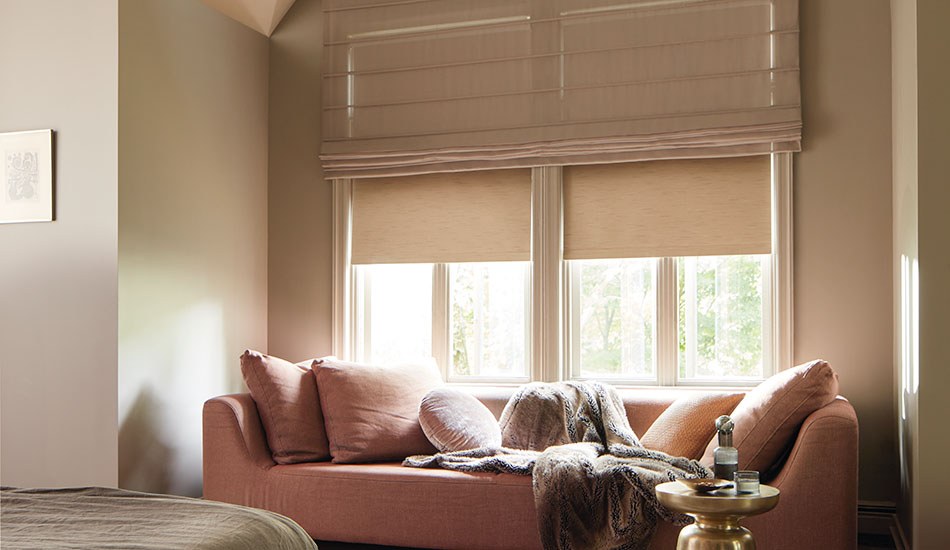
A simple flat or front-fold roman shade introduces gentle horizontal lines without the decorative complexity of a heavily patterned treatment. Use a solid or low-contrast texture, and avoid excessive trim if the room already has nailhead, carved wood, or detailed upholstery. Romans work especially well in dining rooms, sitting rooms, and primary bedrooms.
A roman shade can be the base layer on its own, or it can sit inside a larger drapery frame. If the window is near a cooking area, confirm that fabric placement is away from heat and splashing. The best fabrics for roller shades guide also offers useful comparisons for cleanability and durability.
Woven wood shades add depth through bamboo, grass, reed, or wood fibers. To keep the look transitional instead of rustic, choose a tight weave, a restrained stain, and a clean edge. Add a privacy or blackout liner where the room faces a street or neighboring home. Our woven wood shades guide explains weave density, liners, and color variation.
World Wide Shades can coordinate a woven shade with drapery or a nearby roller so the windows feel related. Order swatches and view them at both noon and dusk; natural fiber colors change noticeably as the light shifts.
How to layer without making a room look busy
Decide what the shade must do before choosing the decorative layer. A solar shade handles glare and preserves a view. A light-filtering shade diffuses daylight and adds daytime privacy. A room-darkening shade supports sleep and media viewing. Curtains may improve softness and privacy, but they should not be expected to solve a poorly sized shade gap.
For a balanced transitional installation, hang panels close to the ceiling or just above the frame and let them break lightly at the floor. Extend the rod 6 to 12 inches beyond each window side when wall space allows so the glass remains visible when the panels are open. Neutral linen blends, subtle herringbone, and low-contrast stripes add softness without competing with the shade.
A layered look becomes cohesive when one characteristic repeats: the shade undertone, the drapery hardware finish, the woven texture, or the line of the headrail. Do not match every textile exactly. Instead, let a warm taupe shade echo the sofa, rug border, or wood stain. Our window shades color guide covers how undertones behave beside paint and trim.
If you want help balancing pattern and texture, contact World Wide Shades or call (844) 674-2716. A consultation can prevent ordering five windows of a fabric that looks too cool once it is installed.
Mounting and proportions that look custom
Inside mounts preserve architectural trim and create a crisp, integrated look. They require a usable recess and may leave a small light gap at the sides. Outside mounts cover more of the frame, can make a window appear larger, and allow more control over edge light. As a general planning range, an outside shade often extends 2 to 4 inches on each side and 3 to 6 inches above the frame, subject to trim, handles, and the manufacturer’s hardware.
Split very wide windows into multiple units rather than forcing one heavy roll. A 96-inch opening might be divided into two 48-inch shades, but exact limits depend on fabric weight, tube diameter, and motor selection. For doors and narrow sidelights, see roller shades for French doors. For difficult architectural openings, World Wide Shades can recommend a cassette, fascia, or separate shade arrangement.
Use the builder to configure the basics, then contact the team for an opening-by-opening review. World Wide Shades can also help coordinate a layered look in a new build; see custom shades for new construction.
Room-by-room transitional combinations
In a living room, pair a 3% to 5% solar roller with stationary linen side panels when glare is the main issue. In a bedroom, use a room-darkening roller with a relaxed roman or lined drapery layer. In a dining room, a woven wood shade with a privacy liner adds texture while keeping the table comfortable in evening light.
In an open kitchen and family room, repeat the base roller fabric across both zones and vary the soft layer only where needed. For a rental apartment, a cordless inside-mount roller can deliver the look with minimal visual impact; our roller shades for rental apartments guide discusses removable and low-commitment approaches. If the room faces strong afternoon sun, read best shades for south-facing windows.
Motorization and care
Motorized shades fit transitional rooms when the motor and cassette are quiet and visually discreet. Use them for tall windows, high transoms, or a group of windows that should close together at sunset. Rechargeable systems may add roughly $100 to $250 per shade over manual hardware; hardwired power and smart integration can increase the project range. See smart home motorized shades setup and motorized shades with Alexa and Google Home.
Dust shades with a soft brush or low-suction attachment. Blot spots rather than rubbing textured fabric. Keep drapery from dragging on a heater or blocking a shade’s bottom rail. With correct installation and care, custom shades commonly serve 8 to 15 years, with fabric and lift components determining the exact life.
A five-window transitional project might budget $900 to $2,700 for manual rollers or $1,800 to $4,800 for motorized units, before unusual sizes and drapery. For a precise plan, use World Wide Shades swatches, configure in the builder, and call (844) 674-2716.
Frequently Asked Questions
Warm white, oatmeal, mushroom, soft taupe, and pale stone are reliable because they bridge classic woods and modern finishes. Choose the undertone after comparing a physical sample beside your wall and upholstery.
Inside mounts feel integrated when the recess is deep and square. Outside mounts provide better edge coverage and can make a small window look larger. The right choice depends on trim, handles, and the desired amount of light control.
Yes. A roller can provide the functional layer for glare, privacy, or darkness while curtains add softness and visual framing. Use a matte, quiet shade fabric so the two layers complement rather than compete.
They can be either. A tight, neutral weave with a simple edge reads transitional; a heavily rustic weave, decorative trim, or strong contrast pushes the look more casual or traditional.
World Wide Shades can coordinate shade fabric, liner, hardware, and drapery proportions across different windows. Start with World Wide Shades swatches, use the builder, or contact the team.