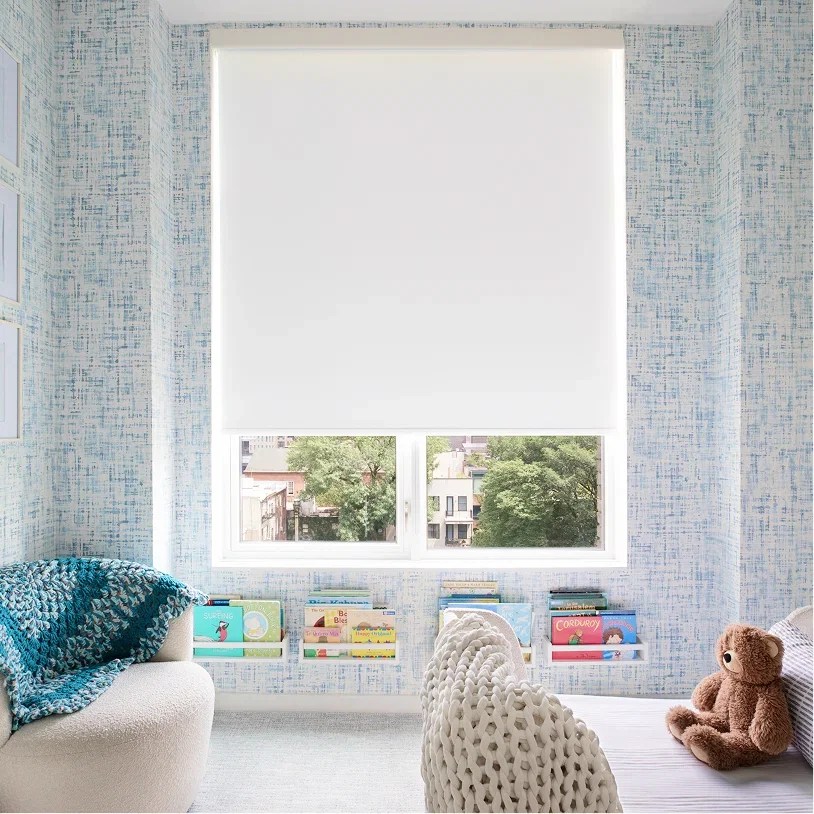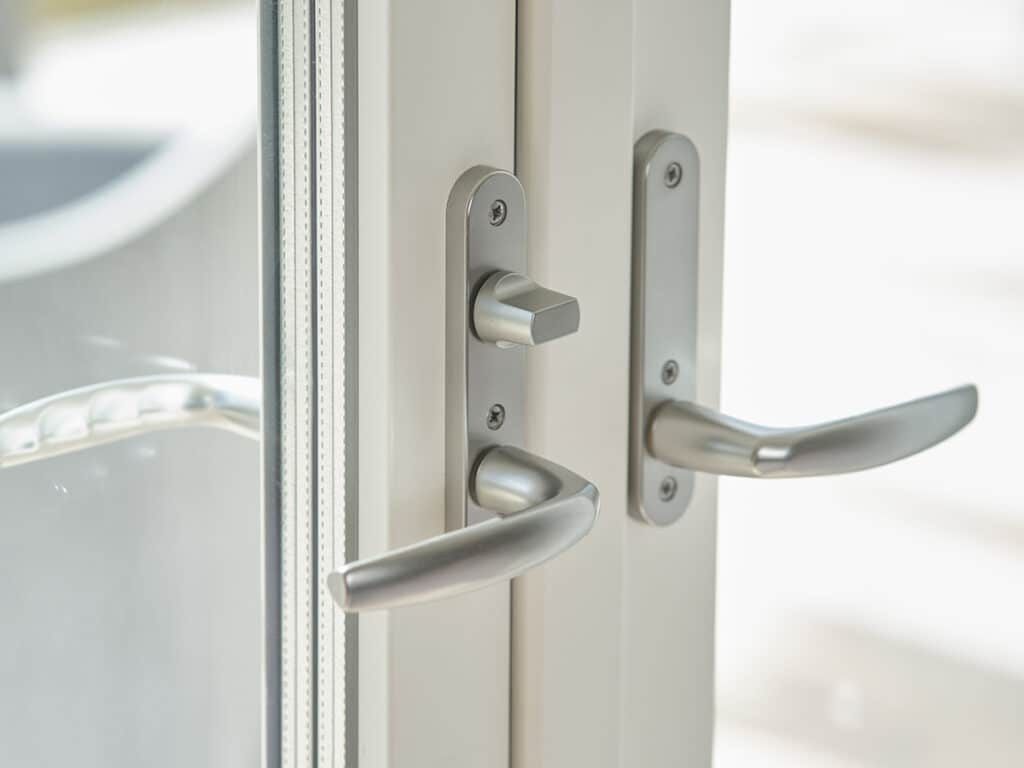
Hardwired motorized shades can be an excellent choice for large windows, new construction, and rooms where changing batteries would be difficult. They also require more planning than battery-powered shades. The shade, power supply, wire route, control system, and finished trim all have to work together before drywall or millwork hides the wiring.
This guide covers the decisions that matter: low-voltage power, transformer location, home-run versus daisy-chain layouts, conduit, control wiring, access, electrician coordination, and costs. Electrical work should be completed by a qualified professional in accordance with local code. World Wide Shades can help create a shade schedule and wiring brief; start with the online builder before your electrical rough-in.
What “hardwired” means
A hardwired shade receives continuous power through a concealed cable rather than relying on a replaceable battery. Most shade motors use low-voltage DC power, commonly 12V or 24V, supplied by a transformer or power distribution panel. The motor does not normally connect directly to household line voltage at the window.
The visible result is a cleaner headrail with no battery compartment and no routine charging. The tradeoff is that the cable must reach the motor, the power supply needs a serviceable location, and the installation has to be coordinated with framing, insulation, trim, and control wiring.
Ask World Wide Shades to confirm the motor voltage, amperage, connector, maximum cable length, and approved power supply before an electrician buys materials. Use /contact to request the technical information.
When hardwired power makes sense
Hardwiring is particularly useful for shades that are wide, heavy, high, or cycled many times per day. A 12-foot picture window, a two-story foyer, a bank of 10 shades, or a commercial conference room can make battery access impractical. It is also attractive when the goal is a minimal headrail with no visible charging port.
Battery motors may be the better value for a finished home, a rental, or a small number of ordinary windows. The motorized versus cordless shades comparison can help frame the convenience and cost tradeoff. World Wide Shades will recommend hardwired power when the lifecycle benefit justifies the extra coordination, not simply because it sounds more advanced.
Plan the power architecture first
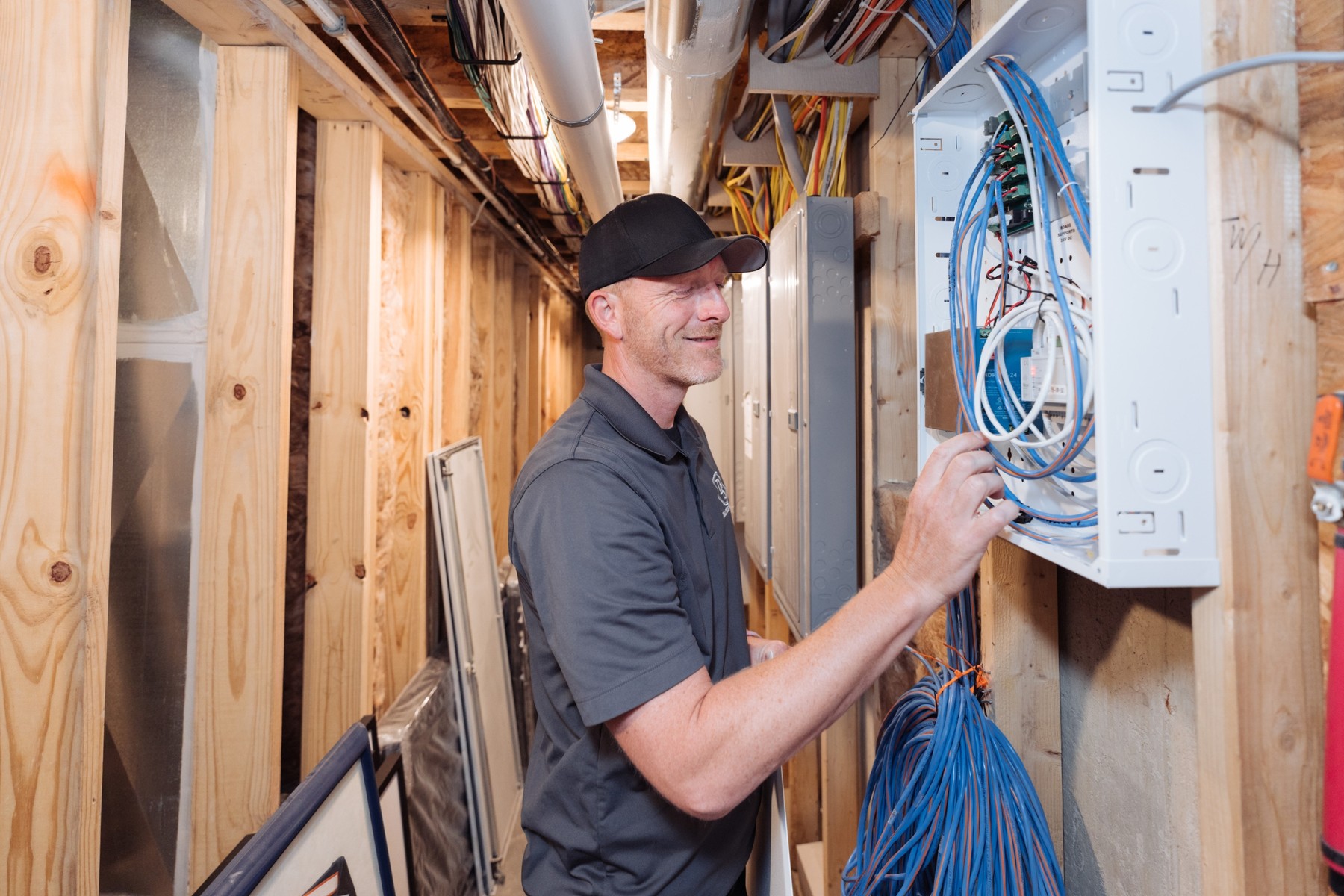
Before wiring, map each shade to a room, window, motor, and power zone. Decide whether power supplies will sit above the ceiling, in a nearby closet, inside a cabinet, or in an accessible electrical enclosure. The location should be hidden but serviceable; sealing a transformer behind drywall can turn a minor failure into a wall repair.
A small project may use one transformer per shade or one listed supply for a group. A larger project may use a central power panel with separate outputs. The correct architecture depends on motor draw, cable length, voltage drop, number of shades, and the manufacturer’s limits.
Do not mix power supplies or connectors from different systems without written confirmation. World Wide Shades can produce a window-by-window power schedule so the electrician knows which output feeds which motor. Call (844) 674-2716 for project planning.
Use low-voltage cable correctly
Low-voltage shade wiring is not the same as 120V branch-circuit wiring. The cable gauge, polarity, insulation rating, and route must match the motor system and local requirements. Long cable runs can produce voltage drop, which may cause a motor to move slowly, stop under load, or fail to reach its limits.
A 24V system often reduces current for the same power compared with 12V, but voltage alone does not determine the right choice. Ask for the manufacturer’s cable table and maximum distance. Label both ends of every cable, leave a service loop near the motor, and keep connectors accessible until final testing.
For general electrical safety guidance, review the National Fire Protection Association electrical safety resources. A licensed electrician should determine the permitted route, box, and power-supply installation for your jurisdiction.
Home-run versus daisy-chain layouts
A home-run layout brings an individual cable from each shade back to a central panel or junction location. It uses more cable but simplifies troubleshooting and makes each motor independently serviceable. This is often the best choice for a new build with open walls.
A daisy-chain or grouped layout connects multiple shades along a planned route. It can reduce cable usage and make a room look tidy, but one damaged connection may affect every shade downstream. Confirm whether the motors support the proposed topology; some systems require dedicated outputs or have a strict maximum number of motors per supply.
For five shades in one room, a labeled home-run may be worth the extra material cost. For two nearby windows with a readily accessible supply, grouped wiring may be efficient. World Wide Shades can compare both approaches against the final window schedule.
Pre-wire location details
For each window, identify the exact side of the headrail where the motor connector exits. Note whether the shade is inside mounted, outside mounted, recessed into a pocket, or hidden behind a valance. Leave enough space for the connector to bend without pinching against the bracket.
Mark the finished shade centerline and the finished ceiling or trim plane. A cable that emerges 3 inches below the intended headrail can be visible or impossible to connect. Coordinate with the framer, electrician, drywall contractor, and trim carpenter so the rough opening reflects the final treatment.
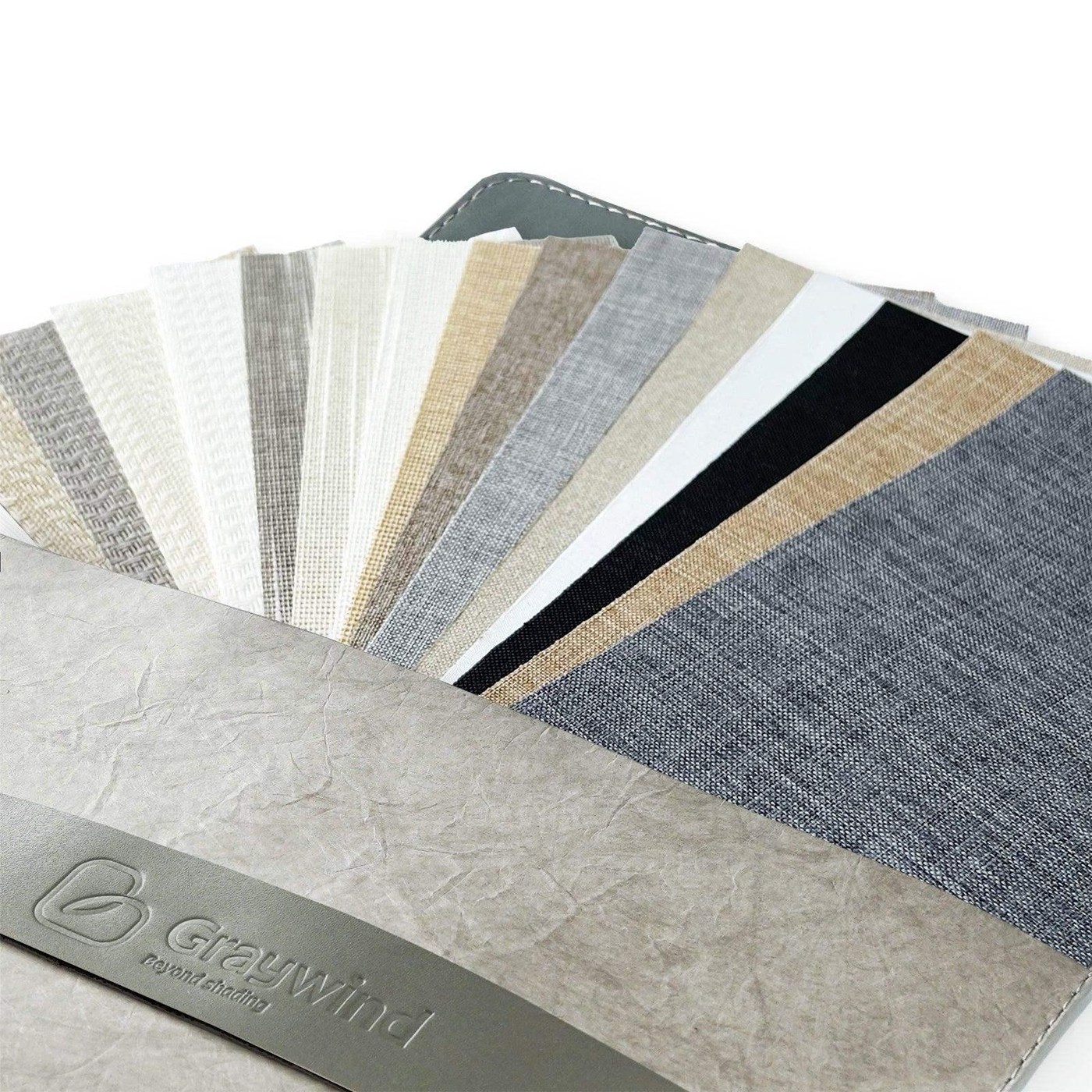
If the shade sits inside a pocket, provide a removable access panel or a serviceable headrail section. Do not cover the motor connector with permanent millwork. Browse /swatches while the design is still flexible so fabric and cassette choices can be included in the pocket dimensions.
Control and smart-home wiring
Hardwired power does not automatically mean hardwired controls. Many modern motors use radio, RF, Wi-Fi, Zigbee, Matter, or a proprietary bridge. A wall keypad may communicate wirelessly while the motor receives only low-voltage power. Other systems use a control bus or dry-contact interface.
Decide whether you want a local wall switch, remote, app, voice assistant, astronomical schedule, or all of the above. Place keypads where they are intuitive, such as near the room entrance, and avoid installing a switch that only controls one shade when the room needs a group scene.
Review motorized shades Alexa Google Home and smart home motorized shades setup for integration questions. World Wide Shades can verify compatibility before the electrician roughs in a control box.
A safe installation sequence
List each opening’s width, height, mount, fabric, cassette, motor, control zone, and power requirement. Include doors, arches, and skylights separately.
Obtain voltage, current, connector orientation, cable gauge, maximum distance, transformer requirements, and reset procedure. Save the document with the electrical plan.
The electrician runs approved cable, labels both ends, installs accessible boxes or panels, and leaves service loops. Photograph the open walls before insulation.
Protect the cable from fasteners and confirm the final shade pocket or fascia dimensions. The trim should not compress the connector or block the headrail.
Mount brackets, attach headrails, connect polarity correctly, and secure all connectors. Never energize an unknown circuit to “see what happens.”
Set upper and lower limits, pair remotes or hubs, label zones, and test group commands. Run each shade at least five full cycles and check for heat, noise, hesitation, or a loose connection.
For the finishing portion, see how to install roller shades. Contact World Wide Shades if the actual opening differs from the rough-in schedule.
Power failure and manual operation
Ask what happens when the home loses power. Some hardwired motors stop in place; others retain limits but require power to move. If a window is a required egress path or a frequently used door, confirm that a manual override or battery backup is available.
A central power panel may benefit from a labeled disconnect or a small backup supply, but the correct solution depends on the motor system. Do not connect a generic UPS without checking output compatibility. Keep the room usable even if the network, hub, or power supply is offline.
Cost expectations
Hardwired motorized shades often cost $350–$1,200 per window before electrical work, with large or specialty shades at the higher end. Electrical rough-in can add $500–$2,500 for a small home project, while a new-construction system with a central panel and many windows may require $2,000–$8,000 in electrical coordination and installation.
The final price depends on window size, motor load, cable paths, access, number of power zones, and whether walls are already finished. Compare the total project, not only the motor price. World Wide Shades can prepare a quote that separates shades, controls, power supplies, and installation; call (844) 674-2716 or request it through /contact.
For offices and conference rooms with many wired windows, compare the planning considerations in commercial roller shades for offices before choosing a control topology.
Common hardwired planning mistakes
A transformer or panel needs service access. Use a closet, cabinet, attic access, or removable panel that remains reachable.
Motor exits differ by model. A cable on the wrong side can be too short or visible after trim is installed.
Voltage and current ratings must match the motor and the number of connected shades. Use approved components.
Keep wiring separated and code-compliant. A qualified electrician should determine boxes, conduit, and cable paths.
The final headrail, fascia, and fabric roll need room to operate. Confirm dimensions before the pocket is closed.
FAQs about hardwired motorized shades
Many use 12V or 24V DC power from a listed transformer or distribution panel, but the exact voltage depends on the motor. Confirm the manufacturer’s specification before wiring.
Sometimes. The supply must have enough capacity for the connected motors, and the wiring topology, cable length, and maximum output count must follow the motor manufacturer’s instructions.
Often yes, when the motor or bridge supports the platform. Hardwired power only addresses the energy source; verify the radio, hub, Matter, or control-bus compatibility separately.
Place it in a concealed but accessible location such as a closet, cabinet, attic access area, or serviceable panel. Never bury it behind permanent drywall or fixed millwork.
They can be better for tall, wide, or heavily used windows because there is no routine charging. Rechargeable shades are usually simpler and less expensive for finished walls and smaller projects.
Start at the World Wide Shades online builder, compare fabrics in /swatches, and contact /contact for a window-by-window wiring brief. Call (844) 674-2716 before rough-in if you need motor specifications.