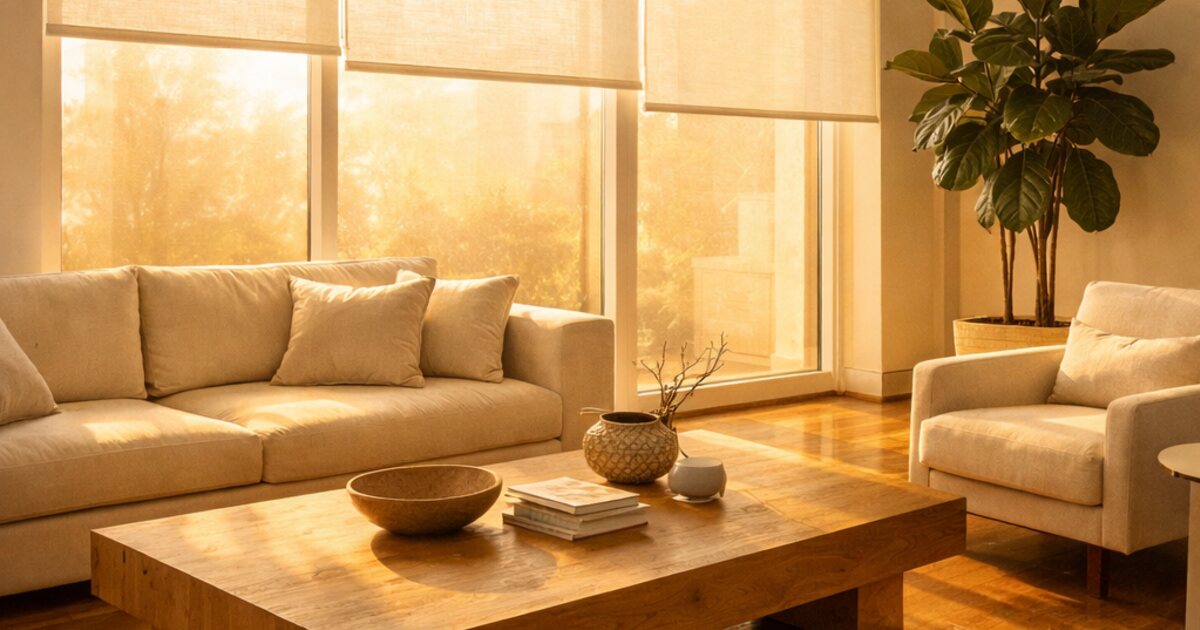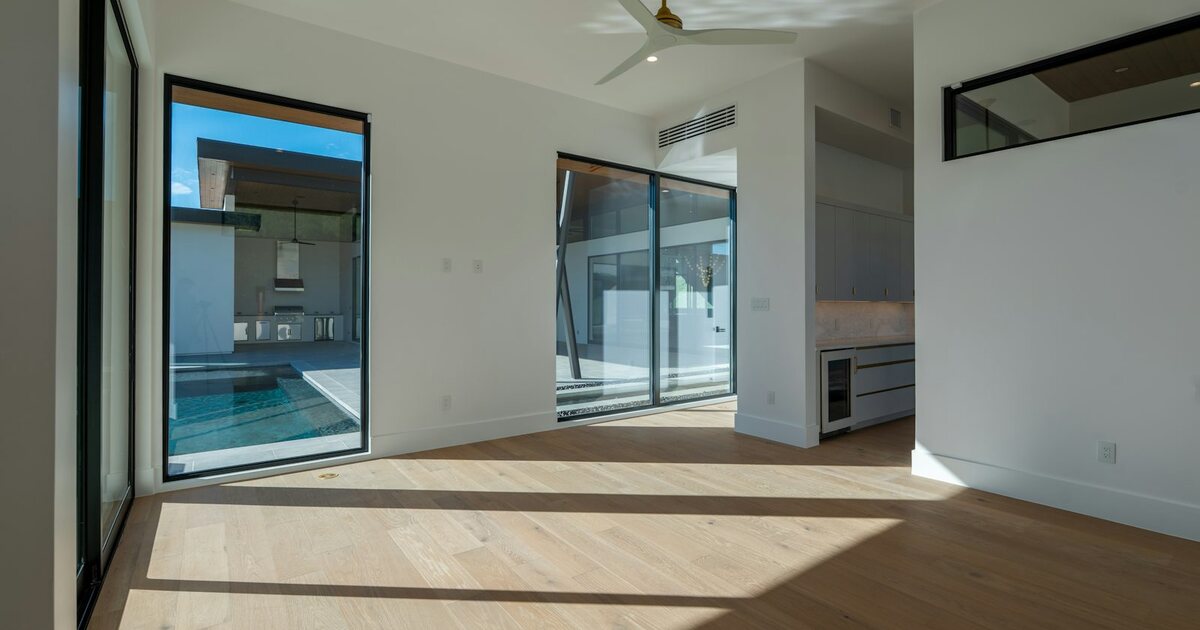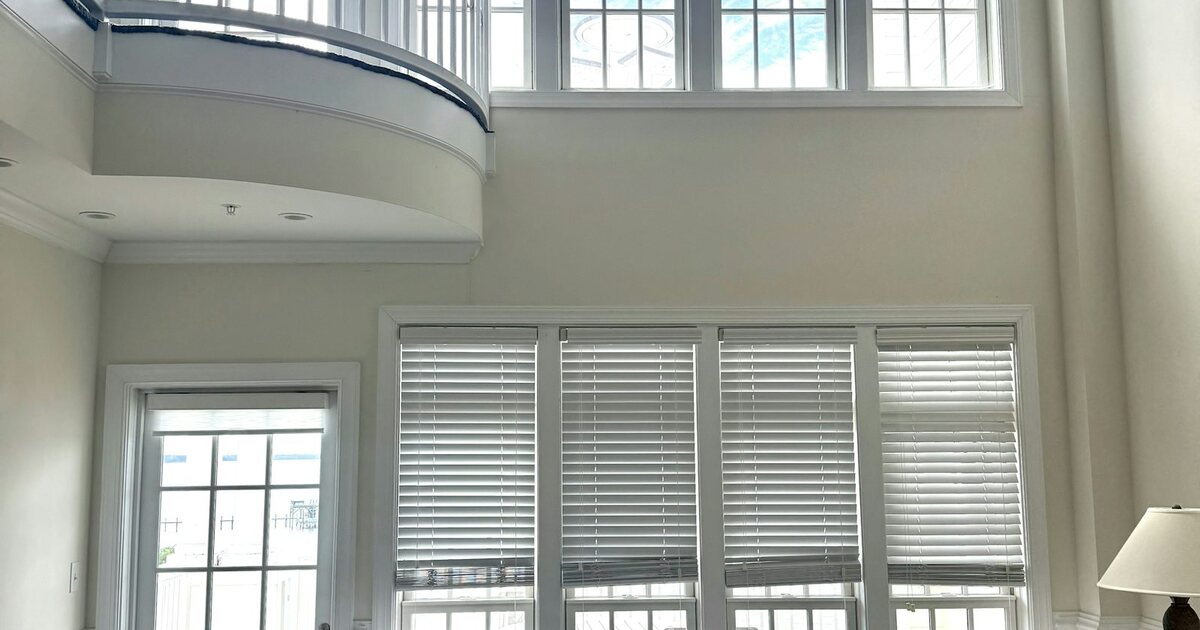
For Orlando homes, solar fabric is a strong choice where direct sunlight creates glare but you want to preserve a daytime view; light-filtering fabric suits shared rooms, and blackout fabric is usually best when bedroom darkness matters. Orlando International Airport's 1991–2020 normals show a July normal daily maximum of 33.4°C and summer rainfall totals of 204.4 mm in June, 189.5 mm in July, and 195.2 mm in August; those are outdoor climate measures, not an indoor fabric rating (NOAA's Orlando climate normals).
Last updated: 2026-11-25
| Rank and option | Best use | Main trade-off |
|---|---|---|
| 1. Solar roller shade | Bright rooms where glare control and a daytime view both matter | Not a dependable privacy layer after dark |
| 2. Light-filtering roller shade | Living and dining rooms with mixed daylight | Less privacy when the room lights are on |
| 3. Blackout roller shade | Bedrooms and media spaces | Edges may still admit light |
| 4. Motorized roller shade | Tall glass, hard-to-reach windows, and frequent adjustments | Needs a remote and a charging plan |
| 5. Outside-mounted roller shade | Shallow openings or a need for more perimeter coverage | Covers more trim and needs clearance around the frame |
Choose by the window rather than ordering one fabric for the entire home. A pool-facing room may need view-through during the day, while a street-facing bedroom may need more privacy at night. If your priority is keeping solar heat from reaching the glass, an exterior screen can be a better product than an interior shade; that distinction is covered below. For more background, compare shades for south-facing windows and the roller-shade fabric guide.
1. Solar fabric for direct sun and outdoor views
Solar fabric is the best starting point when the room gets direct sun and the outside view is part of why you like the window. The weave can reduce visual glare while preserving some view-through. Compare the published openness factor for the available fabrics instead of guessing from a product photo: a more open weave generally gives more view, while a denser one changes how much light and outside detail comes through.
Treat view-through and privacy as two separate questions. During the day, a solar shade may make the room harder to see from outside while leaving a view from inside. At night, indoor lighting can reverse that advantage. If a neighbor, walkway, or street is close to the glass, decide whether you need a second layer or a more opaque fabric for evening.
World Wide Shades carries more than 500 colors across 40-plus fabric families from Phifer, Mermet, Ferrari, Copaco, Senbesta, and Texstyle. Its product information includes a published openness factor and genuine fabric photo. Review those details in the World Wide Shades fabric library, then configure the selected opening in the builder and see live pricing there.
2. Light-filtering fabric for living and dining areas
Light-filtering fabric works well when you want a room to stay bright but would rather soften direct glare. In an Orlando living room, it can help maintain a relaxed daytime feel without making the window appear uncovered. It is often a better choice than solar fabric when the outside view is less important than a softer, more even look indoors.
The trade-off is after-dark visibility. Light-filtering fabric is not the same as blackout material, and an illuminated room may reveal shapes or movement. A quick evening check from outdoors can help you judge whether that level of privacy is acceptable. If it is not, compare a more opaque option for that opening rather than buying the same fabric as the kitchen or living room.
Consider how the room changes through the day. If a desk sits in direct sun, a solar fabric may be more appropriate on that window even if light-filtering fabric suits the rest of the room. The guide to roller shades for living rooms has more on balancing view, glare, and brightness across shared spaces.
3. Blackout fabric for bedrooms and media rooms
Choose blackout material if you want to limit light passing through the shade fabric. A bedroom with an east-facing window or a room used for daytime sleep may benefit more from blackout fabric than from a translucent screen. For media rooms, a darker panel can also reduce brightness that competes with a screen.
Blackout fabric does not automatically eliminate light at the edges. An inside mount sits within the opening and may leave side gaps. An outside mount can overlap the frame more, but it covers trim and requires a place to mount brackets. If complete darkness is essential, evaluate the frame, wall clearance, and any existing hardware before selecting a mounting style.
Humidity is relevant to where and how a product is used, not just to the city on the shipping label. The airport's summer precipitation normals do not tell you the moisture level beside a bathroom window or whether condensation forms on a particular pane. For a window exposed to repeated condensation, splashes, or steam, ask about fabric care and suitability before ordering rather than assuming every material should be used in a wet area.
4. Motorized operation for tall glass and daily adjustment
Motorization can be helpful when a window is hard to reach, when furniture blocks access, or when you adjust shades repeatedly as the sun moves. It is especially worth considering for tall glass or a series of windows that you want to open and close together. Start by choosing the opacity; motorization changes operation, not the light-control performance of the fabric.
World Wide Shades uses Automate motors by default. The motors are battery powered, so new wiring is not needed, and a remote is required. Somfy is an option only when you already have a Somfy remote you intend to use; confirm the remote model before ordering. Automate Pulse 2 adds app, voice, and schedule features for Automate motors, with the required remote still part of the setup.
The motor charger is not included. A USB-C charger can recharge the motor, or you can add the motor charger to the order. For automated rooms, sketch which windows should move together and which should stay independent. The guide to smart-home motorized shade setup can help you decide whether schedules, voice control, or a simple remote better matches your household.
5. Outside mounting for shallow depth or added coverage
Inside mounting gives a clean, recessed appearance, but only when the frame has enough depth. World Wide Shades requires at least 1.5 inches of inside depth and recommends 2.5 inches for a motorized shade. Measure the actual frame rather than assuming that windows in the same home have identical trim or clearance.
For an inside mount, measure width at the top, middle, and bottom, then use the narrowest value. Measure height on the left, center, and right, then use the tallest value. Enter the exact opening size in the builder. The factory makes its deductions, so do not subtract from your measurements.
An outside mount is often a better path when the opening is shallow or uneven. Plan 2–3 inches of overlap on each side and 3 inches above the opening, then check clearance around handles, molding, and nearby walls. More overlap can help cover the perimeter, but the fabric and brackets will sit over the trim. For a second opinion on window layouts, see custom shades for Miami waterfront condos, which discusses room and view priorities in another Florida residential setting.
When an exterior screen is better than an interior shade
If the main goal is to stop solar heat before it reaches the glass, an exterior solar screen or exterior-mounted shade may be the stronger option. The Department of Energy explains that intercepting direct sun before it reaches the window can reduce summer solar heat gain more effectively than interior shading; performance still depends on window orientation and local conditions (DOE's exterior-shading guidance).
That choice comes with different considerations: wind exposure, maintenance, installation access, and any condominium or homeowners-association rules. World Wide Shades specializes in custom interior roller shades, so an exterior product may need another supplier. Choose an interior roller shade when you want a finished indoor appearance, room privacy, or convenient operation; look outside the glass when solar interception is the lead requirement.
Check fabric, measurements, and schedule before purchase
For every window, record the room, sun period, desired view, privacy expectation after dark, and mount depth. Then review the published openness factor for solar fabrics, the genuine fabric photo, and the manufacturer's written details. World Wide Shades does not offer a physical sample program, so use the online material information with your wall and trim colors in mind; if the images look too similar on screen, contact the team before selecting.
You can schedule a free Zoom or Google Meet fit check as a second review, but the final measurements still need to be accurate. Custom orders are not returnable. If a mismeasurement occurs, World Wide Shades offers one free recut, with shipping paid by the customer. A manufacturing defect reported within 30 days is remade at no charge; motors have a one-year warranty.
Delivery is usually 2–4 weeks; limited-stock fabrics can take 3–4 weeks. U.S. shipping is free. To compare materials and see live pricing in the World Wide Shades builder, configure one room at a time. If you are uncertain whether a humid or condensation-prone window is suitable for a particular fabric, contact World Wide Shades or call (844) 674-2716 before ordering.
Frequently asked questions
Solar fabric is often the best match when direct glare is a problem and you still want a daytime view. Use light-filtering fabric when softer daylight matters more, and blackout fabric when the room needs less light through the shade.
Not reliably. If the interior is brighter than outdoors, silhouettes or activity may be visible; choose an opaque material or another privacy layer when evening privacy is important.
Humidity alone does not determine whether a specific fabric is suitable. Repeated condensation, steam, or splashes are separate concerns, so ask about care and fabric suitability for those conditions before placing an order.
Measure width at the top, middle, and bottom and use the narrowest. Measure height at the left, center, and right and use the tallest; enter the exact opening measurements because the factory makes deductions.
Use the World Wide Shades fabric library to compare the published fabric information, then enter the opening in the builder to see live pricing. For help, contact World Wide Shades or call (844) 674-2716.
Match the shade to the room's real problem
For a sunny Orlando living room, begin with solar fabric if you want glare control and a view, and choose light-filtering fabric when softer daylight is more important. Bedrooms often call for blackout material, while motorization suits windows that are difficult to operate by hand. If heat control before glazing is the priority, compare an exterior screen; if moisture is the issue, confirm fabric suitability before choosing. The World Wide Shades builder lets you configure custom interior roller shades and see live pricing.