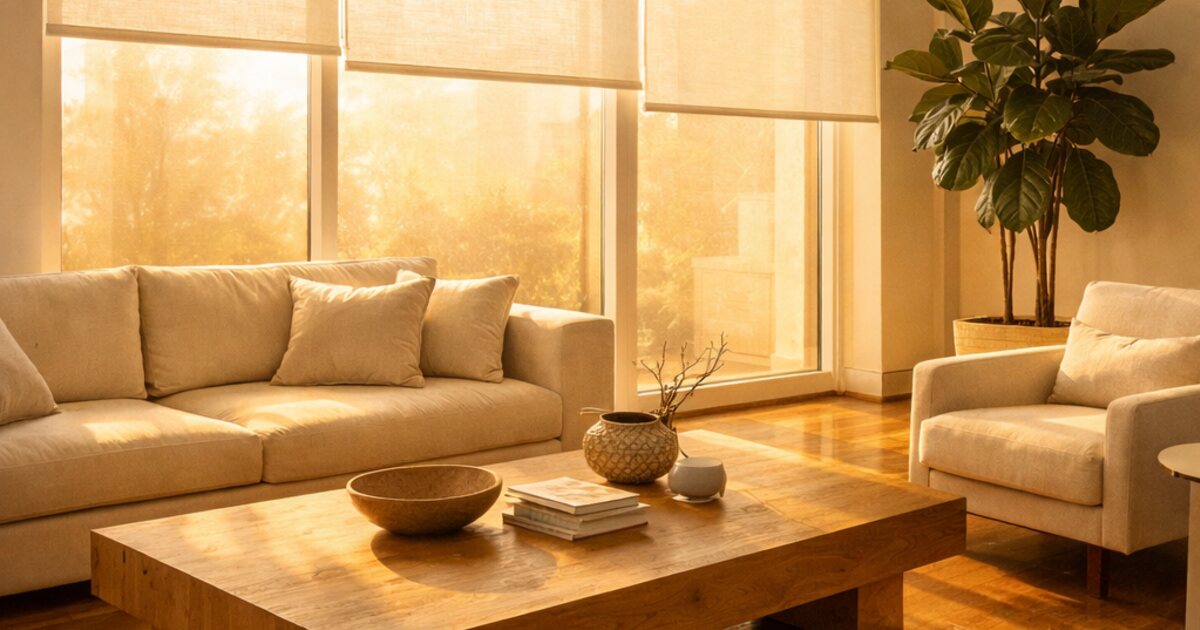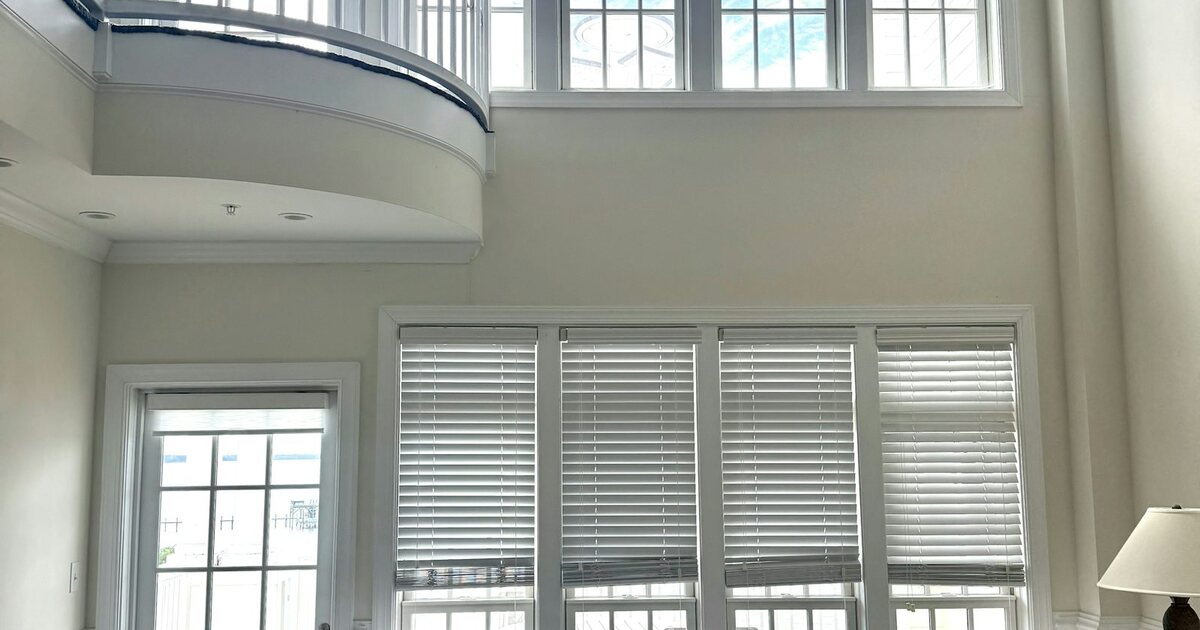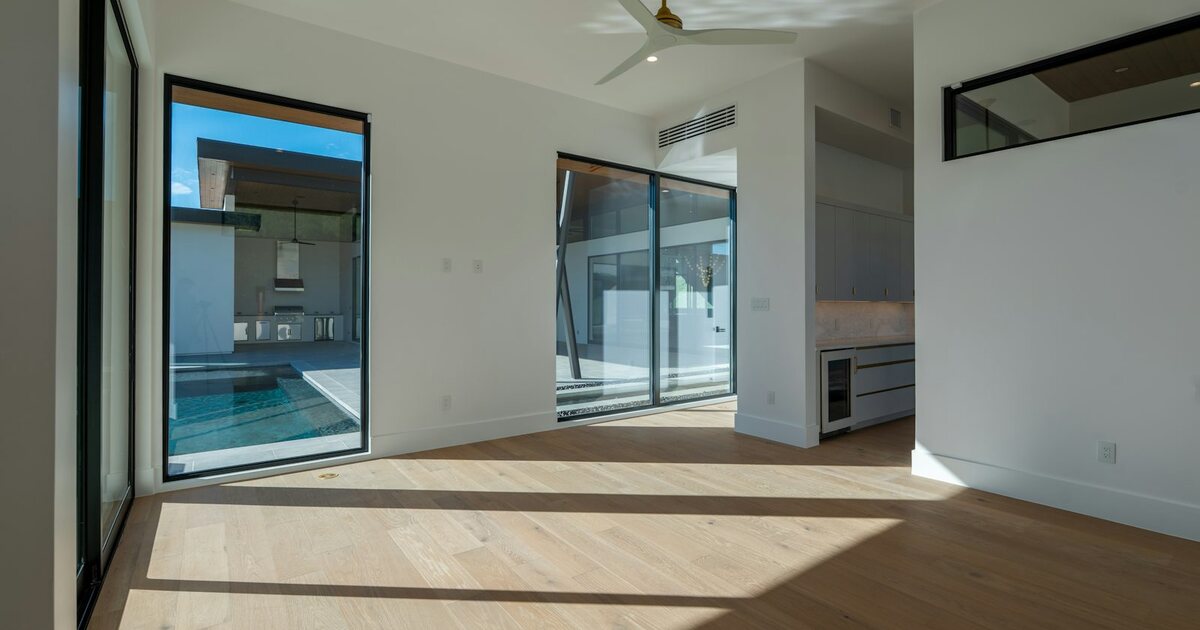
For Las Vegas homes, start with solar fabric on bright windows where glare is the problem and you want a daytime view, then use light-filtering or blackout fabric where privacy and darkness matter more. The National Weather Service describes Las Vegas as having abundant sunshine through the year and hot summer temperatures that reach into the triple digits, so room orientation and the time of direct sun should guide the choice (NWS Climate of Las Vegas).
Last updated: 2026-11-25
| Rank and option | Best use | Main trade-off |
|---|---|---|
| 1. Solar roller shade | Bright rooms where you want to reduce glare and preserve a daytime view | Not reliable for nighttime privacy |
| 2. Light-filtering roller shade | Living spaces where soft daylight matters | A lit room may show silhouettes |
| 3. Blackout roller shade | Bedrooms and media rooms | Edge gaps can admit light |
| 4. Motorized roller shade | Tall, wide, or frequently adjusted windows | Requires a remote and recharging |
| 5. Outside-mounted roller shade | Shallow frames or a need for more overlap | More of the frame and wall are covered |
The recommendations are ranked for residential rooms, not commercial storefronts or outdoor patios. For a room-by-room comparison, pair this guide with the best roller shades for living rooms, the guide to south-facing windows, and the roller-shade fabric guide.
1. Solar fabric for bright windows with a view
Solar fabric is the first option to consider when direct sun makes a room uncomfortable to look at or work in, but a city, mountain, or backyard view is important. Its openness factor is a useful published specification: compare it across fabrics to understand how much the weave allows through. A more open material generally preserves more view, while a denser weave offers more screening; fabric color and finish also affect how the window looks from inside.
The key trade-off is that daytime view-through is not the same as privacy at night. If the room is brighter than the exterior after sunset, activity or silhouettes may be visible. A high-rise condo facing another building, for example, may need a more opaque evening layer even if solar fabric is ideal during the day. The guide to shades for south-facing windows is useful when sun direction differs from the view or privacy concern.
World Wide Shades lists over 500 colors across more than 40 fabric families from Phifer, Mermet, Ferrari, Copaco, Senbesta, and Texstyle. The catalog includes the mill's published openness factor and a real fabric photo. Compare those details in the World Wide Shades fabric library, then build the exact opening and see live pricing in the builder.
2. Light-filtering fabric for rooms that need soft daylight
Choose light-filtering fabric when a room needs less harsh brightness but does not need a dark surface. It is a good fit for living and dining areas where people move between tasks and do not want the window to feel closed. The fabric softens light, so the room can stay bright without leaving the glass fully uncovered.
The cost of that softness is nighttime privacy. A translucent material can still show shapes when the interior lights are on. Test the requirement honestly: is it enough to obscure a clear view, or do you need to block visibility from a nearby neighbor? If you need more privacy, compare an opaque fabric for that room rather than expecting light-filtering fabric to do the work of blackout material.
Because strong sun can vary by exposure and time, do not specify the same material for a north-facing room and a west-facing room without checking how each is used. World Wide Shades offers custom roller shades by opening, so fabric selection can follow the function of each room. For more examples of balancing brightness and privacy, see roller shades for living rooms.
3. Blackout fabric where darkness matters most
Blackout fabric limits light traveling through the material, which makes it a sensible choice for bedrooms and media spaces. It is particularly useful where a room is used for daytime sleep or where a bright exterior competes with a screen. Use it selectively: a blackout panel in a bedroom may be right, while the living room next door may work better with solar fabric.
Blackout does not close every path around the shade. Side and bottom gaps can remain, especially with an inside mount. An outside mount can overlap the opening more, but its appearance and placement need to work with the wall, handles, and existing trim. If you need near-total darkness, plan for both fabric opacity and perimeter coverage instead of choosing fabric alone.
World Wide Shades can customize a roller shade to the measured opening. Before ordering, compare the written fabric details and the mount options, because custom orders are not returnable. If a room's primary need is reduced glare rather than darkness, review the fabric comparison guide before settling on a black or dark color.
4. Motorization for expansive glazing and hard-to-reach windows
Motorization is worth evaluating when a shade is tall, wide, above furniture, or adjusted at several points in the day. It can make a large window easier to operate, but it does not replace thoughtful fabric selection. A solar shade might be appropriate for a living area, while a nearby bedroom needs blackout fabric even if both shades are controlled by remote.
World Wide Shades uses battery-powered Automate motors by default, which do not require new wiring. A remote is required. Somfy motors are an option only if you already own a Somfy remote that you want to pair; confirm that remote before choosing Somfy. Automate Pulse 2 adds app, voice, and schedule controls for Automate motors, but a remote remains required.
The motor charger is not included in the box. A USB-C charger works, or you can add the motor charger while building the order. Motorized inside mounts have 2.5 inches of depth recommended. For more planning about schedules, routines, and controls, see smart-home motorized shades setup. To see what changes with larger openings, review roller shades for tall, narrow windows.
5. Outside mount when the frame cannot take an inside mount
An inside mount can look architectural and discreet when the frame has enough depth. World Wide Shades requires 1.5 inches of depth for an inside mount and recommends 2.5 inches for motorized shades. Do not infer depth from the window style; measure the actual opening and confirm that brackets will clear handles and locks.
For width, measure at the top, middle, and bottom, using the narrowest point. For height, measure on the left, center, and right, using the tallest point. Enter the exact opening size in the builder. The factory makes its deductions, so do not reduce the numbers yourself.
For an outside mount, add 2–3 inches on each side and 3 inches above the opening. That overlap helps the shade cover more of the surrounding frame, but it also changes the wall area covered and may affect how the room feels. Review molding and any nearby ceiling or furniture before placing brackets.
When an exterior product is the better solar-control choice
An interior solar shade can improve glare and visual comfort, but if the lead goal is to intercept heat before the sun reaches the glass, an exterior screen or shade may fit better. The Department of Energy explains that exterior retractable shading blocks solar heat more effectively than interior shading, while also noting that outdoor products may need protection against strong winds and should be accessible for cleaning (DOE's exterior-shading guidance).
Exterior products also bring questions about wind, upkeep, installation access, and any community rules. World Wide Shades specializes in custom interior roller shades, not exterior solar screens. If the main problem is nighttime privacy, a custom interior roller shade is more direct. If reducing solar heat before it reaches the glazing is central, compare an exterior specialist before treating an indoor fabric as a substitute.
Decide by exposure, then verify the fabric and fit
Walk each room at the time sunlight causes a problem and note the direction, duration, and whether you want to keep the view. Then decide how the room should feel after dark. Solar fabric is a view-and-glare decision; light-filtering is a softer daylight decision; blackout is about limiting light through the fabric. Compare the actual material photo and published openness factor rather than choosing only by the color name.
World Wide Shades has no physical sample program. Its catalog shows genuine fabric photos and mill-published details, which you can compare with the room's finishes and daylight. A free Zoom or Google Meet fit check is available as a second review, but you still need to take and enter accurate measurements. Custom orders are not returnable. A mismeasure can receive one free recut with shipping paid by the customer; a manufacturing defect reported within 30 days is remade at no charge, and motors have a one-year warranty.
Plan on 2–4 weeks for delivery, or 3–4 weeks for limited-stock fabrics. U.S. shipping is free. To compare fabric families and see live pricing, start a configuration in the World Wide Shades builder. If you are unsure which fabric suits a panoramic window or how much the outside mount should overlap, contact World Wide Shades or call (844) 674-2716.
Frequently asked questions
Solar fabric is often the best fit when glare is a concern and you still want a daytime view. Compare the openness factor and fabric appearance; choose an opaque option if nighttime privacy is more important.
Not reliably. When indoor lighting makes the room brighter than outdoors, silhouettes or activity may be visible through a solar weave.
They can help manage glare and daylight, but an exterior shade or screen may be better when the main goal is stopping solar heat before it reaches the glass. Check exterior installation and community requirements.
World Wide Shades requires at least 1.5 inches of depth, with 2.5 inches recommended for motorized shades. If there is not enough room for the brackets and shade, consider an outside mount.
Review the World Wide Shades fabric library, then enter the opening in the builder to see live pricing. For a difficult opening, contact World Wide Shades or call (844) 674-2716.
Pick the product that solves the actual problem
For many Las Vegas rooms, solar fabric is the best starting point because it balances glare management and daytime view-through. Use light-filtering fabric where you want softer daylight, blackout where darkness matters, and motorization when operating the shade is inconvenient. If heat interception is more important than interior appearance, compare exterior screens before ordering. Configure a custom roller shade with World Wide Shades and see live pricing there.