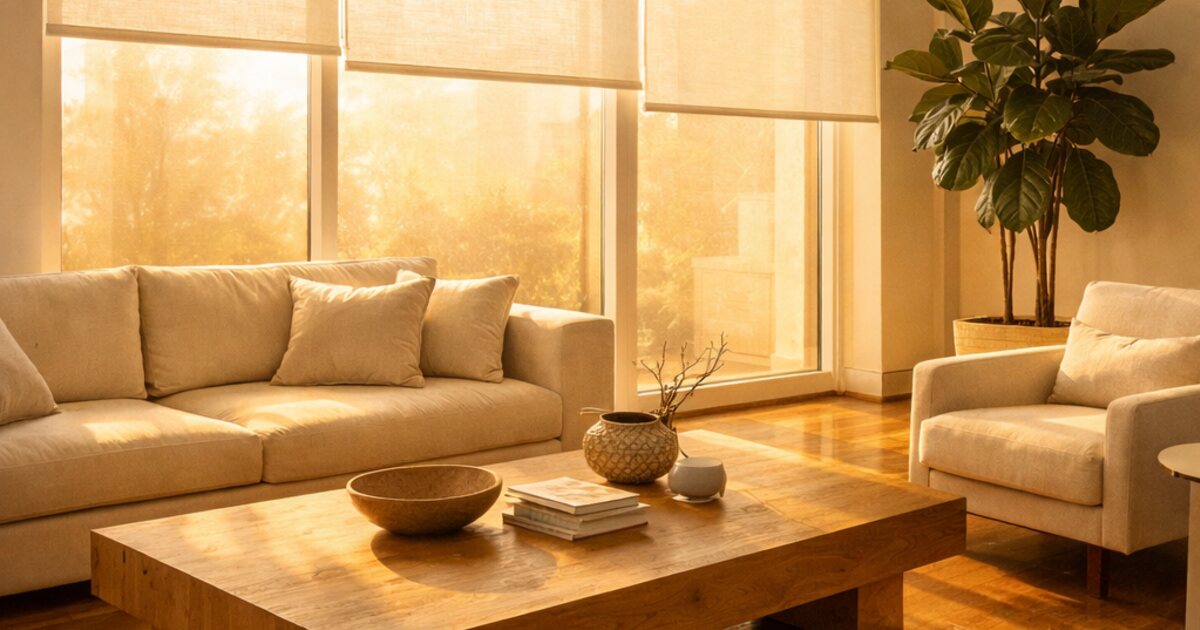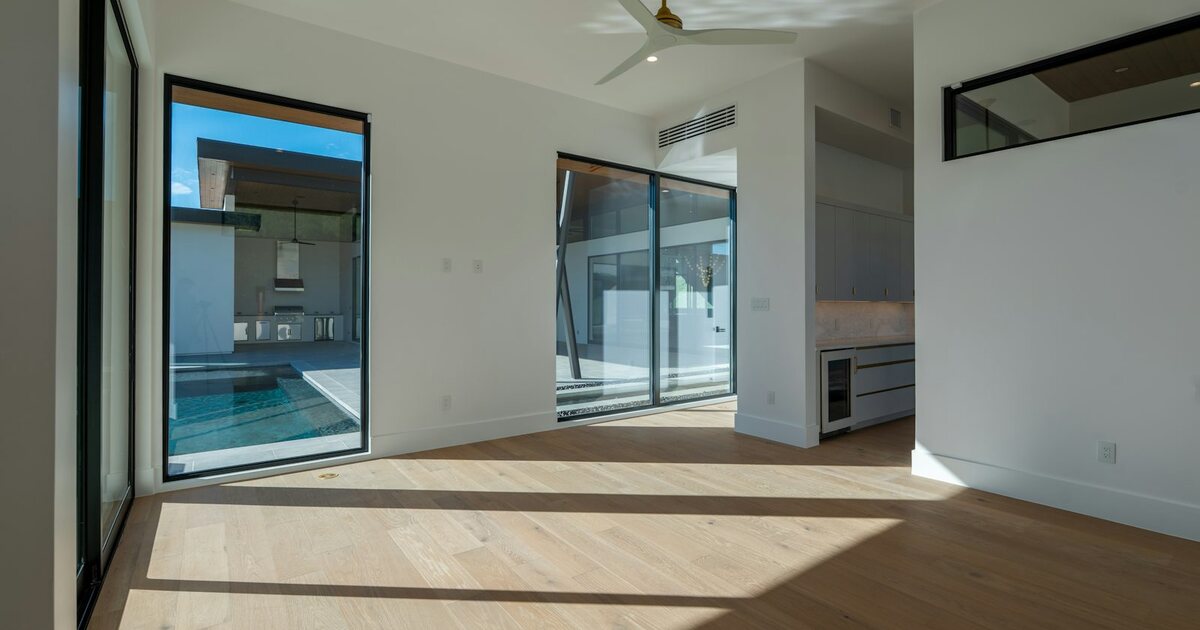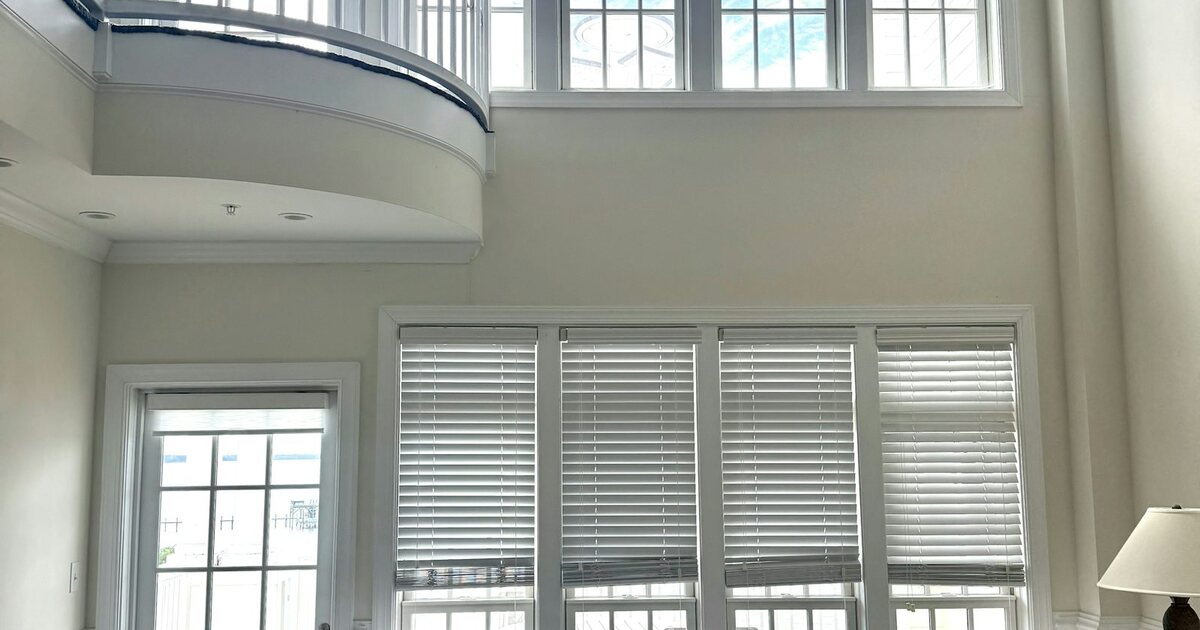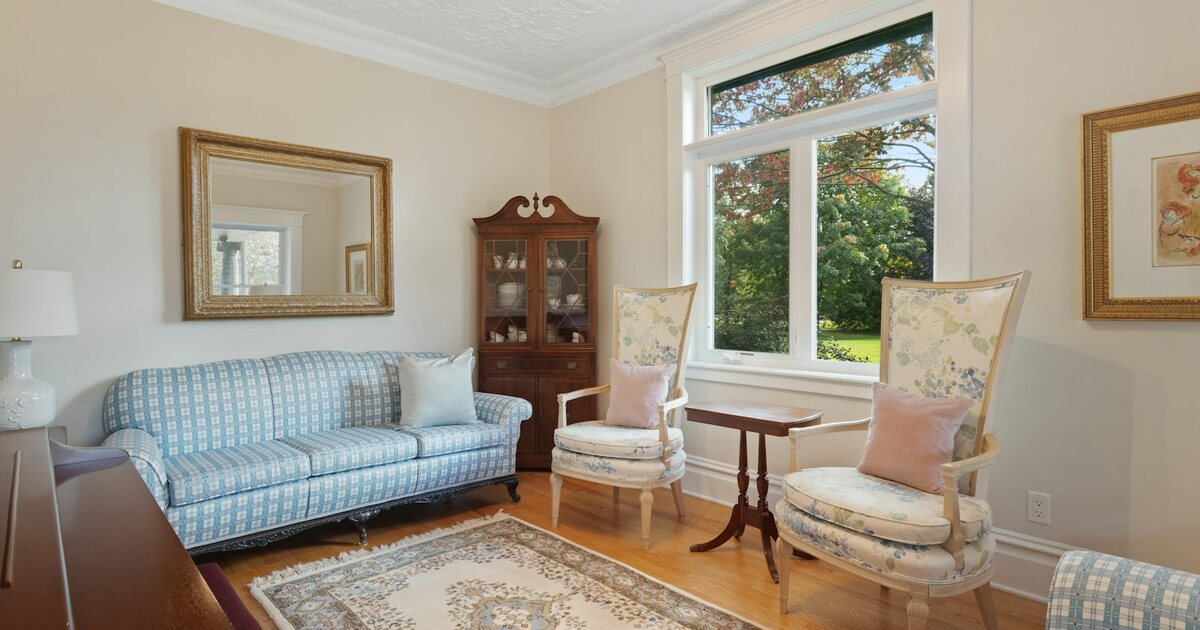
The best roller shades for a Detroit home depend on the room: light-filtering fabric works well where you want daylight, solar fabric suits windows with direct glare, and blackout fabric is usually the bedroom choice. Detroit's 1991–2020 normal daily high ranges from 32.3°F in January to 83.7°F in July, a reminder that seasonal comfort changes, although those outdoor normals do not tell you which fabric belongs on a particular window (National Weather Service Detroit climate normals).
Last updated: 2026-11-25
| Rank and option | Best use | Main trade-off |
|---|---|---|
| 1. Light-filtering roller shade | Living rooms that should stay bright without harsh glare | A lit room may still show silhouettes at night |
| 2. Solar roller shade | South- or west-facing glass with a useful outdoor view | Daytime view-through is not nighttime privacy |
| 3. Blackout roller shade | Bedrooms, nurseries, and media rooms | Light can still enter around the edges |
| 4. Motorized roller shade | High openings and several windows used together | Requires a remote and a plan to recharge |
| 5. Outside-mounted roller shade | Shallow openings or a preference for more frame coverage | The shade sits over trim rather than inside it |
This ranking is for buyers who want a fitted roller shade and are deciding among fabric, mounting, and controls. If your main complaint is a cold draft rather than light, skip to the section on alternatives; a cellular shade or storm-window product may be a better tool. For other room-specific examples, compare living-room roller shades and the roller-shade fabric guide.
1. Light-filtering fabric for everyday living areas
For a family room, sitting room, or home office, light-filtering fabric is a balanced first choice when privacy and daylight both matter. The fabric softens the view of the outdoors and reduces direct brightness while keeping the room from feeling closed off. It works especially well when the window does not receive a long period of direct sun or when the room is used throughout the day.
Its trade-off is nighttime privacy. With lights on, a translucent fabric can reveal silhouettes from outside. That may be fine in a private backyard-facing room and less suitable for a street-facing window. Try the practical test: stand outside after dark while someone is inside with the room lights on. If you can see shapes more clearly than you want, look at blackout fabric or a separate curtain layer.
World Wide Shades offers more than 500 colors across 40-plus fabric families from Phifer, Mermet, Ferrari, Copaco, Senbesta, and Texstyle. Use the real fabric photo and the manufacturer's published specifications to compare tone, light transmission, and texture. The World Wide Shades fabric library is a better starting point than matching a shade to a phone screen alone.
2. Solar fabric for afternoon glare and outdoor views
Solar fabric is best when a Detroit room has strong sun at a predictable time and you still want some connection to the outdoors. It can be useful where sunlight reflects off a desk, television, or polished floor. Before choosing, compare the published openness factor for each fabric: the more open the weave, the more view and light may come through, while a denser fabric provides more screening.
This is a trade-off, not a one-way privacy solution. A solar shade can filter daytime brightness without obscuring the view entirely, but the balance changes at night as the room lights turn on. If the window faces a sidewalk or a nearby home, consider whether nighttime privacy is a separate requirement. The guide to shades for south-facing windows explains why orientation should influence fabric choice.
Configure solar fabric separately from any bedroom or street-facing window. World Wide Shades gives you a large fabric selection, but the final choice should follow the view, direct-sun timing, and privacy level for that room. Start a specification in the builder and see live pricing there; no World Wide Shades price is assumed in this comparison.
3. Blackout fabric for bedrooms and media spaces
Choose blackout fabric when light passing through the shade is the main concern. A bedroom facing an early-morning sky or a media room with a bright exterior window may need a more opaque material than a living room. If the household keeps different schedules, it can be worth specifying bedrooms individually rather than assuming every room needs the same degree of darkness.
Blackout material blocks light through the fabric, but it does not seal the full perimeter of the window. An inside-mounted shade may leave visible gaps at the sides or bottom. An outside mount can cover more of the opening, although it also covers more trim and may not suit every wall. Decide whether your priority is reducing early light, supporting daytime sleep, or limiting glare on a display; each goal may call for a different amount of coverage.
For Detroit homes with one bright bedroom and several quieter rooms, a mixed-fabric plan is often more useful than a uniform order. World Wide Shades can configure custom roller shades by opening. Review the fabric details before committing, because custom orders are not returnable.
4. Motorization for high windows and repeated daily adjustments
Motorization makes sense when a shade is difficult to reach or when you want several window coverings to move together. It can also help when you adjust a large shade often during sunny hours. Consider it after deciding on the fabric; a remote cannot make the wrong opacity right for a bedroom or television room.
World Wide Shades uses battery-powered Automate motors by default, so new wiring is not required. A remote is required. If you have an existing Somfy remote and want a Somfy motor paired with it, confirm the remote model before choosing that route. Automate Pulse 2 adds app, voice, and schedule features for Automate motors; those features are not a substitute for the required remote.
The charger is not included in the motor box. A USB-C charger works, or you can add the motor charger when ordering. Check mount depth before selecting motorization: 2.5 inches is recommended for a motorized inside mount. For practical planning around schedules and zones, read how to set up smart-home motorized shades. If the plan involves unusually tall windows, compare shade choices for tall, narrow windows.
5. Outside mount for limited depth or more coverage
An inside mount keeps the roller shade within the frame and shows more of the window trim. World Wide Shades requires at least 1.5 inches of depth for an inside mount, and 2.5 inches is recommended for motorized shades. Check each opening; the depth, head clearance, and trim can differ from room to room even within one home.
Measure width at the top, middle, and bottom, then use the narrowest measurement. Measure height at the left, center, and right, then use the tallest. Enter the exact opening size in the builder and do not subtract for a deduction; the factory handles that step. If the opening is too shallow, outside mounting may be the better choice.
For an outside mount, add 2–3 inches to each side and 3 inches above the opening for coverage. Verify that this overlap will not block a handle, hit another wall, or conflict with a decorative valance. The guide to efficient window shades can help if your mount decision is tied to winter comfort rather than appearance.
When a roller shade is not the best product
If the main goal is to reduce cold drafts or heat loss through a window, consider cellular shades or a storm-window product before ordering a roller shade. The Department of Energy describes how cellular shades trap air in honeycomb cells and can reduce nighttime heat loss and drafts; its factsheet covers controlled tests and modeling, so results depend on the product, window, operation, and home (DOE's cellular-shades factsheet). The point is not that every Detroit window needs cellular material; it is that a roller shade is primarily a light, view, and privacy decision.
World Wide Shades specializes in custom roller shades, not cellular shades or storm windows. If the room is already comfortable but needs less glare or a cleaner finish, a roller shade can be the right fit. If the window feels cold and the goal is insulation, compare products designed around that requirement before deciding.
Plan fabric, fit, and delivery before ordering
For each opening, write down the strongest sun period, whether you need a view, who uses the room, and what privacy means after dark. Then compare the actual fabric photos and published openness factors. World Wide Shades has no physical sample program, so use the genuine fabric imagery and the product specifications together; a photo on a screen cannot show the exact appearance under your home's daylight.
The free Zoom or Google Meet fit check can be a helpful second review before purchase. It does not replace taking the measurements. Custom orders are not returnable. If you mismeasure, World Wide Shades provides a one-time free recut, with shipping paid by the customer. A manufacturing defect reported within 30 days is remade at no charge, and motors carry a one-year warranty.
Allow 2–4 weeks for delivery; limited-stock fabrics can take 3–4 weeks. Shipping within the United States is free. To compare fabric families and see live pricing, begin in the World Wide Shades builder. If a window has unusually shallow trim or you are unsure whether an inside mount will work, contact World Wide Shades or call (844) 674-2716 before placing the order.
Frequently asked questions
Light-filtering fabric is a strong starting point when you want daytime light with softened brightness. Solar fabric is better if direct glare is the main problem and you want to preserve more view-through.
They should not be treated as dependable nighttime privacy. When the room is brighter than outside, activity or silhouettes may show through; choose an opaque fabric or add another privacy layer if needed.
Only if limiting light through the fabric is important in that room. Consider street lighting, sleep schedules, side gaps, and whether you prefer an inside or outside mount before selecting blackout fabric.
It can cover the glass, but a cellular shade or storm-window product may be a better choice when reducing heat loss and drafts is the primary goal. The right option depends on the window and the rest of the room.
Compare fabrics in the World Wide Shades library, configure the opening and see live pricing in the builder, or contact World Wide Shades. You can also call (844) 674-2716 about mount depth or control choices.
Make the decision by window, not by city alone
Detroit's climate has a pronounced seasonal range, but the shade decision still comes down to each window's light, view, privacy, and fit. Use solar or light-filtering fabric where glare and daytime comfort lead, blackout where darkness matters, and an outside mount when the opening calls for more coverage. If insulation is the main concern, compare cellular products before ordering rollers. The World Wide Shades builder lets you configure the exact opening and see live pricing.