The best roller shades for home bar windows are usually solar screens if the problem is daytime glare and you want to keep the view, and light-filtering fabric if the bar is mostly used in the evening and you want a softer, more private room. If the same window has to handle both jobs, a dual roller with a screen on one roll and a light-filtering or blackout fabric on the other is the most flexible custom option. Exposure and privacy always depend on the fabric, its openness, and the time of day, so rank what the window must do before you pick a color.
Last updated: 2026-11-27
| Rank | Option | Best for | Main trade-off |
|---|---|---|---|
| 1 | Solar-screen roller | Daytime glare, a kept view, a slim look over the bar | Limited privacy once the room is lit after dark |
| 2 | Light-filtering roller | Evening gatherings and softened daylight | Some light and silhouettes still pass through |
| 3 | Dual roller (screen plus a second fabric) | One window used by day and by night | Two shades to operate and a fuller headrail |
| 4 | Blackout roller | Screen-watching, strong outside lights, maximum privacy | Closes off the view and daylight when lowered |
| 5 | Motorized roller | Windows above counters or cabinetry, routine adjustments | Needs a remote and a control decision up front |
| 6 | Drapery or shutters (not sold by us) | Layered design, sound softening, or a built-in look | Different depth and light-control behavior |
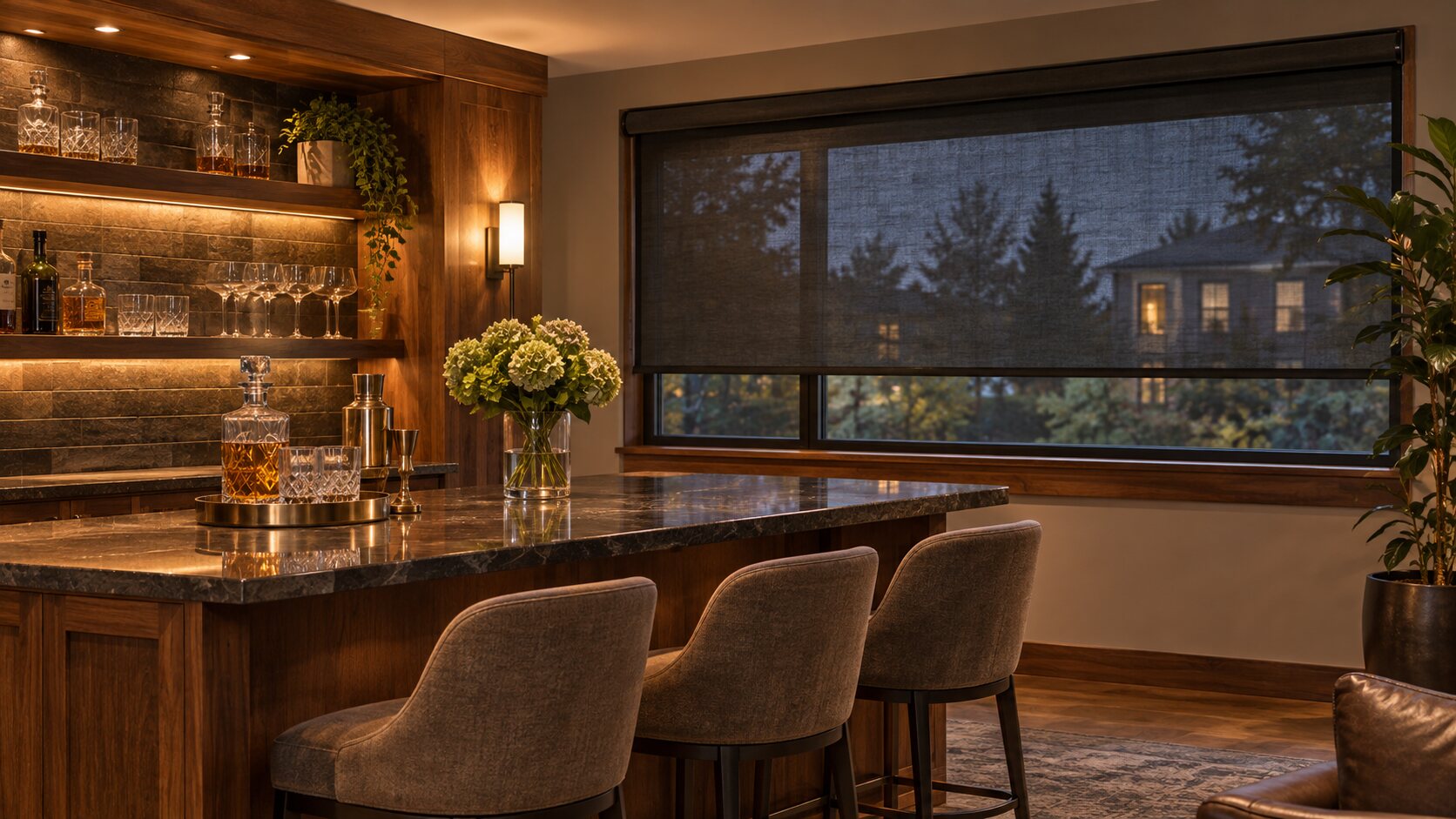
A home bar may be a basement corner, a nook off the kitchen, a converted sunroom, or a built-in wall in the living room. Glass can sit above a counter, beside a back bar, or across from a television. This guide covers private residential bars and ranks options by glare, privacy, and evening use.
1. Solar-screen roller shades for daytime glare and the view
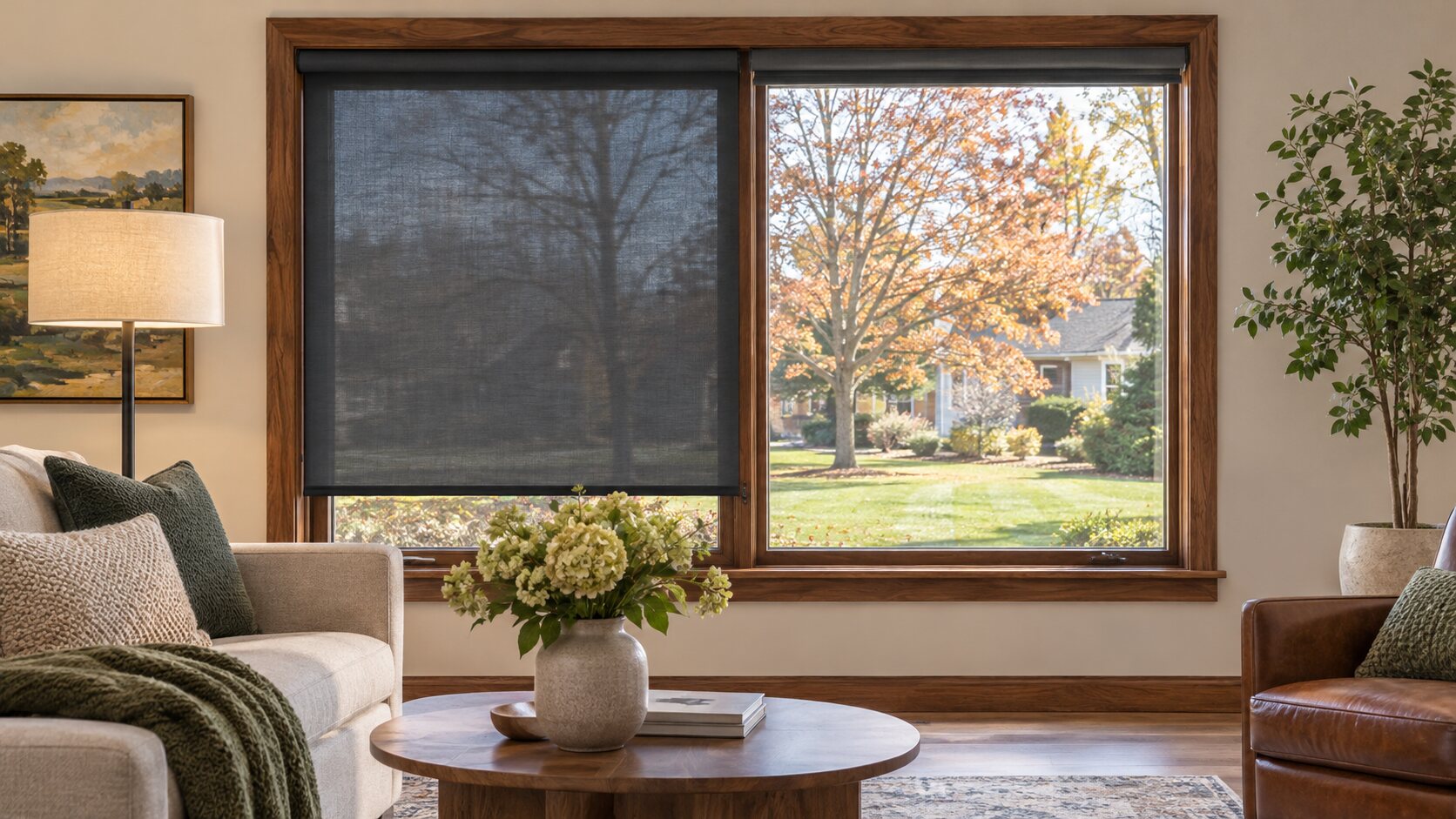
If the bar window faces a yard, a street with a pleasant outlook, or a patio, a solar screen is the strongest starting point. The woven fabric reduces the brightness and glare that wash out a television, a mirrored back bar, or polished glassware, while still letting you see outside during the day.
The Building America Solution Center's residential guide to window attachments distinguishes interior shades from exterior shading: interior attachments can help with glare and privacy, while exterior systems block solar heat before it reaches the glass. Treat an interior solar screen as a glare-and-view choice, not as a promise of a specific energy result.
Openness is the spec to compare. A tighter weave screens more and tends to look more private in daylight. A more open weave keeps more of the outside view and lets in more light. World Wide Shades publishes mill openness information with its screen fabrics in the fabric catalog, so you can compare two similar-looking colors on actual specs instead of guessing.
The caveat is nighttime. During the day the brighter side is outdoors, so people inside generally see out more easily than people outside see in. After dark that flips: with bar lighting on, someone outside can often see into the room through a screen. That is why the screen ranks first for glare but not for evening privacy. For a deeper look at fading and sun exposure, see our UV protection guide.
2. Light-filtering roller shades for evening use
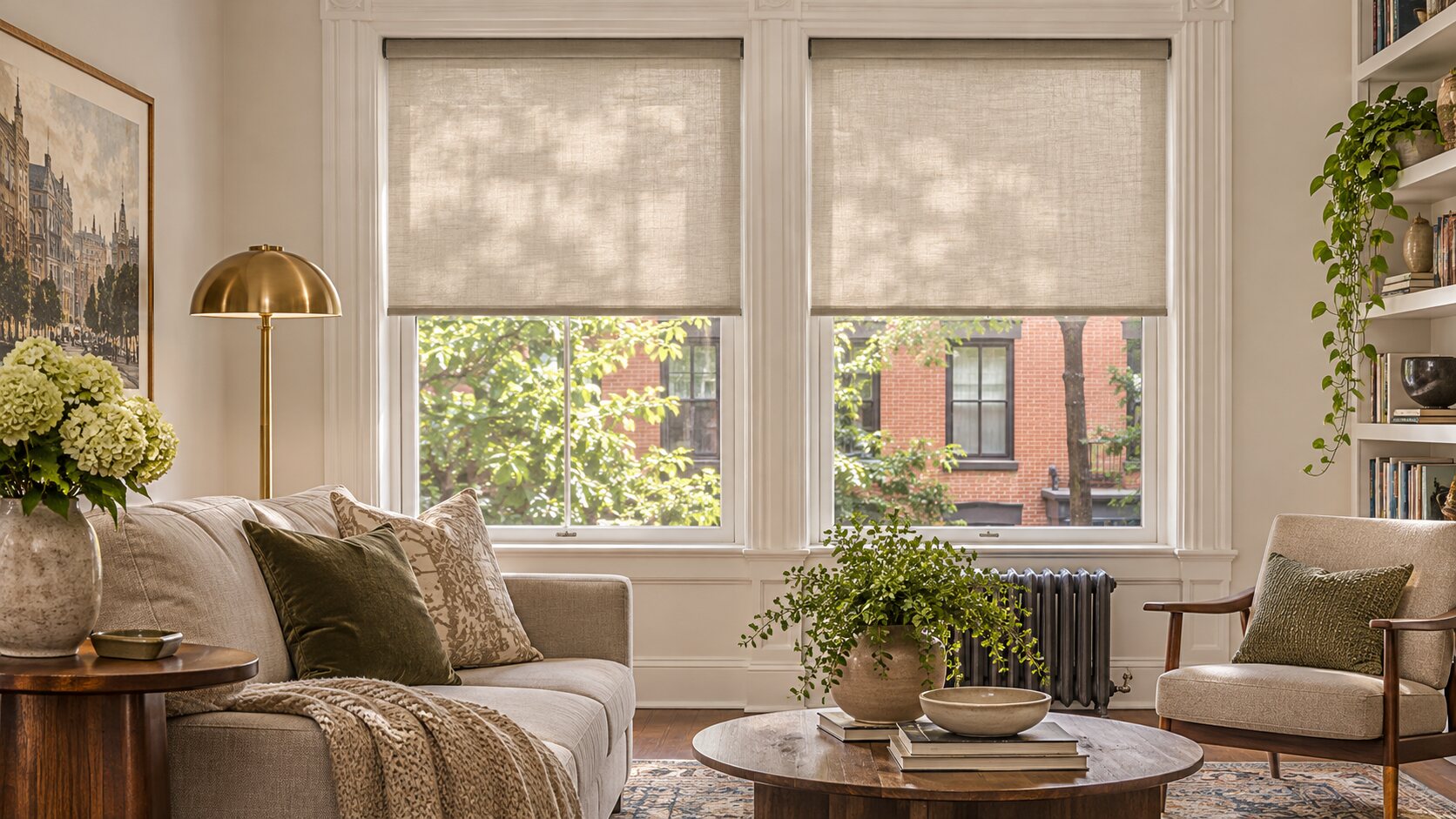
If you mostly use the bar after work or on weekends, a light-filtering fabric is often the better everyday pick. It diffuses daylight into a soft glow, hides more of the view into the room than a screen does, and gives the window a finished look when it is closed.
Light-filtering does not mean dark. At night, a bright room can still create silhouettes against the fabric, and a lighter color generally lets more light through than a deeper one. If the window faces a close neighbor or the sidewalk, compare the product details in the fabric catalog and think through how the bar lights sit relative to the glass. Our light-filtering shades guide explains how this category behaves, and the roller shade fabric guide covers how fabric types differ.
If the bar opens into a living area, our guide to the best roller shades for living rooms is a useful companion. The light-filtering shades page shows the full category.
3. Dual roller shades for separate day and evening needs
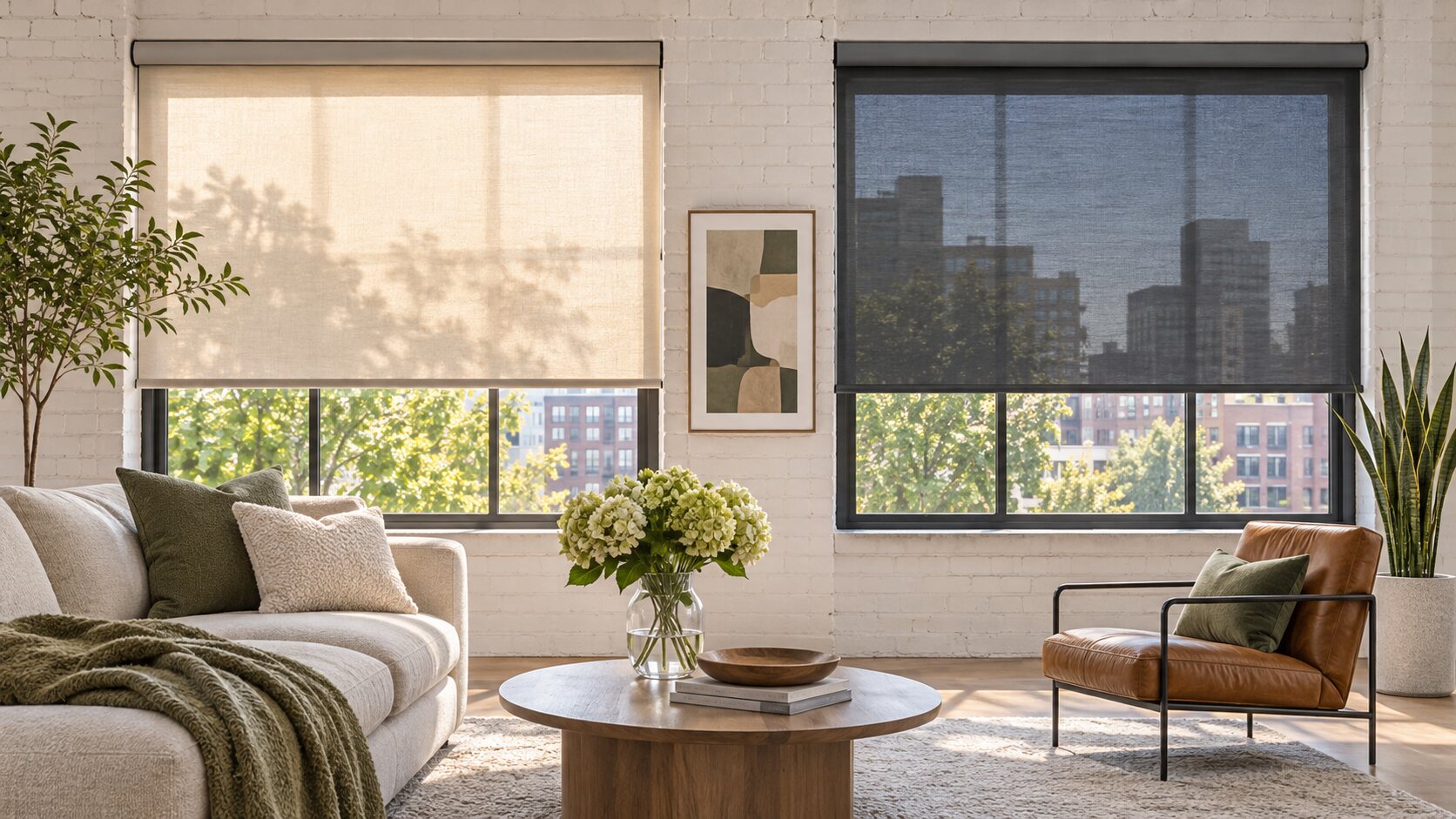
When one window has to do two different jobs, a single fabric forces a compromise. A solar screen alone may leave you exposed at night, and a blackout alone may block a view you love at four in the afternoon. A dual roller solves this by putting two fabrics on one opening, so you can lower the screen for daytime glare and the second fabric when the evening starts.
World Wide Shades offers dual rollers for standard rectangular openings, with two shades on one double bracket under a shared 3- or 4-inch metal fascia. The fabrics can be assigned to the front or back position. Each shade has its own chain or motor, and a motorized pair uses two motors with one remote. Side channels can be added to the front shade, back shade, or both. See the dual roller shades page for configuration details.
The trade-offs are practical. You operate two shades instead of one, and the combined headrail is deeper than a single roller, so check what sits around the window, such as shelving, a faucet, or cabinet doors. If one well-chosen fabric would do, the simpler option wins. If you use the bar at two very different times of day, a dual setup is the most direct way to get both.
4. Blackout roller shades for screens and strong outside light
Choose blackout fabric when the bar doubles as a media corner, when a streetlight or neighbor's floodlight shines in, or when privacy matters more than the view. It limits light passing through the fabric itself, which makes a television easier to see and a late-night gathering more private.
A lowered blackout shade can make the window feel like a dark panel, which may not suit a bar designed around a view, and the mount and gaps around the shade also affect how much light reaches the room. If you are weighing shade against fabric panels, our comparison of blackout curtains and blackout shades lays out where each wins. The blackout roller shades page shows the category.
5. Motorized roller shades for hard-to-reach windows
Many bar windows sit behind a counter, above a sink, or over built-in cabinets. A shade that is hard to reach tends to stay in the wrong position. Motorization helps when the window is out of reach or when you change positions often, such as lowering a screen in the afternoon and a second shade at dusk.
World Wide Shades motors are battery-powered, so no wiring is needed. Automate is the default motor system, and Somfy is used only when you already have a Somfy remote. A remote is required. The Push 5 remote can operate up to five shades, and the Pulse 2 hub adds app, voice, and schedule control for Automate motors only. If voice control matters, read our smart-home motorized shade setup guide and the motorized shades page before choosing.
A manual shade remains a sensible choice for a standard window you only touch occasionally. Motors add a control decision, so choose them for convenience, not by default. To talk through a bar layout with several windows, call World Wide Shades at (844) 674-2716.
6. When drapery or shutters are the better choice
World Wide Shades sells custom roller shades, so we will say this plainly: sometimes a different treatment is the better answer.
Drapery is a strong option when the bar is meant to feel like a lounge. Fabric panels add softness and let you layer color and pattern around a window. They need wall or ceiling space beside the glass, which a tight nook above a counter may not have. A roller under side panels is a common pairing, and our Roman shade comparison and woven wood shades guide cover other textured alternatives.
Shutters make sense for a permanent, architectural look, for windows where you want louvers to angle light, and for bars with built-in millwork. They are bulkier than a roller, and louvers can leave some light and visibility gaps when closed. We do not offer them, so compare on look and light control.
Choose a roller when you want the slimmest profile, a wide choice of fabrics, and a tidy opening. Choose drapery or shutters when texture, sound softening, or a built-in feel is the point.
How to decide quickly
Start by ranking your needs in order: daytime glare, evening privacy, a protected view, or a dark room for a screen.
- If you use the bar mostly in the evening and the window faces a neighbor, begin with light-filtering and check how bright the room will be.
- If the window faces a private yard or a view and glare is the issue, begin with a solar screen.
- If you need both, consider a dual roller before compromising on one fabric.
- If the window is hard to reach, add a motor.
Color matters too: a shade close to the wall tone recedes, while a deeper one can echo dark cabinetry. World Wide Shades does not offer a sample program, so review the photos and published specs in the fabric catalog carefully before you order.
Ordering from World Wide Shades
World Wide Shades makes every shade custom and by hand. Normal delivery is 2 to 4 weeks, while limited-stock fabrics and specialty shapes take 3 to 4 weeks. Every order includes a video fit check by Zoom or Google Meet, which is useful for bar windows that sit close to cabinetry or a counter. Custom orders are not returnable, so use that fit check before the shade goes into production.
To compare fabrics and configure a shade, open the World Wide Shades builder. To ask about a tight bar nook, a dual roller layout, or a motor choice, contact the team or call (844) 674-2716.
FAQs
A solar-screen roller is the best starting point when daytime glare is the problem and you want to keep the view. Light-filtering fabric is better when evening use and softer light matter more, and a dual roller can combine both.
Not reliably. During the day, a screen makes it easier to see out than in. After dark, with the bar lit, someone outside can often see into the room. Privacy depends on the fabric's openness, the lighting, and how close the window is to a neighbor or street.
Use blackout when the bar doubles as a screen area, when outside lights shine in, or when privacy is the top priority. If you want to keep a view, compare a solar screen or light-filtering fabric first.
It is worth considering when the window needs different fabrics at different times, such as a screen by day and a blackout or light-filtering layer in the evening. It adds a second shade to operate and a deeper headrail, so skip it if one fabric meets your needs.
They are helpful when the window is hard to reach or you adjust it often. World Wide Shades motors are battery-powered and require a remote, and the Pulse 2 hub adds app, voice, and schedule control for Automate motors.
Drapery suits a layered, lounge-style look and has room beside the window, while shutters suit permanent, built-in designs with adjustable louvers. Roller shades are better when you want a slim profile and a wide range of fabrics.