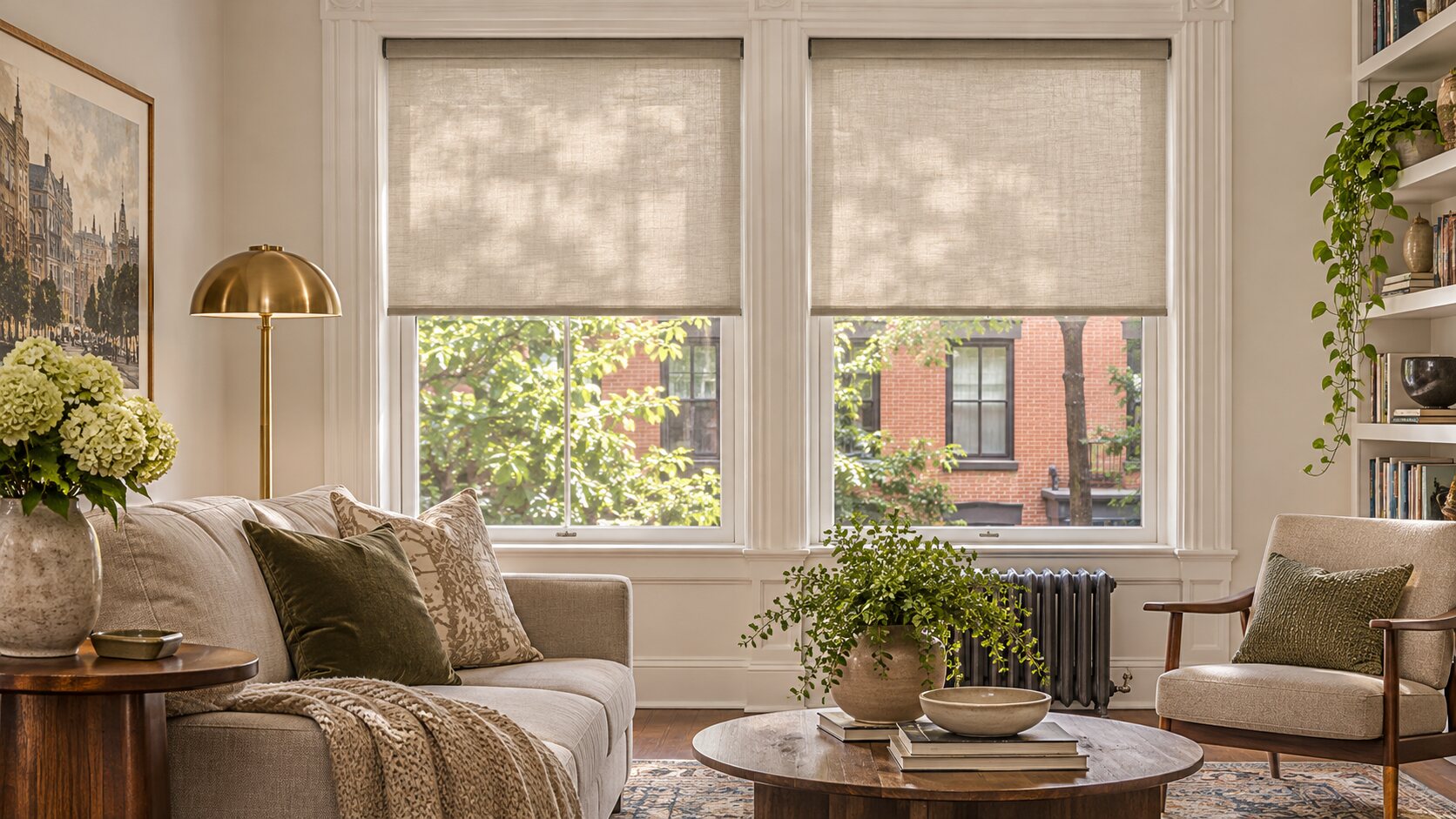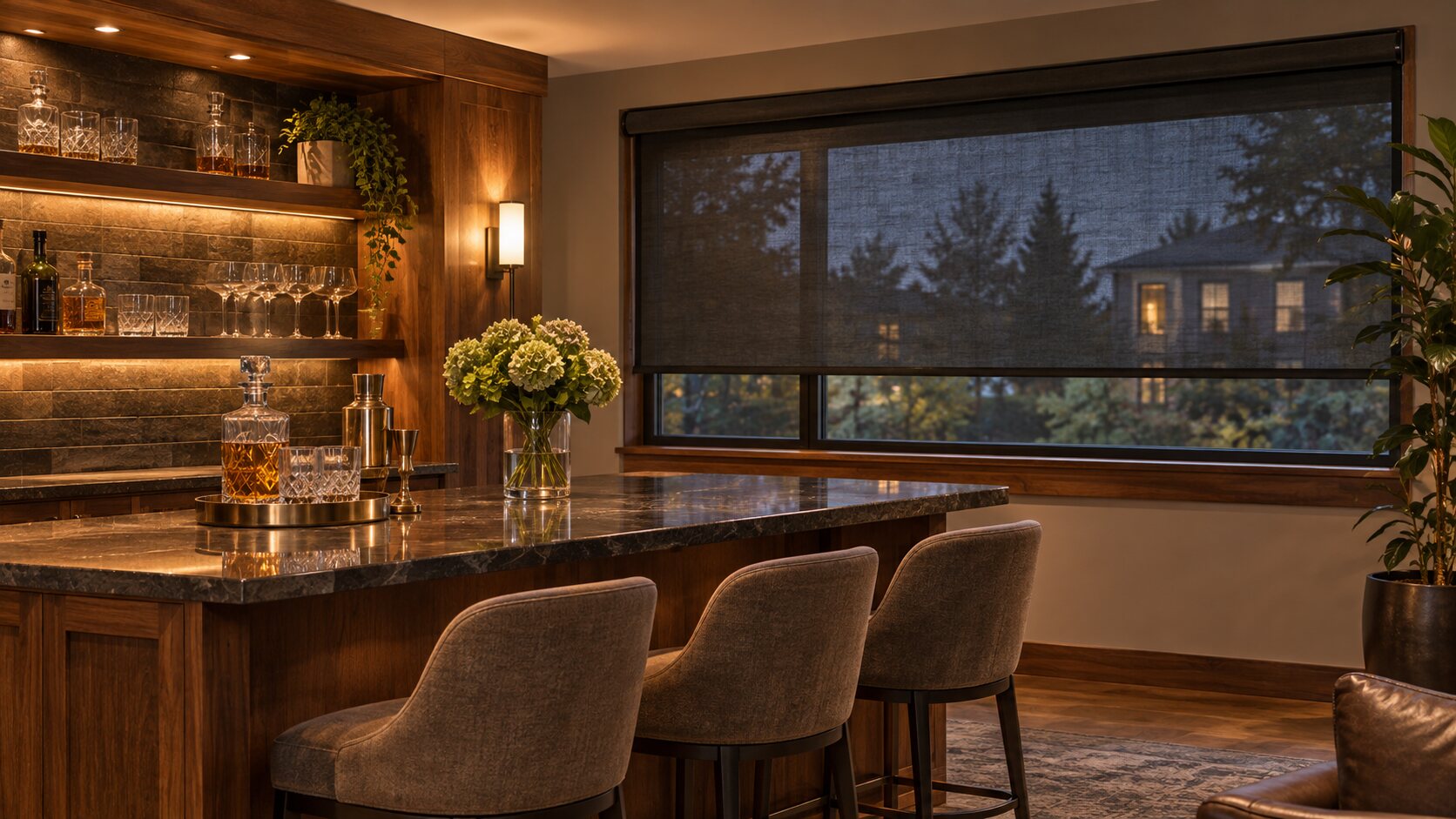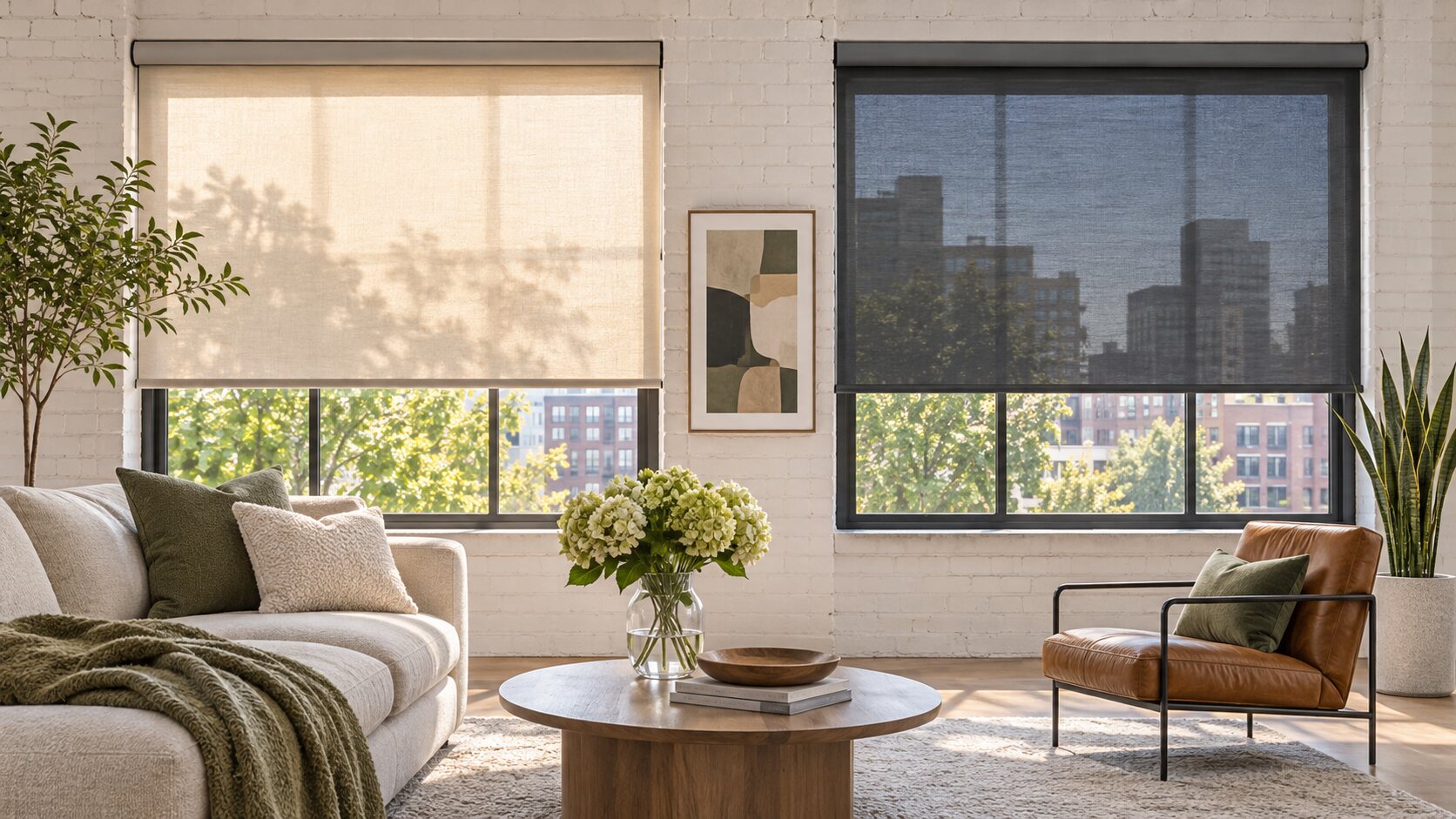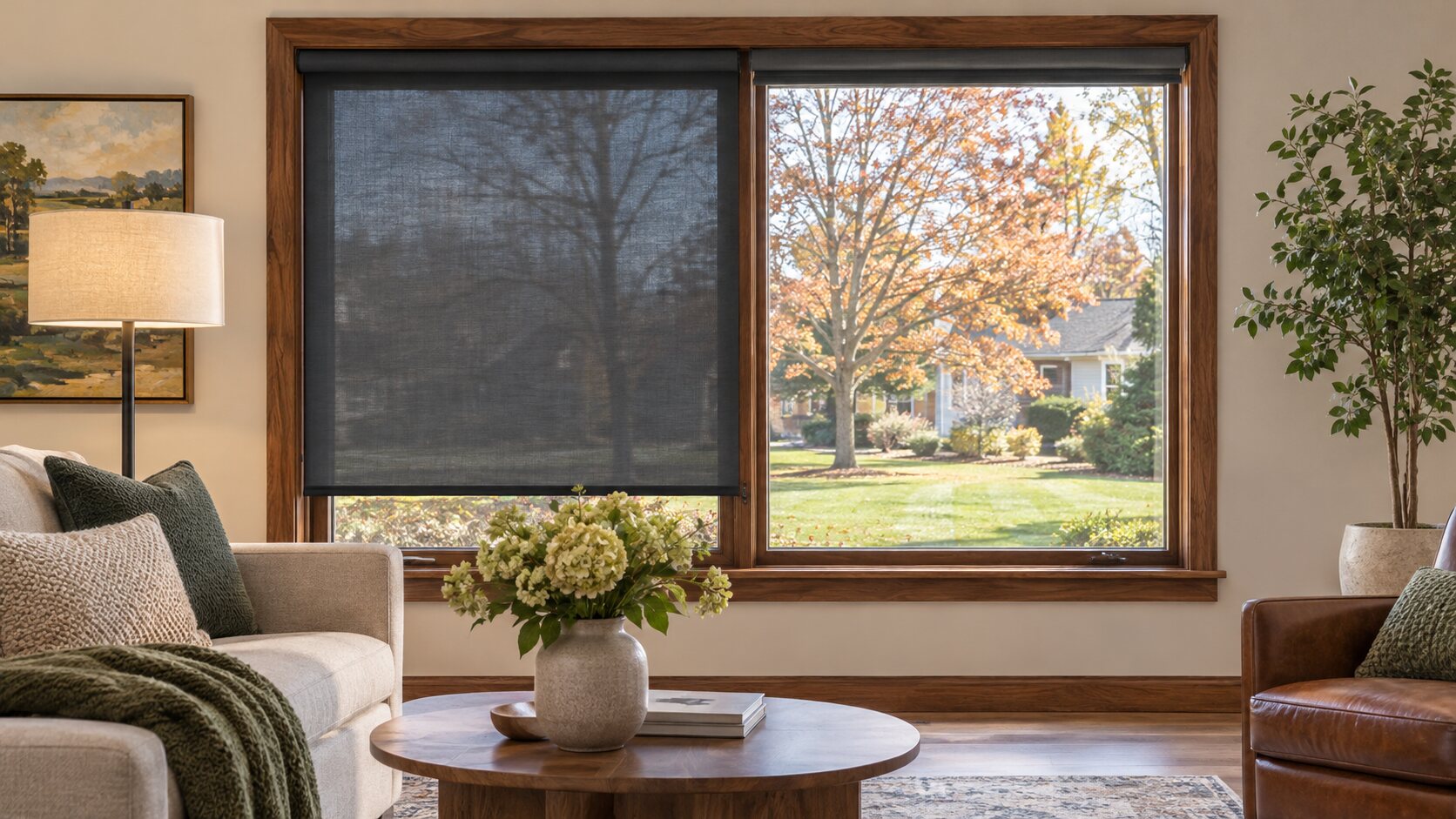
The best custom roller shades for Indianapolis homes depend on the room, not the city: solar fabrics suit living areas where you want glare control and a view, while blackout fabrics suit bedrooms and nurseries. If winter drafts bother you more than daytime glare, cellular shades are the better pick for that window, and we explain why below. Every recommendation here is for houses, condos, and apartments.
Last updated: 2026-11-27
Quick Comparison of Top Picks
| Rank | Option | Best for | Main trade-off |
|---|---|---|---|
| 1 | Solar roller shades | Living rooms, kitchens, home offices with glare | Less privacy after dark with the lights on |
| 2 | Blackout roller shades | Bedrooms, nurseries, shift workers | No daytime view when lowered |
| 3 | Light-filtering roller shades | Rooms that need privacy and soft daylight | Dimmer outlook than solar fabrics |
| 4 | Paired solar and blackout shades | Rooms that need a view by day and darkness at night | Needs adequate mounting depth for two shades |
| 5 | Cellular shades (not sold by us) | Drafty windows where insulation matters most | Thicker stack, fewer clean-lined looks |
How We Ranked These Options
We ranked by how many Indianapolis-area rooms each option solves well, then by how much compromise it asks of you. Our team at World Wide Shades builds custom roller shades, so four of the five picks are products we make. The fifth is a product we do not sell, and we include it because it is the right answer for some windows.
Indianapolis homes vary widely. A brick bungalow with deep porch overhangs lives differently from a new subdivision with large west-facing glass, and a downtown condo with floor-to-ceiling windows differs from both. We make no claim about sun exposure across the city. Your window's direction, nearby trees, neighboring buildings, and porch or eave cover will tell you more than any citywide average.
For seasonal context, NOAA's 1991–2020 monthly normals for the Indianapolis station list a January mean temperature of 28.5°F and a July mean of 75.8°F. That is a wide swing, so a shade has two jobs over the year: taming warm-season glare and not adding to cold-season drafts. Rank your priorities with both seasons in mind.
1. Solar Roller Shades for Daytime Glare and Views
Solar fabrics are woven screens that cut glare while letting you see outside. They are our first pick for living rooms, kitchens, dens, and home offices where you work or watch television during the day and still want the yard or street in view.
The key detail is openness, the percentage of weave that lets light through. A tighter weave reduces more glare and gives more privacy. A more open weave preserves the view but admits more brightness. Mill-published openness information is the right place to compare, and our fabric library includes fabrics from mills including Phifer, Mermet, Ferrari, Copaco, Senbesta, and Texstyle, across 40+ fabric families and 500+ colors.
What to know before choosing solar:
- Privacy changes after sunset. With lights on inside and darkness outside, people can often see in through a solar screen. Use it where evening privacy is not a concern, or pair it with something denser.
- Color affects the view. Darker fabrics generally preserve the outside view better and reduce glare on screens, while lighter fabrics look brighter indoors.
- Orientation still matters. For a window that takes harsh afternoon light, read our guide to shades for south-facing windows. For fading, see the UV protection guide.
Compare options in the World Wide Shades builder, or read our best fabrics for roller shades overview first.
2. Blackout Roller Shades for Bedrooms and Nurseries
Blackout roller shades are the strongest choice when darkness matters: bedrooms with streetlight, nurseries with daytime naps, and rooms for anyone who sleeps after a night shift. A bedroom facing a bright street can be difficult to darken without a proper fabric.
Be realistic about light at the edges. A blackout fabric blocks light through the material, but a small amount can still come around the sides and top. An inside mount in a recessed window typically looks cleaner, while an outside mount that overlaps the opening generally limits more edge light. Our blackout roller shades page explains the options, and our comparison of blackout curtains versus blackout shades covers where each works better.
Media rooms benefit too, and our bedroom guide goes deeper on fabric color, controls, and layering.
Households with young children should plan controls carefully. Read child-safe window treatments before choosing a lift style, and consider motorization for windows that are hard to reach.
If a bedroom is your priority, call World Wide Shades at (844) 674-2716 to talk through the window, or start a blackout design in the builder.
3. Light-Filtering Roller Shades for Privacy and Soft Daylight
Light-filtering fabrics are denser than solar screens. They diffuse daylight into a soft glow and give more privacy, but you generally cannot see out clearly through them. That makes them a strong pick for ground-floor rooms near sidewalks, bathrooms, front-facing dining rooms, and any window close to a neighbor.
Choose light filtering when:
- Privacy during the day matters more than the view.
- You want brightness without bare glare on a television or monitor.
- The room faces a street where passersby can look in.
Our light-filtering shades guide walks through the difference between this style and solar, and our color guide helps with matching the fabric to walls and trim. You can see the full range on our light-filtering shades page.
For kitchens and bathrooms, think about where moisture and splashes occur and read our guide to roller shades in kitchens and bathrooms before deciding.
4. Paired Solar and Blackout Shades for Rooms That Need Both
Some rooms need a view in the morning and complete darkness at night. A family room that doubles as a media room, or a primary bedroom with a good garden view, is a typical case. Two shades in one opening give you both modes without compromising either.
The practical question is depth. Two shades need more mounting space than one, so confirm that your window depth supports a pair before you commit. If it does not, a flat-mounted second shade on the wall or frame is another option. Our team can help you work through this over the phone, which is far easier than guessing.
If you also want convenience, a motorized dual uses two motors and one remote. Automate motors paired with the Pulse 2 hub add app, voice, and schedule control; see the motorized shades page, our smart-home motorized shade setup guide, and the Alexa and Google Home guide before choosing.
Choose this only if you use a room both ways; a bedroom used only at night needs one blackout shade.
5. Cellular Shades: When They Beat Roller Shades
We sell custom roller shades, not cellular shades, but cellular shades are genuinely better in one situation: a window where winter heat loss and cold drafts are your main complaint, and view or style are secondary.
The U.S. Department of Energy's cellular shade fact sheet explains that cellular shades trap air in each cell and between the shade and the window, which is why they can reduce nighttime heat loss and cold drafts. Its caveat is important, though: the experiments focused on the heating season, and the fact sheet says research is needed to fully explore cooling-season benefits. The test home was in Knoxville, Tennessee, so treat it as a useful guide rather than a prediction for your house.
Where cellular wins:
- Older single-pane or drafty windows, such as those in some older bungalows, where insulation outweighs everything else.
- Bedrooms where cold is the problem, not light.
- Rooms where you do not need an outside view, since cellular fabrics are generally opaque or softly translucent.
Where roller shades win:
- View through the fabric. Cellular shades have no equivalent to a solar screen.
- Clean, flat profile. A roller stacks into a compact tube, while cellular shades gather into a thicker stack at the top.
- Fabric range. World Wide Shades offers 40+ fabric families and 500+ colors.
- Wide windows and patio doors. See our guide to roller shades for French doors.
Our energy-efficient window shades guide compares the options more fully. If your whole house is drafty, the honest advice is cellular on the worst windows and roller shades everywhere else.
Matching Shades to Common Indianapolis Home Situations
Use these as starting points, not rules. Your specific windows decide.
Older brick and bungalow homes. Porches, mature trees, and neighboring buildings can shade some windows more than others, so judge each opening separately. Light-filtering for street-facing rooms and blackout for bedrooms is a dependable combination. Drafty original windows might call for cellular shades.
Newer subdivision homes. Large windows and open floor plans can create glare, and tall openings can be hard to reach. Consider solar shades in main living areas and motorization for tall or hard-to-reach windows. Our new-construction shades guide covers timing the order around move-in.
Condos and apartments. Renters should read roller shades for rentals before ordering. Solar plus blackout pairs work well in bedrooms.
Skylights and unusual openings. These need their own approach, covered in our skylight shades guide.
Ordering Custom Shades From World Wide Shades
Custom roller shades are made to your measurements, with a typical lead time of 2 to 4 weeks, so order before a deadline such as a holiday gathering or a move. Browse fabrics, build your shade in the online builder, or contact World Wide Shades with questions. You can also call (844) 674-2716 to talk through room-by-room choices.
If you are weighing custom against a big-box option, read custom roller shades versus Home Depot and how much custom roller shades cost.
Frequently Asked Questions
There is no single winner. Solar fabrics are strongest for glare control with a view, blackout fabrics for sleeping spaces, and light-filtering fabrics for daytime privacy. Choose room by room, then confirm the choice against your window's direction.
Blackout, in most cases. Solar fabrics let light and sometimes silhouettes through, so they do not give the darkness most bedrooms need. If you want an outside view during the day, consider pairing a solar shade with a blackout shade.
For insulation at a particular window, often yes. The Department of Energy fact sheet describes how cells trap air, but also notes its research focused on the heating season. Roller shades give you more fabric choices, a slimmer profile, and the option of a see-through solar screen.
They reduce the light reaching them, which can slow fading, but no shade stops it entirely. Tighter weaves and darker colors generally block more. See our UV protection guide for how to think about it.
World Wide Shades custom orders typically take 2 to 4 weeks. If you have a deadline, start in the builder early, or call (844) 674-2716 so our team can help you plan.
Yes. Battery-powered motors suit tall or hard-to-reach windows, and a remote is required. Automate motors paired with the Pulse 2 hub add app, voice, and schedule control. Our motorized shades page explains the options, and the smart-home setup guide covers planning.