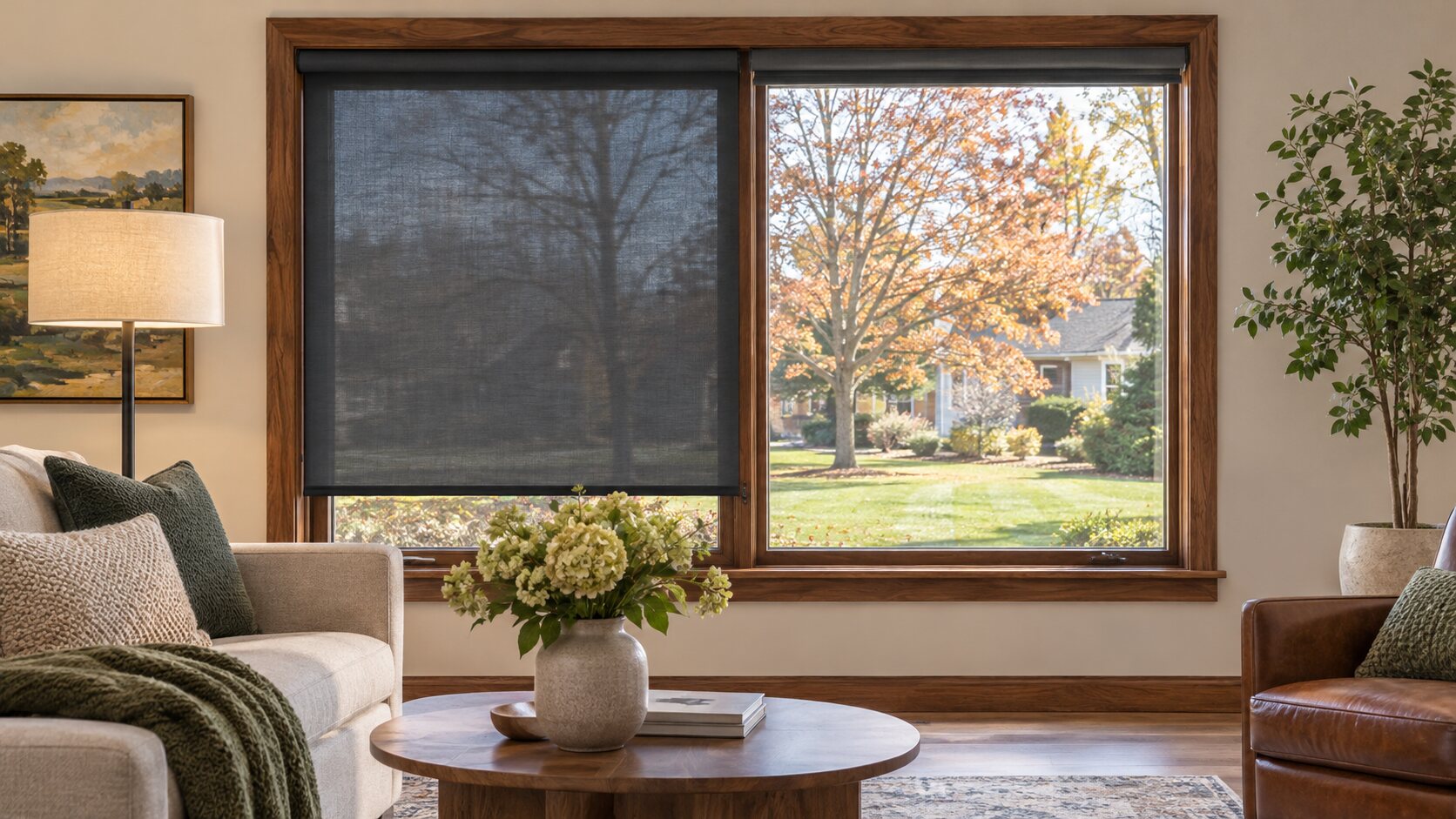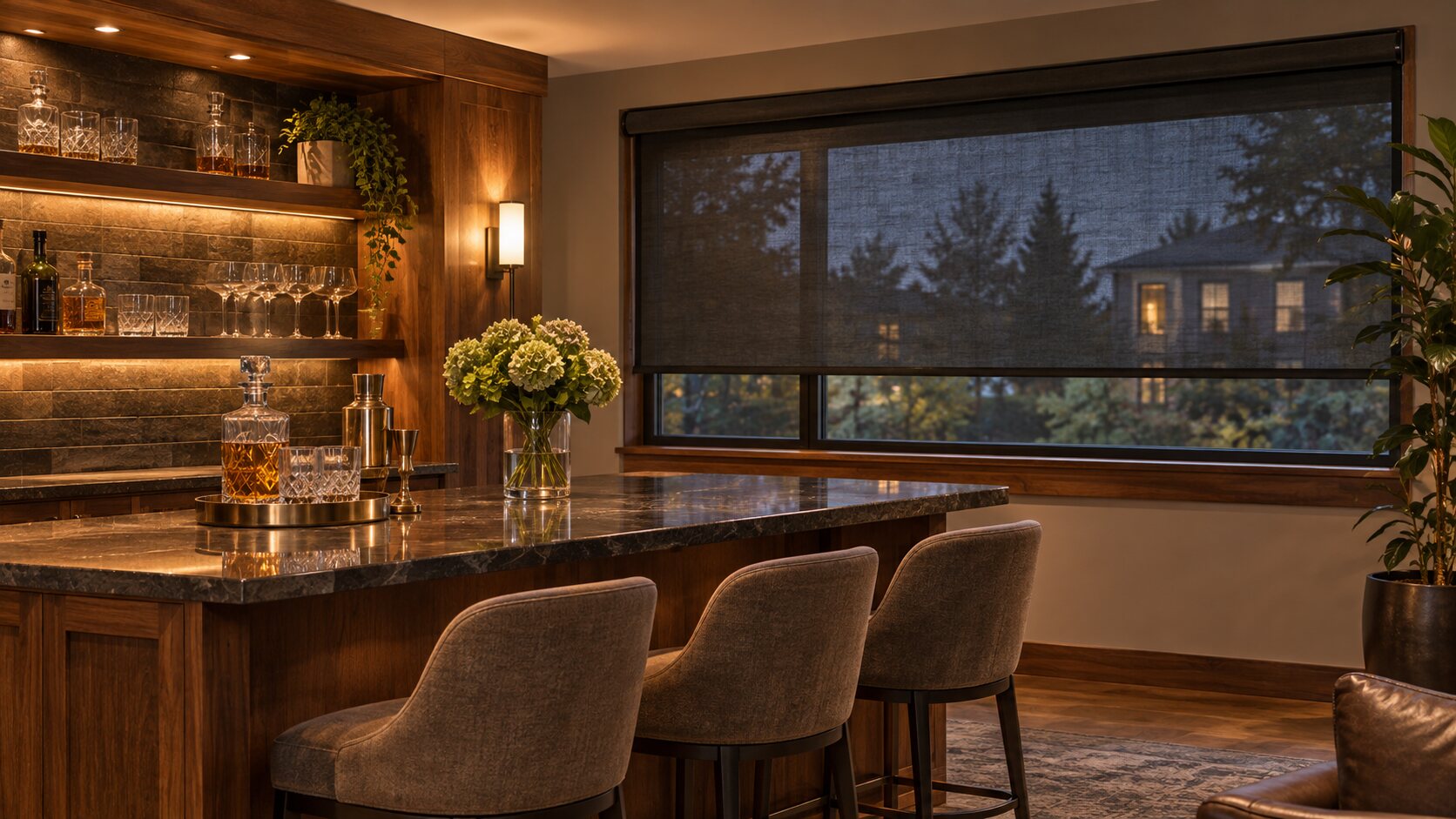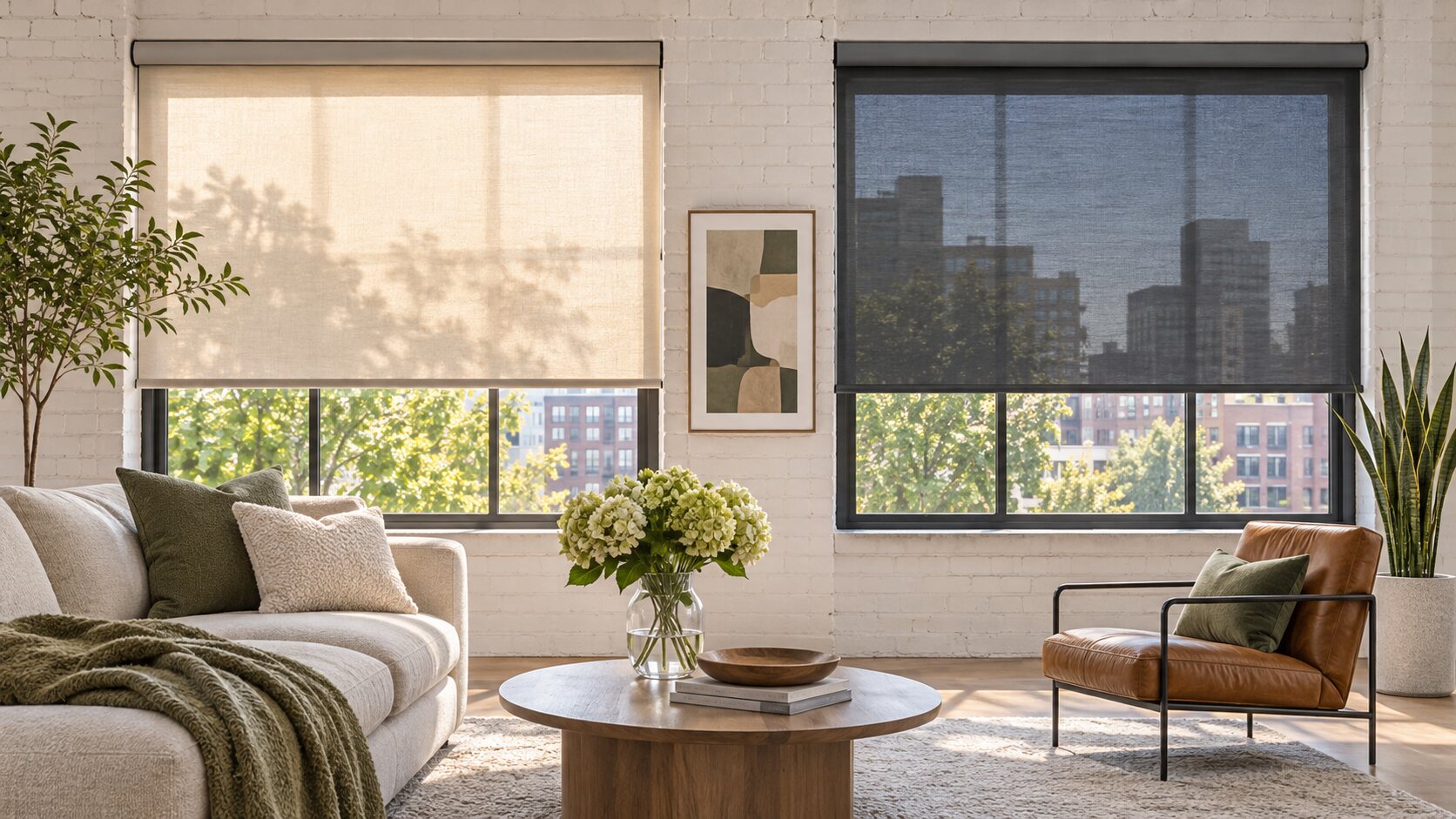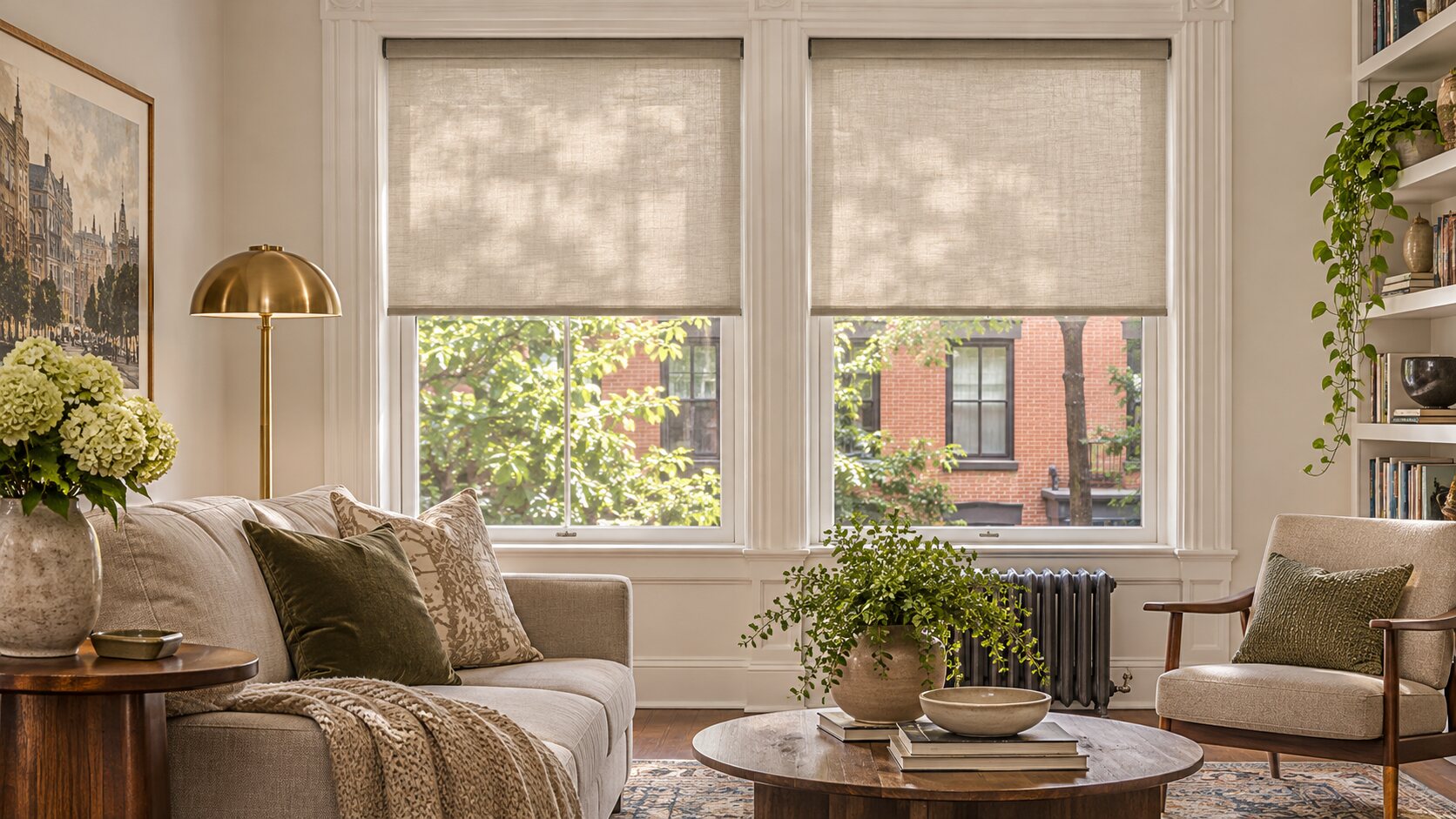
The best custom roller shades for Washington DC homes are light-filtering roller shades for street-facing living areas and blackout roller shades for bedrooms, with motorization added where windows are tall or hard to reach. In a rowhouse, townhome, or condo, the window opening itself often decides the winner, so depth and mounting style matter as much as fabric. World Wide Shades builds roller shades to the exact size you enter, so you can match each window to its job.
Last updated: 2026-11-27
This guide is written for residential owners and renters in rowhouses, townhomes, and condominiums. Your exposure depends on your block, floor, and orientation, so use the picks below as a way to judge your own windows rather than a rule for every address.
Summary: Ranked Picks at a Glance
| Rank | Option | Best for | Key trade-off |
|---|---|---|---|
| 1 | Light-filtering roller shades | Street-facing living rooms and dining rooms | Silhouettes can show at night with lights on |
| 2 | Blackout roller shades | Bedrooms and media spaces | Closed shades give no daylight |
| 3 | Motorized roller shades | Tall, wide, or hard-to-reach windows | Needs 2.5 in of inside depth for the recommended fit |
| 4 | Outside-mount roller shades | Shallow or uneven openings | Overlap onto the wall or trim is visible |
| 5 | Cellular shades (not sold by WWS) | Winter insulation priority | Thicker stack; not a roller shade |
| 6 | Drapery (not sold by WWS) | Soft look, wide or irregular spans | Takes up wall and floor space |
1. Light-Filtering Roller Shades for Street-Facing Windows
If your front windows sit close to the sidewalk or stoop, light-filtering roller shades are the strongest all-around choice. The Building America Solution Center notes that light-filtering interior roller shades can reduce heat gains and harsh glare while allowing diffuse natural light, and that they can provide nighttime privacy and full-window shading. That combination suits a front room you use all day.
Fabric choice drives privacy. A tighter weave and a deeper color generally hide more of the room, while a very open weave keeps more of the outdoor view and reveals more of what is inside. For a deeper look at openness and color, read the light-filtering shades guide and the guide to the best roller shade fabrics.
One honest caution: a light-filtering shade can show silhouettes after dark when the room is lit and the street is dim. If a front window needs full privacy at night, pair it with a blackout layer or choose a blackout fabric for that opening.
Browse World Wide Shades light-filtering roller shades or call (844) 674-2716 to talk through a street-facing window.
2. Blackout Roller Shades for Bedrooms
Bedrooms on a lit street, or rooms that catch early sun, are where blackout roller shades earn their place. The same federal guide says roller shades, depending on the model, can provide diffuse daylight or blackout, and that they mostly block airflow for breezes, so you control light without adding bulk.
For a second-floor bedroom facing the street, blackout fabric handles streetlight and early light. For a rear bedroom, you may be able to choose a lighter fabric because the exposure is different. Edge light is the detail that surprises people: a closed shade still lets a thin halo escape around the frame, and an outside mount with generous overlap tends to reduce it. The bedroom window shades guide covers sleep-focused choices, and blackout curtains versus blackout shades explains when a curtain layer makes sense.
Choose a blackout fabric from World Wide Shades and compare colors in the fabric library.
3. Motorized Roller Shades for Tall or Hard-to-Reach Windows
Many DC homes have tall parlor-level windows, stair-landing windows, or wide openings over a sofa or desk. Motorization lets you adjust those shades without reaching a cord, and a remote is required. Automate motors paired with the Pulse 2 hub add app, voice, and schedule control. It also avoids a hanging cord in a hallway or shared stairwell, which is a practical plus in a home with children or pets. See the child-safe window treatments guide for more on cordless operation.
Motorized shades need room. World Wide Shades lists a minimum inside depth of 1.5 in for standard inside mounts and recommends 2.5 in when the shade is motorized. If a window falls short, an outside mount is the straightforward fix. Smart-home pairing is covered in the motorized shades setup guide and the Alexa and Google Home guide.
Explore World Wide Shades motorized roller shades.
4. Outside-Mount Roller Shades for Shallow or Uneven Openings
Rowhouses and older townhomes can have openings with variable depth, trim that is not square, or deep sills in one room and almost none in the next. Condos can have shallow frames where the glass sits close to the surface. In these cases, an outside mount often gives the cleanest result because the shade does not depend on the opening's depth.
World Wide Shades recommends adding 2–3 in to each side of the opening and 3 in above for outside mounts. That extra coverage helps block side light around the frame. If you prefer an inside mount, the numbers work differently: enter the narrowest width among the top, middle, and bottom of the opening and the tallest height among the left, center, and right, then enter that exact opening size. The factory makes the deductions, so you do not subtract anything yourself.
A valance or cassette can also tidy the top of the shade where the roll is visible. See roller shade valance options.
5. Cellular Shades: The Better Pick When Insulation Comes First
World Wide Shades does not sell cellular shades, and for some windows they are the better answer. The U.S. Department of Energy explains that cellular shades trap air in their honeycomb cells and between the shade and the window, which helps reduce nighttime heat loss and cold drafts near windows. In comparison with no shades, the DOE fact sheet reports savings of up to 20% on heating energy and up to 15% on total heating and cooling energy, though it also notes the experiments focused on the heating season.
Choose cellular shades when a drafty single window is your main concern, for example a bedroom window in an older rowhouse that feels cold in winter. The trade-offs are real. They are thicker than a roller shade, they do not give the same clean flat look, and the federal guide says closing insulating interior shades at night can raise the risk of condensation or frost on glass. It suggests leaving the bottom rail about half an inch from the sill and opening shades during the day. For a roller-based comparison, read the energy-efficient window shades guide.
6. Drapery: The Better Pick for Soft Style and Wide Spans
Drapery is another option World Wide Shades does not sell, and it can beat a roller shade in specific rooms. The Building America guide notes that drapes and curtains can provide some winter insulating value, offer diffuse light in some models, and are protected from the elements. They also block views when closed and, like other interior treatments, reduce heat gain less effectively than exterior shading because sunlight has already passed through the glass.
Drapery works well on a wide living room wall, an irregular bay, or any place where you want texture and softness. The trade-off is space: panels need wall width and sometimes floor clearance, which can be tight in a narrow rowhouse room. Roller shades versus Roman shades can help if you are weighing fabric looks.
How to Match Shades to Your Home Type
Front windows often face a sidewalk or stoop, so privacy is usually the first goal. Consider light-filtering shades on the main level and blackout shades on bedroom floors. Check window depth room by room, because older openings can differ from one window to the next. Stairwell and rear-addition windows are good candidates for motorization.
Shared buildings can bring rules about how windows look from outside, and some associations ask for a uniform appearance. Check your building's rules before you choose a color or fabric. If you rent, ask your landlord what is allowed, and read the rental apartment roller shades guide.
Where windows face a neighboring wall, alley, or shared courtyard, light control can matter more than street privacy. A lighter light-filtering fabric keeps daylight flowing while softening a close view. For rooms where outside sound is a concern, see noise-reducing window shades, which sets realistic expectations.
What to Know Before You Order
World Wide Shades builds each shade to order, and lead time is typically 2–4 weeks, so plan ahead if you have a move-in date or an event. Start in the World Wide Shades builder, enter your exact opening size, choose your mount, fabric, and control, and review the result before checkout. If you are unsure about depth, mount, or fabric opacity for a particular window, call (844) 674-2716 or contact World Wide Shades for guidance.
Frequently Asked Questions
Light-filtering roller shades are the best fit for most street-facing living spaces, and blackout roller shades are best for bedrooms. Add motorization on tall or hard-to-reach windows, and use an outside mount where depth is shallow or uneven.
They can, depending on fabric. Light-filtering fabrics offer daytime privacy, and the federal guide says they can provide nighttime privacy, but silhouettes may show when the room is lit and outside is dark. For a window that needs complete privacy at night, choose blackout fabric.
World Wide Shades lists a minimum inside depth of 1.5 in, and 2.5 in is recommended for motorized shades. If your opening is shallower, an outside mount is the better choice.
For an outside mount, add 2–3 in to each side of the opening and 3 in above it. This overlap helps limit side light around the frame.
Sometimes. Cellular shades are the stronger pick when winter insulation is the main goal, as the DOE fact sheet describes. Drapery is better for a soft look on wide or irregular spans. World Wide Shades does not sell either, and roller shades remain the cleaner option for flat, tailored privacy and light control.
World Wide Shades lead time is 2–4 weeks. The exact timing depends on your order, so confirm when you check out or call (844) 674-2716.
Start With the Right Shade for Each Window
Begin with the rooms where privacy or light causes the most daily friction, then match each window to a pick above. Start your design in the World Wide Shades builder, compare fabrics, or contact the team to talk through a window that does not fit the usual pattern.