What makes a roller shade “healthcare-grade” (and what actually matters)
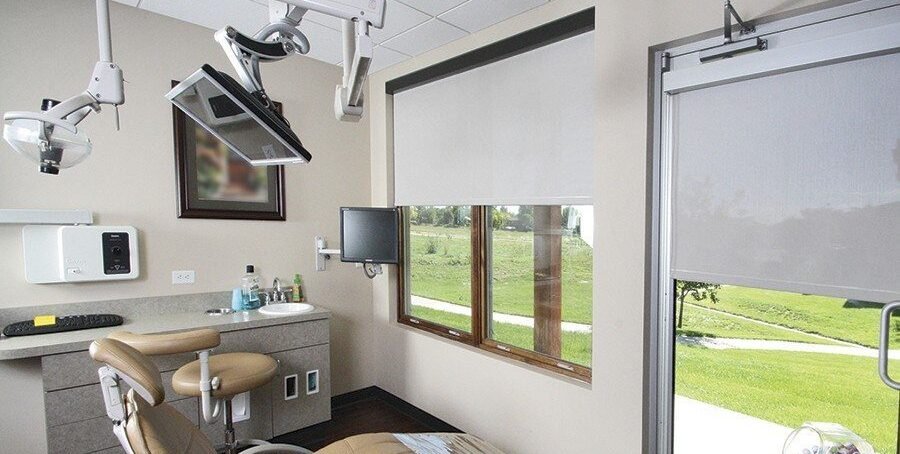
Medical offices and dental clinics have a different definition of “good window shades” than a typical home. You’re balancing patient privacy, comfort, lighting for exams, screen glare for charts, and a space that has to look clean even at 4:45 p.m. on a fully booked day.
In practice, “healthcare-grade” usually comes down to five requirements:
- Cleanability: Smooth, non-absorbent or tightly woven surfaces are faster to disinfect and don’t hold on to dust the way heavy drapery can.
- Moisture and stain resistance: Operatories, sterilization areas, and breakrooms see humidity swings; waiting rooms see coffee spills.
- Privacy control: Many clinics need daytime privacy without turning the office into a cave.
- Glare management: Clinical workstations and patient-facing monitors are common sources of complaints.
- Durability for high-touch spaces: A waiting room shade gets used more like a retail fixture than a residential window covering.
If you want help choosing the right fabric and hardware combination for your floor plan, start with World Wide Shades and use the online design tool at Build your custom shades. World Wide Shades can guide you toward commercial-ready fabrics, hardware, and mounting strategies.
Fabric performance: the specs to ask for in a clinic
Not every “roller shade fabric” performs the same under frequent cleaning. When you compare options, focus on specs that predict real-world performance.
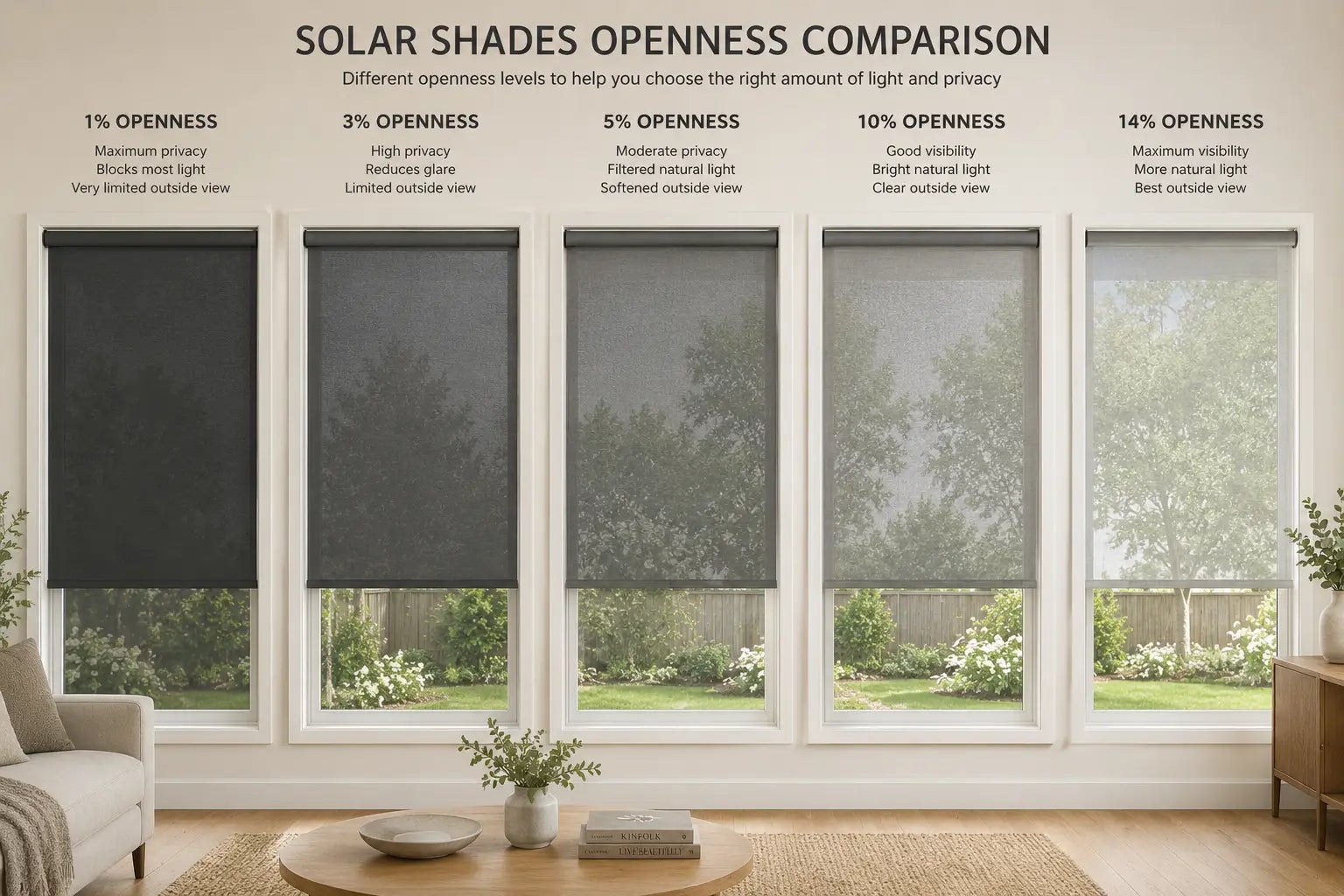
Openness factor (often written as 1%, 3%, 5%, or 10%) is the percentage of the fabric that is “open” to light and view.
- 1% openness: Best glare control and daytime privacy, less view out.
- 3% openness: Strong glare control with a better view out than 1%.
- 5% openness: Balanced; common for offices where you want daylight without harsh glare.
- 10% openness: Brightest feel and best view out, but least privacy and glare reduction.
For many medical offices, 3% to 5% is the sweet spot in administrative areas, while 1% works well in rooms where privacy and screen visibility are priorities.
If you want to go deeper on fabric specs, World Wide Shades breaks down openness and light behavior in Light filtering shades guide and UV protection window shades.
Not every clinical space needs true blackout. Choose based on use:
- Room-darkening: Reduces light significantly while allowing small edge gaps; often enough for consult rooms.
- Blackout: Best for ultrasound, imaging review, sleep medicine consults, or any room where lighting needs to be controlled precisely.
Edge gaps matter in clinical settings because even a small sliver of light can reflect off monitors. Outside-mount blackout shades can reduce light leak better than inside-mount for many window types.
World Wide Shades can help you compare light-control goals to budget at Get help via Contact or by starting with Build your custom shades.
Clinics frequently prefer coated or performance fabrics because they’re quick to clean and maintain their look.
- Performance polyester: A common commercial workhorse; can look more “design-forward” than you’d expect.
- Vinyl-coated options: Often chosen for maximum wipeability.
- Textured weaves: Can look warmer in waiting rooms but may require more careful cleaning.
If durability and maintenance are your top priorities, compare material pros/cons in Polyester vs vinyl roller shade fabric and cleaning considerations in How to clean roller shades.
Privacy planning by area: waiting room vs operatories vs offices
A smart clinic plan uses different fabrics (and sometimes different lift types) by zone.
Goals: reduce glare, keep the space bright, and maintain daytime privacy.
Recommended approach:
- 3%–5% solar or light-filtering fabric for daylight + comfort.
- Uniform appearance from the street if you’re in a medical plaza with tenant guidelines.
For professional curb appeal, World Wide Shades can coordinate colors across windows and elevations; start with Order swatches so you can see the fabric under your real lighting.
Goals: controllable privacy, cleaner look, and a calm environment.
Recommended approach:
- Light-filtering or room-darkening for most exam rooms.
- Blackout for rooms where patient comfort or clinical function requires low light.
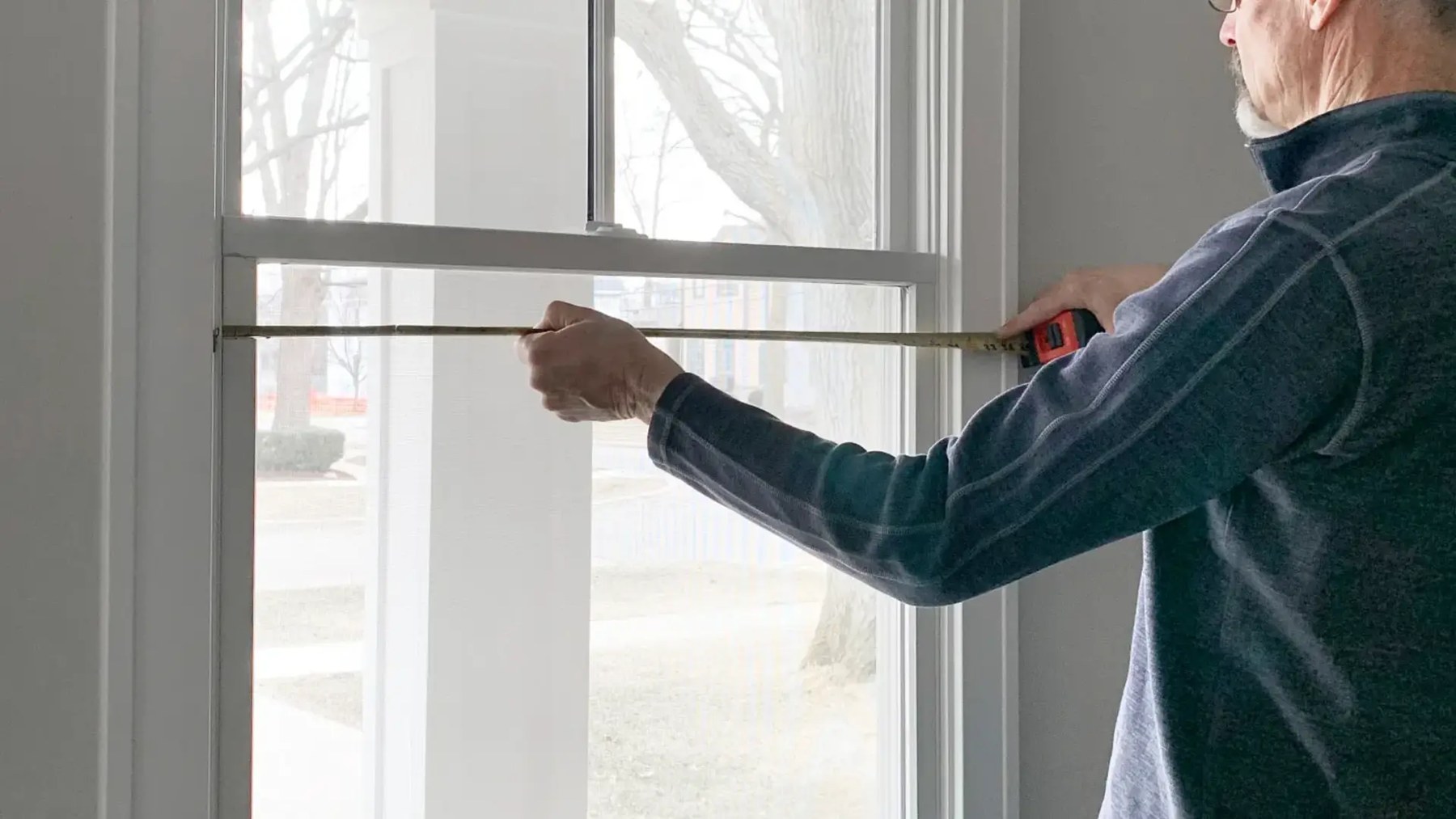
If you’re deciding between mounting styles for better light blocking, you’ll like Inside mount vs outside mount shades and the practical fit details in How to measure windows for roller shades.
Goals: reduce screen glare and heat gain without making the room feel enclosed.
Recommended approach:
- 3%–5% openness for monitor comfort.
- Consider dual shades (light-filtering + blackout) for offices that double as consult rooms.
World Wide Shades can spec dual systems for flexible spaces; start with Build your custom shades and note which rooms need “day/night” function.
Cordless, chain, or motorized: what’s best for a healthcare environment
Healthcare teams care about speed and reliability. Patients care about quiet and comfort.
Cordless shades can look sleek and reduce dangling components, but they’re not always the best fit for larger commercial windows or heavy-use areas.
If child safety or cord reduction is part of your spec, compare options in Cordless roller shades guide and broader safety considerations in Child safe window treatments.
Chain control is common in commercial installs because it’s consistent and easy to service. In patient areas, you’ll want to ensure the control is placed where it won’t interfere with traffic flow.
Motorized roller shades are increasingly common in clinics because they:
- Reduce daily handling (less wear and fewer fingerprints)
- Create a higher-end patient experience
- Make it easy to manage glare for screens and clinical lighting
If you’re exploring automation, World Wide Shades covers setup considerations in Smart home motorized shades setup and control ecosystems in Motorized shades Alexa Google Home.
For a quote tailored to the number of windows and preferred control style, contact World Wide Shades at (844) 674-2716 or start building at Build your custom shades.
Hardware details that matter in a clinic (and why)
In commercial environments, hardware choices affect longevity and patient perception.
A cassette (or enclosed headrail) gives a cleaner appearance and can reduce dust on the roll.
Learn the differences in Roller shades with cassette headrail vs exposed tube.
If you’re trying to reduce light leakage for imaging rooms or rooms with patient-facing monitors, side channels can help. They also create a more finished look.
If your current shades have annoying edge light, troubleshoot options in Roller shade light gaps side fix.
Two shades can use similar fabric yet wear differently because of clutch and bracket quality. In high-use areas, better components reduce callbacks, which matters if you manage multiple clinics.
World Wide Shades can help you standardize a spec across locations; reach out at (844) 674-2716 via Contact World Wide Shades.
Choosing colors that look clean (and stay looking clean)
Healthcare interiors often prefer light neutrals because they look bright and reassuring, but pure white can show scuffs.
Practical color guidance:
- Soft whites and warm off-whites tend to hide dust better than bright optical white.
- Medium neutrals can conceal fingerprints in high-touch areas.
- Dark colors can look sharp but show lint and dust more quickly.
For color coordination help, use Order swatches from World Wide Shades and compare against your paint and flooring. For broader palette ideas, see Window shades color guide and trend context in Window shade trends 2026.
Cost and budgeting: what clinics should expect
Clinic budgets usually need to predict per-window costs and lifecycle value.
Typical budget drivers include:
- Fabric type (performance vs decorative)
- Openness/blackout requirements
- Cassette/headrail choices
- Motorization vs manual controls
- Installation complexity (inside/outside mount, height, access)
If you’re estimating total project cost, start with How much do custom roller shades cost and then confirm exact measurements and mounting approach with World Wide Shades at Build your custom shades.
Installation notes for medical and dental offices
A perfect fabric won’t perform well if the mount isn’t right.
Key installation choices:
- Inside mount: Clean architectural look; can leave more edge light in blackout setups.
- Outside mount: Often better for privacy and blackout because you can overlap the frame.
- Clearance planning: Consider cabinet doors, window cranks, and equipment placement.
For step-by-step guidance, see How to install roller shades and measurement specifics in How to measure windows for roller shades.
If you want a fast sanity check before ordering, World Wide Shades can review your plan—call (844) 674-2716 or start with Build your custom shades.
FAQ: medical office and dental clinic roller shades
For most waiting rooms, 3%–5% openness balances daylight, glare control, and daytime privacy. If your windows face a busy sidewalk, 1% can add more privacy.
Roller shades are often easier to keep looking clean than heavy curtains because they present a smoother surface and don’t pool fabric on the floor. The best choice is a performance fabric you can wipe down consistently.
Only if the clinical function needs very low light (imaging review, sleep consults, or strong screen glare issues). Many exam rooms do well with room-darkening.
Motorization can reduce daily handling, improve patient experience, and make it easier to standardize glare control. It’s especially helpful for hard-to-reach windows or multi-window walls.
Standardize your fabric color and openness factor, then use consistent hardware (cassette style, control side, and mount type). World Wide Shades can help you create a repeatable spec across rooms.
Order samples and view them under your clinic lighting. Start with Order swatches from World Wide Shades and compare in the morning and late afternoon.
Next step: spec and order with World Wide Shades
If you’re planning a new clinic buildout, remodel, or multi-location refresh, World Wide Shades can help you select fabrics, openness factors, and hardware that fit your space.
- Build a quote quickly with Build your custom shades
- Compare materials in person with Order swatches
- Talk to a specialist at (844) 674-2716 or via Contact World Wide Shades