“Blackout” and “room-darkening” are not interchangeable labels. Blackout roller fabric is engineered to stop light through the material, while room-darkening fabric reduces most incoming light but may allow a visible glow. Neither can promise a perfectly dark room if light enters around the shade, through an uncovered transom, or beneath a door.
The best choice depends on what you are trying to do: sleep after sunrise, reduce a monitor reflection, watch a movie, protect privacy, or make a living room comfortable. Use the World Wide Shades online builder to compare both fabric types with the same window dimensions and mount.
The difference in plain language
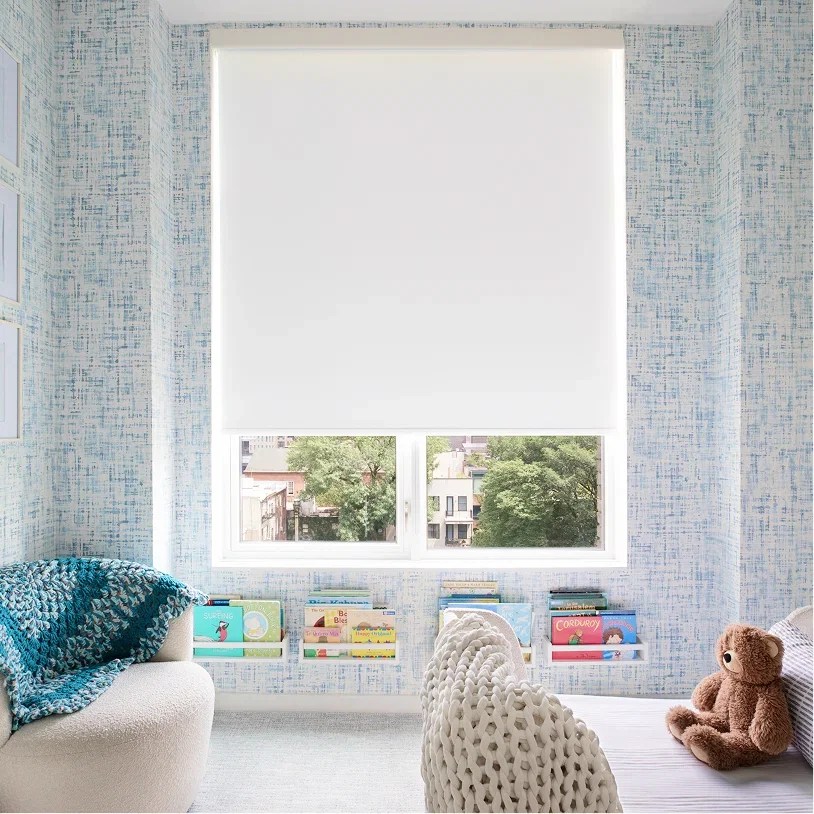
Blackout fabric has a backing or dense construction that blocks light through the cloth. In a correctly sized outside mount with a cassette or side channels, it can make a bedroom or media room dramatically darker. It is the strongest choice for shift workers, nurseries, projectors, and anyone sensitive to early morning light.
Blackout does not mean “zero light under every condition.” An inside mount can leave a 1/2-inch to 1-inch halo depending on the frame and system. A gap above the roller, around a handle, or at the sill can also show. For the complete strategy, read blackout curtains vs. blackout shades.
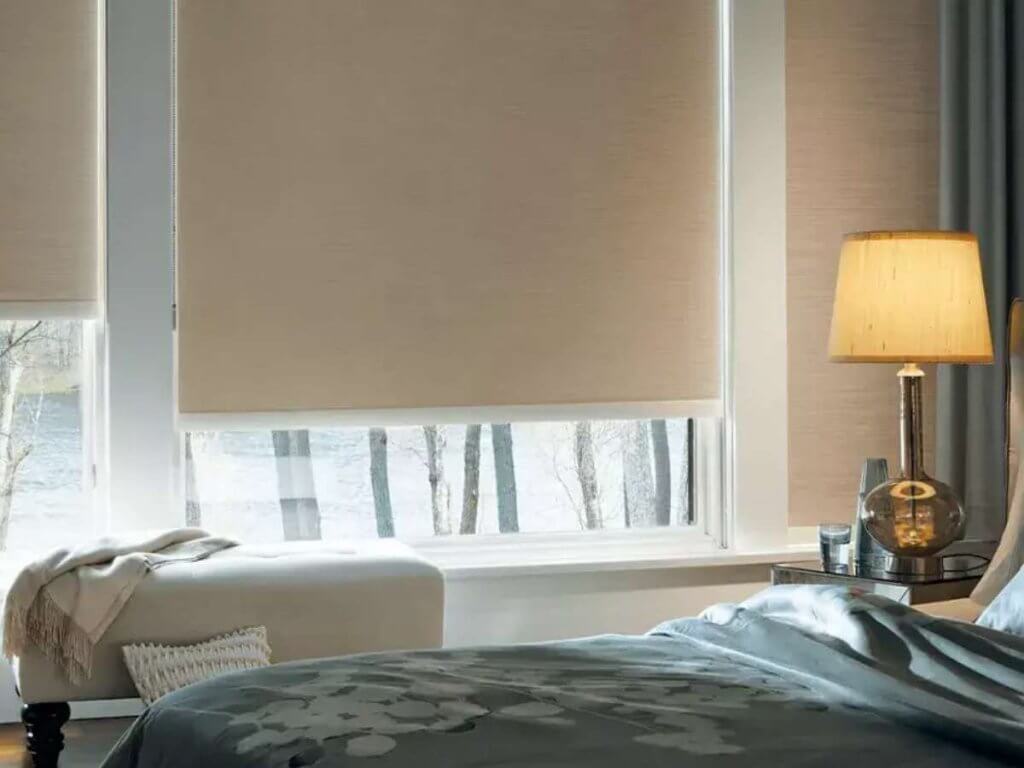
Room-darkening fabric reduces light significantly but may still allow a soft glow through the cloth or edges. It is often more pleasant in a living room, guest room, or office because it dims glare without making daytime feel like night. Room-darkening can also provide privacy while preserving a small amount of ambient light.
If you want a room to be comfortable for a screen but do not need true sleep darkness, room-darkening can be the more flexible choice. Ask World Wide Shades for a fabric comparison before deciding by label alone.
How much darkness does each room need?
Choose blackout when sleep quality, an early sunrise, or a streetlight is the concern. For a better seal, outside mount the shade 3 to 4 inches past each side and at least 3 inches above the frame when space allows. A cassette conceals the top roll; side channels can reduce side leakage further.
Room-darkening works when a slight dawn glow is acceptable or when the window is shaded by deep drapery. Compare fabric and edge treatments in best window shades for bedrooms. Use the builder to compare a blackout roller with a room-darkening alternative.
Blackout can support naps, but safety comes first. Use cordless or motorized operation, secure every bracket, and keep furniture away from the window. A child-safe shade also needs a clean installation and no accessible looped cords. See child-safe window treatments before ordering.
Blackout is usually the better starting point because reflected light reduces contrast on a screen. Seal side gaps and consider a cassette. If the screen is small and the room has no direct sun, room-darkening may be sufficient at a lower cost. Contact World Wide Shades for a multi-window media-room plan.
Room-darkening is often the more livable option. It controls glare on a television, reduces afternoon heat sensation, and keeps the space from feeling sealed off during the day. Choose a 3% solar fabric instead if your first priority is preserving an outdoor view.
Select room-darkening when direct sun interrupts video calls or creates monitor glare. A 1% to 3% solar shade can be better if you need daylight and view. Use an adjustable lift so the shade can stop at the exact line that blocks the reflection. Request swatches from World Wide Shades and test them beside the monitor.
Edge gaps are the part most buyers miss
Fabric opacity and installation coverage are separate decisions. For an inside mount, the finished shade is intentionally narrower than the recess so it can operate. That creates side gaps. The gap varies by product, but a total opening of roughly 1/2 to 1 inch is common in many roller installations.
Outside mount reduces the problem by placing fabric over the trim. Add 3 to 4 inches on each side when wall space allows, and mount the headrail 3 inches above the opening. A cassette covers the top tube; side channels close the vertical edges. For doors, check the handle swing before increasing the width.
A layered treatment can also help. A blackout roller plus stationary drapery panels covers the side halo and adds softness, while the roller handles daily light control. World Wide Shades can coordinate the two layers; contact the team with your window dimensions.
Fabric color does not determine blackout performance
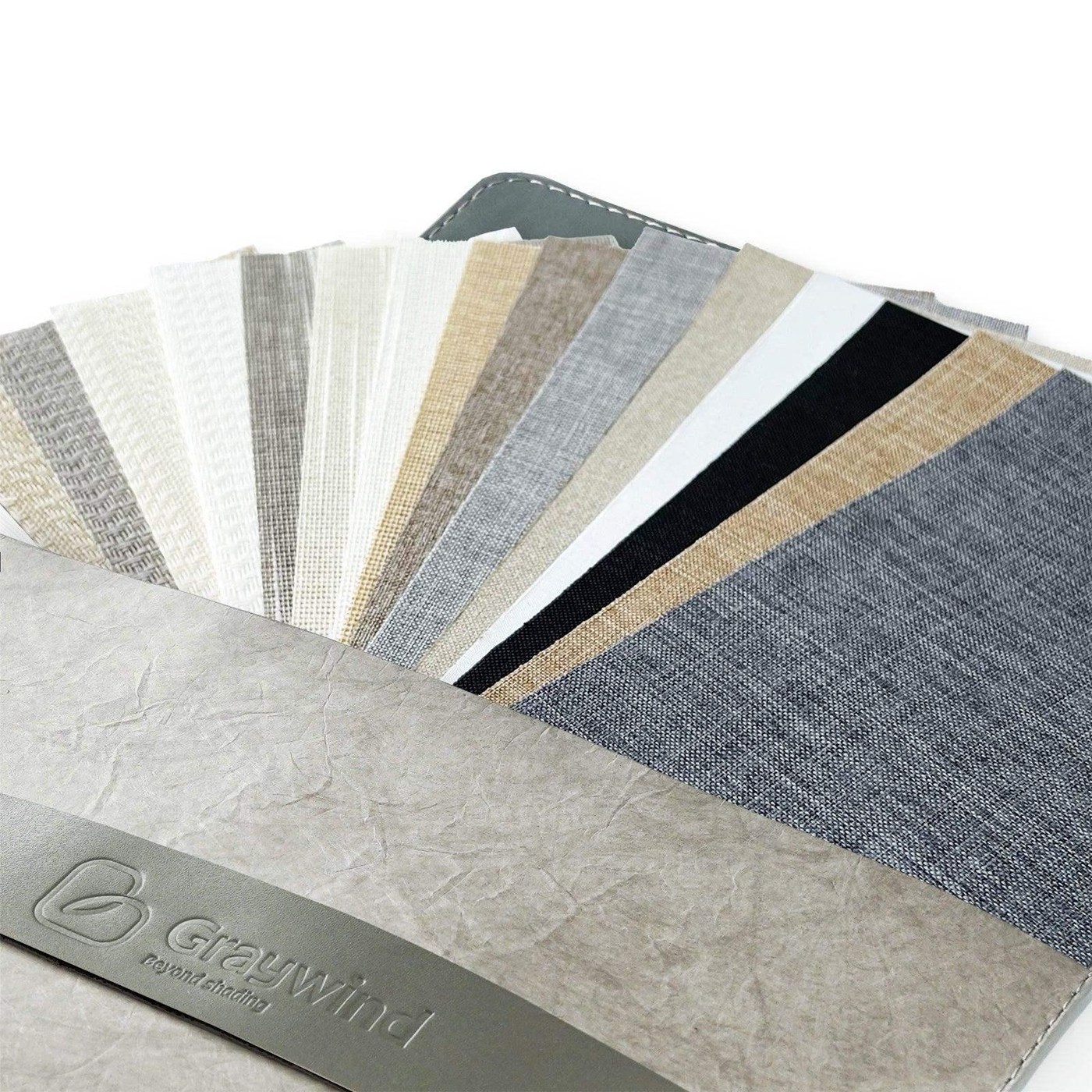
A white blackout fabric can block as much light through the cloth as a dark blackout fabric because the backing does the work. Conversely, a black or navy room-darkening fabric is not automatically blackout. Ask about the construction, lining, and edge coverage, not only the face color.
Color still affects heat and atmosphere. Light face fabrics reflect more visible light and can feel cooler visually; dark fabrics create a stronger visual anchor. Warm white, ivory, taupe, and mushroom keep a blackout bedroom from looking clinical. Read the window shades color guide and order World Wide Shades swatches.
Cost and operating choices
A manual room-darkening roller can fall around $120 to $400 per window, while a blackout roller with a cassette or specialty side channels may run $200 to $650. Oversized windows, dual rollers, and motorization can add substantially. Battery motorization commonly adds about $180 to $350 per window; hardwired systems add electrical labor.
Treat the quote as a system price. Fabric, tube, cassette, brackets, lift, and installation all affect the final number. Use the World Wide Shades builder for a quick configuration, then request a project review if several windows need different coverage.
Blackout and room-darkening maintenance
Dust the shade every 4 to 8 weeks with a soft brush or low-suction upholstery attachment. Spot-clean only as the fabric care code allows. Do not scrub the blackout backing; aggressive rubbing can damage the coating and create a visible patch. Keep bathroom and kitchen shades ventilated so condensation does not sit on the roll.
For pets, choose a durable smooth face and keep the bottom rail out of reach when the shade is raised. Our pet-friendly window treatments guide covers cleaning and scratch resistance. World Wide Shades can recommend a fabric that balances darkness and daily wear; call (844) 674-2716 for help.
Measuring for the result you want
For inside mount, measure width at the top, middle, and bottom and record the narrowest width. Measure height at three points and record the shortest height if the sill is uneven. Check the frame depth, handle clearance, and whether the roller fabric can sit close enough to the glass.
For outside mount, measure the opening and add the desired overlap. A common starting point is 3 to 4 inches on each side and 3 inches above, but trim, outlets, and adjacent windows may change the plan. If a shade is over 60 inches wide, ask whether two aligned shades are more stable than one oversized unit.
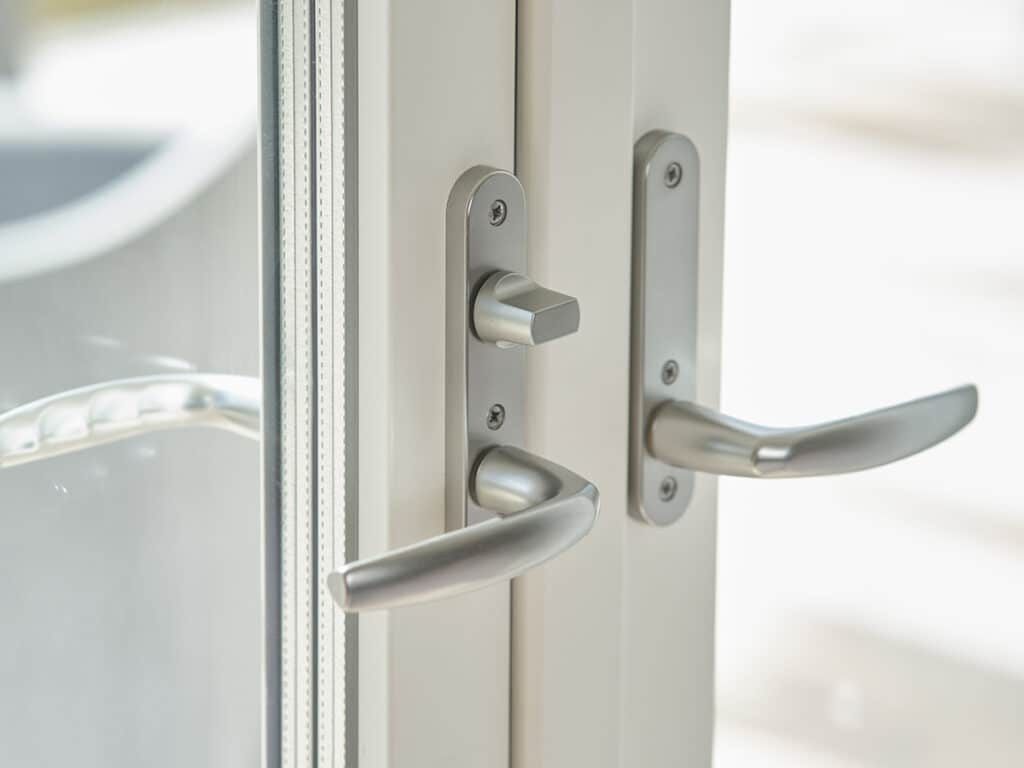
Sliding doors and French doors need special attention to handles and moving panels. Read roller shades for French doors, then send your measurements to World Wide Shades before ordering.
Motorization makes blackout more practical
A motorized blackout shade can close at bedtime without disturbing a sleeping partner or nursery. Schedule the shade to close 30 minutes before sunset, open at a set time, or respond to a smart-home scene. Battery motors are often practical for retrofit work; hardwired systems are worth considering during a renovation.
For voice-control compatibility, see motorized shades Alexa and Google Home. World Wide Shades can pair a clean roller profile with a quiet control plan. Start a motorized configuration or call (844) 674-2716 to compare control options.
Frequently Asked Questions
Blackout fabric blocks light through the material, but an inside mount may leave visible side, top, or bottom gaps. An outside mount with 3 to 4 inches of side overlap, a cassette, and optional side channels creates a much darker result. No shade can block light entering through another uncovered opening.
It can be, especially when the room has exterior shade or curtains and a small dawn glow is acceptable. Choose blackout when you sleep during daylight, work night shifts, have a streetlight problem, or want the darkest possible nursery or media room. Contact World Wide Shades for a fabric and mount recommendation.
Not necessarily. Blackout performance comes from the fabric construction or backing, not simply its face color. A white blackout shade can block light more effectively than a dark room-darkening shade. Compare physical swatches and ask about the fabric’s classification.
Planning ranges are about $200 to $650 per window for many manual blackout configurations, with large, dual, cassette, and specialty installations costing more. Room-darkening rollers may start around $120 to $400. Motorization often adds $180 to $350. Use the World Wide Shades builder for a quote based on your actual dimensions.
Use an outside mount with 3 to 4 inches of overlap per side, install a cassette over the roll, and add side channels when the room requires near-total darkness. Layered drapery can cover the remaining halo. The exact solution depends on trim and handles, so send photos to World Wide Shades or call (844) 674-2716.
Select darkness with intention
Blackout is the right tool when darkness is non-negotiable; room-darkening is better when you want strong glare reduction without losing all daytime atmosphere. In either case, the mount, overlap, cassette, and room’s other openings determine how the result feels.
World Wide Shades can help you compare fabric opacity, color, and edge coverage without guessing. Start with the online builder, request swatches, or contact World Wide Shades. A precise custom fit turns the shade label into the real-world darkness you wanted.