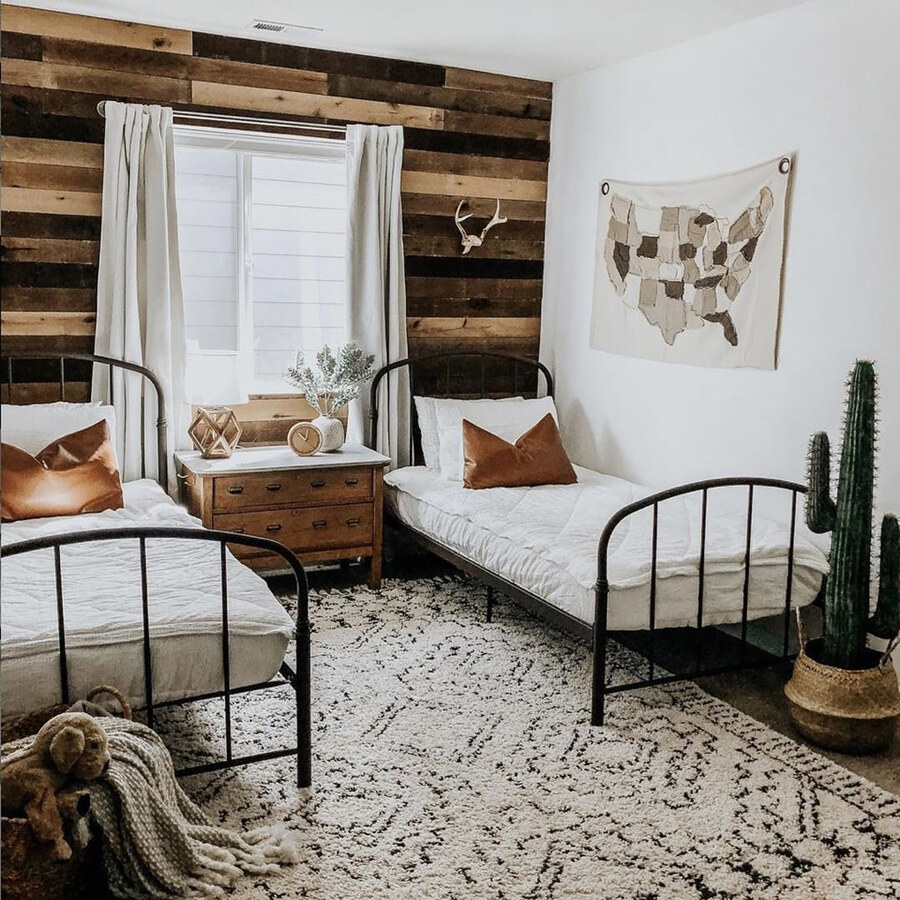
A shared bedroom can have two occupants who want different things from the same window. One person may sleep later, while another gets dressed early; a child may nap while a sibling plays; or a guest room may alternate between daytime use and overnight stays. The shade decision is therefore about more than color: choose how much light to block, whether one or more shades make sense, and how each person should control them.
World Wide Shades makes custom roller shades in blackout and light-filtering fabrics, with options selected for each opening. Rather than assuming one opacity will suit every window, map the room’s sleep, reading, and getting-ready routines first. Compare bedroom shade options, then review the fabric and control choices that could make the room work for both occupants.
Start with the schedules in the room
Write down the different times when each person needs the room to be dark, bright, or private. One occupant may be sleeping while another is getting ready. A child who naps in the afternoon may need more light control than a sibling who uses the room after school. Guests may need privacy and a comfortable room without learning a complicated control system.
Then identify which window affects each activity. If there is one opening over both beds, the shade is a shared decision. If each bed has its own window, separate shades may allow more tailored control. If the room has a large window and a smaller accent window, note whether you want them to move together or independently.
It is often useful to choose a single coordinated color while varying fabric opacity by window or zone. A blackout shade behind the bed can support sleep, while a light-filtering shade by the desk can soften daylight without making the whole room dark. World Wide Shades offers more than 500 colors across 40+ fabric families, including blackout and light-filtering fabrics from Phifer, Mermet, Ferrari, Copaco, Senbesta, and Texstyle.
If the shared room also needs flexible use as a study or guest space, compare roller shades with Roman shades before choosing its overall look. For general selection ideas, read best window shades for bedrooms and compare blackout curtains with blackout shades. You can also browse the World Wide Shades bedroom page while identifying each window’s role.
Choose blackout or light-filtering by activity
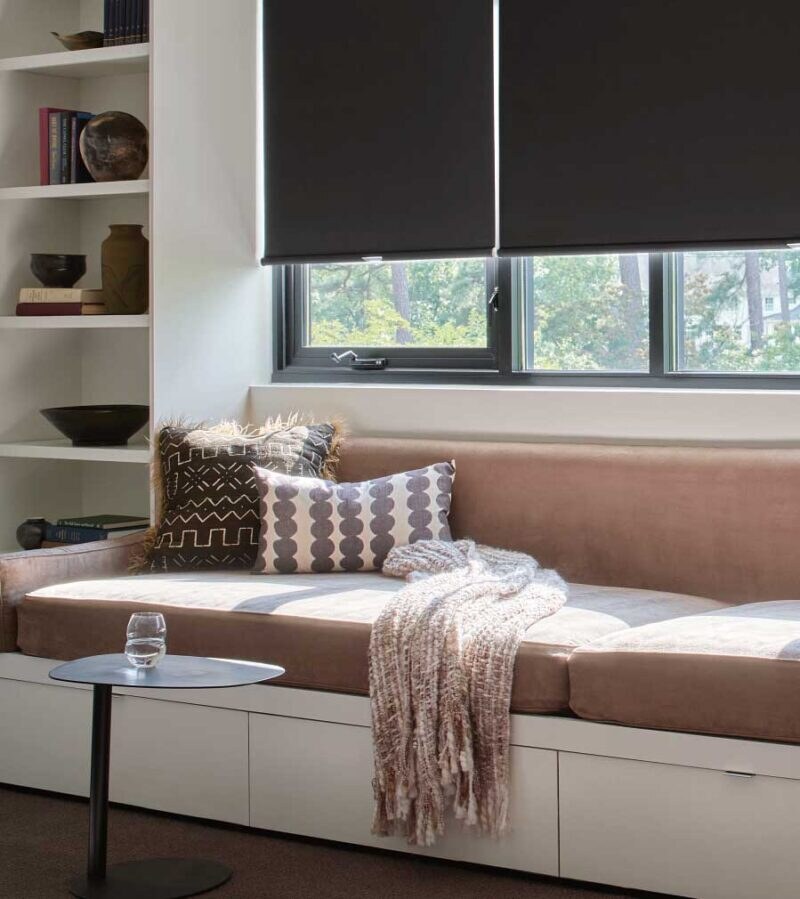
Blackout fabric blocks light through the fabric itself, which can help when one person needs a darker room for sleep or rest. It is worth considering for a window that receives early morning light or for a room where the shade will often be lowered during the day. Explore blackout roller shades and compare them with blackout curtains versus blackout shades.
Blackout does not mean every edge of the window becomes dark. Light can come around the shade, especially at the sides of an inside mount. The position of the beds, the frame depth, and the wall space around the window influence how much coverage is practical. If one occupant is particularly sensitive to morning light, think through the bed’s location and whether an outside mount with overlap is possible.
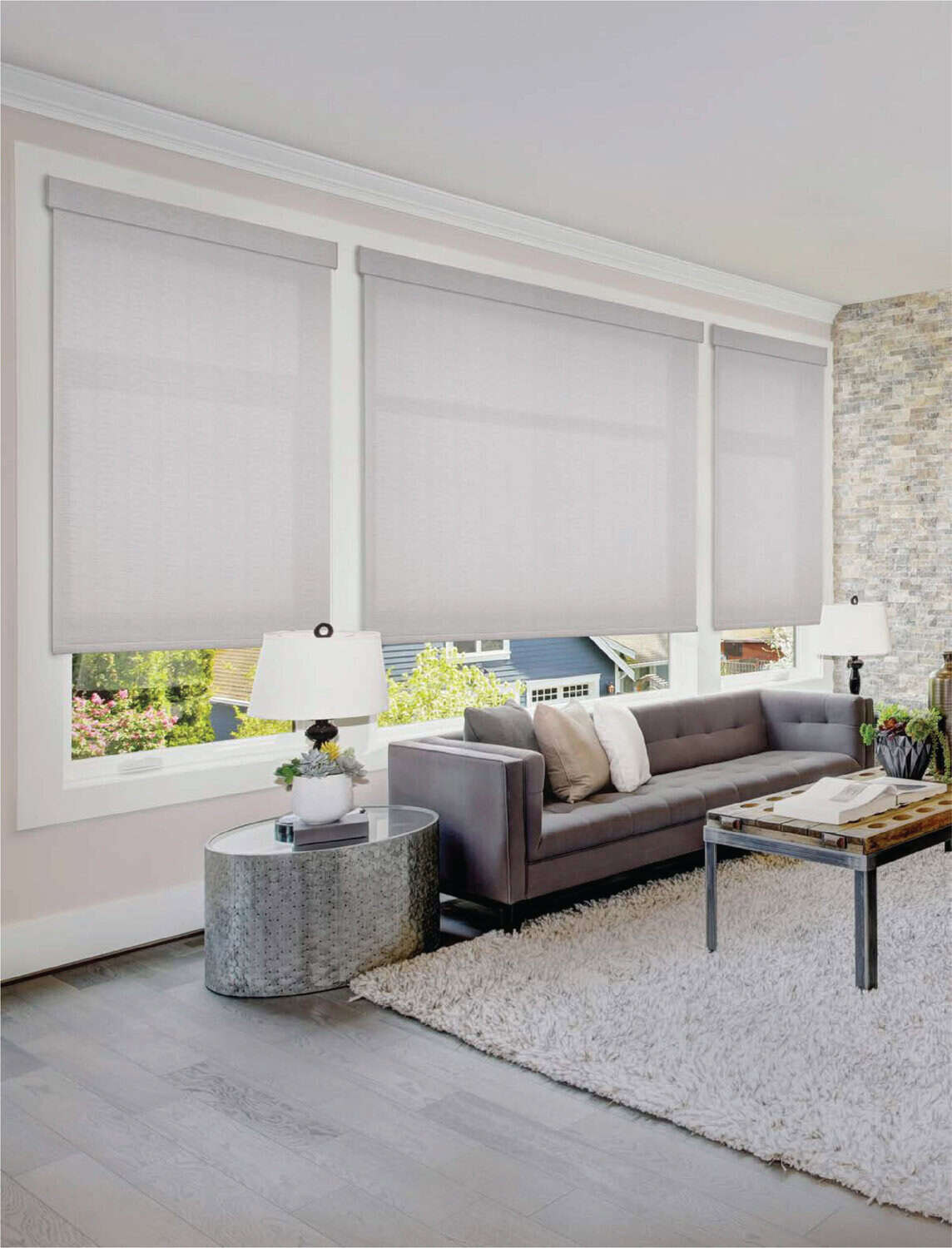
Light-filtering fabric softens daylight while maintaining a more luminous room. It can be a better fit when the shared bedroom doubles as a play area, reading room, or study space during the day. If the room needs light in the morning but a sleeping occupant needs darkness later, consider whether the household’s schedule supports lowering the shade together or whether separate openings and controls are needed.
For a room with one window, a light-filtering fabric may keep daytime use comfortable, but it may not satisfy someone who needs darkness for sleep. Consider a separate window covering only if the architecture supports it and the desired result is clear. World Wide Shades does not offer a swatch or sample program; use the published mill specifications and genuine swatch photography to compare fabric families. Browse light-filtering shades, and compare fabric color options before selecting.
Solar fabrics may suit a shared bedroom with a view or a desk where direct sunlight is distracting. The published openness factor helps compare how open a solar weave is. A more open fabric generally preserves more of the view; a tighter fabric produces a more screened appearance. Openness factor is not a promise of privacy at night, because indoor light can change what is visible through the fabric.
Solar may be a narrower choice for a room where sleep and privacy dominate. If the shared bedroom faces a neighboring house or a street, compare solar against light-filtering and blackout with nighttime privacy in mind. See shade choices for street-facing first-floor windows and light-filtering shade guidance for related decision points.
Choose one shade or separate zones
One shade across a single opening is visually simple, but it gives everyone the same position at the same time. If the room has two separate windows, separate shades can let one side remain lowered while the other is raised. The same principle applies to a wide opening that is divided into multiple shades: decide whether independent coverage is worth the seams and separate controls.
Think about where the light falls, not only where the windows are. A window beside one bed may matter more to that occupant. A desk or reading chair may need its own shade position. If the window is centered between two beds, discuss whether both people are comfortable sharing one fabric and one lowering schedule.
For an inside mount, the frame must have at least 1.5 inches of depth; 2.5 inches is recommended for motorized shades. Measure width at the top, middle, and bottom and use the NARROWEST measurement. Measure height at the left, center, and right and use the TALLEST measurement. Enter the exact opening size, because the factory makes the deductions. Do not subtract. If the frame is too shallow for inside mounting, choose an outside mount.
For an outside mount, add 2 to 3 inches on each side and 3 inches above the frame. Check that the shade’s larger coverage does not conflict with bedside furniture, shelves, or the path to a closet. The measuring guide can help you confirm the final dimensions for each shade.
Decide whether motorization supports the room
Motorization can help when a window is hard to reach, when several shades should move together, or when different occupants need a reliable routine. World Wide Shades uses rechargeable battery motors that require no wiring. Automate is the default motor option, and customers who already own a Somfy remote can choose a Somfy motor paired to it.
A remote is required. The Push 5 can operate up to five shades. If app, voice, or schedules are important, the Automate Pulse 2 hub adds those functions for Automate motors only. No charger is included in the box; any USB-C charger works, or you can add the Motor Charger. Review motorized shades before deciding whether automation would make the shared room easier to use.
The key is to plan the shade groups around actual routines. If the room has two windows and both occupants want them to move together, one control routine may be sufficient. If one window should stay dark while another provides daylight, independent shades and control may be preferable. If the room is used by children, select a control approach they can operate as intended and establish who manages the settings.
For smart-home details, see smart-home motorized shade setup and motorized shades with Alexa or Google Home. The buyer should decide whether the benefit of app or scheduled control outweighs the simpler experience of using the required remote.
Compare value against the room’s long-term use
A custom shade is an investment in fit, fabric, and operation. In a shared bedroom, the value is whether the treatment serves both occupants rather than forcing one person to compromise every day. Consider the room’s likely use over time: children grow, furniture moves, and a guest room may become a study. A coordinated, custom-sized shade can support those changes if you select fabric and control with flexibility in mind.
Compare options by total configuration. Include the number of shades, dimensions, fabric, mount, motors, and any hub or charging accessory. See live pricing in the World Wide Shades builder after you have mapped the room; then compare the intended choices with World Wide Shades bedroom options and the fabric collection. The builder shows live pricing for the configuration selected, rather than a fixed price quoted in this guide.
Every World Wide Shades shade is 100% custom-made by hand in the USA, with free shipping in the United States and delivery in 2 to 4 weeks from order. Limited-stock fabrics and specialty shapes take 3 to 4 weeks. Custom orders are not returnable. Manufacturing defects are remade free within 30 days, and motors are covered for 1 year. Mismeasured shades receive a one-time free recut, with the customer covering shipping.
For a broader comparison of how to outfit the room, read child-safe window-treatment considerations, best roller shades for living rooms, and roller shades versus Roman shades. This run also covers custom shades after window replacement, black-framed windows, and renovation handover timing. If you want to discuss a difficult opening or motor plan, contact World Wide Shades or call (844) 674-2716.
Frequently asked questions
They may be best when darkness is the primary requirement, but the room’s daytime use matters too. If one person needs light while another sleeps, consider separate windows or shade zones and whether each can be operated independently.
The fabric can be selected for each configured shade. That allows a buyer to consider blackout for one opening and light-filtering for another while coordinating color across the room.
Not automatically. Privacy depends on the fabric and the light inside and outside. If nighttime privacy is essential, compare the opacity and mounting coverage rather than relying only on a daylight appearance.
Automate motors can use the Pulse 2 hub for schedules, app, and voice functions. A remote is still required, and the Pulse 2 hub does not work with Somfy motors.
Measure width at the top, middle, and bottom and use the narrowest width. Measure height at the left, center, and right and use the tallest height. Enter the exact opening; the factory makes the deductions.
Ready to Order?
World Wide Shades lets you configure a separate shade for each opening, so the order can reflect more than one sleep schedule. For help selecting fabric or controls, call (844) 674-2716 before checkout.
- Measure: Record each opening accurately and confirm inside-mount depth.
- Choose fabric: Compare blackout, light-filtering, and solar by sleep, study, and privacy needs.
- Choose control: Decide which shades should move independently and whether motorization is useful.
- See live pricing and order: Build the bedroom shades, verify each configuration, and submit the custom order.