A converted garage can become a productive office, but its windows often start with disadvantages: thin glass, dark wall colors, unconditioned air, low sill heights, and direct sun through a former garage door or side window. Garage office window shades help correct those problems by reducing glare on screens, moderating solar heat, improving privacy, and giving the conversion a finished architectural feel.
World Wide Shades plans shades around the opening, not the room label. Use the online shade builder to compare solar, insulating, and blackout fabrics, order swatches in your office palette, or contact World Wide Shades when a garage conversion has unusual framing. The right shade cannot replace insulation in the walls or roof, but it can be a cost-effective part of the thermal and visual upgrade.
Why garage-office windows behave differently
Garages were designed for vehicles, not eight-hour workdays. A standard attached garage may have a slab floor, a large unshaded door, and windows that receive low-angle morning or afternoon sun. Concrete and metal surfaces can amplify temperature swings. If the room is 78°F at the thermostat but the chair is next to a sunlit pane, comfort and concentration still suffer.
Window shades address four common issues:
- Solar heat: A solar screen can cut direct sun while preserving a view.
- Screen glare: A controlled openness factor reduces bright reflections.
- Privacy: A shade blocks views into a workspace that may contain documents or equipment.
- Perimeter comfort: Cellular or lined shades add a modest insulating layer near glass.
The energy-efficient window shades guide explains what shades can and cannot do. Think of a shade as one layer in the envelope, alongside air sealing, weatherstripping, insulation, and efficient HVAC.
Choose a fabric for the work you do
Solar shades are often the first choice for a garage office used during the day. Openness factors commonly range from 1% to 10%. A 1% screen blocks more view and glare; a 5% screen preserves more outward visibility while still softening sunlight; a 10% screen feels brighter but offers less sun control. For a desk facing east or west, 1% to 3% is a practical starting range.
The fabric can reduce UV exposure to floors, desks, and artwork, but it does not create nighttime privacy if the office is lit. Pair it with an opaque shade or drapery if the garage faces a neighbor or alley. See UV protection window shades for material and exposure considerations.
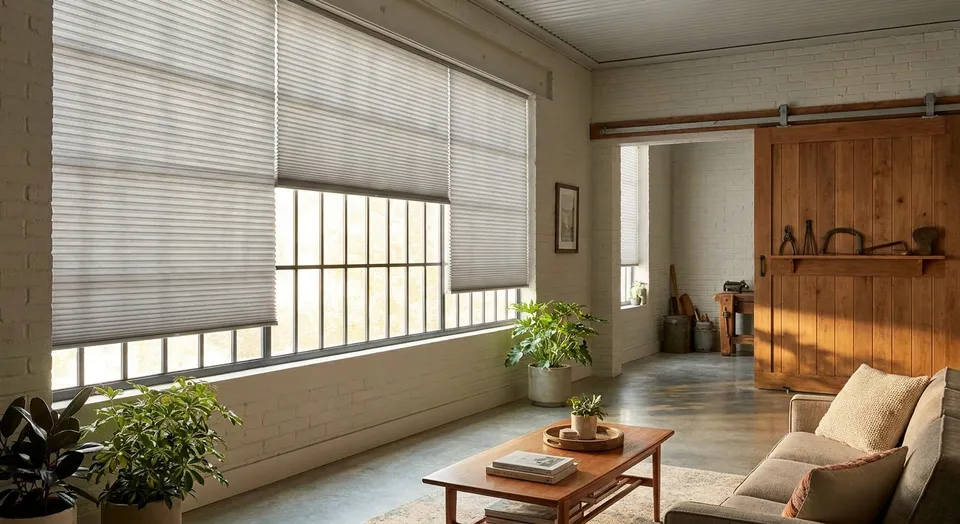
Cellular shades trap air in honeycomb pockets and are useful when garage windows feel cold in winter or hot near the glass in summer. Double-cell construction generally insulates more than single-cell, though the actual result depends on fit, window quality, and whether the shade is closed. For a garage office that is occupied all day, the comfort benefit may matter more than a precise payback calculation.
If the conversion is in a cold region, compare roller shades vs. cellular shades insulation. A cellular shade can be paired with a solar layer when you need both daylight glare control and seasonal insulation.
A room-darkening roller shade can help when the office doubles as a recording studio, presentation room, or guest space. Blackout is useful for projector work or a west-facing room with harsh afternoon sun. It can also make a video-call background more consistent, but avoid making the entire office dark if you need natural light for long work sessions.
World Wide Shades can configure a dual shade so you can use a solar layer at 10 a.m. and a blackout layer for a presentation. Build the two-layer option and compare the cost before ordering.
Managing glare on monitors and cameras
Glare depends on the angle between the sun, window, and screen. Closing a shade completely is not always necessary. A 3% screen lowered to 60% can remove the brightest strip while keeping the office usable. Move the monitor perpendicular to the window when possible; avoid placing the screen directly opposite a bright pane.
For video calls, a shade with a matte, neutral surface can provide a calmer background than a reflective white blind. If the office has two windows at different exposures, use separate shades rather than treating both as one opening. A west-facing window may need a darker openness factor than a north-facing window.
Contact World Wide Shades for help matching shade openness to desk orientation, camera position, and work hours. Call (844) 674-2716 if the office needs a glare-control recommendation quickly.
Privacy and security in an attached garage
A garage office may face a driveway, side yard, or street. At night, a bright office can reveal computer screens and equipment through uncovered glass. Opaque roller shades, privacy liners, or dual shades allow you to close the office without adding heavy drapery that consumes floor space.
For a low window, an outside mount can cover the entire opening and reduce side gaps. For a high window or clerestory, motorization keeps operation accessible and avoids a ladder. Use a cordless option whenever children or pets may enter the office. Read child-safe window treatments for the safety basics.
Installation on garage-conversion walls
Garage conversions can include metal studs, masonry, furring strips, or drywall over older framing. The fastener must match the substrate and support the shade's weight. Do not assume a drywall anchor is adequate for a wide motorized shade. Locate framing or use an approved masonry fastener, and keep brackets level so the roll does not telescope to one side.
Measure each opening independently. Converted garages often have small differences caused by settling or new trim. Record width at three points, height at three points, depth, handle clearance, and the distance from the glass to the nearest obstruction. For basic measuring and mounting, see how to install roller shades. For a broad garage opening or former door, review roller shades for large windows.
A cassette valance conceals the roll and helps the conversion look like a finished office rather than a repurposed utility room. Side channels are helpful when blackout performance matters, but they must be installed square and plumb.
Manual versus motorized shades
Manual cordless shades are a sensible choice for one or two reachable windows. A rechargeable motor is more compelling when the opening is wide, the sill is behind a desk, or the office uses a daily schedule. A motorized shade can close automatically when the west sun reaches a chosen time, reducing the chance that a meeting starts with a bright stripe across the camera.
Battery motorization often adds approximately $150 to $350 per window; hardwired power can add $300 to $600 or more when an electrician is needed. A hub or bridge may add another $80 to $200 for app or voice integration. Explore smart home motorized shades setup before choosing a system.
World Wide Shades can price a manual, rechargeable, and hardwired approach together. Compare configurations, and call (844) 674-2716 if you want to protect the budget for insulation or electrical work first.
A practical garage-office specification
For a 12-by-20-foot converted garage with three windows, a useful plan might include:
- A 3% solar screen on the south or west windows for daytime glare.
- A 5% screen on a north-facing window where view and daylight matter more.
- A cellular or lined layer on the coldest opening if winter comfort is an issue.
- Outside mounts with 2 inches of overlap when privacy or edge glare is severe.
- Cordless operation for reachable windows and motorization for high openings.
- Neutral, matte fabrics to keep video-call backgrounds calm.
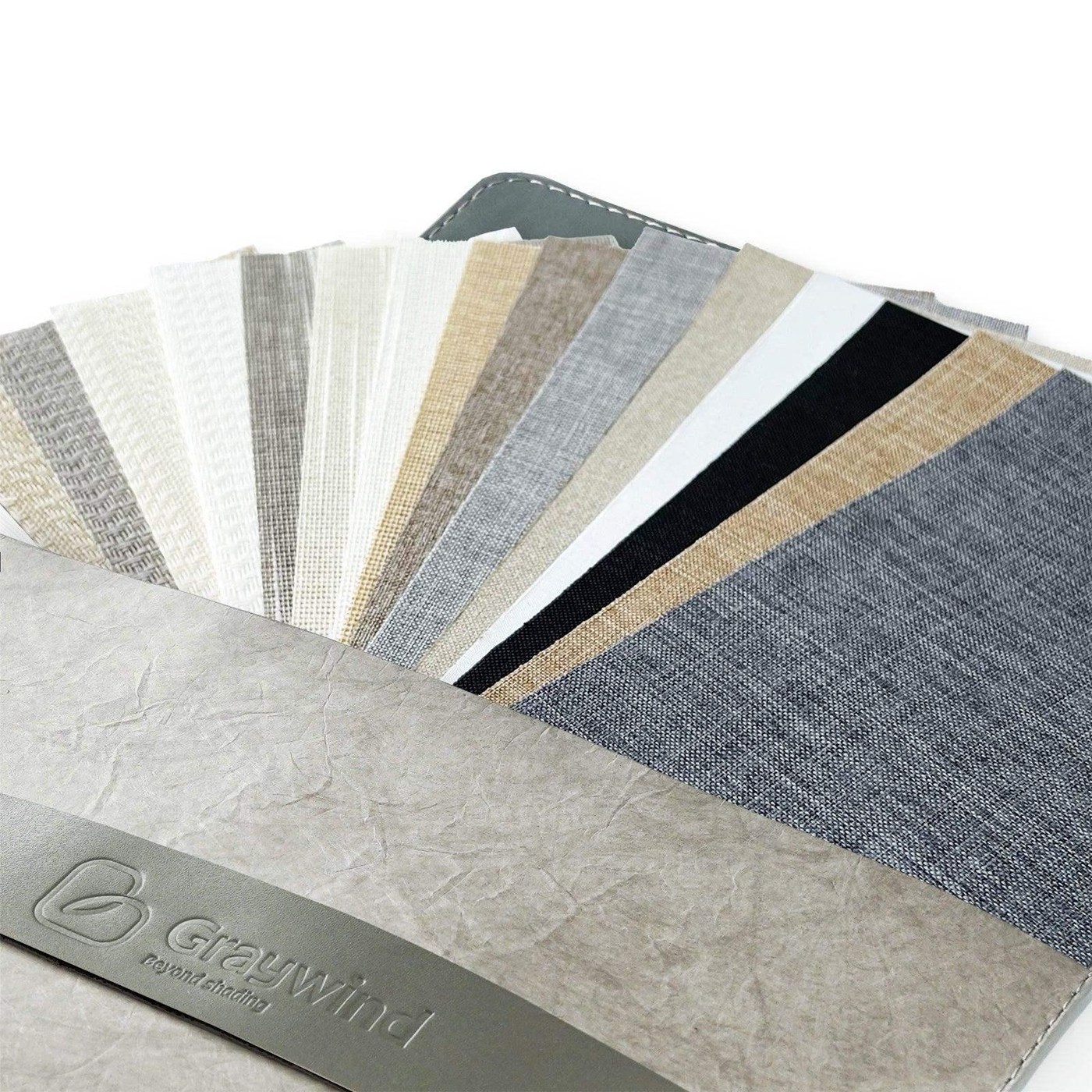
The exact specification should follow the desk layout, sun path, and window construction. Order swatches and view them beside the monitor, not only against the wall.
Cost and return on comfort
A custom solar roller shade may start around $120 to $300 per standard opening. Cellular, blackout, cassette, side-channel, and motorized options can raise the price to roughly $250 to $700 or more per window. A three-window garage office may therefore range from $400 for simple manual treatments to $2,000 or more for a coordinated motorized, layered system.
Energy savings are difficult to promise because the shade is only one component of the room's envelope. Evaluate comfort, reduced glare, privacy, and the value of a workspace you can use consistently. World Wide Shades can help prioritize the windows that receive the most sun instead of treating every opening identically.
FAQ: garage office window shades
Solar shades are usually best for daytime glare and screen work. Add cellular, lined, room-darkening, or blackout layers when the room also needs insulation, privacy, or projector-level darkness.
They can reduce heat transfer near the glass, especially cellular or lined shades, but they do not replace wall, roof, door, or air-sealing improvements. Treat shades as one part of the upgrade.
A 1% to 3% solar screen is a strong starting point for bright east- or west-facing windows. A 5% screen admits more view and daylight; exact choice depends on the desk and sun angle.
Yes. Lowering glare and using a matte neutral fabric can make the background and your face easier to light. Separate shades help when windows have different orientations.
Manual shades often begin near $120 to $300 per window. Layered or motorized systems can range from $250 to $700 or more per opening, depending on size and installation.
Finish the conversion with window control
A garage office becomes much more useful when the windows stop fighting the workday. World Wide Shades can coordinate solar openness, insulating layers, privacy, mounting, and motorization for the exact conversion you have. Design the shades, test fabrics, or contact World Wide Shades for a measured recommendation. Call (844) 674-2716 to discuss the most troublesome opening first.