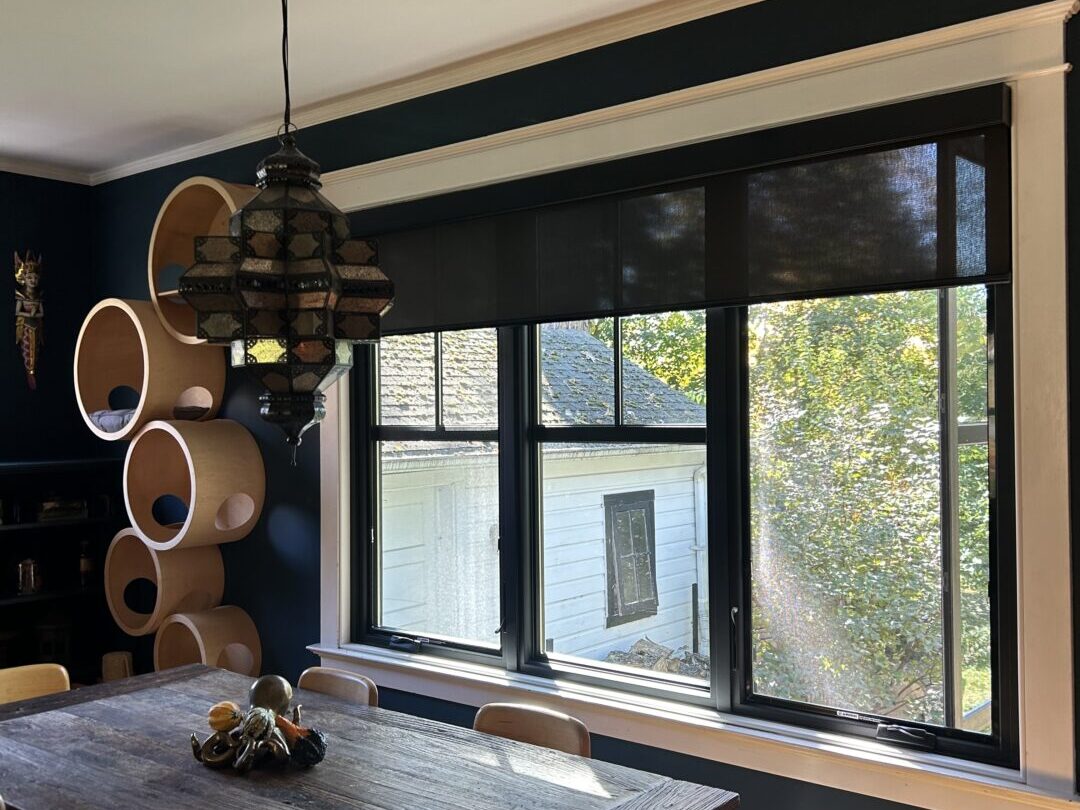
Hardwired motorized shades are a smart choice for wide windows, tall glass, new construction, and rooms where charging batteries would be inconvenient. They are also a construction-coordination project, not simply a product choice. The motor, cable, transformer, controls, pocket, trim, and service access must be planned together before drywall or millwork conceals the work.
This guide explains how to create a wiring plan that an electrician, builder, and shade installer can use. World Wide Shades can turn your window list into a shade schedule and wiring brief; start with the World Wide Shades builder before your electrical rough-in.
What hardwired motorized shades actually require
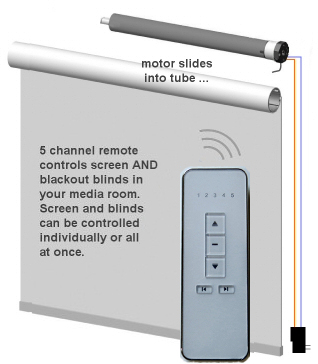
A hardwired shade receives continuous low-voltage DC power through a concealed cable. The motor is normally supplied by a listed transformer or distribution panel rather than being connected directly to household line voltage at the headrail. Common systems use 12V or 24V DC, but the correct voltage, current rating, connector, polarity, and maximum cable length depend on the motor selected.
The visible benefit is a clean headrail with no battery compartment and no regular charging routine. The tradeoff is that a cable must arrive at the correct end of the shade, the power supply needs a serviceable location, and the finished opening must leave room for the motor connector. Ask World Wide Shades to confirm the motor specifications before an electrician purchases materials. Use contact World Wide Shades to request the technical brief.
A licensed electrician should determine the permitted cable type, box, conduit, separation from line-voltage wiring, and local-code requirements. The National Fire Protection Association’s electrical safety guidance is a useful general reference, but it does not replace local inspection or a professional design.
When hardwired power is worth planning
Hardwired power makes the most sense when a shade is wide, heavy, high, or operated frequently. Examples include a 12-foot picture window, a 20-foot great-room wall divided into eight shades, a two-story foyer, or a commercial conference room that cycles shades several times daily. Battery access becomes an ownership problem when a ladder is required or a headrail is hidden inside a ceiling pocket.
A retrofit with three ordinary windows may be better served by rechargeable motors because opening walls adds labor and finish risk. A new build or major renovation usually offers the best opportunity: cables can be installed while framing is open, and the power supply can be placed in a closet or accessible utility zone. World Wide Shades can compare battery, plug-in, and hardwired approaches through the online builder before you commit.
Factor in the lifecycle, not just the first invoice. A hardwired system can avoid dozens of charging visits over 10 years, while a battery system can save substantial rough-in labor. The right answer depends on window count, motor load, access height, and how much of the wall is already finished.
Build a window-by-window power schedule
Start with a table containing room, window ID, finished width, finished height, mount type, shade fabric, motor side, motor voltage, power zone, control method, and installer notes. Do not rely on labels such as “living room left”; number windows on the plan and mark those numbers on the framing.
For each shade, record whether the treatment is inside mounted, outside mounted, recessed into a pocket, or hidden behind a fascia. Note whether the motor is on the left or right when viewed from inside. A cable that arrives at the wrong side may require a visible extension or a complete rework.
Include expected shade weight and daily cycles. A 36-inch light-filtering shade and a 96-inch blackout shade do not place the same demand on a motor. The best fabrics for roller shades guide can help match openness and fabric construction to the room, while World Wide Shades can verify the selected motor against the finished size.
Choose the transformer location before rough-in
A transformer or power panel should be hidden but reachable. Typical locations include a nearby closet, an accessible attic zone, the top of a cabinet, or a dedicated electrical enclosure. Avoid burying a transformer permanently behind drywall, fixed tile, or non-removable millwork. Leave a documented route to the supply so a future technician can identify it without opening the wall.
One supply may power one shade, or a listed distribution system may power a group. The decision depends on motor draw, number of outputs, cable length, voltage drop, and the manufacturer’s limits. Never combine connectors or power supplies from unrelated shade systems without written approval. Call (844) 674-2716 to have World Wide Shades review a multi-window power plan.
Label every cable at both ends with a durable tag. A useful label includes the window ID, room, and supply output, such as “LIV-W03 / PS-2.” Photograph the rough-in with a tape measure visible and save the images with the final plans. This costs minutes during construction and can save hours during service.
Understand voltage drop and cable length
Voltage drop is the loss of voltage along a cable. Long runs, undersized conductors, high current, and many connections increase the risk. Symptoms can include a motor that moves slowly, stops under load, fails to start, or loses its programmed limits. A 24V system can use less current than a 12V system for the same power, but voltage alone does not determine the correct cable.
Use the motor manufacturer’s cable table and maximum-distance guidance. Do not substitute a convenient speaker wire or extend a lead with an unapproved connector. Leave a modest service loop at the headrail and supply, but do not coil excessive cable tightly inside a hot enclosure. World Wide Shades can provide the motor data your electrician needs; contact the team before the first cable is pulled.
Keep low-voltage wiring organized and physically separated from line-voltage conductors as required by the electrical design. Protect cables from sharp metal, fasteners, moving doors, insulation damage, and areas where future screws may be installed. The electrician, not the shade installer, should approve the final route.
Home-run versus grouped wiring
A home-run layout brings an individual cable from each shade back to a central location. It uses more cable, but each motor is easier to isolate, label, replace, and test. Home-runs are especially practical for a new build with open walls or a home where future automation may expand.
A grouped or daisy-chain layout can reduce cable use for nearby windows, but it introduces dependencies. A damaged connector may affect every downstream shade, and some systems require dedicated outputs rather than a chain. For five shades in one room, compare the small material saving with the value of independent service.
Ask World Wide Shades for a room-by-room comparison, then have the electrician confirm that the topology complies with the selected system. If you are still deciding between fabrics or cassettes, order free swatches so the pocket and headrail dimensions are based on a real specification.
Coordinate pockets, trim, and access
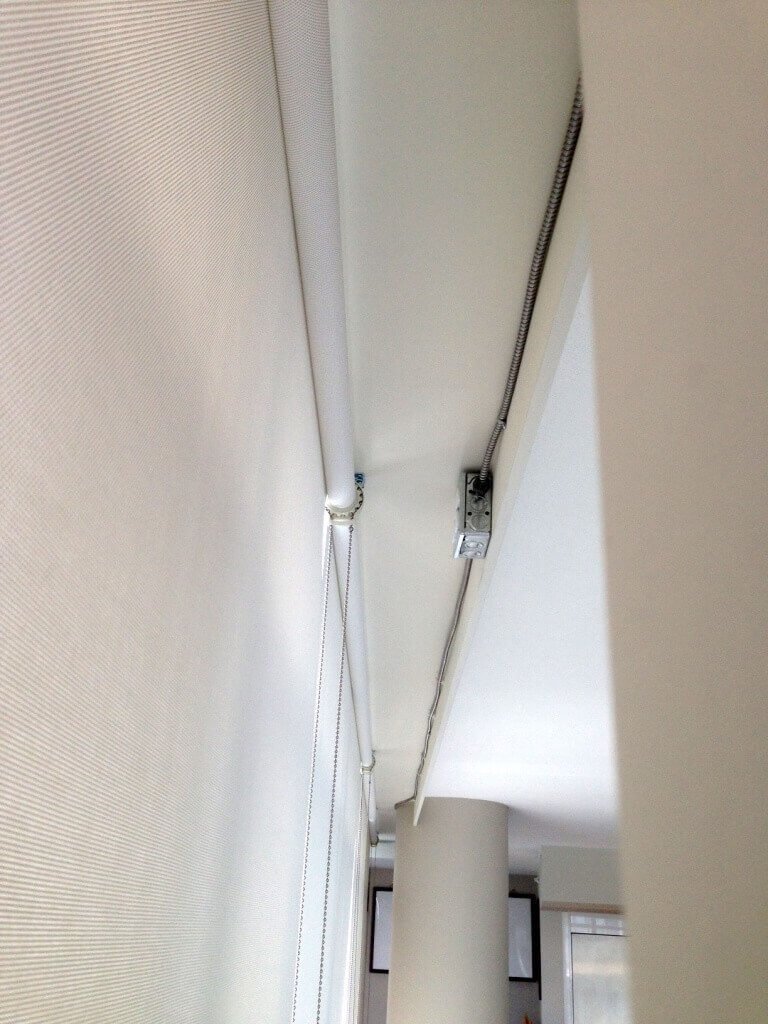
The finished shade needs a physical path for the motor connector and enough clearance for the bracket. Mark the final headrail centerline, ceiling plane, trim face, and pocket depth. A cable emerging 3 inches below the headrail can be visible; a cable pinched against a bracket can be impossible to connect.
For a ceiling pocket, specify a removable fascia or access panel. A serviceable section can be as simple as a lift-out cover, but it must be reachable without damaging paint. Do not cover a motor connector with permanent cabinet panels. The roller-shade valance options guide helps compare concealment choices without sacrificing service access. For adjacent planning, review custom shades for new construction and window shades that increase home value.
Coordinate the shade schedule with the framer, electrician, drywall contractor, cabinetmaker, and installer. If a window changes by 2 inches late in construction, the cable exit and headrail may shift. World Wide Shades can update the schedule before finishes are installed; call (844) 674-2716 when dimensions change.
Plan controls and smart-home integration
Decide whether shades will use a wall switch, handheld remote, app, hub, voice assistant, or a combination. A hardwired motor does not automatically mean a hardwired control system. Radio-frequency controls may need a bridge, while wired control protocols may require additional low-voltage conductors or network planning.
For a whole-home system, reserve a location for the bridge or hub with stable power and reasonable radio coverage. Do not hide it inside a metal electrical cabinet if the manufacturer warns that the enclosure will block radio signals. The smart-home motorized shades setup guide explains the broader choices, and World Wide Shades can help align the motor with the control platform.
Create a manual fallback. A local wall control or accessible remote is valuable when Wi-Fi is down, a phone is unavailable, or a guest needs privacy. Test individual shades, room groups, scenes, upper and lower limits, and power recovery before closing the wall.
A practical pre-wire sequence
- Confirm final window dimensions and mount type.
- Assign a window ID to every shade.
- Select a motor and obtain voltage, current, connector, and cable limits.
- Mark motor side, headrail elevation, cable exit, and service loop.
- Choose a serviceable transformer or distribution location.
- Draw home-run or grouped routes and label both ends.
- Photograph rough-in before insulation and drywall.
- Install shades, connect power, set limits, pair controls, and test every scene.
That sequence prevents the most expensive error: installing wiring before the shade specification is final. If you want a second set of eyes, use the World Wide Shades contact page with your floor plan and window schedule.
Cost and timing expectations
The shade hardware, motor, fabric, transformer, controls, electrician labor, access panels, and finish work each affect the total. As a planning range, a simple low-voltage rough-in may add a few hundred dollars to a small project, while a multi-room system with central distribution and finished access can add several thousand dollars. Treat those figures as budgeting placeholders, not a quote; motor load and local labor rates vary.
Order decisions early enough to protect the rough-in date. A reasonable sequence is design and swatches first, motor confirmation second, electrical plan third, rough-in fourth, shade installation after finished dimensions are verified. World Wide Shades can prepare a project-specific scope through the builder, so the electrician is not guessing from a product photo.
FAQ: hardwired motorized shades
Usually no. Many motorized shade systems use low-voltage DC power supplied by a listed transformer or distribution panel. The electrician must verify the selected motor’s requirements and local code; never connect a shade motor to line voltage without explicit manufacturer instructions.
A dedicated home-run is often easiest to label and service, but some approved systems allow grouped wiring. The correct choice depends on motor limits, supply outputs, cable distance, and the manufacturer’s topology rules. World Wide Shades can map the options to your window schedule.
It should not be made inaccessible. Place the transformer in a closet, cabinet, attic zone, or enclosure with a removable access panel that a technician can reach safely. Document its location with photos and labels.
Plan it before electrical rough-in and before drywall. For new construction, finalize the shade schedule while framing is open; for renovation, coordinate the plan before walls or trim are removed. Use World Wide Shades to start the specification early.
Rechargeable or plug-in motors may reduce wall disruption. A qualified installer can assess concealed routes, but do not open walls or modify electrical wiring without the appropriate professional. Request a retrofit recommendation from World Wide Shades through contact.
The next step
Hardwired shades reward precise planning: label every opening, keep power serviceable, confirm voltage and cable distance, and leave access for the future. World Wide Shades can coordinate the design, fabric, motor, and control decisions in one place. Start with the shade builder, order swatches, or call (844) 674-2716 for project guidance.