Skylight shades only perform as well as the measurements behind them. A shade that is 1/4 inch too wide can bind in a tight opening; one that is too narrow can leave bright side gaps. Measuring a skylight also involves more than width and height: you need the opening shape, recess depth, slope, obstructions, and access plan. This guide explains a repeatable way to measure skylight roller shades before ordering.
If you want a second set of eyes, contact World Wide Shades with your notes and photos. World Wide Shades can help turn an awkward roof window into a shade specification that a fabricator can use.
Decide what you are measuring
Start by identifying the actual opening the shade must cover. A skylight may have a finished drywall shaft, a wood curb, a metal frame, or a manufacturer-specific sash. The visible glass is not necessarily the measurement used for an inside-mounted shade. Measure the finished mounting surface where brackets, channels, or a cassette will attach.
There are three common configurations:
- Inside mount: the shade sits inside the finished recess and follows the opening. This creates a clean appearance but requires enough depth for the headrail and may show small light gaps at the edges.
- Outside mount: the shade mounts over the trim or curb. It can cover more light and solve a shallow recess, but you need clear flat mounting area around the opening.
- Channel or frame system: side channels guide the fabric and improve light control on a sloped skylight. The shade package needs measurements for the full frame, not just the glass.
For context on choosing a shade for a roof window, see skylight shade options. If the skylight is in a bedroom, compare the light-control priorities in our bedroom shade guide before you measure.
Tools and measuring rules
Use a steel tape measure, a pencil, a notepad or phone, a step ladder rated for your weight, and a second person when the opening is high. Do not stand on a chair or lean a ladder against fragile trim. For a skylight above a stairwell or double-height room, stop and hire a qualified installer rather than reaching from an unsafe position.
Measure in inches to the nearest 1/8 inch unless the shade supplier specifies another increment. Record the measurement exactly as read; do not subtract for clearance unless the manufacturer tells you to. Custom shade factories apply their own deductions for brackets, fabric roll, channels, and operating clearance.
Take every dimension at least twice. A 1/8-inch difference between readings is common in older framing. A difference of 1/4 inch or more is a signal to measure at a third point and inspect the opening for taper.
Step-by-step skylight measuring process
Take a straight-on photo from below and close-ups of all four corners. Note whether the skylight faces north, south, east, or west, and write down the room below it. A south- or west-facing skylight can receive intense afternoon sun, so a solar or blackout fabric may affect the shade and side-channel choice.
Also record whether the window opens for ventilation, has a screen, or includes a built-in blind. A moving sash needs clearance through its full travel. World Wide Shades uses photos and orientation notes to recommend the right fabric category instead of treating every roof window as identical.
Measure the finished opening from left to right at the top, middle, and bottom. Write all three values down in this order. For example: top 35 7/8 inches, middle 36 inches, bottom 35 3/4 inches. Do not average them yourself.
For an inside mount, the smallest width is usually the most important constraint, but the final deduction depends on the shade system. If the opening varies by more than 1/4 inch, check that the tape is square to the side jambs and inspect for a bowed frame. A tapered opening may need a trim solution, a surface mount, or a custom channel adjustment.
Use World Wide Shades' builder after you have the three width readings. The builder helps organize the window order, while the World Wide Shades team can confirm how the shade system handles an uneven opening.
Measure from the upper mounting line to the lower mounting line at the left, center, and right. On a sloped skylight, the length along the slope is the number that matters. Do not measure the horizontal projection across the ceiling; that will understate the fabric travel.
Write the slope length, not just the glass length. If the left side is 58 1/8 inches, the center is 58 3/8 inches, and the right is 58 1/4 inches, report all three. The largest number can affect channel length and the smallest number can reveal a framing issue.
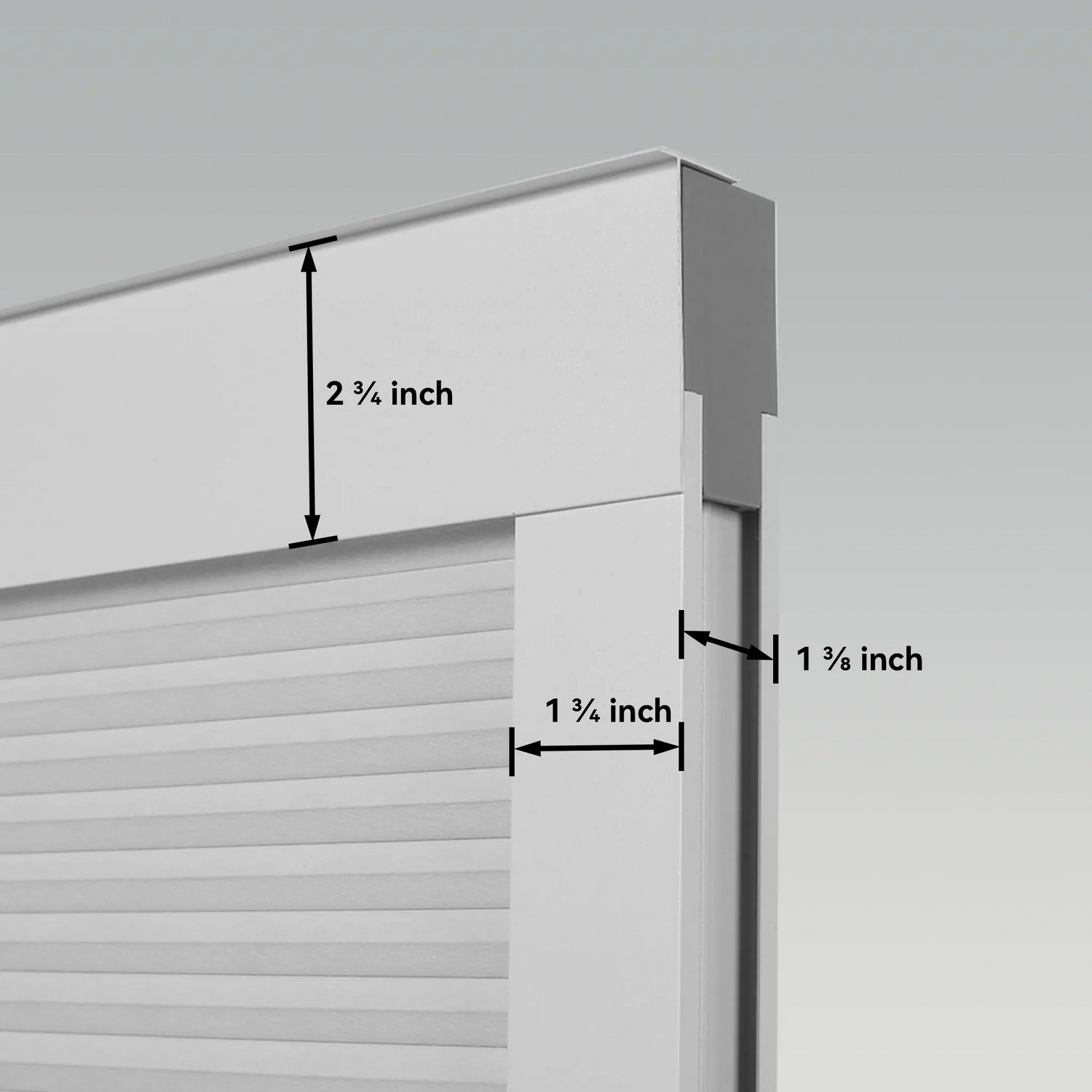
Measure clear depth from the front edge of the trim to the glass or sash at several points. Then measure the width of the flat surface where the brackets or cassette will sit. A shade may need 2 to 4 inches of depth depending on the roll diameter, headrail, motor, and fabric thickness; the exact requirement is system-specific.
Look for drywall returns, trim lips, handles, insect screens, crank hardware, and condensation channels. Mark anything that projects more than about 1/2 inch into the planned shade path. For a deep but irregular opening, a cassette can protect the roll while side channels guide the fabric.
A typical roof window follows the roof pitch, but two skylights in the same room may not have identical slopes. Use a digital angle finder or a phone inclinometer and record the approximate angle in degrees. Measure both side jambs and the top and bottom edges for square. A difference of 1 degree may matter for a channel system, especially over a long run.
Do not assume the ceiling angle is the window angle. Measure the frame itself. Send the angle, photos, and dimensions to World Wide Shades when the opening is angled, arched, or unusually large.
For a skylight, the control plan is part of the measurement. A manual chain or wand is only practical when the shade is reachable. A battery motor avoids wiring but still needs future charging access. A hardwired or rechargeable motor may be preferable when the shade is 15 feet above the floor or over a stairwell.
Record the nearest outlet, attic access, and possible motor side. If the skylight will be automated, note whether the home uses Alexa, Google Home, Apple Home, or another hub. For automation ideas, read smart home motorized shade setup. World Wide Shades can review the control plan before you place an order; request a recommendation with the opening height and access constraints.
A sample measurement sheet
Use one line per skylight so a multi-window order does not mix dimensions:
- Room and window label: Upstairs hall, SK-01
- Mount: inside or outside
- Width: top / middle / bottom
- Slope length: left / center / right
- Recess depth: smallest and largest
- Angle: approximate degrees
- Hardware: handle, screen, crank, or obstruction
- Operation: manual, battery, rechargeable, or hardwired
- Fabric goal: light filtering, solar, room darkening, or blackout
- Photos: straight-on view plus four corners
For example, “SK-01, inside mount, width 35 7/8 / 36 / 35 3/4 inches, slope length 58 1/8 / 58 3/8 / 58 1/4 inches, depth 3 1/8 inches, 27-degree slope, rechargeable motor” gives a designer much more usable information than “36 by 58.”
Fabric and light-control decisions after measuring
Measurement determines fit; fabric determines how the room feels. A light-filtering weave can soften glare while keeping a skylight bright. A solar screen can reduce glare and UV exposure, but openness and color affect how much view and light remain. A room-darkening or blackout fabric is a better fit for a nursery, media room, or guest room that needs predictable darkness.
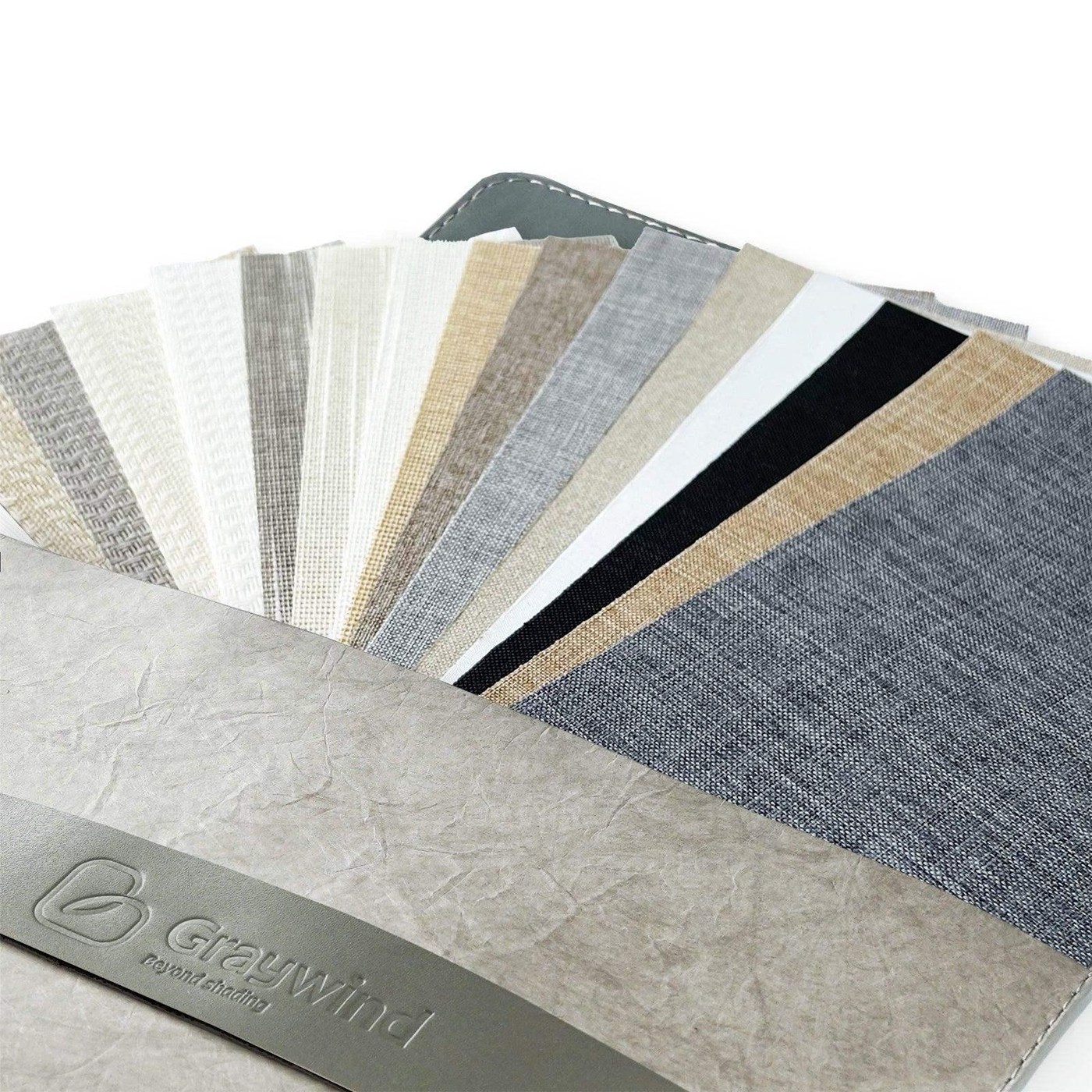
Compare light-filtering shade fabrics and UV protection window shades before choosing. World Wide Shades can send fabric swatches so you can test the material under the actual skylight at 10 a.m. and 3 p.m., when the light can look very different.
If you are ordering several rooms, use the online builder to create a consistent schedule, then ask World Wide Shades to verify unusual skylight dimensions. Call (844) 674-2716 when the opening is high, angled, or difficult to access.
Common measuring mistakes to avoid
- Measuring the glass instead of the mounting surface.
- Reporting one width and one length when the opening is tapered.
- Subtracting 1/4 inch automatically instead of following the shade system's specification.
- Using horizontal ceiling distance instead of slope length.
- Forgetting a screen, handle, crank, sprinkler, or trim return.
- Ignoring how a motor will be charged or serviced.
- Ordering before checking the shade stack and headrail depth.
When in doubt, do not guess. Email photos and all readings to World Wide Shades through contact. A short review before fabrication can prevent a costly remade shade and a second ladder trip.
FAQ: measuring skylight roller shades
The mounting opening's width, slope length, and usable recess depth are the three most important measurements. Record each at three points because skylight frames can taper or sit out of square.
Measure the finished mounting surface where the shade will attach, not only the visible glass. The supplier needs to know whether the shade is inside-mounted, surface-mounted, or installed with channels.
Clearance varies by headrail, roll diameter, motor, fabric, and channel system. Do not apply a universal deduction; send exact measurements to World Wide Shades so the appropriate manufacturing allowances can be confirmed.
Yes, if the shade is within safe reach and the operating control will not require a ladder. For high, steep, or stairwell skylights, a battery or hardwired motor is usually more practical and safer for daily use.
Not always. Choose light filtering for a bright but softened room, solar fabric for glare and UV management, and room-darkening or blackout when sleep, projection, or temperature control is the priority. Test swatches in the room before ordering.
Yes. Send the three-point dimensions, recess depth, angle, photos, and operating preference through World Wide Shades contact, or call (844) 674-2716 for help planning a custom skylight shade.
A measured skylight is a solvable design problem. Start with the World Wide Shades builder, keep your measurement sheet with the window photos, and ask the team to review any opening that is tapered, unusually deep, or out of reach.