Start with the architecture, not the trend
Industrial interiors often put the window on display: black metal frames, deep sills, exposed brick, concrete, and broad panes of glass all contribute to the room’s character. A good shade should add control without hiding those features. The most useful starting point is to identify what the window needs to do—reduce screen glare, soften direct sun, provide nighttime privacy, or darken a room—then choose a fabric and mount that fit the architecture.
World Wide Shades helps homeowners match the operating details to the room, not just pick a color from a small screen. You can compare fabric families in the World Wide Shades builder, then request material samples through World Wide Shades swatches.
What “industrial style” means at the window
Industrial design is less about a single shade color and more about combining practical materials with visible structure. Matte black, dark bronze, galvanized metal, concrete gray, brick red, weathered wood, and warm leather are common palette cues. A roller shade can complement those materials because its fabric plane is simple and its hardware can recede into the frame.
The best match depends on which feature you want to emphasize:
- Black steel windows: a graphite, charcoal, or warm gray fabric echoes the frame and keeps the view visually crisp.
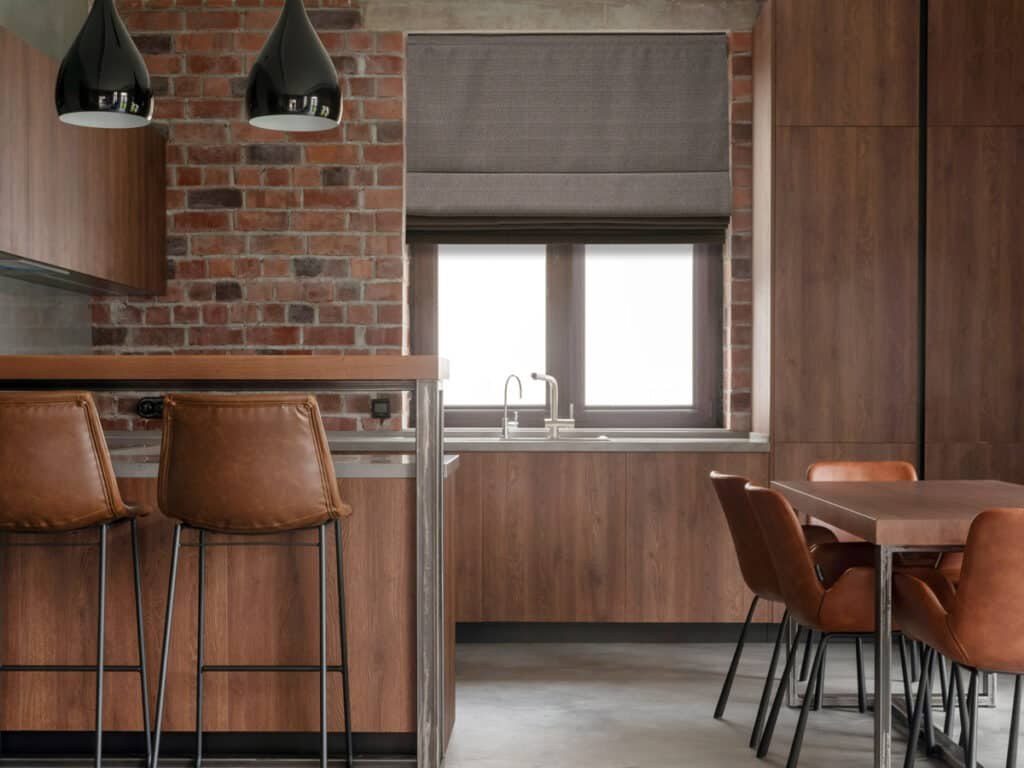
- Red or brown brick: flax, sand, oatmeal, and muted clay tones soften the contrast without competing with the masonry.
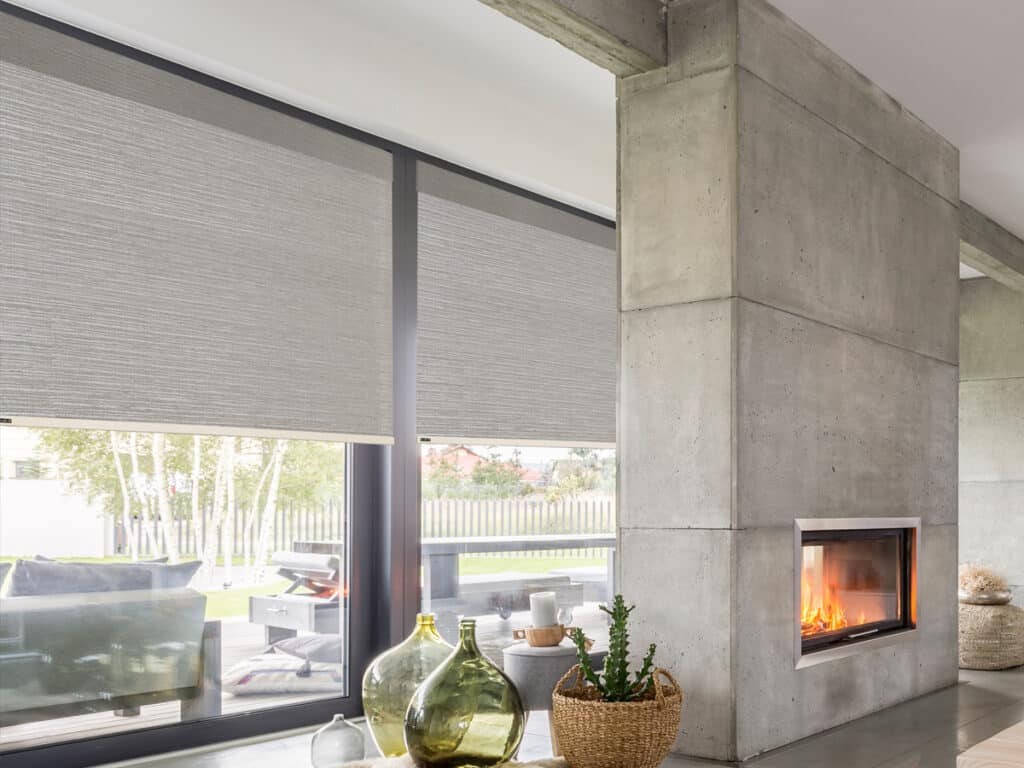
- Concrete or polished floors: a textured gray or off-white screen fabric can add a softer surface against hard finishes.
- Warm wood and leather: natural beige, tobacco, or light taupe shades keep the room from feeling cold.
Color is only one decision. A fabric that looks subtle in a sample may read darker when it covers a large window. Hold a swatch against the frame and wall at morning, midday, and evening; the window’s changing light can make a “neutral” look green, pink, or blue. World Wide Shades recommends ordering samples before committing to multiple rooms, especially when black metal, brick, or polished concrete sets a strong color cast.
Choose a fabric for the actual light problem
Roller fabrics solve different problems. A solar screen filters bright light and preserves some view; a light-filtering weave softens daylight and typically provides more daytime privacy; an opaque room-darkening or blackout fabric blocks more light when closed. These are not interchangeable labels, so check the fabric’s visible openness, backing, and privacy description before choosing.
Screen fabrics are often described by openness factor, such as 1%, 3%, or 5%. The figure refers to the proportion of open area in the fabric construction; it is not a guarantee of a particular amount of heat rejection or nighttime privacy. A lower openness usually means a tighter view through the fabric, while a more open screen tends to preserve more of the outside view. At night, with interior lights on, a screen may reveal more of the room than it does during daytime.
This option is useful in a loft office, dining room, or living area where glare on a monitor or television matters but the view is part of the design. Compare fabric colors at the window rather than relying on a product thumbnail. If evening privacy is important, consider a more opaque fabric or a second layer.
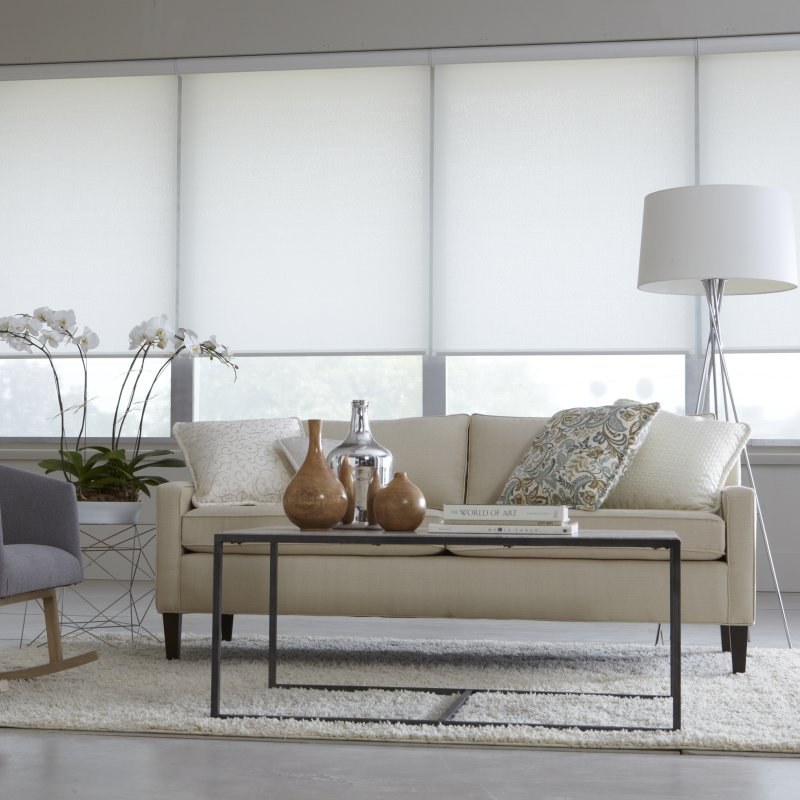
Light-filtering fabrics diffuse daylight while retaining a clean, continuous surface. They can keep a brick-and-metal room from feeling stark, especially when the walls and floors are dark. They do not provide complete darkness, and the precise privacy level depends on weave, color, lighting, and viewing distance. A white or pale fabric may glow in direct sun; a darker fabric may make the window read as a strong graphic block.
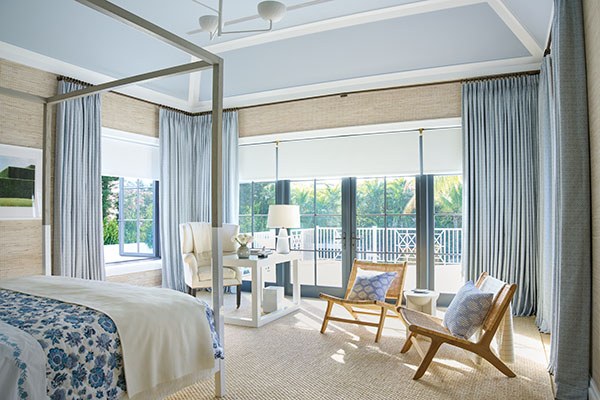
Choose an opaque fabric when darkness is the priority, such as in a bedroom, editing room, or home theater. A shade mounted inside a deep steel or masonry reveal may still leave side gaps, so the mount and coverage matter as much as the fabric. For a closer comparison of blackout options, see blackout-curtains-vs-blackout-shades and best-window-shades-bedroom.
Make the mount work with metal, masonry, and deep frames
An inside mount keeps the shade aligned with the window and preserves exposed trim. It can look especially clean in a steel sash or a deep masonry opening. Before selecting it, confirm that the frame is deep enough for the chosen tube, brackets, and any fascia or cassette. The exact depth requirement changes by product; do not assume every roller shade fits inside a narrow metal frame.
An outside mount attaches above or around the opening. It can cover trim, span an irregular reveal, or reduce visible side light. On a loft wall with a header or exposed concrete, a fascia in a coordinated finish can make the shade assembly look intentional rather than like an add-on. Outside mounting needs a sound surface and adequate clearance for the roll, handles, and any door or window operation.
Industrial frames are often steel, aluminum, or part of a masonry assembly. Ask what the installer will fasten into: a metal frame, wood blocking, concrete, or a hollow cavity require different attachment plans. Do not select fasteners based only on the finish material you can see. For a broad opening, the weight and span may call for a larger tube, extra support, or more than one shade; the product’s maximum width is specific to its fabric and hardware.
For a more polished top treatment, compare the options in roller-shade-valance-options. If the opening is oversized, commercial-roller-shades-office covers related considerations for larger projects.
Think through heat, glare, and privacy as separate goals
A fabric that reduces glare does not necessarily make a room darker or more private at night. For south- and west-facing glass, note when direct sunlight hits the room and whether it causes hot spots, fading concerns, or screen reflections. If heat is part of the problem, compare product performance data rather than relying on a color name. The U.S. Department of Energy directs consumers to the Attachment Energy Rating Council (AERC) for window-attachment product ratings and to the Efficient Window Coverings Collaborative for selection guidance (DOE window and attachment resources).
The Efficient Window Coverings Collaborative explains that interior roller shades provide solar-heat-gain control, with performance depending on fabric and how the shade is used; it also cautions that conventional coverings deliver only modest thermal insulation (interior blinds, shades, and drapes overview). Treat a shade as one part of the room’s comfort plan—not as a substitute for a well-performing window or a complete building-envelope upgrade. For more on choosing for sunny rooms, see best-shades-south-facing-windows and energy-efficient-window-shades.
World Wide Shades can help you compare the fabric’s view, light, and privacy tradeoffs before you order; start a custom configuration when you know which windows need treatment.
Use scale and hardware to keep the room balanced
Tall industrial windows can make a small shade appear visually insignificant. If a shade covers only one sash in a multi-part opening, decide whether repeated shades should align at the same head height or follow each opening independently. For a wall of glass, a continuous run can look calm, while separate shades may preserve individual window operation and allow different light settings.
Hardware finish should relate to other visible metal, such as door pulls, lighting, or window frames. Black is an easy match for black muntins, but it is not the only choice. Bronze or dark gray can soften a sharp outline; a white or fabric-wrapped fascia can disappear into a pale wall. Consider the operating chain or motor placement too—visible hardware should not interrupt the clean geometry you are trying to preserve.
For large or hard-to-reach windows, motorization may be more convenient than a manual lift. A planned motor also affects bracket clearance, power access, and how adjacent shades are controlled; compare the tradeoffs in motorized-shades-vs-cordless-shades. If you are building an industrial-style new home, custom-shades-new-construction discusses planning before finishes are complete. World Wide Shades can review room layouts and lift preferences; call (844) 674-2716 or contact the team.
A practical way to specify an industrial shade
Before comparing fabrics, write down the job of each opening. This short room-by-room description helps avoid ordering a screen fabric for a bedroom that needs nighttime privacy or a blackout fabric for a living room where the view matters.
- Record orientation and timing. Note whether the window faces east, south, west, or north, and when direct sunlight crosses it.
- Identify the main viewing position. A desk, sofa, dining table, or bed changes where glare and privacy are most noticeable.
- Check frame depth and obstructions. Include handles, latches, mullions, crank operators, and the opening direction.
- Choose daytime and nighttime behavior. Decide whether the shade remains down after dark, rises for the view, or pairs with a second layer.
- Test the color in place. View a swatch near the glass and against the wall in more than one lighting condition.
- Confirm the operating plan. Decide whether each shade is manual, cordless, motorized, or connected to a room-wide routine.
This is also a good point to compare industrial looks with window-shade-trends-2026 and woven-wood-shades-guide, which can add texture where a smooth screen feels too technical.
FAQ: industrial-style window shades
Charcoal, graphite, warm gray, flax, and off-white all work. Choose a shade that relates to the wall and floor as well as the frame; a large field of pure black can make a bright loft feel heavier.
Not reliably. A solar screen may obscure a view from outside during daylight, but interior lights can reverse the effect after dark. For nighttime privacy, choose a more opaque fabric or combine layers.
Yes, particularly when the room benefits from a simple fabric plane that does not compete with exposed structure. The correct fabric depends on the window’s glare, privacy, and light-control needs.
Sometimes, but the installer should verify frame material, fastener suitability, and available depth. Some projects require blocking or a wall/ceiling mount instead of fastening only to the frame.
They can help manage solar heat and glare, but the effect varies with fabric, window construction, orientation, and whether the shade is deployed. Use product ratings where available and avoid treating a shade as a replacement for window performance.
Build a coherent finish across the room
Industrial rooms look intentional when the shade, frame, wall, and hardware feel like parts of the same composition. Compare fabric color at the window, choose openness according to daytime view and nighttime privacy, and verify the mount before settling on a product. World Wide Shades can help narrow the options without hiding the architecture that makes the room distinctive.
Explore fabrics in the World Wide Shades builder, order World Wide Shades swatches, or call (844) 674-2716 to discuss a challenging frame or oversized opening. If you would rather talk through the plan first, contact World Wide Shades.